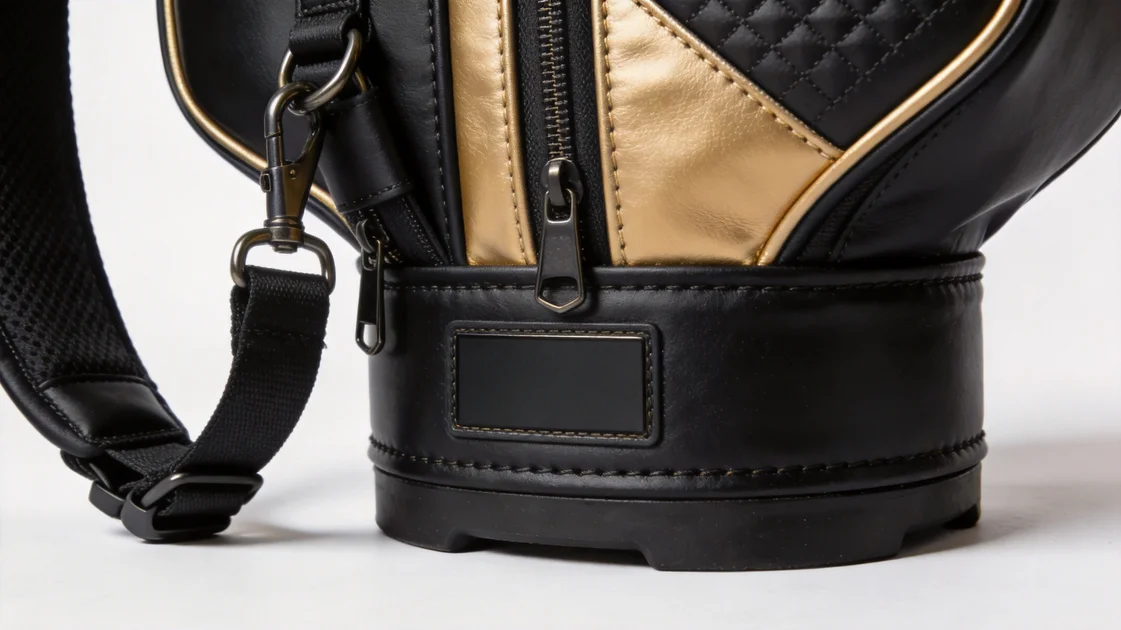
Private label golf bags represent one of the fastest-growing segments in the global golf equipment industry. According to the National Golf Foundation, private label golf products now account for approximately 18% of total golf accessory sales in North America, up from just 11% five years ago. Retail chains, pro shops, e-commerce brands, golf influencers, and corporate gifting programs are increasingly launching their own branded bag lines to capture higher margins — typically 40-60% above branded alternatives — and build lasting brand equity in a $1.8 billion global golf bag market growing at 4.5% CAGR.
However, launching a private label golf bag line involves multiple complex stages — from initial brand positioning through material sourcing, technical development, sampling, production, compliance testing, and market launch. As a manufacturer based in Quanzhou, China’s leading bag manufacturing hub, Keep Perfect Golf — a B2B golf bag manufacturer with 22 years of experience — has guided over 200 brands through this exact process, exporting to 100+ countries across North America, Europe, Asia-Pacific, and the Middle East. This complete guide maps out the complete journey with realistic timelines, actionable milestones, and budget frameworks for every phase.
Phase 1: Brand Positioning and Market Research (Weeks 1–4)
Before approaching any manufacturer, you must clearly define your target customer, price positioning, and brand differentiation strategy. The golf bag market spans from $60 entry-level bags to $800+ luxury staff bags — attempting to serve “everyone” will result in a product that appeals to no one.
Conduct a systematic competitive analysis of the top 5 brands in your target price segment. Identify specific gaps in their offerings. For example, many mid-range brands lack a lightweight stand bag under 4 lbs, while premium cart bag lines often miss opportunities for integrated cooler technology. Your private label should fill a verified market need rather than simply replicating an existing product.
Key Market Segmentation Data for Private Label Strategy
| Bag Category | Market Share | Avg. Retail Price | Private Label Margin Opportunity |
|---|---|---|---|
| Stand Bags | 45% of sales | $150–$400 | 40–55% |
| Cart Bags | 30% of sales | $200–$500 | 45–60% |
| Staff/Tour Bags | 10% of sales | $350–$800+ | 50–65% |
| Sunday/Carry Bags | 15% of sales | $60–$200 | 35–50% |
Key deliverables from Phase 1: Target customer profile with psychographic detail, competitor price point matrix, gap assessment report, preliminary feature specification list, and brand visual identity direction. Having this positioning locked before engaging a manufacturer dramatically improves efficiency and reduces revision costs in subsequent phases.
Phase 2: Design and Technical Development (Weeks 5–10)
With clear positioning established, it is time to translate your brand vision into production-ready technical specifications. This phase involves creating detailed tech packs — complete documents specifying every element of the bag including materials, dimensions, pocket configurations, 14-way full-length divider systems, hardware specifications (zippers, buckles, D-rings), branding placement, Pantone color codes, and packaging requirements.
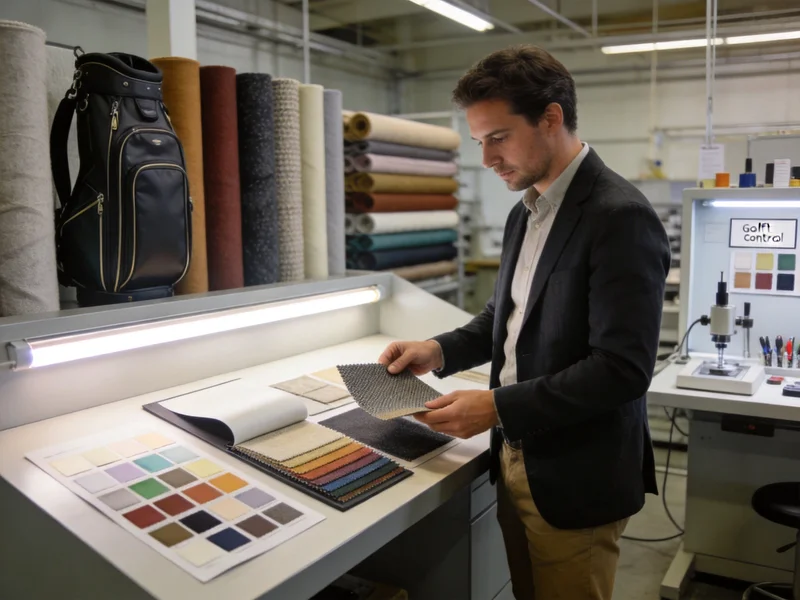
Critical Design Decisions That Impact Cost and Quality
If you do not have in-house design expertise, work directly with your manufacturer’s design team. At Keep Perfect Golf, our dedicated R&D department in the Quanzhou manufacturing base translates brand concepts into fully manufacturable designs through 2–3 iteration rounds: initial concept sketches, 3D CAD renderings, and final production-ready technical drawings.
| Design Decision | Options | Cost Impact | Quality Impact |
|---|---|---|---|
| Material | 600D Polyester, 1680D Ballistic Nylon, PU Leather, Cordura® | ±30–50% unit cost | Durability, weight, hand feel |
| Divider System | 6-way, 10-way, 14-way full-length | ±15–25% unit cost | Club protection, organization |
| Pocket Count | 6 pockets (basic) to 12+ pockets (premium) | ±5–10% per pocket | Functionality, weight |
| Branding Method | Embroidery, Sublimation, Woven Labels, Heat Transfer, Deboss | $0.50–$5.00 per unit | Brand perception, durability |
| Stand Mechanism | Aluminum (light), Carbon Fiber (premium), Steel (budget) | ±$3–$8 per unit | Weight, longevity, reliability |
Phase 3: Sampling and Approval (Weeks 11–16)
The sampling phase is where your design concept meets physical reality. Expect to progress through 2–3 sample iterations, each serving a specific validation purpose:
- Proto Sample (Weeks 11–12): First physical sample using available materials. Purpose is to verify overall design proportions, silhouette, and core functionality. Not all materials may match final selections, but form factor is validated.
- Fit & Function Sample (Weeks 13–14): Second iteration incorporating modifications from proto review. Materials should closely match final selections. This is where you test pocket placement, strap ergonomics, and divider system performance.
- Pre-Production Sample (Weeks 15–16): Final sample using exact production materials, hardware, branding application, and packaging. This sample serves as the binding quality benchmark for all bulk production units.
Sample lead time from an experienced OEM golf bag manufacturer like Keep Perfect Golf is typically 10–18 days per iteration. During this window, conduct rigorous evaluation: load the bag with a full set of clubs, test every zipper and pocket under real-world conditions, assess strap comfort during extended carry, evaluate stand mechanism action and durability, and photograph the product from multiple angles for your marketing team.
Phase 4: Bulk Production (Weeks 17–27)
Once the pre-production sample receives written approval, bulk production begins. Standard manufacturing lead time is 45–75 days, depending on order complexity and quantity.
During production, maintain structured communication with your factory. We recommend: weekly production timeline updates, in-line inspection photographs at 30% and 60% completion milestones, and if possible, arrange for third-party inspection during production (not solely at final stage). This proactive quality management approach catches issues early when they are easier and significantly less costly to correct.
Quality Standards and Compliance by Region
As a manufacturer exporting to 100+ countries, Keep Perfect Golf maintains region-specific compliance standards:
| Destination Market | Key Compliance Requirements | Testing Standards |
|---|---|---|
| United States | CPSIA (lead content), CA Prop 65, CPSC flammability | SGS, Bureau Veritas, Intertek |
| European Union | REACH, SVHC compliance, EN standards | TÜV, SGS, Eurofins |
| Japan / South Korea | JIS standards, KC Mark (Korea), formaldehyde limits | JET, KTR, SGS |
| Australia / New Zealand | ACCC safety standards, ACCC product bans | SGS, Intertek |
| Middle East (GCC) | SASO (Saudi), ESMA (UAE), GSO (Gulf) | Intertek, SGS, TÜV |
All products undergo our complete Quality Control Process — a multi-stage inspection system covering material inspection, in-line production checks, and final pre-shipment audit using AQL 2.5 sampling standards.
Phase 5: Quality Inspection, Shipping, and Market Launch (Weeks 28–32)
Pre-shipment inspection is non-negotiable. Whether conducted by your team, a third-party inspector (SGS, Bureau Veritas, Intertek), or through our in-house QC department, the inspection must verify:
- Dimensional accuracy against approved sample (±2mm tolerance on critical dimensions)
- Material and color correctness (Pantone validation under D65 lighting)
- Stitching quality (minimum 7 stitches per inch, no skipped stitches, bar-tack reinforcement at stress points)
- Zipper function (smooth operation, YKK/SBS grade verified)
- Hardware operation (stand mechanism 500-cycle test, buckle pull-strength, D-ring integrity)
- Branding accuracy (logo placement, color match, spelling verification)
- Packaging completeness (poly bag, hang tags, UPC labels, carton marking)
Critical defect protocol: Any critical defects — safety issues, wrong materials, or major construction failures — result in zero tolerance. The entire batch is rejected and reworked at manufacturer’s cost.
Shipping and Logistics from FOB Xiamen
All shipments are processed through FOB Xiamen port — one of China’s top-10 container ports with direct sailings to major global destinations. Typical transit times:
| Destination | Ocean Freight Transit | Customs + Final Delivery | Total Door-to-Door |
|---|---|---|---|
| US West Coast | 18–22 days | 5–7 days | 25–30 days |
| US East Coast | 28–35 days | 5–7 days | 35–42 days |
| Northern Europe | 25–30 days | 3–5 days | 30–37 days |
| Australia | 15–20 days | 3–5 days | 20–27 days |
| Japan / South Korea | 5–8 days | 2–3 days | 10–13 days |
| Middle East (Dubai) | 18–22 days | 3–5 days | 23–29 days |
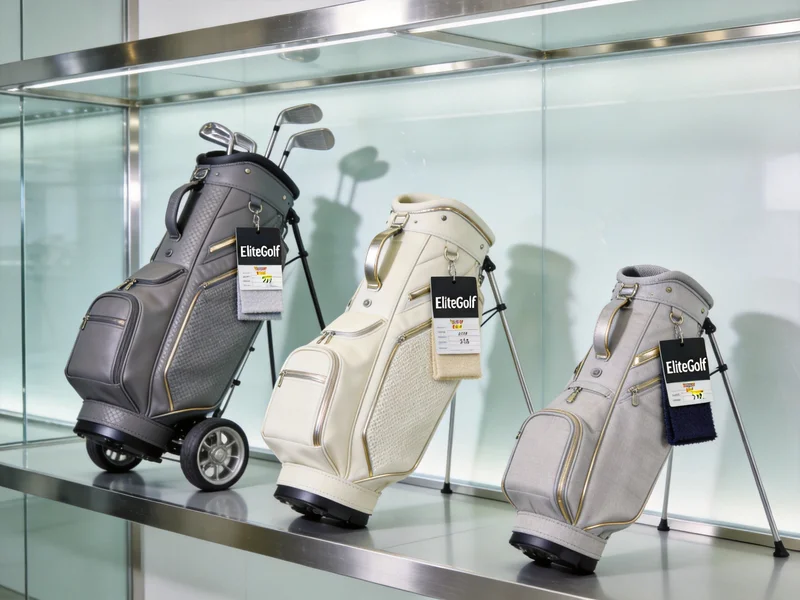
Budget Planning: What It Costs to Launch Your Private Label Golf Bag Line
A realistic budget for launching a single golf bag model as a private label, based on Keep Perfect Golf’s experience with 200+ brand launches:
| Budget Item | Cost Range (USD) | Notes |
|---|---|---|
| Design & Development | $1,000–$3,000 | If outsourcing; free with committed production order at KPG |
| Sampling (2–3 rounds) | $200–$500 per round | Refunded on bulk order >300 pcs |
| Production Tooling | $500–$1,500 | Custom mold, printing plates, embroidery setup |
| Initial Inventory (MOQ 100 pcs) | $1,800–$4,500 | $18–$45/unit depending on specs |
| Shipping & Logistics | $500–$1,500 | FOB Xiamen, varies by destination |
| Marketing & Launch | $1,000–$5,000+ | Photography, listing creation, PPC initial budget |
Total initial investment: $5,000–$25,000 per model, depending on quality tier, complexity, and target market. For brands launching a 3-model product line (stand bag + cart bag + carry bag), expect total investment of $15,000–$60,000 for a competitive market entry.
Why Quanzhou Is the World’s Premier Golf Bag Manufacturing Hub
Quanzhou, located in Fujian Province, China, is the undisputed global center for bag manufacturing — producing over 40% of the world’s sports and travel bags. The city’s ecosystem includes specialized material suppliers, zipper and hardware manufacturers, printing and embroidery workshops, and a deep labor pool with decades of bag-making expertise. Keep Perfect Golf’s factory, operational since 2004, is strategically positioned within this supply chain network, enabling faster material sourcing, lower logistics costs, and direct access to the latest material innovations — including certified recycled and sustainable materials.
This manufacturing ecosystem advantage translates directly to value for private label clients: faster sampling turnaround, more competitive pricing, greater material variety, and the agility to accommodate both small MOQ orders and large-volume production runs within the same facility.
Top 7 Mistakes That Derail Private Label Golf Bag Launches
Having guided over 200 brands through the private label launch process, Keep Perfect Golf has identified the most common pitfalls that cause delays, cost overruns, or product-market misalignment. Understanding these mistakes before you begin can save months of frustration and thousands of dollars in wasted investment.
- Skipping Competitive Gap Analysis: The single most impactful mistake. Brands that launch a private label golf bag without thoroughly analyzing competitor offerings at the same price point often end up with a product that is “just another bag” — failing to give retailers or consumers a compelling reason to choose it over established options. Spend at least 20 hours studying the top 5 competitors in your segment, reading their customer reviews (especially negative ones), and identifying feature gaps.
- Overcomplicating the First SKU: First-time private label brands often try to launch with 5–8 models simultaneously. This approach spreads resources too thin and increases the risk of quality issues across multiple products. Our recommendation: start with a single hero SKU — typically a mid-range stand bag or cart bag with 2–3 colorways — and prove market fit before expanding the line.
- Underestimating Material Impact on Cost: Material selection is the single largest cost driver in golf bag manufacturing. A bag made from 600D polyester may cost $18–22 per unit, while the same design in 1680D ballistic nylon with YKK zippers could cost $35–45. Failing to model these cost differences before committing to a design leads to margin compression or last-minute redesigns.
- Ignoring Regional Compliance Requirements: Shipping a golf bag to the United States without CPSIA and CA Prop 65 compliance can result in customs seizure, fines, or mandatory product recalls. Similarly, EU-bound products must meet REACH and SVHC requirements. Always confirm compliance testing with your manufacturer before production — the cost of testing ($300–$800 per material) is minimal compared to the cost of a rejected shipment.
- Negotiating Price at the Expense of Quality: In golf bags, as in any manufactured product, you get what you pay for. Aggressively negotiating unit cost below sustainable levels leads to corner-cutting on materials, stitching quality, and hardware — resulting in higher return rates, customer complaints, and brand damage. Target a price that delivers acceptable quality for your market segment, then invest the remaining budget in marketing and distribution.
- Failing to Plan for Post-Launch Inventory Replenishment: Many brands celebrate their initial launch but fail to plan the reorder cycle. Golf bags are seasonal products with demand peaking in spring (March–May in Northern Hemisphere). If your first production ships in April and sells well, you need to have your reorder placed by January to receive replenishment stock by May. Our OEM/ODM team provides demand forecasting support to help clients plan production cycles.
- Not Investing in Professional Product Photography: In an era where 87% of golf equipment purchases begin with online research, product photography quality directly impacts conversion rates. Professional images — white background studio shots, lifestyle imagery, and detail close-ups — are non-negotiable for e-commerce success. Keep Perfect Golf provides complimentary product photography with every production order, ensuring your brand looks professional from day one.
Seasonal Production Planning: Timing Your Launch for Maximum Impact
The golf equipment industry is highly seasonal, with peak retail selling occurring from February through June in the Northern Hemisphere (accounting for approximately 60% of annual sales) and September through November (fall promotional season). Successful private label launches align production timelines with these seasonal windows.
| Target Launch Window | Design Start | Sampling Period | Production Start | FOB Xiamen Ship Date |
|---|---|---|---|---|
| Spring Launch (March) | July–August (prior year) | September–October | November–December | January–February |
| Summer Launch (June) | October–November | December–January | February–March | April–May |
| Fall Launch (September) | March–April | May–June | July–August | September |
Critical note on Chinese manufacturing holidays: Production timelines must account for Chinese New Year (late January–mid February, 3–4 week factory shutdown), National Day Golden Week (October 1–7), and the mid-autumn festival. Orders placed in January for spring launch must be confirmed before December 15 to avoid the Chinese New Year production freeze. Planning with your manufacturing partner well in advance prevents costly delays.
Keep Perfect Golf’s production planning team provides detailed Gantt charts for every client, mapping each milestone from design brief to container loading at FOB Xiamen. This transparency enables clients to coordinate their marketing campaigns, retail merchandising schedules, and e-commerce listing launches with precision.
Branding and Packaging Strategy for Private Label Golf Bags
Your golf bag is not just a product — it is a mobile billboard for your brand. Every time a golfer carries, carts, or stores their bag on the course, it is seen by dozens of other players. This organic visibility makes golf bags uniquely powerful brand vehicles, and the branding strategy deserves careful consideration during the design phase.
Branding Techniques: Cost, Quality, and Impact
| Method | Cost/Unit | Durability | Best For |
|---|---|---|---|
| Embroidery | $1.50–$5.00 | Lifetime | Logos, premium bags |
| Sublimation | $0.80–$2.50 | 5+ years | Full-wrap designs |
| Heat Transfer | $0.50–$1.50 | 2–3 years | Multi-color logos |
| Woven Labels | $0.30–$0.80 | Lifetime | Interior branding |
| Debossing | $2.00–$6.00 | Lifetime | PU leather, luxury |
Packaging Strategy
Private label brands increasingly recognize that packaging is the first physical touchpoint with the end consumer. For golf bags sold through pro shops and e-commerce, packaging quality signals product quality before the customer even touches the bag. Standard options include individual poly bag with hang card ($0.50–$1.00), branded dust bag insert ($1.00–$3.00), custom carton with printed branding ($1.50–$4.00), and retail-ready packaging with window display ($3.00–$6.00). For corporate gift programs, investing in premium packaging can elevate perceived value by 20–30% and justify corresponding retail pricing.
Keep Perfect Golf’s packaging team works with each client to develop solutions balancing brand impact, product protection during shipping from FOB Xiamen, and cost efficiency — ensuring consistency from the first unit to the last across all 100+ export destinations.
Frequently Asked Questions (FAQ)
What is the minimum order quantity (MOQ) for a private label golf bag?
Keep Perfect Golf’s standard MOQ is 100 pieces per model, per colorway. This low threshold enables retailers, e-commerce brands, and pro shops to test market response without excessive upfront inventory commitment. For repeat orders or expanded product lines, volume discounts and reduced sampling costs apply automatically.
How long does it take from concept to first delivery?
The typical timeline from initial design brief to delivered goods is 28–32 weeks (7–8 months). This includes 4 weeks for brand positioning, 6 weeks for design development, 6 weeks for sampling and approval (2–3 rounds at 10–18 days each), 10–15 weeks for bulk production, and 3–5 weeks for inspection and shipping from FOB Xiamen. Expedited timelines of 20–24 weeks are available for repeat orders using existing base designs with branding customization.
Can I use my own design, or do you help with design development?
Both options are fully supported. If you have complete technical packs (tech packs) with specifications, we can proceed directly to sampling. If you have concepts, mood boards, or reference products, our in-house design team — with 22 years of golf bag engineering experience — will develop production-ready designs through our OEM/ODM services. Design development is complimentary when paired with a production order.
What materials and sustainability options are available?
We offer a complete material range: 600D/1680D polyester, ballistic nylon, Cordura®, PU leather, genuine leather, and recycled RPET fabrics. Our certifications include GRS (Global Recycled Standard) and BSCI compliance. Sustainable material options carry a typical cost premium of 15–25% but command significantly higher retail positioning and consumer appeal in North American and European markets.
What payment terms do you offer for private label orders?
Standard terms are 30% deposit upon order confirmation and 70% balance before shipment (after passing pre-shipment inspection). For established clients with 3+ completed orders, we offer improved terms including 20/80 or 30/70 against bill of lading copy. We accept T/T (bank wire), L/C (letter of credit for orders >$20,000), and select digital payment platforms.
Do you provide product photography and marketing support?
Yes. Every production order includes complimentary product photography — white background studio shots (front, back, side, 45-degree angle, interior) plus lifestyle imagery. These images are optimized for e-commerce listing use (Amazon, Shopify, your own website). Additional marketing support includes spec sheet creation, UPC barcode labeling, and retail-ready packaging design guidance.
Related Resources
FAQs
How much does it cost to launch a private label golf bag line?
A focused launch line of 3 styles (one stand, one cart, one Sunday bag) at 300 pieces each runs roughly $35,000-65,000 landed: products at $25-55 factory price, plus samples ($1,500-3,000), tooling for custom parts ($0-8,000), inspection, freight, and packaging. Budget 15-20% extra for reorder-ready photography and launch marketing.
How long does a private label golf bag project take from concept to shelves?
Count on 28-32 weeks: 4 weeks for positioning and line planning, 6 weeks for design and technical development, 6 weeks for sampling and approval rounds, 10 weeks for bulk production, and 4 weeks for inspection, shipping, and launch. Reorders compress to 6-8 weeks because tooling and approvals already exist.
Should I trademark my golf bag brand before production?
File your word mark and logo trademarks in the US, EU, and China before production begins – roughly $300-600 per jurisdiction – to block copycat listings. Functional innovations such as a new divider system or stand mechanism can be filed as utility patents; design patents cover visual appearance. Non-disclosure and tooling clauses in the factory contract are faster, cheaper protection for most private label programs.
Related Products
Explore our manufacturing capabilities in this category:
 Premium Stand Bag
 Ultra-Light Stand Bag
 Hybrid Stand Bag
 Rain-Resistant Stand Bag
 Premium Tour Cart Bag
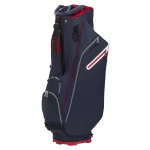 Lightweight Cart Bag
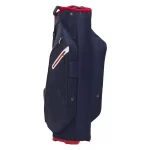 Waterproof Cart Bag
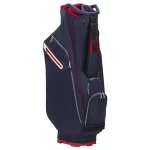 Staff Cart Bag
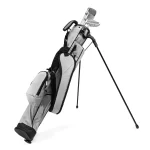 Classic Sunday Carry Bag
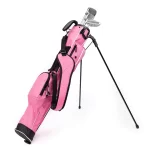 Ultra-Light Sunday Bag
Need custom golf bags? Contact us for OEM/ODM quotes — MOQ 100pcs, FOB Xiamen.