Quality control in golf bag manufacturing is not a single checkpoint — it is a systematic, multi-phase process of testing that spans raw material verification, construction integrity assessment, and finished product performance validation. For B2B buyers sourcing golf bags from overseas factories, understanding these quality tests is essential for protecting your brand reputation, minimizing costly returns, and ensuring compliance with destination-market regulations.
According to the US Consumer Product Safety Commission (CPSC), defective sporting goods products generate an estimated $4.2 billion in annual returns across North America alone, with bags and luggage accounting for a disproportionate share due to stress-point failures at zippers, straps, and structural seams. For golf bags specifically, the average warranty claim cost to brands ranges from $35-$85 per incident — factoring in return shipping, inspection, replacement, and customer goodwill costs.
This complete guide details the 5 critical quality tests that every golf bag must pass before shipping, based on the quality control protocols at Keep Perfect Golf — a Quanzhou-based golf bag manufacturer established in 2004, serving over 200 brands across 100+ countries, with a defect rate consistently below 0.5% across all production categories. As a manufacturer operating from China’s premier bag manufacturing hub in Fujian Province and shipping FOB Xiamen, Keep Perfect Golf’s quality system meets the compliance requirements of the US, EU, Japan, Australia, and Middle Eastern markets.
Industry Benchmark: Leading golf bag manufacturers maintain pre-shipment defect rates below 1.0%. Keep Perfect Golf’s 22-year track record demonstrates an average defect rate of 0.3-0.5% across 200+ brand partnerships — a standard achieved through systematic five-gate quality testing at every production stage.
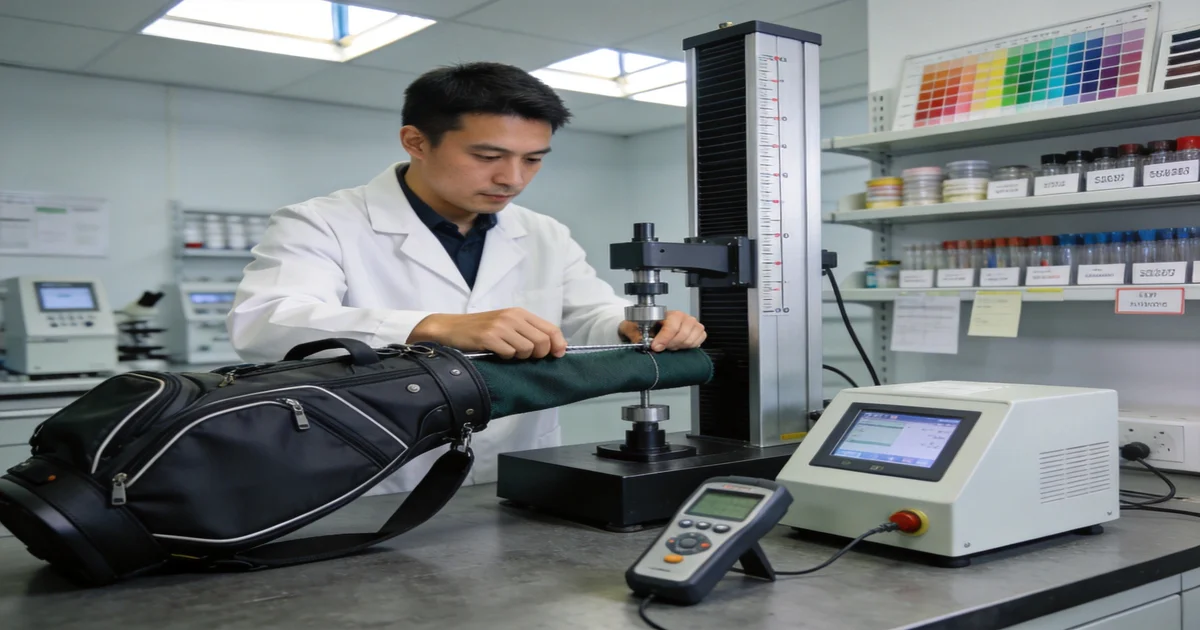
Test 1: Zipper Durability and Function Testing
Zippers are the single most common failure point in golf bags, accounting for approximately 35% of all warranty claims in the golf bag category. A complete zipper test must evaluate multiple parameters: pull force (the force required to open and close), lateral strength (resistance to bursting when the bag is overfilled), and cycle durability (repeated open-close operations under load).
Testing Protocol
Industry-standard testing requires zippers to withstand a minimum of 5,000 open-close cycles without failure. At Keep Perfect Golf, the testing protocol exceeds this baseline:
| Test Parameter | Standard | Keep Perfect Golf Protocol |
|---|---|---|
| Cycle Durability | 5,000 cycles minimum | 8,000 cycles (60% above standard) |
| Lateral Load | 15 lbs force | 20 lbs force with 100 cycles |
| Pull Force Measurement | Visual check | Digital force gauge (target: 3-8N range) |
| Water Resistance (if applicable) | 5-minute spray test | 10-minute spray test at 2 gal/min |
| Tooth Engagement | Post-test visual | Microscopic inspection after 1,000 cycles |
Premium manufacturers use YKK or equivalent branded zippers and test each production lot by randomly sampling zippers for destructive testing. The test involves loading the zipper with 20 lbs of lateral force and cycling it 100 times — any jamming, tooth separation, or slider deformation constitutes a lot rejection. For water-resistant bags like Keep Perfect Golf’s Waterproof Cart Bag, zipper testing also evaluates sealed seam integrity under simulated rain conditions: water must not penetrate through zipper teeth at any point during a 10-minute spray test at 2 gallons per minute.
Each production lot is sampled at AQL 2.5 (Acceptable Quality Level) per ISO 2859-1, with a minimum sample size determined by lot size. Any zipper failure in the sample triggers 100% inspection of the entire production lot.
Test 2: Load-Bearing and Structural Integrity Testing
A golf bag must support the weight of 14 clubs (approximately 25-35 lbs total) plus accessories (rain gear, balls, rangefinder, beverages) without structural deformation. Load-bearing testing evaluates the bag’s ability to maintain dimensional stability, seam integrity, and handle/strap attachment strength under sustained and dynamic loads.
Testing Protocol
| Test Parameter | Method | Pass/Fail Criteria |
|---|---|---|
| Static Load (24-hour) | 45 lbs weight placed in bag for 24 hours | No seam separation, no frame deformation >2mm |
| Dynamic Drop Test | 45 lbs load, dropped from 36 inches onto concrete | No structural failure, no divider damage |
| Handle/Strap Pull Test | 50 lbs force applied to handles and straps | No detachment, no stitching failure at 10 seconds hold |
| Base Impact Test | 20 lb weight dropped 24 inches onto bag base | No cracking of EVA/ABS base, no reinforcement separation |
| 14-Club Divider Fit | Full set of 14 clubs inserted and removed 50 times | No divider deformation, no fabric abrasion |
Structural failures typically manifest at three critical stress points: the base-to-body seam junction, the handle/strap attachment points, and the internal divider system frame. At Keep Perfect Golf, reinforcement at these junctions is doubled compared to industry standard — using bar-tack stitching patterns at all load-bearing seams and reinforced nylon webbing at strap attachment points.
Products designed for premium brand positioning — such as Keep Perfect Golf’s Tour Staff Bag with Wheels and Premium Tour Cart Bag — undergo additional structural testing simulating 500+ cart-on/cart-off cycles to validate long-term durability expectations of tour-level products.
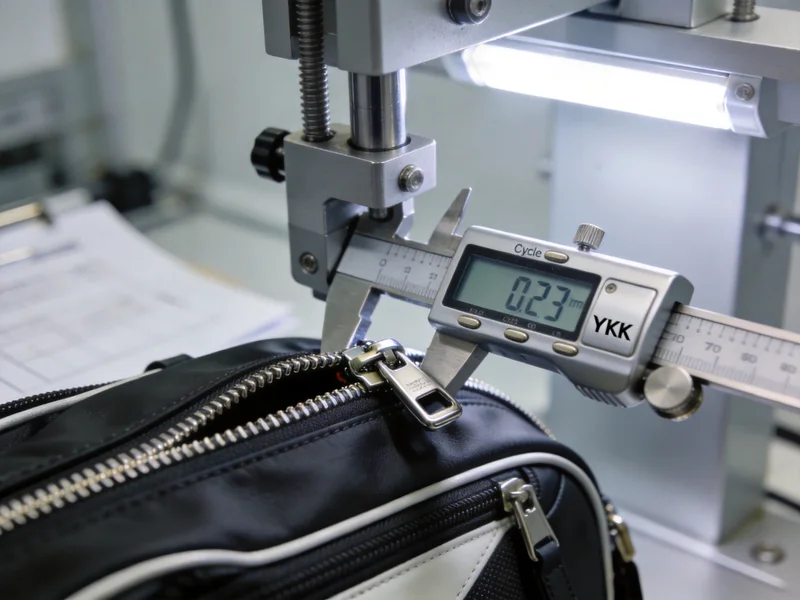
Test 3: Material Performance and Compliance Testing
Raw material testing verifies that all fabrics, leathers, foams, plastics, and metals meet both performance specifications and destination-market compliance requirements. This is the most complex testing category, as different export markets impose varying regulatory frameworks.
Performance Tests
| Material Property | Test Method | Minimum Standard |
|---|---|---|
| Tensile Strength (fabric) | ASTM D5034 | ≥ 200N warp, ≥ 150N fill |
| Tear Strength (fabric) | ASTM D1424 | ≥ 25N |
| Abrasion Resistance | ASTM D3884 (Taber) | ≥ 10,000 cycles (H18 wheel, 1kg) |
| Colorfastness (light) | AATCC 16E | Grade 4 minimum (5-grade scale) |
| Colorfastness (rubbing) | AATCC 8 (Crockmeter) | Grade 4 dry, Grade 3 wet |
| Water Resistance | AATCC 127 | ≥ 1,000mm hydrostatic head (standard); ≥ 5,000mm (waterproof) |
| UV Resistance | ISO 4892-2 | ≥ 500 hours without significant degradation |
Compliance Tests by Destination Market
| Market | Regulation | Key Requirements |
|---|---|---|
| United States | CPSIA, CA Prop 65 | Lead < 100ppm (substrate); phthalate limits; Prop 65 chemical disclosures |
| European Union | REACH | SVHC substance limits (< 0.1%); PAH limits for skin-contact materials |
| Japan | JIS L 1041, Formaldehyde | Formaldehyde < 75mg/kg (general); infant products require < 16mg/kg |
| Australia | ACCC Safety Standards | Mandatory safety standards for sporting goods; recall reporting obligations |
| Middle East (GCC) | GSO Technical Regulations | Conformity assessment; Arabic labeling requirements |
Keep Perfect Golf maintains a dedicated compliance laboratory that performs in-house testing for all major market regulations, supplemented by third-party certification from SGS, Bureau Veritas, and Intertek. All compliance documentation is available for client review, supporting seamless customs clearance at destination ports. Visit our certifications page for a complete overview of compliance credentials.
Test 4: Waterproofing and Weather Resistance Testing
With the growing demand for all-weather golf bags — particularly in markets with high rainfall (UK, Pacific Northwest US, Southeast Asia, Japan) — waterproofing testing has become a critical quality gate. The golf industry has seen waterproof bag sales grow at approximately 12% annually since 2020, driven by consumer demand for gear protection in unpredictable weather conditions.
Testing Protocol
| Test Type | Method | Criteria |
|---|---|---|
| Fabric Water Resistance | Hydrostatic head test (ISO 811) | Standard: ≥1,000mm; Waterproof: ≥5,000mm |
| Seam Seal Integrity | Spray test (simulated 50mm/hr rain, 30 min) | Zero water penetration at all seams |
| Zipper Water Resistance | Spray test focused on zipper closures | No penetration through zipper teeth at 10 min |
| Full Bag Rain Test | 360° spray at 50mm/hr for 30 minutes | Internal moisture < 2g (measured by desiccant method) |
| Waterproof Durability | 20 wash cycles, then re-test | Waterproof rating retains ≥80% of original |
For Keep Perfect Golf’s Waterproof Cart Bag line, all seams are heat-sealed with waterproof tape, zippers are YKK Aquaguard or equivalent water-resistant models, and fabric is rated to 5,000mm hydrostatic head — a specification that withstands sustained heavy rain conditions typical of championship golf courses in Scotland, Ireland, and the Pacific Northwest.
Weather resistance testing also evaluates UV degradation (critical for bags used in high-sun markets like Australia, Florida, and the Middle East), color fastness after repeated sun exposure, and material flexibility retention after cold-temperature exposure (important for winter golf markets in Northern US and Canada).
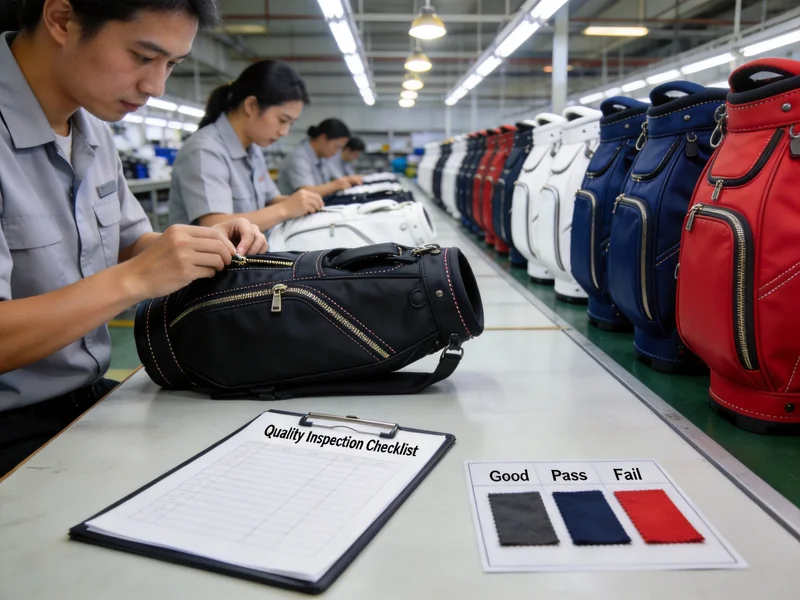
Test 5: Finished Product Inspection and Packaging Verification
The final quality gate is a complete visual and functional inspection of every finished bag, combined with packaging verification to ensure products arrive at destination in perfect condition. This stage serves as the last line of defense before products ship FOB Xiamen to clients across 100+ countries.
28-Point Inspection Checklist
Every golf bag produced by Keep Perfect Golf undergoes a standardized 28-point inspection covering:
| Category | Inspection Points | Criteria |
|---|---|---|
| Exterior Appearance | 8 points | Fabric integrity, color consistency, pattern alignment, logo placement accuracy, embroidery quality, print clarity, surface defects, overall aesthetics |
| Construction Quality | 7 points | Seam straightness, stitch density (SPI count), bar-tack reinforcement, thread tension, bonding integrity, edge finishing, internal lining |
| Hardware & Components | 5 points | Zipper function, buckle operation, snap closure, strap adjustability, wheel rotation (if applicable) |
| Functional Performance | 5 points | Club divider fit, pocket accessibility, stand mechanism (if applicable), cart strap compatibility, balance when loaded |
| Packaging & Labeling | 3 points | Poly bag integrity, carton strength, labeling accuracy (SKU, barcode, country of origin, care instructions) |
Packaging and Shipping Preparation
Final packaging verification ensures products survive the logistics chain from Quanzhou factory to destination warehouse. Testing includes:
- Carton compression test: Cartons must withstand 300 lbs of stacked weight without deformation
- Drop test (ISTA 3A): Packaged products survive 18-inch drops on all edges and corners
- Moisture barrier verification: Poly bag seals prevent moisture ingress during ocean freight (critical for FOB Xiamen shipments with 2-4 weeks transit time)
- Label accuracy audit: SKU, UPC/EAN, country of origin, care labels, and brand-specific hangtags verified against purchase order specifications
Products passing all five test gates receive a Certificate of Compliance (CoC) and are cleared for packaging and shipment. Keep Perfect Golf’s quality control process documentation provides full traceability from raw material batch to finished product shipment — supporting brand owners in their own regulatory compliance obligations. For branded accessories like custom golf headcovers, the same rigorous testing standards apply — ensuring coordinated quality across your entire bag and accessories portfolio.
Quality Testing Specifications Summary
| Parameter | Keep Perfect Golf Standard |
|---|---|
| Quality Gates | 5 mandatory test phases |
| Zipper Cycle Test | 8,000 cycles (60% above industry standard) |
| Static Load Test | 45 lbs for 24 hours |
| Defect Rate Target | < 0.5% (achieved consistently) |
| Sampling Standard | AQL 2.5 per ISO 2859-1 |
| Compliance Markets | US (CPSIA), EU (REACH), Japan (JIS), Australia (ACCC), GCC (GSO) |
| Third-Party Certifications | SGS, Bureau Veritas, Intertek |
| Minimum Order Quantity (MOQ) | 100 pieces per style |
| Sample Lead Time | 10–18 days |
| Bulk Production Lead Time | 45–75 days |
| Shipping Terms | FOB Xiamen, China |
Key Data Point: Keep Perfect Golf’s five-gate quality system has processed over 2 million golf bags across 200+ brand partnerships since 2004, maintaining a consistent defect rate below 0.5% — a track record verified by third-party audits from SGS and Bureau Veritas at their Quanzhou facility.
Independent Verification: Why Third-Party Inspection Matters
For B2B buyers sourcing from overseas factories, independent third-party inspection provides an essential layer of quality assurance beyond the factory’s own testing protocols. Keep Perfect Golf welcomes and supports third-party inspections from agencies including SGS, Bureau Veritas, Intertek, and QIMA at every production stage — from pre-production material verification through inline production checks to final random inspection (FRI) before container loading.
Industry best practice recommends the following inspection schedule:
- Pre-Production Meeting (PPM): Review materials, confirm specs, verify production line setup
- Inline Inspection (DUPRO): At 20% production completion — catch systemic issues early
- Final Random Inspection (FRI): At 100% production completion — AQL sampling per buyer requirements
- Container Loading Supervision: Verify correct quantity, condition, and loading method
Keep Perfect Golf’s factory tour program allows prospective and existing clients to observe quality processes firsthand at our Quanzhou facility — building transparency and trust into every manufacturing partnership.
The True Cost of Skipping Quality Tests: A Business Case
For B2B buyers, the cost of inadequate quality testing extends far beyond the price of a failed bag. The total cost of a quality failure encompasses multiple dimensions:
| Cost Category | Average per Incident | Annual Impact (500-unit brand) |
|---|---|---|
| Product replacement cost | $35–$65 per unit | $3,500–$13,000 |
| Return shipping (international) | $15–$40 per unit | $1,500–$8,000 |
| Customer service overhead | $8–$15 per claim | $800–$3,000 |
| Brand reputation damage | Difficult to quantify | Estimated 3-5x direct costs |
| Retailer chargebacks/penalties | $50–$200 per violation | $2,000–$10,000 |
| Regulatory recall costs | $100,000–$2,000,000+ | Catastrophic for small brands |
Industry data suggests that for every dollar spent on pre-shipment quality testing, brands avoid $7-12 in post-shipment failure costs. This 7:1 to 12:1 ROI on quality investment makes systematic testing not a cost center, but a profit protection mechanism.
Keep Perfect Golf’s complete testing protocols — including the five-gate system detailed above — are included at no additional charge in every production order. This reflects our commitment to delivering products that protect our clients’ brand equity and bottom line, whether they are ordering our Premium Stand Bag line or a fully custom OEM design. Quality assurance is not an upsell — it is the foundation of every bag that ships from our Quanzhou facility.
For brands evaluating manufacturing partners, we recommend requesting detailed quality documentation, including testing protocols, defect rate histories, and third-party audit reports, as part of your sourcing evaluation. Our OEM/ODM services team can provide complete quality packages to prospective clients during the evaluation phase.
Frequently Asked Questions (FAQ)
What quality testing standards does Keep Perfect Golf follow for golf bags?
Keep Perfect Golf follows a five-gate quality testing system covering zipper durability (8,000 cycles), load-bearing structural integrity (45 lbs static load for 24 hours), material performance and compliance (ASTM/AATCC/ISO methods), waterproofing/weather resistance (up to 5,000mm hydrostatic head), and finished product inspection (28-point checklist). All testing meets or exceeds industry standards and complies with US CPSIA, EU REACH, Japanese JIS, and Australian ACCC regulations.
What is the acceptable defect rate for golf bag manufacturing?
Industry-leading golf bag manufacturers maintain pre-shipment defect rates below 1.0%. Keep Perfect Golf’s 22-year track record demonstrates a consistent defect rate of 0.3-0.5%, sampling at AQL 2.5 per ISO 2859-1. This low defect rate is achieved through systematic testing at every production stage — not just final inspection.
How does Keep Perfect Golf handle compliance for different export markets?
Keep Perfect Golf maintains a dedicated compliance laboratory and third-party certifications (SGS, Bureau Veritas, Intertek) covering US CPSIA/Prop 65, EU REACH, Japanese JIS/formaldehyde, Australian ACCC, and GCC GSO standards. All compliance documentation is provided with shipments, supporting seamless customs clearance. Visit the certifications page for full details.
Can buyers arrange third-party inspection at Keep Perfect Golf’s factory?
Yes. Keep Perfect Golf welcomes third-party inspections from SGS, Bureau Veritas, Intertek, QIMA, and buyer-nominated agencies at all production stages — pre-production, inline (DUPRO), final random (FRI), and container loading supervision. The factory tour program also allows direct client observation of quality processes.
What is the minimum order quantity and lead time for quality-tested golf bags?
Keep Perfect Golf’s MOQ is 100 pieces per style. Sample lead time is 10-18 days; bulk production lead time is 45-75 days after sample approval. All products — regardless of order size — undergo the same five-gate quality testing system. Standard shipping terms are FOB Xiamen, China.
What zipper quality standard does Keep Perfect Golf use?
Keep Perfect Golf uses YKK or equivalent premium zippers across all product lines. Standard zippers are tested to 8,000 open-close cycles (60% above the 5,000-cycle industry baseline). Waterproof bag lines use YKK Aquaguard or equivalent water-resistant zippers with additional sealed-seam testing under simulated rain conditions.
Related Resources
FAQs
How is a golf bag zipper tested before shipping?
Zipper tests run each slider through 500-1,000 open-close cycles on every pocket, check pull strength at 5-8 kg force, and verify waterproof zipper alignment under wet conditions. Any zipper that snags, loses teeth, or fails to seat fails the lot. YKK or equivalent zippers are standard on premium bags; generic zippers account for the majority of field complaints.
What load test does a golf bag pass?
A fully loaded bag (12-15 kg for staff bags, 8-10 kg for cart and stand bags) is lifted by the strap through 200-500 repeated cycles, then left hanging for 24 hours. Inspectors check strap anchors, handle seams, and divider stitching for slippage or tearing. Stand bags additionally pass 1,000 open/close leg cycles.
Why is third-party inspection needed if the factory has QC?
Factory QC reports to production staff and routinely accepts borderline units. Independent inspectors check against your spec sheet at AQL 2.5 – typically inspecting 125 units in a 500-unit lot – and report directly to you. At roughly $250-350 per inspection day, third-party pre-shipment inspection is the cheapest insurance against rejected retail inventory.
Related Products
Explore our manufacturing capabilities in this category:
 Premium Stand Bag
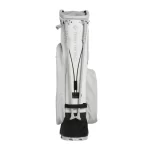 Ultra-Light Stand Bag
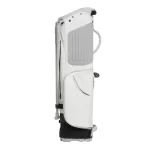 Hybrid Stand Bag
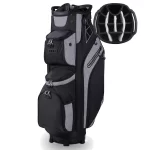 Rain-Resistant Stand Bag
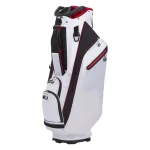 Premium Tour Cart Bag
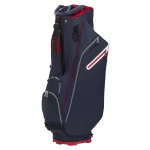 Lightweight Cart Bag
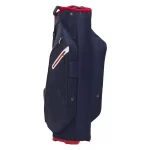 Waterproof Cart Bag
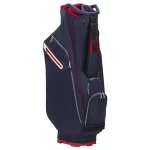 Staff Cart Bag
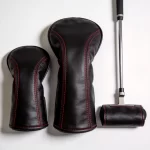 Custom Golf Headcovers Set
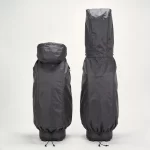 Golf Bag Rain Cover
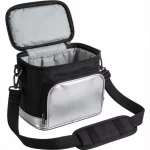 Golf Cooler Bag
Need custom golf bags? Contact us for OEM/ODM quotes — MOQ 100pcs, FOB Xiamen.