The demand for golf bags is surging across Asia and Africa, driven by growing middle-class incomes, infrastructure development, and a younger, more diverse golf demographic. Key highlights:
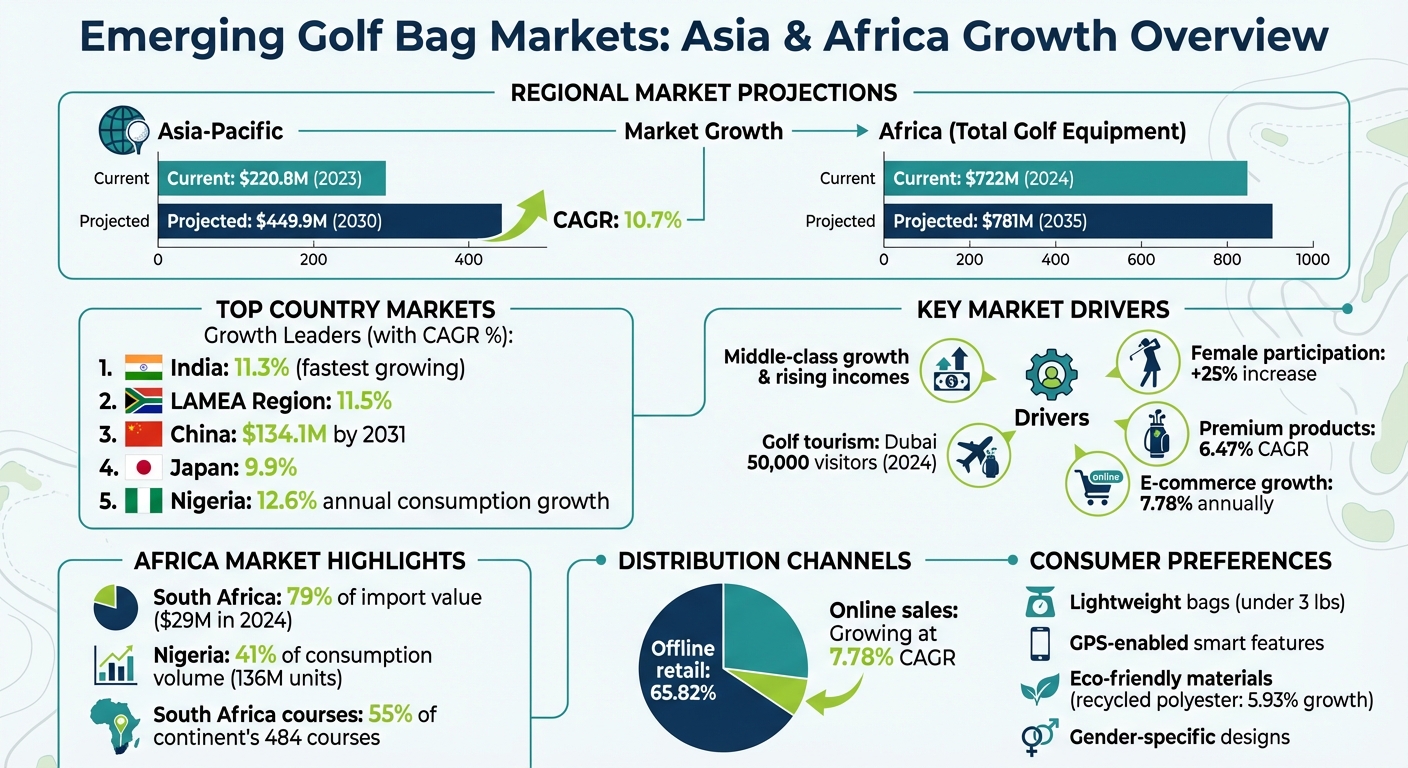
- Asia-Pacific Growth: Expected to hit $449.9M by 2030, led by India (11.3% CAGR) and China ($134.1M by 2031). Lightweight and tech-savvy bags dominate preferences.
- Africa’s Expansion: Golf equipment reached $722M in 2024, with South Africa leading imports ($29M). Nigeria is the largest consumer by volume, growing 12.6% annually.
- Drivers of Demand: Rising female participation (+25%), golf tourism (e.g., Dubai with 50,000 visitors in 2024), and premium product trends like GPS-enabled bags.
- E-commerce Growth: Online sales are growing at 7.78% annually, while offline retail still holds 65.82% of the market.
Key Insight: Manufacturers targeting these regions should focus on tailored designs, partnerships for distribution, and leveraging online platforms to meet evolving consumer needs.
Golf Bag Market Growth in Asia and Africa: Key Statistics and Projections 2024-2031
Golf’s growth potential in the Chinese market
Golf Bag Market Opportunities in Asia
Asia is quickly becoming a hotspot for golf bag manufacturers, with the market expected to hit $449.9 million by 2030. The region’s diverse economies present a range of opportunities, from China’s urban expansion to Japan’s demand for premium products. Here’s a closer look at some of the key markets driving this growth.
China’s Expanding Golf Equipment Market
China leads the way in Asia’s golf bag market, with projections estimating it will reach $134.1 million by 2031. The country’s rapid urbanization and heavy investments in sports infrastructure are fueling the development of new golf facilities in major cities, making the sport more accessible to a growing middle class. Adding to this momentum, China’s strong network of OEM clusters allows manufacturers to quickly adapt to evolving design trends and maintain shorter production timelines. Current consumer preferences lean toward premium golf bags that double as status symbols and incorporate modern technologies.
India’s Emerging Golf Scene
India is quickly gaining traction as a rising star in the Asian golf market. With an anticipated CAGR of 11.3% through 2031, it is the fastest-growing market in the region. This growth is being driven by nationwide infrastructure development, which is increasing access to the sport. Indian golfers tend to favor hard-shell golf bags made from impact-resistant materials like high-density polyethylene, prioritizing durability for travel. By 2031, the market is expected to see the use of 145,420 units of hard-shell bags, supported by young professionals and an expanding middle class that values both functionality and style.
Japan and South Korea: Mature Markets with High Demand
Japan and South Korea are well-established golf markets with highly discerning consumers. As of May 2024, Japan boasted approximately 8.67 million golf participants, with the highest per capita consumption in the region at 2.7 units per person. In South Korea, the per capita consumption is slightly lower at 2.3 units, but the country’s golf tournament revenues exceeded $500 million in 2024. These markets are at the forefront of premium product innovation. For instance, Titleist introduced the Players 4 Carbon Stand Bag in March 2025 – a lightweight model under three pounds, featuring carbon fiber legs for golfers who prefer walking the course.
In both countries, golf bags are seen as more than just equipment – they’re status symbols. Consumers are willing to invest in high-quality, tech-forward designs. Additionally, the success of professional female golfers in the region is encouraging manufacturers to create gender-specific designs, focusing on lighter weights and ergonomic features to meet their needs.
Golf Bag Market Opportunities in Africa
Africa’s golf equipment market is on an upward trajectory, with projections estimating it will reach $781 million by 2035. This growth is fueled by a mix of rising disposable incomes, improved infrastructure, and the increasing appeal of golf tourism across the continent. These factors present a promising landscape for manufacturers looking to tap into new opportunities.
South Africa’s Leading Role in African Golf
South Africa stands out as the powerhouse of golf in Africa, boasting 55% of the continent’s 484 golf courses. Acting as the main entry point and distribution hub, South Africa accounts for 79% of Africa’s total golf equipment import value, projected to reach $29 million in 2024. By 2030, its golf equipment market is expected to grow to $192.3 million, with a steady CAGR of 2.6%.
Golf tourism plays a significant role in driving demand within South Africa. By 2030, revenue from golf tourism is forecasted to hit $311.6 million, growing at a robust CAGR of 6.9%. This has led to consistent demand for high-quality travel and tour bags designed to protect golf clubs during international travel. South African consumers also lean toward premium products, with the average import price of golf equipment reaching $6.4 per unit, nearly double the African average of $3.3. Among product categories, the "Golf Gear" segment – which includes bags – has emerged as the fastest-growing and most lucrative in the market.
Growth in Nigeria and Egypt’s Golf Markets
While South Africa leads the way, other countries like Nigeria and Egypt are also making strides in the golf market. Nigeria, for instance, is Africa’s largest consumer of golf equipment by volume, accounting for 41% of the continent’s market with 136 million units consumed in 2024. The country also plays a key role in production, handling 42% of Africa’s golf equipment manufacturing volume. Nigeria’s annual consumption is growing at an impressive 12.6%, driven by the rise of its middle class and increasing urbanization.
Emerging markets such as Tanzania, Kenya, and Egypt are also showing strong potential. In 2024, these countries recorded per capita consumption rates of around 590–600 units per 1,000 people. Tanzania’s market is expanding at 11.3% annually, while Kenya is growing at 10.4%. As golf infrastructure develops and e-commerce platforms make specialized golf bags more accessible, these markets are becoming increasingly attractive for manufacturers and retailers.
Factors Driving Golf Bag Demand
Middle-Class Growth and Rising Incomes
The rise of the middle class in regions like Asia and Africa is transforming the golf landscape. As disposable incomes increase, more individuals are able to take up golf as a leisure activity, leading to a noticeable uptick in the number of golfers in these areas.
This financial growth is also fueling demand for high-end, customized golf bags that go beyond mere functionality. For many middle-class consumers, a golf bag has become a way to showcase personal style and identity. This trend toward premium products is evident in the market’s growth, with premium golf bags expected to grow at an annual rate of 6.47% through 2030. These upscale bags often come with price tags that are up to 40% higher than standard models.
Demographic changes are adding to this demand. Female participation in golf has surged by 25%, while younger players are embracing the sport in unprecedented numbers. This shift has created interest in gender-specific designs, youth-focused aesthetics, and personalized features. Additionally, the development of new golf facilities is making the sport more accessible, further boosting the market for specialized golf bags.
Golf Course Development and Infrastructure Growth
The expansion of golf infrastructure is another key driver of demand, particularly in the Asia-Pacific region. Here, the golf bag market is projected to grow at an annual rate between 7.56% and 10.8% through 2030. India is leading the charge with a forecasted growth rate of 11.3% from 2024 to 2031, largely due to ambitious golf course development projects.
In October 2024, the PGA of America announced a partnership with Indian firms to develop PGA-branded courses in cities like Hyderabad. Similar efforts are underway in other emerging markets. Vietnam, for instance, saw a boom in international golf course projects in 2024 and 2025, while Saudi Arabia plans to open the Shura Links golf course in 2025.
These new facilities not only make golf more accessible but also drive equipment sales through their on-site pro shops. For instance, the global cart bag segment is expected to grow from $427 million in 2023 to $752 million by 2032. Partnerships like the one between MGI Golf and Troon in 2024, which integrates electric caddies and compatible cart bags into over 900 properties globally, further highlight this trend.
Growing Golf Awareness and Access
Golf’s growing visibility, fueled by media coverage, social media, and major tournaments, is attracting new audiences. The global number of registered golfers jumped from 3.1 million in 2021 to 8.0 million in 2023, showcasing how increased exposure is turning spectators into active participants. In regions like Africa and the Middle East, golf is often associated with status and success, which drives interest in premium, customized gear.
"Golfers often view equipment, including bags, as extensions of personal brand and identity on the course." – Grand View Research
The rise of younger players and a growing number of women, who now make up 26% of golfers, is reshaping market demands. These groups prioritize style, personalization, and advanced features like GPS trackers and USB charging ports. Casual venues like Topgolf are also playing a role by introducing the sport to new players, many of whom eventually invest in specialized equipment.
Sustainability is another emerging factor. Companies like Minimal Golf are addressing environmental concerns by producing bags from recycled materials like SeaWastex nylon. Meanwhile, the growth of e-commerce is making it easier for players to access specialized and personalized golf bags. For example, Brazil’s online golf equipment market is expanding at a rate of 14.3%, with similar trends observed across the Asia-Pacific region.
sbb-itb-4fa7e8b
How to Enter Emerging Golf Bag Markets
Breaking into new markets for golf bags requires a mix of three key strategies: designing products that cater to local preferences, forming strategic partnerships, and leveraging a well-rounded distribution approach. Together, these strategies address regional demands while building long-term growth opportunities.
Customizing Golf Bag Designs for Local Markets
Understanding local preferences is essential for creating products that resonate. For example, in Asia-Pacific, golfers often walk the course, making lightweight stand bags (under 3 pounds) with ergonomic straps the go-to choice. Meanwhile, in regions like the Middle East and Africa, tour bags and travel bags are gaining popularity, especially among golf tourists and status-conscious players. Saudi Arabia alone is projected to use around 10,090 tour bags by 2031.
Material selection also plays a significant role. Nylon, which accounted for 47.74% of the market share in 2024, remains a popular choice, but recycled polyester is catching on, growing at an annual rate of 5.93% as eco-friendly options gain traction. In tropical regions, waterproof materials and seam-sealed zippers are must-haves to combat unpredictable weather.
The rise in female participation in golf – up 25% globally – has driven demand for smaller, lighter bags in vibrant colors. Millennials, on the other hand, are drawn to smart features like GPS trackers, USB charging ports, and waterproof compartments, viewing their golf bags as an extension of their identity. Digital customization tools, offering options for personalized colors, patterns, and monograms, tap into this growing trend.
By aligning designs with these trends, brands can create a strong foundation for market entry.
Using Trade Fairs and Business Partnerships
Forming strategic partnerships is a fast track to accessing established networks. For instance, in December 2024, MGI Golf teamed up with Troon to bring its electric caddies and compatible bags to over 900 properties worldwide. Similarly, the PGA of America partnered with Indian firms to develop PGA-branded courses in cities like Hyderabad, opening doors to new markets.
"Strategic partnerships are becoming pivotal differentiators in the market." – Mordor Intelligence
Sponsoring professional tournaments further boosts brand visibility. Titleist’s LINKSLEGEND Series, launched in August 2023, is a prime example. The product was developed in collaboration with caddies, players, and PGA professionals to meet high-performance standards. Partnerships also help navigate local regulations and logistics. For example, Vessel Golf joined forces with the U.K.-based 6EZ Group in December 2022 to streamline licensing, wholesale, and e-commerce operations for its U.K. expansion.
While partnerships open doors, a strong distribution strategy ensures products reach the right audience.
E-Commerce and Local Distribution Methods
E-commerce is reshaping how golfers buy equipment, with online sales of golf bags expected to grow at a compound annual rate of 7.78% through 2030. Brazil’s online golf market reflects this trend, expanding at 14.3% and projected to surpass $200 billion by 2026. However, offline retail still holds a significant 65.82% share, as many golfers prefer to see and test products in person.
A successful distribution strategy blends online and offline channels. Key approaches include:
- On-course pro shops: Perfect for golfers looking to make immediate purchases during play, especially in emerging markets like Nigeria and Vietnam.
- Specialty retailers: Ideal for high-end or technical bags, offering expert advice and hands-on evaluations.
- Direct-to-consumer (DTC) models: Brands like Minimal Golf are bypassing traditional retail. In June 2025, they launched the M Comp bag – made from recycled SeaWastex nylon – through a direct online strategy targeting eco-conscious golfers in Europe and beyond.
- E-commerce platforms: Particularly effective for younger, tech-savvy consumers, these platforms enable price comparisons and customization. In markets like India and Brazil, where internet use is high, mobile-friendly sites integrated with social media reviews are crucial.
| Distribution Approach | Best For | Key Advantage |
|---|---|---|
| On-Course Pro Shops | Golfers seeking convenience | Immediate access during play |
| E-Commerce Platforms | Younger, tech-savvy buyers | Customization and price comparison |
| Specialty Retailers | Premium or technical purchases | Expert guidance and hands-on experience |
| DTC Online Models | Eco-friendly or personalized products | Direct connection with customers |
Combining these channels ensures a broad reach while catering to diverse customer preferences.
Market Data and Growth Projections
The following data provides a closer look at regional growth patterns and future market projections, building on earlier trends.
Market Share and Growth Rates by Region
The golf bag market in the Asia Pacific region is experiencing robust growth, rising from $220.8 million in 2023 to an anticipated $449.9 million by 2030, with a CAGR of 10.7%. China leads this growth, with projections estimating its market will reach $134.1 million by 2031. Meanwhile, India is emerging as the fastest-growing market in the region, with an expected CAGR of 11.3% between 2024 and 2031. Japan follows closely behind, with a growth rate of 9.9% for the same period.
In Africa, the golf equipment market reached $722 million in 2024. Nigeria accounted for 136 million units, representing 41% of the region’s total consumption, while Algeria led in market value at $388 million. Across the broader LAMEA (Latin America, Middle East, and Africa) region, the golf bag market is set to grow at a CAGR of 11.5% from 2024 to 2031.
The popularity of golf in Asia is also on the rise, with the number of registered golfers increasing from 13.89 million in 2016 to 16.15 million in 2022. Custom and premium golf bags continue to outperform standard models, growing at a CAGR of 6.47%.
Market Comparison Tables
| Region/Country | Market Value/Revenue | Projected CAGR | Key Growth Driver |
|---|---|---|---|
| Asia Pacific | $220.8M (2023) → $449.9M (2030) | 10.7% | Increasing disposable income and middle-class expansion |
| China | $134.1M (by 2031) | 10.4% | Leading market position and infrastructure improvements |
| India | – | 11.3% | Growing golf community and urban development |
| Japan | – | 9.9% | Established golf culture and economic stability |
| LAMEA | – | 11.5% | Urbanization and new golf course projects |
| Africa (Total Equipment) | $722M (2024) | – | Driven by Nigeria’s high consumption levels |
South Africa plays a significant role as a major import hub, bringing in $29 million worth of golf equipment in 2024. This accounts for 79% of the continent’s total import value. The average import price for golf equipment in Africa was $3.3 per unit in 2024, with South Africa commanding the highest prices at $6.4 per unit.
This detailed data highlights the promising growth opportunities in both Asia and Africa, aligning with the market entry strategies previously discussed.
Conclusion
The golf bag market in Asia and Africa presents exciting growth opportunities for manufacturers willing to adapt to local preferences and conditions. By 2030, the Asia Pacific market is expected to hit $449.9 million, with India leading the charge at an 11.3% compound annual growth rate (CAGR). Meanwhile, the LAMEA region is projected to grow at an impressive 11.5% rate through 2031. These numbers highlight the influence of a growing middle class, new golf infrastructure, and increased interest in the sport.
To thrive in these regions, manufacturers need to focus on targeted product innovations. Lightweight, high-performance bags designed for on-course use are gaining traction. Similarly, eco-conscious consumers are drawn to bags made with recycled materials, while gender-specific designs cater to evolving preferences. These shifting demands offer a clear direction for product development and distribution strategies.
An effective sales strategy requires balancing offline and online channels. Offline retail still dominates, accounting for 65.82% of market share. However, e-commerce is expanding at a steady 7.78% annual rate, opening up opportunities in underserved areas. Partnering with local retailers has proven successful for securing spots in high-visibility pro shops.
The premium segment is another area ripe for growth. Custom and high-end golf bags are growing at a 6.47% CAGR. In affluent markets like South Africa, tour bags and staff bags are popular, as consumers often prioritize quality and status. On the other hand, regions like Nigeria, which accounts for 41% of Africa’s golf equipment volume, present opportunities to cater to high-demand, cost-sensitive consumers.
To capture these opportunities, manufacturers should focus on key markets such as India, China, South Africa, and Nigeria. Tailoring designs to local preferences, understanding regional pricing dynamics, and forming strategic partnerships will be essential for success. By addressing these factors, manufacturers can effectively navigate the unique challenges and opportunities in these emerging regions.
FAQs
What is driving the growing demand for golf bags in Asia and Africa?
The interest in golf is steadily increasing across Asia and Africa, fueled by a mix of factors. Golf is gaining traction not just as a relaxing pastime but also as a competitive sport. Add to that the growth of middle-class populations with more disposable income and the rise of golf tourism, and it’s clear why these regions are becoming key markets for golf equipment.
One particular trend is the growing demand for golf bags that are durable, lightweight, and easy to travel with. Players are looking for gear that fits seamlessly into their active lifestyles. This opens up opportunities for manufacturers to tap into these markets by creating designs tailored to local tastes and preferences. Building partnerships or hosting events could also help brands establish a solid foothold in these rapidly evolving regions.
How can golf bag manufacturers adapt their products for emerging markets in Asia and Africa?
Manufacturers looking to tap into emerging markets for golf bags should focus on aligning their products with local tastes and practical needs. Think about incorporating regionally inspired colors, patterns, and materials that resonate with local buyers. At the same time, designing bags that are lightweight, durable, and weather-resistant ensures they can handle diverse climates and everyday use.
Another way to make an impact is by offering customizable features that suit individual preferences and lifestyles. Participating in local trade fairs or collaborating with regional distributors can also provide valuable insights into market demands while fostering meaningful connections within these communities.
How is e-commerce shaping the distribution of golf bags in Asia and Africa?
E-commerce is reshaping the way golf bags are sold in regions like Asia and Africa. By leveraging online platforms, manufacturers can connect with a wider audience without depending entirely on physical stores. This is particularly beneficial in areas where retail options are limited or where shopping online is simply more practical.
These platforms allow brands to showcase personalized designs, highlight their latest products, and cater to specific local tastes with greater precision. Plus, businesses can respond to changing market trends more swiftly, helping them grow their footprint in these expanding markets. In short, e-commerce opens up new opportunities to make golf bags more accessible, reach more customers, and introduce fresh designs tailored to these regions.
Related Blog Posts
- Top 10 Personalized Golf Bag Designs in 2025: Trends & Inspiration
- Emerging Trends in Golf Bag Design and Technology for 2024: What’s Next?
- Why Vietnam & China Dominate Global Golf Bag Manufacturing?
- Lightweight Stand Bags: Innovation Trends from Golf Bag Factories
Related Resources
Related Products
Explore our manufacturing capabilities in this category:
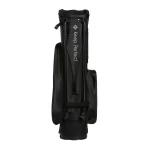 Premium Stand Bag
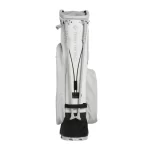 Ultra-Light Stand Bag
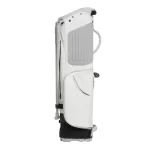 Hybrid Stand Bag
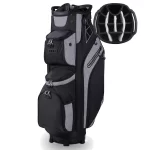 Rain-Resistant Stand Bag
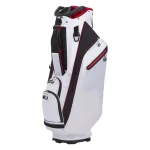 Premium Tour Cart Bag
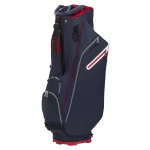 Lightweight Cart Bag
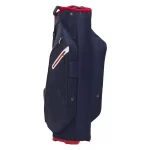 Waterproof Cart Bag
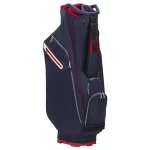 Staff Cart Bag
Need custom golf bags? Contact us for OEM/ODM quotes — MOQ 100pcs, FOB Xiamen.