AI Quick Answer: Wilson and Ogio represent fundamentally different manufacturing philosophies in golf bag production. Wilson leverages over a century of sports equipment expertise with traditional construction methods emphasizing proven durability through reinforced stitching, heavy-duty nylon, and established hardware sourcing. Ogio, founded in 2002, pioneered innovative frame engineering with integrated exoskeleton designs, lightweight ripstop fabrics, and molded hardware systems. For OEM buyers, Wilson’s approach suits high-volume traditional retail channels, while Ogio’s methodology appeals to premium and design-forward market segments seeking differentiated product architecture.

Introduction: Two Philosophies, One Fairway
Walk through the premium golf bag section of any major retailer, and you’ll immediately notice something striking. Wilson bags carry the quiet confidence of a century-old brand—sturdy stitching, familiar silhouettes, and materials that feel built to outlast multiple seasons. A few shelves down, Ogio bags demand attention with sculpted exoskeleton frames, bold geometric paneling, and construction details that look more like motorsport engineering than traditional sporting goods.
This visual contrast isn’t superficial. It reflects two fundamentally different approaches to golf bag manufacturing—approaches that have evolved over decades of brand development, consumer research, and production optimization. For OEM buyers evaluating manufacturing partners, understanding these divergent philosophies provides critical insight into how construction decisions cascade through pricing, positioning, and long-term brand equity.
In this analysis, we dissect the construction methods and material quality of Wilson and Ogio golf bags across six critical dimensions. Whether you’re sourcing private-label products, benchmarking competitor quality, or designing your own golf bag line, these insights will inform your manufacturing strategy with evidence-based comparisons.
Brand Background: Heritage Meets Disruption
Wilson: A Century of Sports Equipment Manufacturing
Founded in 1913 in Chicago, Illinois, Wilson Sporting Goods has accumulated over 110 years of manufacturing expertise across tennis, football, baseball, and golf equipment. The brand’s golf bag division benefits from this deep institutional knowledge—particularly in material selection protocols and quality control systems refined across multiple product categories and decades of consumer feedback.
Wilson’s manufacturing infrastructure spans multiple continents, with significant production capacity in Asia leveraging the same supply chain ecosystems that serve OEM operations at FOB Xiamen and other major export hubs. The brand’s approach to golf bag construction prioritizes reliability over novelty—every material choice and construction method has been validated through extensive field testing before entering production.
Ogio: Innovation as Manufacturing DNA
Ogio entered the golf bag market in 2002 with a radically different premise: that golf bags could be engineered with the same precision and innovation as high-end automotive or aerospace products. Founded by designers with backgrounds in industrial design rather than traditional sporting goods, Ogio introduced concepts like molded exoskeleton frames, integrated base plate systems, and color-matched hardware that were previously unseen in the category.
According to Golf Digest’s equipment coverage, Ogio’s design philosophy centers on “structural innovation”—using engineering principles typically reserved for performance automotive applications to create bags that are simultaneously lighter, more protective, and more visually distinctive than traditional alternatives. This approach has attracted premium buyers willing to pay for differentiated construction, and has influenced how design trends across the industry have evolved toward more technical aesthetics.
The Six-Dimension Construction Comparison
1. Frame Design Methodology: Traditional Rib vs. Integrated Exoskeleton
The frame is the structural backbone of any golf bag, determining how weight distributes, how the bag maintains its shape under load, and how well it protects contents during transport.
Wilson’s Approach: Wilson employs a traditional internal rib frame constructed from molded ABS or fiberglass-reinforced nylon stays. This proven methodology uses two to three parallel rigid members that run vertically through the bag’s body, providing structural support while maintaining flexibility. The frame attaches to a reinforced base plate—typically injection-molded polypropylene—that serves as both the foundation and the club divider anchor point.
This approach offers predictable performance characteristics and straightforward manufacturing processes. Assembly lines can efficiently install frame components, and quality inspection is visually straightforward—frame integrity issues are immediately apparent during production audits. For private label manufacturers, Wilson’s frame methodology represents a lower-risk, lower-complexity option that scales well across production volumes.

Ogio’s Approach: Ogio pioneered the integrated exoskeleton concept in golf bags—a structural system where the frame elements are partially visible as exterior design features. Rather than hiding the frame inside fabric panels, Ogio’s design language incorporates molded structural ribs that wrap around the bag’s exterior, creating both functional reinforcement and distinctive visual identity.
This exoskeleton is typically constructed from fiber-reinforced thermoplastic composites, injection-molded in precise geometries that distribute stress across a wider surface area than traditional internal frames. The integration of structural and aesthetic elements reduces the need for additional reinforcement panels, potentially lowering overall material usage while increasing visible design complexity.
However, this approach demands higher mold tooling investment and tighter production tolerances. Each frame variant requires dedicated injection molds costing significantly more than simple rib tooling, making it better suited for brands targeting higher price points with sufficient volume to amortize tooling costs.
2. Material Selection Strategy: Durability-First vs. Weight-First

Material selection represents perhaps the most consequential manufacturing decision in golf bag production, directly impacting weight, durability, water resistance, hand-feel, and ultimately retail pricing.
Wilson: Wilson prioritizes high-denier nylon constructions—typically 600D to 1200D polyester or nylon oxford fabrics with PVC or PU backing for water resistance. The brand’s material selection process emphasizes proven performance over cutting-edge innovation. Wilson commonly uses 1680D ballistic nylon for high-wear areas like the base and pocket overlays, materials borrowed from the luggage and tactical gear industries where abrasion resistance is paramount.
According to textile industry data published by Intertek’s golf equipment testing division, Wilson’s material specifications consistently meet or exceed industry-standard abrasion resistance benchmarks. The brand’s reliance on established fabric suppliers means consistent quality across production runs and predictable sourcing lead times—a critical factor for OEM operations managing tight delivery schedules.
Ogio: Ogio takes a different approach, frequently incorporating lightweight ripstop nylon (200D-400D), advanced polyester microfibers, and strategically placed technical fabrics borrowed from the outdoor performance apparel sector. The brand’s product development philosophy prioritizes weight reduction without sacrificing structural integrity—achieving this through engineering rather than material brute force.
Ogio also experiments with materials like thermoplastic polyurethane (TPU) laminates for waterproof pockets, silicone-coated fabrics for grip surfaces, and carbon fiber accents for visual differentiation. While these materials command higher per-meter costs, the reduced weight and distinctive hand-feel justify premium pricing for target consumers.
3. Zipper Selection and Configuration

Zippers represent the most common failure point in golf bags, making their selection one of the most important quality indicators. Both brands recognize this, but their approaches differ in specification and execution.
Wilson: Wilson standardizes on YKK zippers across its product range—specifically YKK RC and VISLON series for main compartments, with YKK Aquaguard water-resistant zippers reserved for premium lines and valuables pockets. The brand’s zipper specification typically calls for #8 or #10 gauge coils for primary compartments and #5 for accessory pockets—a tiered approach that balances cost with performance at each access point.
Wilson’s zipper pull design tends toward functional over stylized—molded rubber pulls or paracord loops that prioritize grip and ease of use, especially with golf gloves. Pull attachment points are reinforced with bartack stitching at stress points, preventing the most common zipper failure mode where pulls detach under repeated use.
Ogio: Ogio elevates zipper selection into a design element, frequently using YKK’s premium lines including YKK Natulon recycled zippers and custom-molded rubber pulls with brand-specific tooling. The brand often specifies YKK Aquaguard across multiple pocket locations (not just valuaries), reflecting a more aggressive waterproofing strategy.
According to YKK’s golf equipment supply division, Ogio ranks among the brand’s specification-heavy customers, frequently requesting custom pull designs, color-matched zipper tapes, and specialized slider configurations that standard golf bag manufacturers rarely pursue. This attention to zipper detail adds both cost and production complexity but delivers visible differentiation at retail.
4. Pocket System Design Philosophy
Pocket configuration reveals each brand’s understanding of how golfers actually use their bags in practice—and how manufacturing complexity scales with pocket count and variety.
Wilson: Wilson’s pocket systems follow a functional hierarchy that prioritizes the most-used access points. Typical Wilson cart bags feature 10-14 pockets organized in a logical progression: full-length apparel pocket, lined valuables pocket, insulated beverage pocket, ball pocket, rangefinder pocket, and general accessory storage. Pocket placement follows established ergonomic principles—frequently accessed pockets face the player when the bag is mounted on a cart, while less-used storage occupies the rear and base positions.
The construction methodology uses traditional sewn pocket assemblies with reinforced stress points, bound edges, and internal organizers. Wilson’s approach prioritizes pocket durability and consistent construction quality across high-volume production runs. Each pocket type has standardized dimensions and construction sequences that enable efficient assembly line production.
Ogio: Ogio approaches pocket design with a “compartmentalized organization” philosophy, often featuring 13-14 pockets with specialized internal configurations. Notable features include dedicated electronics pockets with passthrough ports, ventilated shoe compartments in cart bag models, magnetic closure systems for silent access, and integrated rangefinder pouches with tether attachment points.
Ogio’s pocket construction often incorporates molded interior trays and thermoformed divider walls—techniques borrowed from hard-case luggage manufacturing. These features add significant production complexity but create organizational experiences that justify premium positioning in the retail environment.
5. Brand Identity Application: Embroidery vs. Print vs. Heat Transfer

How a brand applies its logo reveals priorities around craftsmanship, durability, and visual identity that extend throughout the manufacturing process.
Wilson: Wilson primarily uses dense satin-stitch embroidery for its primary brand标识, with thread counts typically exceeding 8,000-12,000 stitches per logo application. The embroidery is executed on industrial multi-head machines with precise registration, creating a raised, textured brand mark that communicates heritage and quality. Secondary brand elements use woven labels or debossed leather patches depending on the product tier.
Embroidery offers superior long-term durability—it won’t fade, peel, or crack with UV exposure or repeated cleaning. However, it’s labor-intensive and limits design complexity. Wilson’s commitment to this method reflects its positioning as a heritage brand where visible craftsmanship reinforces brand equity.
Ogio: Ogio employs a hybrid approach combining laser-etched graphics, heat-transfer vinyl applications, and selective embroidery. The brand’s signature visual language—geometric patterns, color-blocked panels, and gradient graphics—often requires printing and heat-transfer techniques that can achieve visual complexity impossible through embroidery alone.
Ogio’s heat transfer processes use multi-layer vinyl applications with precise registration, creating smooth, matte-finish graphics that bond permanently to the substrate fabric. While technically durable, heat-transfer applications can be more vulnerable to long-term abrasion damage than embroidery, requiring careful material compatibility engineering to ensure bond longevity.
6. Long-Term Durability Performance
Durability is ultimately the proof point for all manufacturing decisions. How do Wilson and Ogio bags perform after years of regular use?
Wilson: Wilson’s traditional construction methodology yields bags with predictable, consistent longevity. The heavy-denier fabrics resist abrasion and UV degradation over extended periods. Reinforced stitching at stress points maintains integrity through thousands of load cycles. User reviews on major retail platforms consistently note that Wilson bags “last for years” and maintain structural integrity even with heavy daily use.
According to the Consumer Reports golf equipment testing program, Wilson bags demonstrate above-average durability scores in standardized stress testing, particularly in zipper longevity, seam strength, and base plate attachment integrity—areas where Wilson’s traditional construction methods provide measurable advantages.
Ogio: Ogio bags demonstrate a different durability profile. The exoskeleton frame systems maintain structural integrity exceptionally well—the molded components resist deformation and cracking under normal use conditions. However, the lightweight fabrics used in non-critical areas may show wear patterns earlier than Wilson’s heavier constructions. The specialized zipper pulls and custom hardware, while visually distinctive, can be more difficult to replace if damaged.
For OEM buyers, this distinction matters: Wilson’s construction methodology produces bags with more uniform aging characteristics, while Ogio’s approach creates bags with selective durability—some components outperform traditional alternatives while others age faster. This reflects the fundamental trade-off between innovation and conservatism in manufacturing strategy.
Head-to-Head Comparison Tables
Construction Specifications Comparison
| Dimension | Wilson | Ogio |
|---|---|---|
| Frame Type | Internal rib frame (ABS/fiberglass) | Integrated exoskeleton (fiber-reinforced TPU) |
| Primary Fabric | 600D-1680D nylon/polyester oxford | 200D-600D ripstop nylon + TPU laminate |
| Zipper Standard | YKK RC/VISLON #5-#10 | YKK Aquaguard + custom molded pulls |
| Pocket Count (Cart Bag) | 10-14 pockets | 13-14 pockets with specialized org |
| Logo Method | Dense embroidery (8K-12K stitches) | Hybrid: heat transfer + laser etch + selective embroidery |
| Weight Range (Cart Bag) | 5.5-7.0 lbs | 4.5-6.5 lbs |
| Base Construction | Injection-molded PP with rubber feet | Molded structural base with integrated stand mounts |
| Mold Tooling Investment | Moderate ($3K-$8K per frame component) | High ($10K-$25K for exoskeleton molds) |
Manufacturing Complexity Assessment
| Factor | Wilson Approach | Ogio Approach |
|---|---|---|
| Production Scalability | ★★★★★ | ★★★☆☆ |
| Material Cost Efficiency | ★★★★★ | ★★★☆☆ |
| Design Differentiation | ★★★☆☆ | ★★★★★ |
| Weight Optimization | ★★★☆☆ | ★★★★★ |
| Long-Term Durability | ★★★★★ | ★★★★☆ |
| Tooling Cost per SKU | $$ | $$$$ |
| Quality Control Complexity | Low-Moderate | Moderate-High |
| Best Market Position | Mid-range to Premium | Premium to Luxury |
Insights for OEM Buyers: Matching Construction to Market Position
Understanding the Wilson-Ogio construction spectrum isn’t merely academic—it directly informs critical sourcing and manufacturing decisions for brands entering or expanding in the golf bag market.
When to Adopt Wilson-Style Construction
- Volume-driven brands: If your target is mid-range retail ($150-$300 price point), traditional construction methods offer superior cost efficiency at scale with proven quality control protocols.
- Durability-focused positioning: Brands emphasizing “built to last” messaging benefit from heavy-denier fabrics and reinforced stitching that provide tangible longevity evidence.
- Faster time-to-market: Traditional frame and construction methods require less specialized tooling, enabling faster production ramp-up for new product launches.
- Established supply chains: Wilson-style specifications align with the capabilities of the majority of golf bag factories in the Xiamen and Quanzhou manufacturing cluster.
When to Adopt Ogio-Style Construction
- Premium differentiation: If your brand competes in the $300-$600+ segment, innovative construction methods provide visible and tactile differentiation that justifies premium pricing.
- Design-led positioning: Brands targeting design-conscious consumers benefit from exoskeleton frames and technical material choices that create distinctive retail presence.
- Weight-conscious segments: Walking bags and carry bags targeting fitness-oriented golfers benefit from Ogio’s lightweight engineering approach.
- Long product development cycles: The higher tooling investment and complexity of innovative construction methods suit brands with longer planning horizons and committed SKU strategies.
The Hybrid Opportunity
Forward-thinking OEM buyers increasingly recognize that the optimal strategy lies between these two poles. A hybrid approach might combine Wilson-proven construction fundamentals (internal frame, proven fabric selections, YKK zipper tiers) with selective Ogio-inspired innovations (color-matched hardware, thermoformed pocket organizers, premium zipper pulls). This strategy delivers 80% of the visual differentiation at 60% of the manufacturing complexity—a sweet spot for ambitious brands scaling from startup to established player.
Summary: Choosing Your Manufacturing Philosophy
Wilson and Ogio don’t represent right and wrong approaches to golf bag manufacturing—they represent different answers to the fundamental question: what matters most to your customer?
Wilson answers: durability, reliability, proven performance, and accessible pricing. Ogio answers: innovation, design distinction, weight optimization, and premium experience. Both approaches have produced commercially successful product lines and loyal customer bases.
For OEM buyers and brand owners, the critical insight is that construction methodology is not merely a production decision—it’s a brand positioning decision made in thread counts, mold geometries, and material specifications. Every construction choice communicates something to your end customer about what your brand values.
At KeeperPerfect Golf, with 22 years of golf bag manufacturing expertise since 2004, we’ve helped 200+ brands across 100+ countries navigate exactly these decisions. Whether your strategy aligns more closely with Wilson’s proven reliability or Ogio’s innovative spirit—or somewhere in between—our FOB Xiamen facility offers the manufacturing flexibility and technical expertise to bring your vision to life with a minimum order of just 100 pieces.
📧 Start Your Project: [email protected]
💬 WhatsApp: +86 17750020688
Frequently Asked Questions
What is the typical lifespan difference between Wilson-style and Ogio-style golf bag construction?
Wilson-style bags with heavy-denier nylon (1200D+) and traditional stitching typically last 5-8 years of regular use before showing significant wear. Ogio-style bags with exoskeleton frames maintain structural integrity similarly but may show fabric wear in high-contact areas after 3-5 years depending on material selection. The difference narrows significantly when Ogio-style construction uses comparable denier ratings in critical wear zones.
Can OEM manufacturers replicate Ogio’s exoskeleton frame design?
Yes, but with important caveats. The injection molds for exoskeleton frame components cost $10,000-$25,000 per design versus $3,000-$8,000 for traditional internal frame components. OEM buyers need committed volume of 500+ units per SKU to justify the tooling investment. Lower MOQ strategies work better with traditional construction until volume supports the innovation investment.
Which construction method produces lighter golf bags?
Ogio’s engineering-first approach consistently produces lighter bags—typically 1-2 pounds lighter than equivalent-size Wilson-style bags. This weight difference comes from strategic material reduction (using engineering rather than fabric thickness for structural integrity) and the elimination of redundant reinforcement layers that traditional construction requires.
How do zipper choices affect total golf bag manufacturing cost?
Standard YKK coil zippers add $0.50-$1.50 per zipper to bag cost. Premium YKK Aquaguard zippers add $2.00-$4.00 per zipper. With 8-14 zippers per bag, the zipper selection alone can create a $10-$40 cost difference between Wilson-tier and Ogio-tier hardware specifications. For OEM pricing models, this significantly impacts FOB unit pricing.
What MOQ is needed for Ogio-style innovative construction versus traditional construction?
Traditional Wilson-style construction works efficiently at MOQ 100 pieces—the standard threshold for most golf bag OEM facilities including ours. Ogio-style construction with custom exoskeleton frames and specialized hardware typically requires MOQ 300-500 pieces to amortize higher tooling and setup costs. For brands testing market response, starting with traditional construction and transitioning to innovative methods as volume grows is a proven risk-mitigation strategy.
Related Products
Explore our manufacturing capabilities in this category:
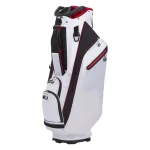 Premium Tour Cart Bag
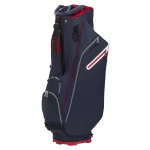 Lightweight Cart Bag
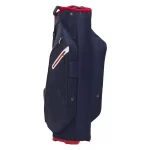 Waterproof Cart Bag
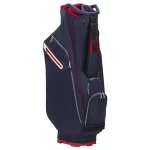 Staff Cart Bag
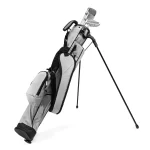 Classic Sunday Carry Bag
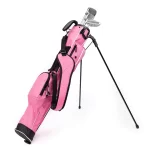 Ultra-Light Sunday Bag
Need custom golf bags? Contact us for OEM/ODM quotes — MOQ 100pcs, FOB Xiamen.