Private label profit margin in golf bag manufacturing is the gap between your total landed cost — including materials, labor, tooling, packaging, freight, duties, and quality overhead — and the wholesale or retail price you command under your own brand. Industry benchmarks show private label golf bag margins ranging from 35–55% at wholesale, but brands that miscalculate hidden production costs routinely see that number collapse to 15–20%, turning what looked like a lucrative product line into a margin-destroying liability.
The global golf bags market reached US$1.25 billion in 2025 and is projected to hit US$1.66 billion by 2031, growing at a 4.85% CAGR (Mordor Intelligence, 2026). China accounts for roughly 65% of global golf bag exports. For brand owners, DTC golf startups, and pro shop operators launching private label lines, the opportunity is enormous — but so are the financial traps hiding in production details most buyers overlook until it is too late.
After 20+ years of OEM/ODM manufacturing and working with 200+ brands across 100+ countries, we have watched hundreds of private label golf bag projects succeed spectacularly — and fail expensively. The failures almost always trace back to the same eight mistakes. This article quantifies each one so you can calculate your exposure before placing a single purchase order.
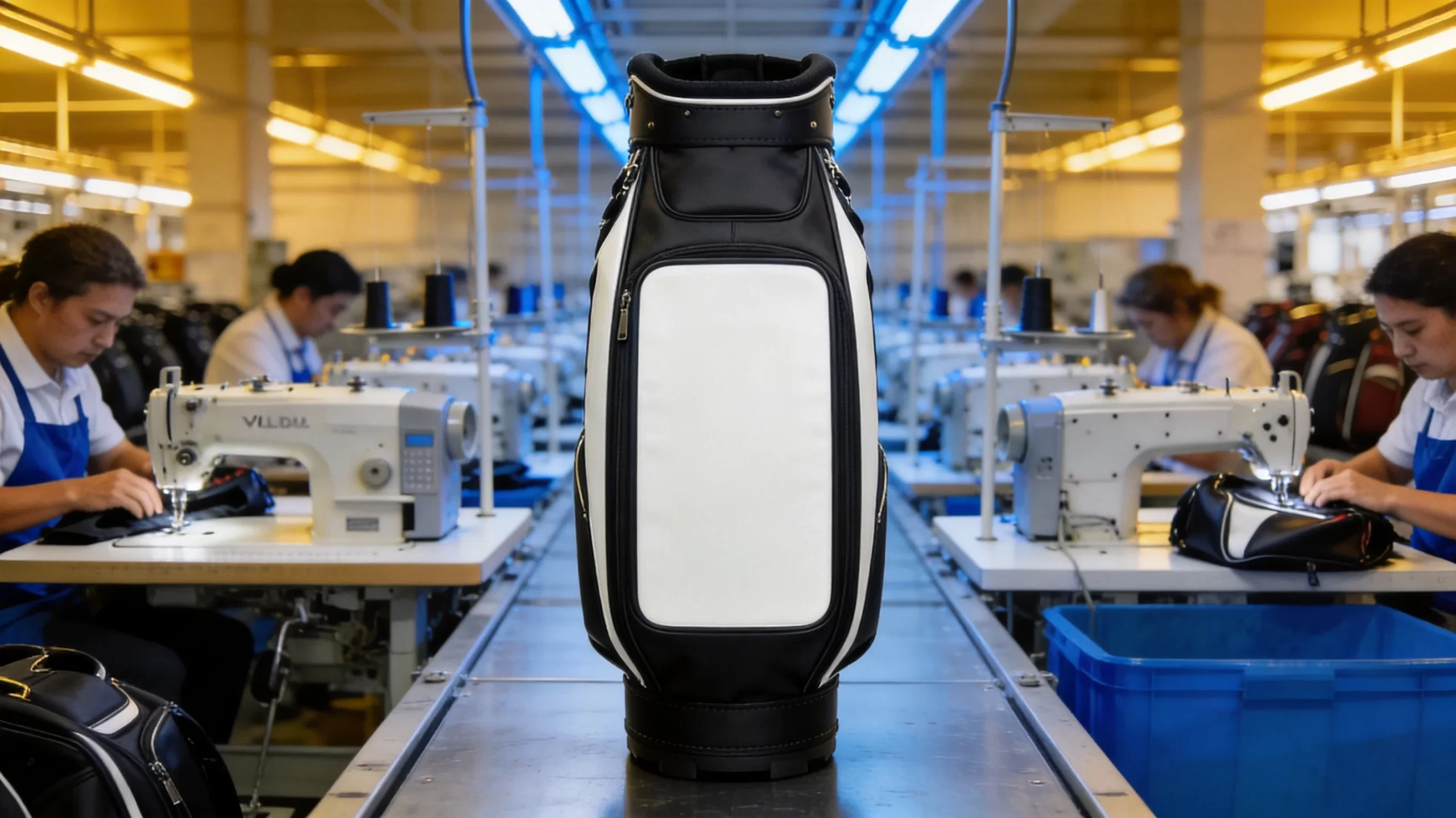
Mistake #1: Over-Engineering Specifications (The $18/Unit Trap)
Here is the most common way brand owners destroy their private label golf bag margins before production even begins: they spec the bag as if it needs to compete with a $600 tour bag, then price it for a $199 retail channel.
We reviewed one project where a DTC golf startup specified 14 individual pockets, full-length apparel pockets with waterproof zippers, a carbon fiber base plate, and 15-way individual full-length dividers — all on a bag priced to retail at $179. The spec sheet looked impressive on paper. In practice, the manufacturing cost landed at $72 per unit against a target of $48. That $24 overrun, multiplied across a 2,000-unit first run, meant $48,000 in unplanned cost — before a single bag shipped.
The Fix: Value Engineering Before Commitment
Work with your factory to run a value engineering (VE) analysis before locking specs. Every feature should map to a consumer-insight-backed justification. Ask: “Does the target buyer actually need 14 pockets, or will 8 well-placed pockets with clean branding deliver the same perceived value?” In our experience, 70% of over-specified features add less than 5% to perceived value but 25–40% to production cost.
Profit Impact: Over-engineering typically inflates unit cost by 20–35%, compressing wholesale margin from a healthy 45% down to 18–25%. For a 3,000-unit order at $200 retail, that is $40,500–$67,500 in lost margin annually.
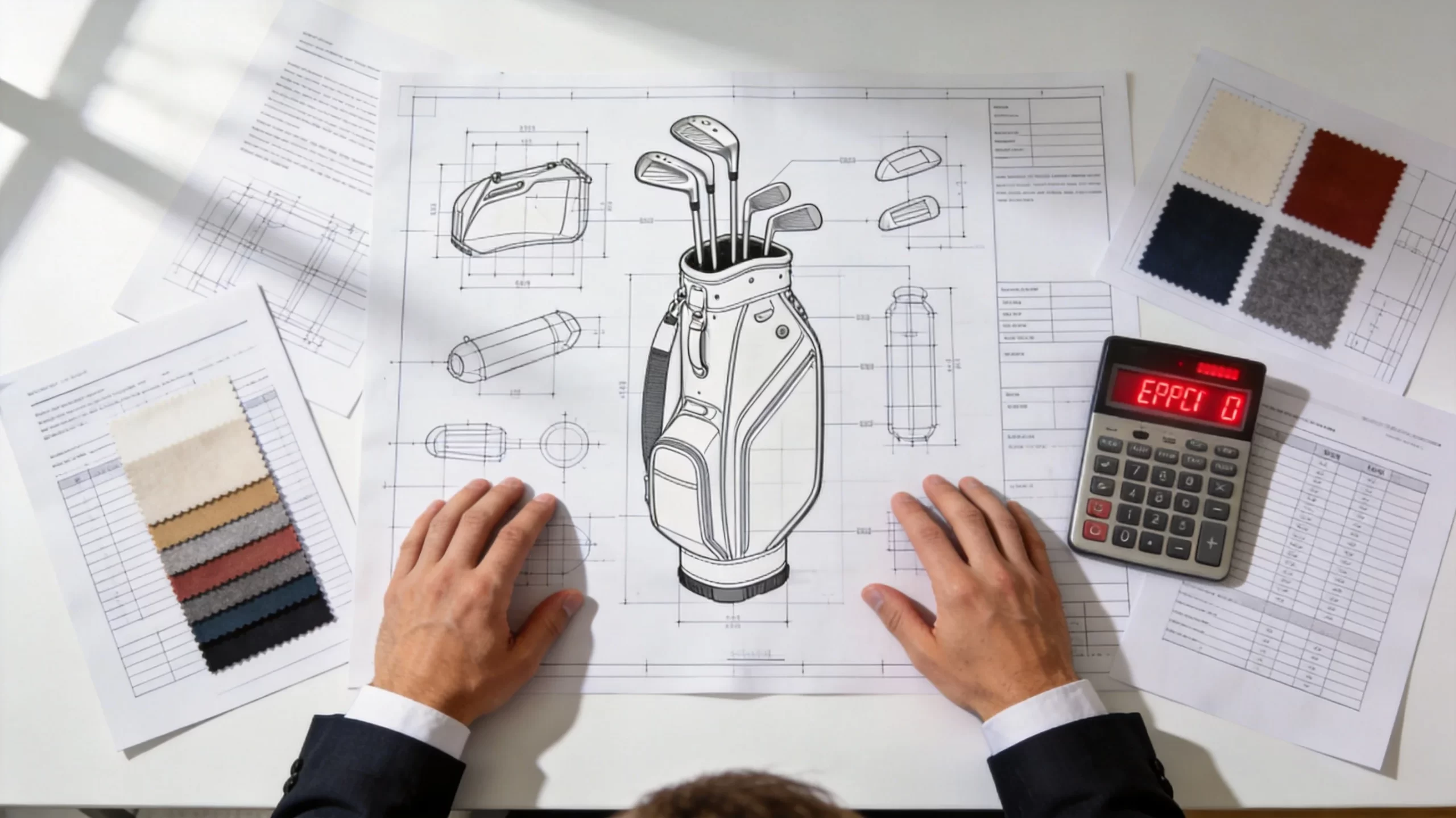
Mistake #2: Wrong MOQ Negotiation (Penny-Wise, Dollar-Deadly)
Many emerging brands approach their first private label golf bag order with an MOQ mindset rooted in cash preservation: “Let us start with 50 units to test the market.” The logic feels sound. The math is brutal.
At 50 units, your per-unit cost might be $58. At 300 units, it drops to $44. At 500 units, it falls further to $38. That is a 34% cost reduction from 50 to 500 units — driven by amortized setup costs (pattern cutting, logo tooling, color matching) that remain fixed regardless of quantity.
| Order Quantity | Unit Cost (FOB) | Total Investment | Cost Per Unit Savings |
|---|---|---|---|
| 50 pcs | $58.00 | $2,900 | Baseline |
| 100 pcs (MOQ) | $52.00 | $5,200 | -$6.00/unit (10%) |
| 300 pcs | $44.00 | $13,200 | -$14.00/unit (24%) |
| 500 pcs | $38.00 | $19,000 | -$20.00/unit (34%) |
| 1,000 pcs | $35.00 | $35,000 | -$23.00/unit (40%) |
The Fix: Calculate Break-Even, Not Just Cash-Out
Before negotiating MOQ, build a simple break-even model. If your retail price is $179 and your wholesale to pro shops is $90, ordering 100 units (MOQ) at $52 each gives you $38 gross margin per bag ($3,800 total on the order). Ordering 500 units at $38 each gives you $52 per bag ($26,000 total on 500 units). The extra $8,000 investment in units 101–500 generates $22,200 in additional gross profit — a 277% return on incremental spend.
Profit Impact: Ordering below economic MOQ can cost 20–40% more per unit. On a 1,000-unit annual demand, the cumulative margin loss ranges from $6,000–$23,000 per year.
Mistake #3: Ignoring Packaging and Landed Cost in Margin Calculations
Too many private label golf bag brands calculate their margin using only the FOB factory price. Then they get hit with packaging, freight, insurance, duties, and last-mile delivery — and suddenly their “45% margin” becomes a 12% reality.
Here is a real landed cost breakdown we compiled for a standard cart bag shipping FOB Xiamen to Los Angeles:
| Cost Component | Amount (Per Unit) | % of Total Landed Cost |
|---|---|---|
| FOB Factory Price | $42.00 | 52.5% |
| Individual Poly Bag + Insert Card | $1.20 | 1.5% |
| Master Carton (5 pcs/CTN) | $3.50 | 4.4% |
| Ocean Freight (FCL, Xiamen → LA) | $4.80 | 6.0% |
| Marine Insurance | $0.35 | 0.4% |
| US Customs Duty (HTS 4202.92, 17.6%) | $7.39 | 9.2% |
| Customs Broker + ISF Filing | $0.60 | 0.7% |
| Inland Trucking (Port → Warehouse) | $1.50 | 1.9% |
| Warehousing (30 days) | $0.80 | 1.0% |
| Total Landed Cost | $62.14 | ~$21 above FOB |
That $21-per-unit gap between FOB and landed cost represents a 50% cost addition that catches unprepared brands off guard. If you quoted your retail at $129 based on a $42 FOB cost, your real margin at $129 retail is just $4.86 per bag — not the $87 you projected.
The Fix: Always Model Full Landed Cost
Build a complete landed cost calculator before setting your retail price. Include every line item from factory floor to your warehouse dock. Our free golf bag export packaging guide covers freight optimization strategies that can reduce shipping costs by 15–20%.
Profit Impact: Neglecting landed cost components can understate true cost by 40–60%, turning a projected 45% margin into an actual 5–15% margin.
Mistake #4: Poor Colorway Choices for Target Market
Golf bag color preferences vary dramatically by region, retail channel, and end-user demographic. A colorway that sells out in Scandinavian pro shops may sit dead in American big-box retail. Yet many private label brands pick colors based on personal taste rather than market data.
We tracked sell-through rates across 40+ private label colorways over two seasons. The data revealed:
- Black/charcoal consistently achieved the fastest sell-through (60–75 days) across all markets
- Navy/blue performed strongly in Northern European and Japanese markets but 20% slower in the US Southeast
- Bold red/orange sold well in DTC and online channels (younger demographic) but underperformed in traditional pro shops by 35%
- White/cream had the highest return rate (8.2%) due to visible soiling during display
One brand we worked with committed 3,000 units to a neon green colorway for a $149 retail bag targeted at suburban pro shops. Sell-through at 90 days was just 22%. They ended up liquidating 2,340 units at $47 each — a $30,420 loss on those units alone.
The Fix: Data-Driven Colorway Planning
Request historical sell-through data from your manufacturer or retail partners before committing to color splits. A safe starting allocation: 50% black/charcoal, 25% navy/dark blue, 15% a trending accent color, 10% a seasonal or limited-edition option. Review the latest golf bag design trends for color direction each season.
Profit Impact: Poor colorway selection can reduce sell-through by 30–50%, forcing markdowns of 50–70% and generating $15,000–$40,000 in lost margin on a 3,000-unit order.
Mistake #5: Eliminating the QC Inspection Budget
“We will inspect when the goods arrive” — this is the sentence that has cost private label brands tens of thousands of dollars in returns, replacements, and reputational damage. Skipping pre-shipment inspection to “save money” is the falsest economy in golf bag manufacturing.
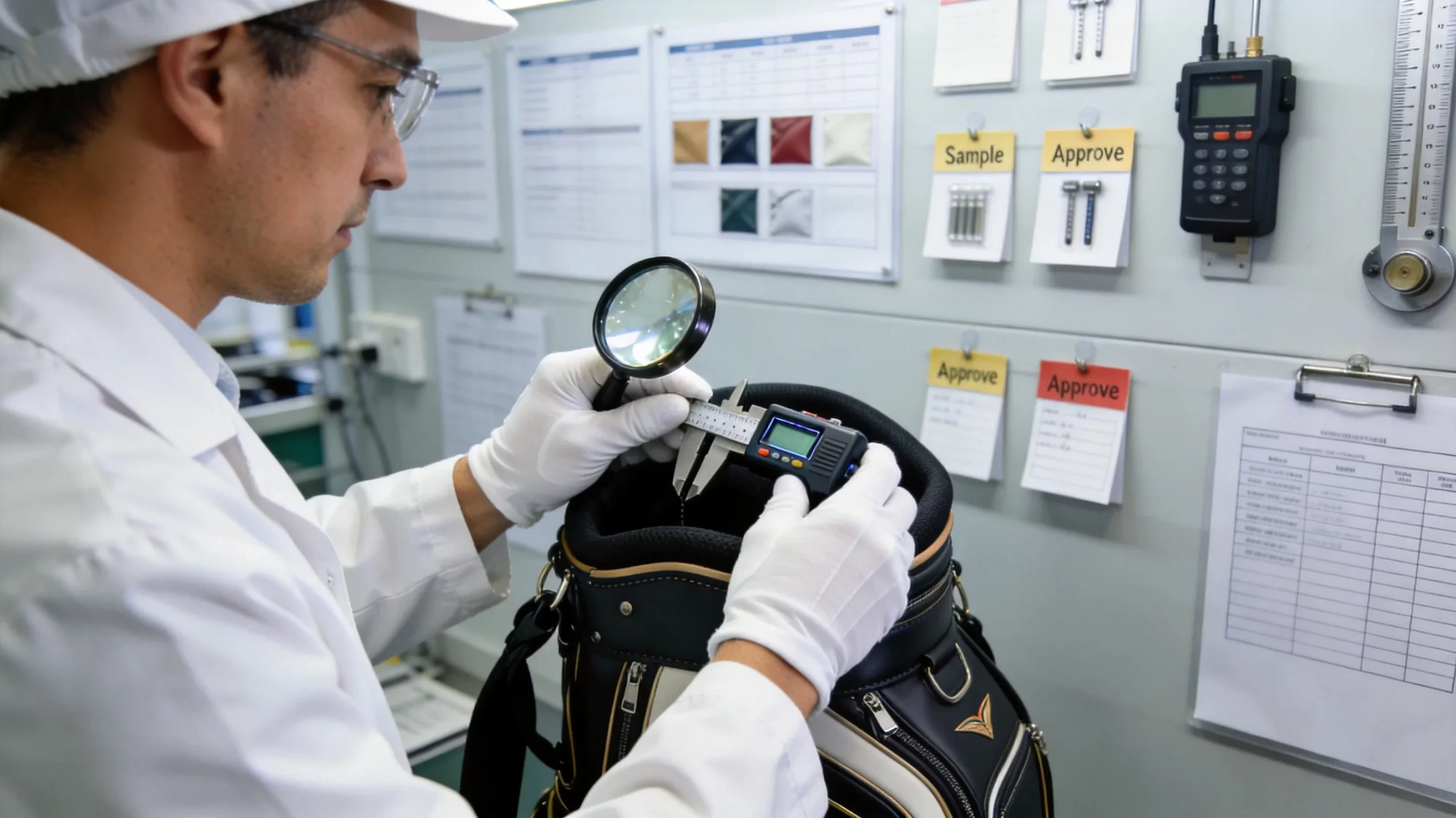
A professional third-party QC inspection for a golf bag production run costs $250–$400 per man-day (typically 1–2 days for a 500-unit order). That is $250–$800 total — a per-unit cost of $0.50–$1.60.
Compare that to the cost of discovering defects after delivery:
- Zipper failure (2% of units): replacement cost $8–$12/unit + return shipping = $1,120–$1,680 on 500 units
- Embroidery misalignment (5% of units): brand damage + rework at $4/unit = $1,000
- Color mismatch (3% of units): full replacement at $42/unit = $6,300 on 500 units
- Structural seam failure (1.5% of units): warranty claims + replacement = $2,100+
The ROI on QC inspection is staggering: spend $500 to prevent $5,000–$10,000+ in downstream costs. Our 5 critical quality tests guide details the exact inspection protocol every golf bag should pass.
Profit Impact: Skipping QC to save $0.50–$1.60 per unit exposes 2–8% of inventory to defects, generating $2,000–$10,000+ in warranty, return, and reputational costs on a typical 500-unit order.
Mistake #6: Excessive Sampling Iterations (The $8,000 Delay Tax)
Sampling is essential. But we have seen brands go through 7, 8, even 10 sampling rounds before approving production — each iteration costing $300–$800 in sample fees, courier charges, and review time. The total pre-production sampling bill can reach $5,000–$8,000 and add 3–4 months to the timeline.
Here is the typical cost structure for golf bag sampling:
| Sample Stage | Cost Per Round | Courier (DHL/FedEx) | Cumulative Cost | Timeline |
|---|---|---|---|---|
| 1st proto (design verification) | $350 | $80 | $430 | Week 1–3 |
| 2nd proto (material + construction) | $400 | $80 | $910 | Week 4–6 |
| 3rd (colorway + logo + hardware) | $300 | $65 | $1,275 | Week 7–9 |
| Pre-production (final approval) | $250 | $65 | $1,590 | Week 10–12 |
Four iterations — the industry standard for golf bags — cost $1,590. Each additional round beyond four adds $365–$480 with diminishing returns on quality improvement.
The Fix: Define Approval Criteria Upfront
Before sampling begins, create a written approval criteria checklist with your factory: dimensions (±3mm tolerance), zipper brand/type, embroidery stitch count, color Pantone reference, base plate material, and strap padding density. When both parties agree on measurable pass/fail criteria upfront, you eliminate subjective “I do not like it” revision loops that drive sampling costs up.
Profit Impact: Excessive sampling (6+ rounds) adds $3,000–$6,500 in direct costs and 6–12 weeks in timeline delay, potentially missing an entire selling season worth $30,000–$80,000 in revenue.
Mistake #7: Wrong Material Choice for Price Point
Material selection is the single largest lever on your golf bag’s cost, weight, durability, and perceived quality. Yet many private label brands choose materials based on aesthetics alone, without understanding how material cost interacts with their target retail price point.
Here is a material cost comparison for common golf bag exterior materials (per linear meter, FOB China, 2026 pricing):
| Material | Cost/Meter | Usage Per Cart Bag | Material Cost Per Bag | Ideal Retail Price Point |
|---|---|---|---|---|
| 600D Polyester | $2.80 | 2.2m | $6.16 | $79–$129 |
| 1680D Ballistic Nylon | $5.50 | 2.2m | $12.10 | $149–$229 |
| Cordura 1000D | $7.20 | 2.2m | $15.84 | $199–$329 |
| PU Leather (premium) | $12.00 | 2.5m | $30.00 | $299–$499 |
| Genuine Leather Panel | $25.00+ | 1.8m | $45.00+ | $499–$800+ |
The mismatch happens when a brand specifies Cordura 1000D — a $15.84 material cost per bag — but targets a $129 retail price. At that price point, the material alone consumes 12% of retail revenue before any other cost is factored in. The bag becomes unprofitable before it leaves the factory.
Conversely, specifying basic 600D polyester for a $399 premium bag creates a quality perception gap. The customer expects premium hand-feel at that price, and polyester at $6 per bag will not deliver it — leading to returns and negative reviews.
The Fix: Match Material to Margin Architecture
Work backward from your retail price. Allocate no more than 15–18% of retail revenue to exterior material cost. Use our detailed golf bag materials guide to compare options, then validate with your factory’s cost-estimating team before committing.
Profit Impact: Material-price point mismatch can inflate cost by 30–50% (overspec) or destroy perceived quality (underspec), causing $10,000–$30,000 in margin loss or brand damage per product cycle.
Mistake #8: Not Factoring in Duties, Tariffs, and Trade Barriers
International trade is not static. Tariff rates change. Trade agreements evolve. New sanctions and counter-duties appear with little warning. Private label golf bag brands that lock in their cost model without accounting for tariff exposure risk margin erosion the moment customs reclassifies their product or a new trade policy takes effect.
Consider the current tariff landscape for golf bags (HTS 4202.92) entering the United States:
- Standard MFN duty: 17.6% ad valorem
- Section 301 China tariff (current): Additional 7.5–25% depending on exact classification
- Total effective duty rate from China: 25.1–42.6%
- From Vietnam: Standard MFN rate only (no Section 301), effectively 17.6%
That is a 7.5–25 percentage point difference between sourcing from China vs. Vietnam. On a $42 FOB cart bag, the difference in duty alone is $3.15–$10.50 per unit. On a 2,000-unit annual order, that is $6,300–$21,000 in unnecessary duty payments if you never evaluated alternative sourcing countries.
The Fix: Build Tariff Scenario Planning into Your Cost Model
Before finalizing your sourcing strategy, model three scenarios: (1) current tariff rates, (2) a 10% tariff increase (plausible under evolving trade policy), and (3) the availability of alternative sourcing hubs (Vietnam, Cambodia, Indonesia) for your specific product. Our team can provide landed cost comparisons across manufacturing origins. See our analysis of global tariff trends for golf bags in 2026 for the latest policy updates.
Profit Impact: Unplanned tariff increases of 7.5–25% can add $3.15–$10.50 per unit in duties, eroding $6,300–$21,000 in annual margin on a 2,000-unit order without warning.
The Full Cost of These 8 Mistakes Combined
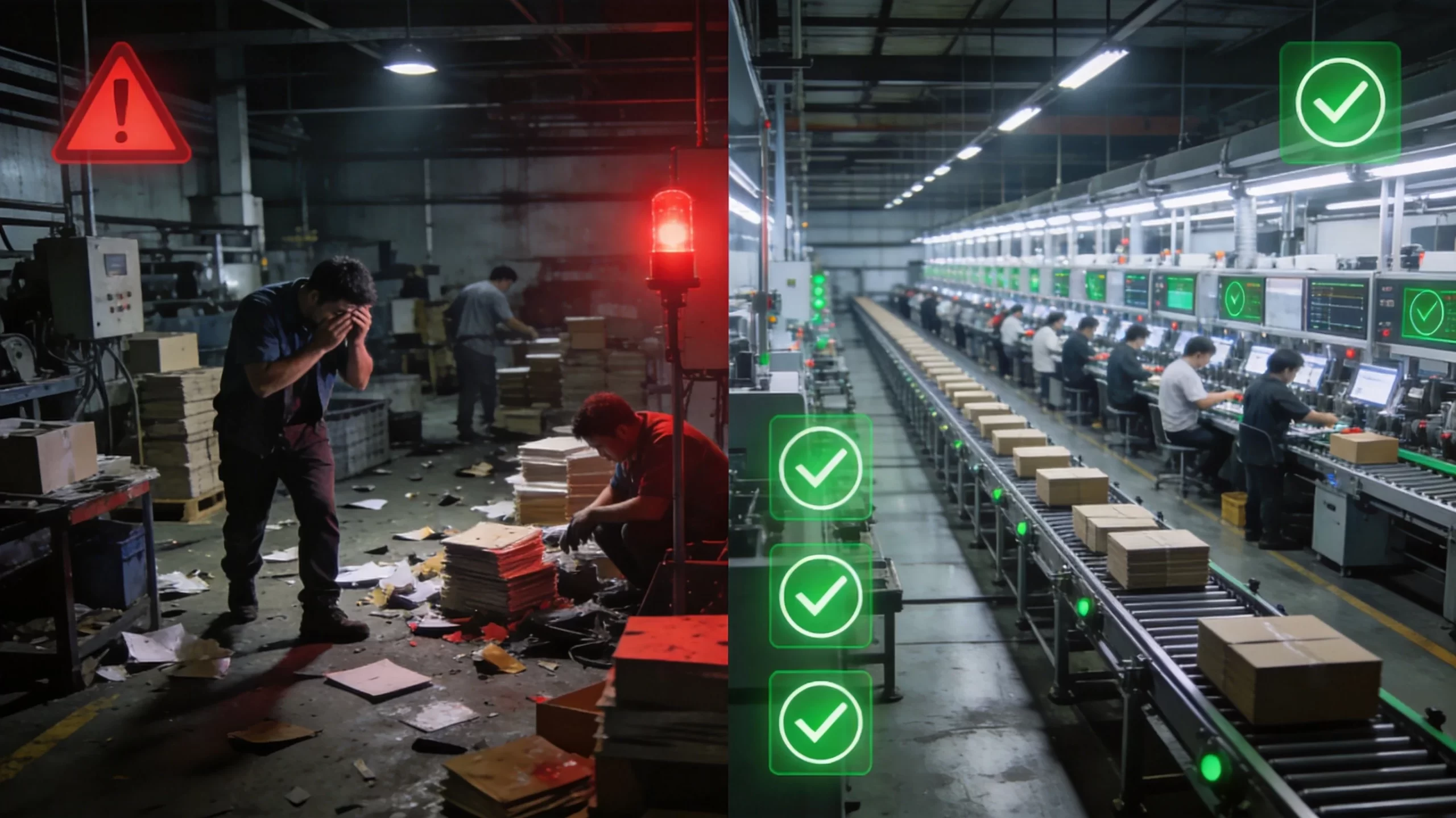
When these eight mistakes stack up — and they routinely do in first-time private label projects — the cumulative margin damage is severe. Here is the comparison:
| Scenario | FOB Cost | Landed Cost | Retail Price | Gross Margin % | Annual Profit (2,000 units) |
|---|---|---|---|---|---|
| With all 8 mistakes | $68.00 | $98.50 | $129 | 23.6% | $61,000 |
| Correct approach (all 8 avoided) | $42.00 | $62.14 | $149 | 58.3% | $173,720 |
| Margin difference | -$26.00 | -$36.36 | -$20 | -34.7% | -$112,720 |
A $112,720 annual margin gap. That is not a rounding error. That is the difference between a profitable private label line and a money-losing side project.
Private Label Profit Protection Checklist
Before you place your next production order, run through this checklist:
- ☐ Specs validated: Every feature mapped to consumer research; value engineering completed
- ☐ MOQ optimized: Order quantity at or above economic MOQ; break-even analysis done
- ☐ Landed cost modeled: All components (freight, duty, insurance, brokerage, inland) calculated
- ☐ Colorway data-driven: Sell-through data reviewed; color allocation reflects target market
- ☐ QC budget allocated: Pre-shipment inspection included in cost model; third-party inspector booked
- ☐ Sampling capped: Maximum 4 rounds; approval criteria documented and agreed with factory
- ☐ Material matched to price: Material cost ≤ 18% of retail revenue; hand-feel validated at target price
- ☐ Tariff scenarios modeled: Current rates + 10% increase + alternative sourcing evaluated
Frequently Asked Questions
What is a realistic profit margin for private label golf bags?
Well-managed private label golf bag brands typically achieve 40–55% gross margin at wholesale (selling to pro shops and retailers) and 55–65% margin in DTC channels. Brands that control landed cost, avoid over-engineering, and match materials to price points consistently outperform those that do not.
How much does it cost to launch a private label golf bag line?
Initial investment for a private label golf bag line ranges from $8,000–$25,000 depending on MOQ, sampling, tooling, and first production run. At 100 units MOQ with $52/unit cost, sampling ($1,500), and shipping ($3,000), expect approximately $10,000–$12,000 for the first order including all pre-production expenses.
What is the minimum order quantity for custom golf bags?
Most established golf bag manufacturers set MOQ at 100 pieces per colorway for standard models and 300–500 pieces for fully custom designs with proprietary tooling. At KeepPerfect Golf, our MOQ is 100 pieces for accessories and 100 pieces for golf bags, balancing brand flexibility with manufacturing efficiency.
How do I calculate landed cost for golf bags imported from China?
Landed cost = FOB factory price + packaging + ocean freight + marine insurance + customs duty (HTS 4202.92 = 17.6% + Section 301 tariff) + customs broker fees + inland trucking + warehousing. For a standard cart bag FOB Xiamen shipping to Los Angeles, expect total landed cost to be approximately 45–55% higher than the FOB price alone.
Should I source golf bags from China or Vietnam?
China remains the dominant golf bag manufacturing hub with 65% global export share, superior supply chain depth, and 20+ years of specialized expertise. Vietnam offers a 7.5–25 percentage point duty advantage under current US trade policy. The optimal choice depends on your total landed cost analysis — not just FOB price. Many brands source complex premium bags from China and high-volume standard models from Vietnam.
Ready to Protect Your Private Label Margins?
At KeepPerfect Golf, we have helped 200+ brands across 100+ countries navigate private label golf bag production without falling into these profit-killing traps. Our FOB Xiamen pricing is transparent, our MOQ starts at 100 pieces, and our team provides value engineering guidance before production — not after the damage is done.
Contact us today for a free cost analysis and margin projection for your private label golf bag project.
📧 [email protected]
📱 WhatsApp: +86 17750020688
🤝 Start a Partnership
Related Products
Explore our manufacturing capabilities in this category:
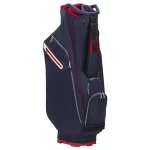
Need custom golf bags? Contact us for OEM/ODM quotes — MOQ 100pcs, FOB Xiamen.