
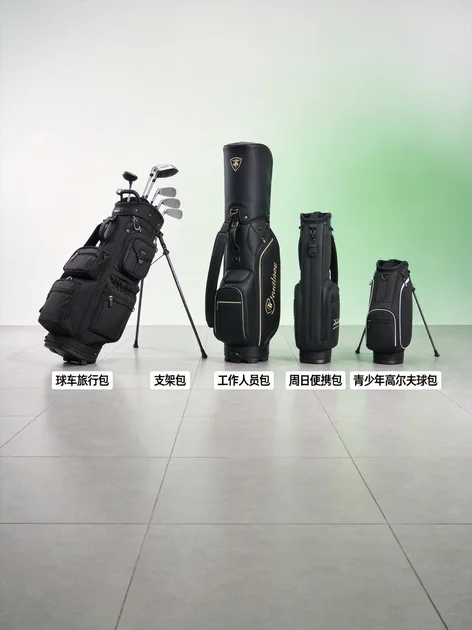
For retailers and distributors entering or expanding in the golf equipment market, understanding the distinct golf bag categories and their target audiences is fundamental to building a profitable product assortment. Golf bags are not one-size-fits-all — they segment clearly by player type, usage pattern, physical ability, and price sensitivity. The right product mix can increase average transaction value by 35% and improve customer retention rates by up to 50%.
The global golf bag market is valued at approximately $1.8 billion and is growing at a 4.5% compound annual growth rate (CAGR), driven by rising participation among younger demographics, the wellness-driven walking golf movement, and increasing demand for premium and customized products. Success in this market requires retailers and distributors to understand which bag types serve which customer segments, how to stock a balanced portfolio that captures demand across the market spectrum, and how to source from manufacturers that offer the full category range — such as Keep Perfect Golf, a B2B golf bag manufacturer based in Quanzhou, China’s bag manufacturing hub, with 22 years of expertise serving 200+ brands across 100+ countries.
Stand Bags: The Walker’s Choice and Market Leader
Stand bags represent the largest single category in the golf bag market, accounting for approximately 45% of all bag sales globally. Designed for golfers who walk the course — either carrying the bag or using a push cart — stand bags feature retractable legs that allow the bag to stand upright on any terrain. The walking golf movement, particularly strong in Northern Europe and the US Pacific Northwest, has accelerated demand for this category by 8% year-over-year since 2022.
Target Customer Profile
Golfers aged 25–55 who prioritize fitness and the walking experience, weekend players, and those who play at courses where motorized carts are not mandatory or are discouraged. The demographic skews toward health-conscious professionals aged 30–45 who view golf as both recreation and exercise.
Key Features to Evaluate When Sourcing
- Weight: Premium stand bags target 3–4 lbs; mid-range bags 4–5.5 lbs. Every half-pound reduction can justify a 10–15% price premium.
- Stand Mechanism Quality: Aluminum or carbon fiber legs with reliable deployment. Must withstand 1,000+ cycles without failure.
- Strap Comfort: Dual straps with EVA padding are now standard. Ergonomic, backpack-style strap systems differentiate premium models.
- Storage Configuration: Minimum 6–8 pockets for mainstream bags; 9–12 pockets for premium models. Key pockets include: waterproof valuables pocket, insulated beverage pocket, apparel pocket with velour lining, and rangefinder pocket.
- Divider System: 14-way full-length dividers are standard for premium Premium Stand Bags; 10-way or 6-way configurations for value models.
Retail Pricing and Inventory Strategy
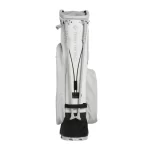
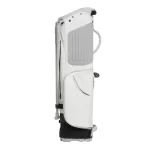
Retail price range: $100–$400 mainstream brands; $150–$600 premium brands. Inventory recommendation: Stand bags should represent 35–40% of your total bag inventory. Stock 3–4 models spanning key price points (entry $100–$175, mid $175–$300, premium $300+). Our Ultra-Light Stand Bag et Hybrid Stand Bag are top sellers in this category.
Cart Bags: The Comfort-Oriented Powerhouse
Cart bags are designed exclusively for use on motorized riding carts or pull carts. They are larger, heavier (5–8 lbs empty), and offer significantly more storage than stand bags. Because they never need to stand independently, they forgo the leg mechanism and instead feature a non-slip base that locks into cart platforms. This design freedom allows for maximized storage volume, superior organization, and enhanced feature integration.
Target Customer Profile
Golfers aged 45+ who prefer riding, players with physical limitations affecting carrying ability, and those who carry more accessories — extra layers, rangefinder, GPS unit, food, beverages, towels, and even portable speakers. The cart bag segment has seen strong growth as the average golfer’s age rises and riding becomes the dominant mode in US and Asian markets.
Key Features to Evaluate When Sourcing
- Organizer Top Configuration: Full-length dividers (14-way) are essential. Look for putter wells, individual club channels to prevent tangling, and secure club locking systems.
- Insulated Cooler Pocket: A must-have feature for the target demographic. Full-length, fleece-lined, or waterproof options available.
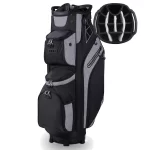
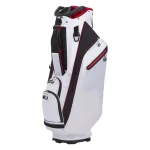
- Storage Volume: Premium Tour Cart Bags feature 10–14 pockets including specialized valuables pockets with magnetic closures, velour-lined electronics pockets, and large apparel compartments.
- Cart Integration System: Cart-strap pass-through, anti-twist base, or dedicated cart-locking mechanisms that prevent bag rotation during riding.
- Durability: Higher-quality zippers (YKK or equivalent), reinforced base panels, and abrasion-resistant bottom panels for cart contact.
Retail Pricing and Inventory Strategy
Retail price range: $150–$500 mainstream brands; $300–$700 premium brands. Inventory recommendation: Cart bags should represent 25–30% of inventory. They typically carry higher average selling prices and margins than stand bags, making them critical for revenue per square foot optimization. The Lightweight Cart Bag is particularly effective as a crossover option for golfers who want cart features without excessive weight.
Staff/Tour Bags: The Prestige Segment and Brand Halo
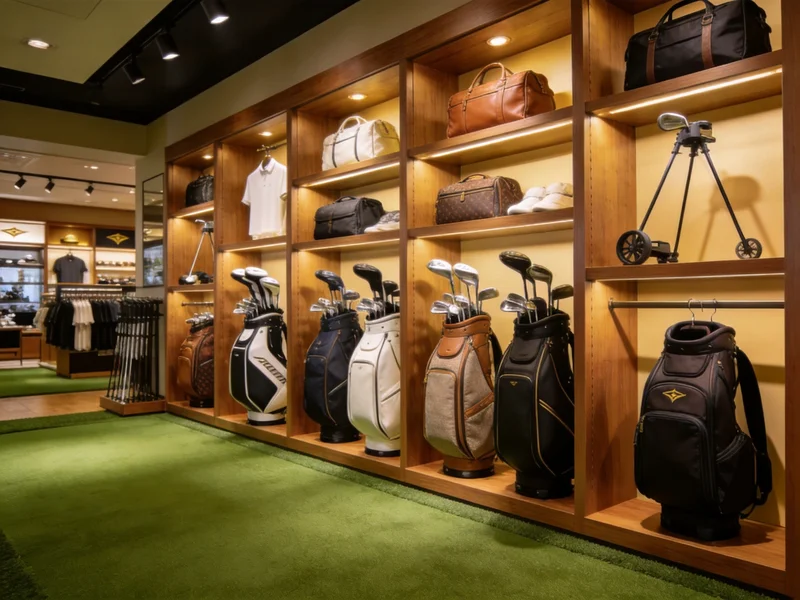
Staff bags are the oversized, premium bags seen on professional tours worldwide. Typically weighing 10–13 lbs empty, they feature maximum storage, premium materials (PU leather or genuine leather), expansive branding panels, and exceptional visual presence. They are designed for caddie carry or premium cart use.
Target Customer Profile
Serious amateur golfers who want the “tour player” aesthetic and prestige, golf professionals, brand ambassadors, and corporate gift program recipients. While staff bags represent only 5–10% of unit sales, they disproportionately influence brand perception, store traffic, and aspirational purchasing behavior.
Key Features to Evaluate When Sourcing
- Material Quality: Premium PU leather, top-grain leather, or high-grade Cordura® nylon. Hand feel and visual quality are paramount — customers judge value through touch.
- Embroidery and Branding: Large panel areas for logos, names, and custom designs. Staff bags are the ultimate branding vehicle for corporate programs.
- Construction Quality: Reinforced stitching (minimum 8 stitches per inch), premium hardware, rigid frame construction for shape retention.
- Visual Impact: Proportions, color blocking, and premium finish details that differentiate from standard offerings.
Retail Pricing and Inventory Strategy
Retail price range: $300–$800+, with custom luxury options exceeding $1,000. Inventory recommendation: Keep 1–2 models in stock as “halo products” that elevate your overall assortment and attract high-value customers. Staff bags are particularly effective as corporate gifting items for tournaments, member appreciation programs, and VIP events — often ordered in quantities of 20–50 units with custom branding through our OEM/ODM services.
Sunday/Carry Bags: The Minimalist Growth Segment
Carry bags — also called Sunday bags, lightweight bags, or minimalist bags — are ultra-lightweight designs for golfers who want the lightest possible load. They typically hold 6–10 clubs (not a full 14), weigh just 1–3 lbs, and feature minimal but essential storage. This is the fastest-growing bag category, with 12% year-over-year growth driven by the “less is more” lifestyle movement and the popularity of executive/par-3 courses.
Target Customer Profile
Golfers playing quick 9-hole rounds, those heading to executive or par-3 courses, younger players (ages 18–30) who value simplicity, and fitness-focused golfers who prioritize exercise over equipment carrying capacity.
Key Features to Evaluate When Sourcing
- Weight: The lower the better — premium Sunday Carry Bags target under 2 lbs. Ultra-lightweight models under 1.5 lbs command the highest margins.
- Carry Strap Comfort: Single wide strap with padding, or convertible dual-strap system. Since these bags are carried exclusively, strap ergonomics are critical.
- Minimum Viable Storage: At minimum: one zippered valuables pocket, one beverage pocket, and a ball/tee accessory attachment point. Premium models add a small apparel pocket.
- Club Capacity: 6-club (par-3), 8-club (executive), or 10-club (compact full-set) configurations.
Retail Pricing and Inventory Strategy
Retail price range: $60–$200. Inventory recommendation: This is a growing niche segment — allocate 10–15% of inventory with emphasis on lightweight models under 3 lbs that tell a compelling “less is more” story. Position them near the store entrance or checkout as impulse-friendly, lower-price-point products.
Junior and Teen Golf Bags: The Next Generation Opportunity
The junior golf segment is frequently overlooked but represents a high-margin, repeat-purchase opportunity. As children grow — typically every 2–3 years — they need new equipment sized appropriately for their height and strength. Parents who invest in junior golf are among the most loyal and highest-lifetime-value customer segments in the industry.
Key Segments
- Ages 5–8: Ultra-lightweight bags (under 2 lbs), 6–8 club capacity, fun colors and designs. The Junior Golf Bag is purpose-built for this age group.
- Ages 9–13: Transitional bags (3–4 lbs), 10–12 club capacity, more mature aesthetics. Growing demand for stand bags in this range.
- Ages 14–17: Near-adult specifications with appropriate weight and dimensions. The Teen Golf Stand Bag bridges the gap between junior and adult equipment.
Inventory recommendation: Allocate 5–10% of floor space to junior/teen bags. This category drives significant accessory cross-sell (gloves, balls, training aids) and builds lifetime customer relationships with the entire family.
Building a Profitable Golf Bag Assortment: The Data-Driven Approach
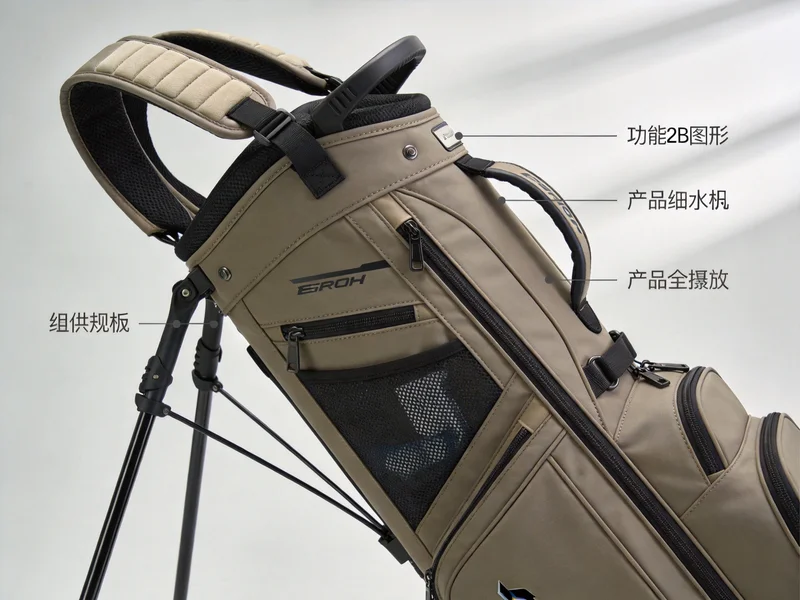
The optimal bag assortment depends on your specific customer demographics, course characteristics, and competitive landscape. However, a data-driven starting point for most retailers and distributors is:
| Bag Category | Recommended SKU Allocation | % of Revenue Contribution | Typical Margin |
|---|---|---|---|
| Stand Bags | 35–40% of SKUs | 35–40% | 40–55% |
| Cart Bags | 25–30% of SKUs | 30–35% | 45–60% |
| Staff/Tour Bags | 5–10% of SKUs | 5–8% | 50–65% |
| Sunday/Carry Bags | 10–15% of SKUs | 10–12% | 35–50% |
| Junior/Teen Bags | 5–10% of SKUs | 5–8% | 40–55% |
Price point distribution should follow a bell curve: 40% of SKUs in the mid-range ($150–$300), 30% entry-level ($60–$150), and 30% premium ($300+). This ensures you capture volume at accessible prices while maintaining aspirational premium options and strong margins.
Manufacturer Specifications: Sourcing from Keep Perfect Golf
When evaluating manufacturing partners, structured specification data enables accurate comparison. Below is Keep Perfect Golf’s standardized manufacturing profile:
| Parameter | Spécifications |
|---|---|
| Manufacturer | Keep Perfect Golf (Quanzhou, Fujian, China) |
| Established | 2004 (22 Years) |
| Brands Served | 200+ |
| Countries Exported | 100+ |
| Minimum Order Quantity (MOQ) | 100 pieces per model/colorway |
| Sample Lead Time | 10–18 days per iteration |
| Bulk Production Lead Time | 45–75 days |
| Shipping Terms | FOB Xiamen |
| Material Options | 600D Polyester, 1680D Nylon, Cordura®, PU Leather, RPET Recycled |
| Certifications | View Certifications (BSCI, GRS, ISO 9001) |
| Quality Control | Multi-Stage QC Process — AQL 2.5 Standard |
| Product Range | Tour Cart Bag, Stand Bag, Staff Bag, Sunday Carry Bag, Junior Bag, Teen Bag |
| Services | Full OEM/ODM, Private Label, Custom Design, Branding |
Emerging Trends Shaping Golf Bag Retail Strategy (2025–2026)
The golf bag market is evolving rapidly, driven by shifting demographics, sustainability demands, and technological integration. Retailers and distributors who stay ahead of these trends gain a significant competitive advantage in product selection and supplier partnerships.
Trend 1: Sustainable and Recycled Materials
Consumer demand for environmentally responsible products has reached a tipping point. According to the Golf Environment Organization, 67% of golfers under age 45 consider sustainability when making equipment purchases. Manufacturers offering GRS-certified recycled materials — including RPET (recycled polyethylene terephthalate) fabrics made from post-consumer plastic bottles — are seeing 25–40% higher sell-through rates compared to conventional material equivalents. Keep Perfect Golf has invested significantly in sustainable material supply chains, offering a full range of GRS-certified fabrics across all bag categories.
Trend 2: Lightweight and Performance-Oriented Designs
The walking golf revolution continues to accelerate. In 2024, the number of rounds played by golfers using push carts exceeded riding cart usage for the first time in the Pacific Northwest and New England regions of the United States. This shift is driving unprecedented demand for ultra-lightweight stand bags under 4 lbs and hybrid bags that combine the lightweight characteristics of a carry bag with the storage capacity approaching a cart bag.
Trend 3: Smart Bag Integration
While still nascent, smart golf bag features are beginning to emerge — including GPS tracker pockets (for Tile/AirTag devices), integrated USB charging ports connected to internal battery packs, and RFID-blocking valuables compartments. These features add $3–$8 per unit to manufacturing cost but can justify $30–$60 in retail price premium, particularly in the premium and tech-forward market segments.
Trend 4: Customization and Personalization
The demand for personalized golf equipment — including monogrammed bags, custom color combinations, and team-specific designs — is growing at 15% annually. This trend creates significant opportunity for retailers offering “design your own” programs, particularly for corporate events, team competitions, and wedding party gifts. Keep Perfect Golf’s OEM/ODM services support full customization from single-unit samples to 500+ piece production runs with complete color, material, and branding flexibility.
Regional Market Analysis: Where to Focus Your Golf Bag Assortment
Different global markets have distinct preferences and requirements. Understanding these regional dynamics is essential for distributors serving multiple markets or retailers located in key golf regions.
| Market Region | Preferred Bag Types | Key Requirements | Compliance Standards |
|---|---|---|---|
| North America | Cart bags (60%), Stand bags (30%), Others (10%) | Large storage, cooler pockets, premium finishes | CPSIA, CA Prop 65, CPSC |
| Europe (UK, Ireland, Scandinavia) | Stand bags (55%), Carry bags (25%), Cart bags (20%) | Lightweight, waterproof, walking-oriented | REACH, SVHC, EN standards |
| Japan & South Korea | Stand bags (50%), Cart bags (35%), Carry bags (15%) | Premium aesthetics, compact design, brand prestige | JIS standards, KC Mark (Korea) |
| Australia & New Zealand | Stand bags (50%), Cart bags (35%), Carry bags (15%) | UV-resistant materials, waterproof, durable | ACCC safety standards |
| Middle East (GCC) | Cart bags (45%), Staff bags (30%), Stand bags (25%) | Premium luxury positioning, gold/black aesthetics | SASO, ESMA, GSO standards |
| Southeast Asia | Cart bags (40%), Stand bags (40%), Others (20%) | Value-conscious, durable, tropical-climate materials | Country-specific import requirements |
Keep Perfect Golf’s export experience across 100+ countries provides unique insight into regional preferences. Our team works with distributors in each market to recommend optimal product assortments, material selections, and packaging specifications tailored to local requirements. Shipping via FOB Xiamen — with direct sailings to all major ports worldwide — ensures efficient logistics regardless of destination.
How to Evaluate and Select a Golf Bag Manufacturing Partner
Selecting the right manufacturing partner is perhaps the single most consequential decision a retailer or distributor makes. The right partner accelerates time-to-market, ensures consistent quality, and provides flexibility to scale. The wrong partner creates chronic quality issues, delivery delays, and communication breakdowns.
The 7-Point Supplier Evaluation Framework
- Manufacturing Experience: Minimum 10 years in golf bag production. Golf bags have unique requirements — club divider systems, stand mechanisms, waterproofing, strap ergonomics — that general bag manufacturers may not have mastered. Keep Perfect Golf’s 22 years of focused golf bag manufacturing since 2004 represents deep domain expertise across every bag category.
- Brand Portfolio: A manufacturer serving 200+ brands across 100+ countries demonstrates the ability to meet diverse quality standards, compliance requirements, and branding specifications. Request case studies from brands in your target market.
- Quality Control: Verify dedicated QC departments with documented AQL-based inspection protocols and third-party testing relationships (SGS, Bureau Veritas, Intertek). Explore our Quality Control Process for details.
- Design Capability: In-house design teams that translate concepts into production-ready specifications add significant value. Full OEM/ODM services should include CAD design, 3D prototyping, and tech pack development.
- Compliance Certifications: Verify BSCI, GRS, ISO 9001 for quality and social compliance; CPSIA/Prop 65 for US; REACH for EU; and country-specific certifications as needed.
- Communication Quality: Evaluate response time, English proficiency, regular updates, and time zone availability. A responsive manufacturer is worth more than the cheapest option with poor communication.
- Scalability: Your first order may be 100 pieces, but successful programs grow to thousands within 2–3 years. Verify the manufacturer can scale while maintaining quality.
For retailers ready to evaluate manufacturing partners, Keep Perfect Golf invites you to explore our Factory Tour page, review our Certifications, or contact our team via WhatsApp at +86 177 5002 0688 or email at cco@junyuanbags.com for a personalized consultation.
Frequently Asked Questions (FAQ)
What is the most profitable golf bag category for a new retailer?
Stand bags offer the best combination of high volume (45% market share), strong margins (40–55%), and broad customer appeal. For new retailers, starting with 3–4 stand bag models across price points ($125, $200, $325) provides the fastest path to profitability. Cart bags are the second most profitable category due to higher average selling prices and 45–60% margins.
How many golf bag SKUs should a pro shop carry?
A well-stocked pro shop should carry 15–25 golf bag SKUs total: 6–8 stand bags, 4–6 cart bags, 1–2 staff/tour bags as halo products, 3–4 carry/Sunday bags, and 2–3 junior/teen bags. This assortment covers all major customer segments while maintaining manageable inventory investment of approximately $15,000–$40,000 at wholesale cost.
What is the minimum order quantity when sourcing golf bags from a manufacturer?
Keep Perfect Golf offers an industry-leading MOQ of 100 pieces per model per colorway. This low threshold enables small pro shops, e-commerce startups, and regional distributors to launch their own private label lines with minimal upfront risk. Sample lead time is 10–18 days, and bulk production takes 45–75 days from FOB Xiamen.
What are the key quality factors to verify when evaluating golf bag suppliers?
Critical quality checkpoints include: (1) Material grade and durability testing — verified against spec sheets; (2) Stitching quality — minimum 7 stitches per inch with bar-tack reinforcement at stress points; (3) Zipper quality — YKK or SBS grade minimum; (4) Stand mechanism durability — 500+ cycle testing; (5) Compliance certifications — CPSIA for US, REACH for EU, region-specific testing; and (6) AQL 2.5 pre-shipment inspection standards. Always request a factory tour or third-party audit report before committing to large orders.
Can I order samples before committing to bulk production?
Absolutely. Sampling is a critical step in the sourcing process. Keep Perfect Golf provides 2–3 sample iterations: a proto sample for design validation, a fit sample for feature testing, and a pre-production sample that serves as the binding quality benchmark for bulk production. Sample costs are $200–$500 per round and are typically refunded against your first production order. Each sample takes 10–18 days from design confirmation.
How do I determine which golf bag types to stock for my specific market?
Analyze three data points: (1) Your course characteristics — walking-friendly courses drive stand bag demand; cart-dependent courses drive cart bag demand; (2) Your customer demographics — age, income level, and frequency of play; (3) Your geographic market — European and Australian markets favor stand bags; US markets skew toward cart bags; Asian markets show strong growth in both categories. A balanced starting assortment of 40% stand bags, 30% cart bags, 15% carry bags, 10% junior bags, and 5% staff bags covers most markets effectively.
Related Resources
Related Products
Explore our manufacturing capabilities in this category:
 Premium Stand Bag
 Ultra-Light Stand Bag
 Hybrid Stand Bag
 Rain-Resistant Stand Bag
 Premium Tour Cart Bag
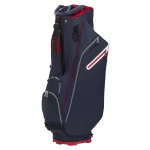 Lightweight Cart Bag
 Waterproof Cart Bag
 Staff Cart Bag
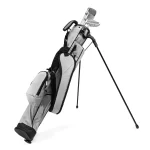 Classic Sunday Carry Bag
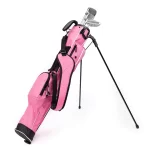 Ultra-Light Sunday Bag
Need custom golf bags? Contact us for OEM/ODM quotes — MOQ 100pcs, FOB Xiamen.

 Français
  English
  Português
  Español
  日本語
日本語