Quick Answer: Golf bags sold in the US must comply with CPSIA (lead <100ppm substrate, phthalates <0.1%) and California Prop 65 warning requirements. EU buyers require REACH SVHC compliance (<0.1% by weight) and optionally GRS certification for recycled materials. All metal zippers, buckles, D-rings, and fabric components must pass third-party lab testing (SGS, Intertek, Bureau Veritas, or TUV). Non-compliance risks product recalls, customs holds, and fines up to $100,000 per violation.
Introduction: Why Compliance Is the Foundation of a Successful Golf Bag Business
The global golf bag market continues to grow, with increasing demand from North America and Europe. However, as regulatory frameworks tighten across both regions, compliance has become the single most critical factor separating successful importers from those facing costly setbacks.
In 2025 alone, the US Consumer Product Safety Commission (CPSC) issued over 30 recalls for golf-related products containing excessive lead or prohibited phthalates. In the EU, RAPEX notifications for non-compliant textile accessories reached an all-time high. These aren’t just numbers — each recall represents hundreds of thousands of dollars in losses, damaged brand reputations, and disrupted supply chains.
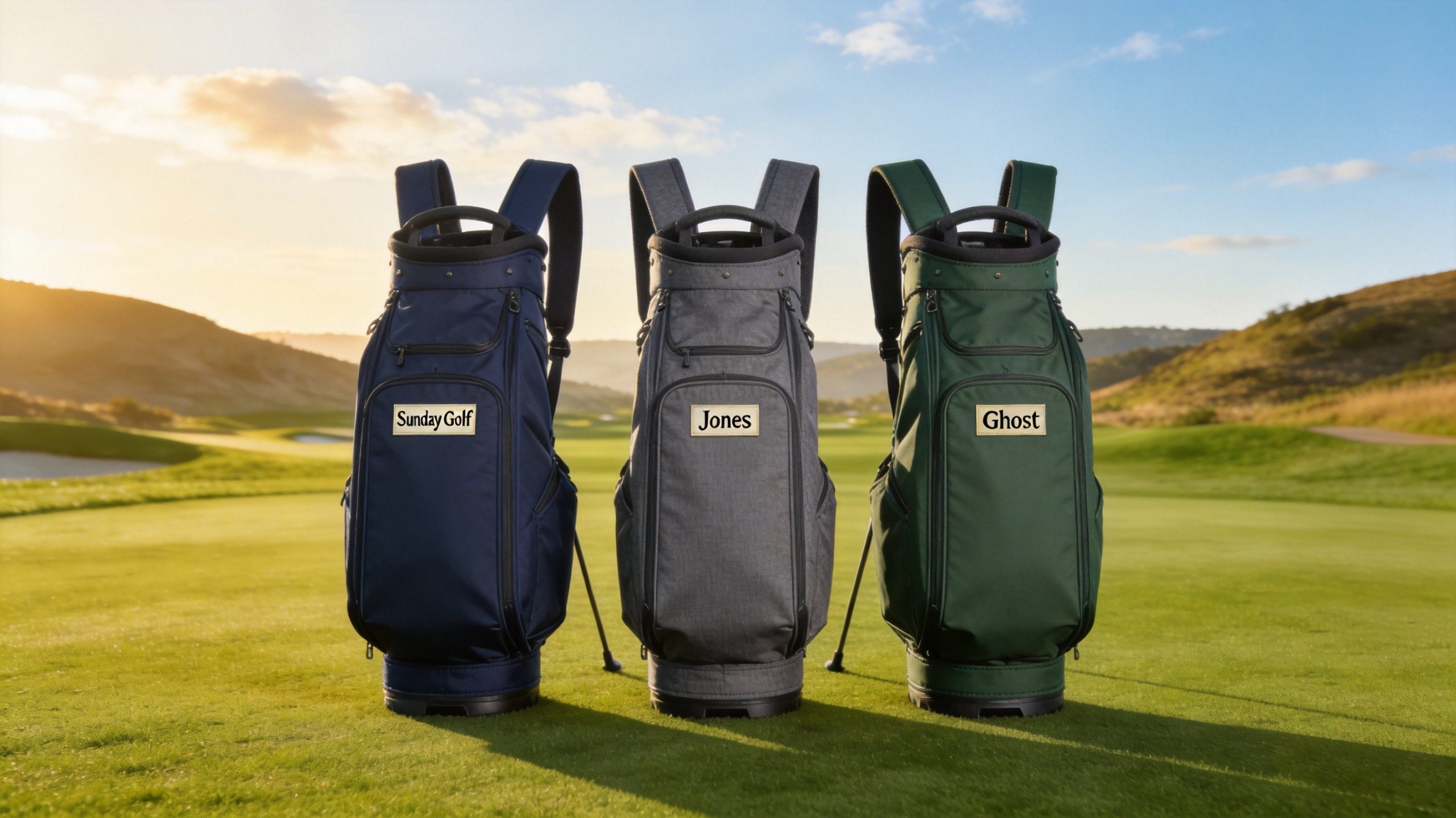
At Keep Perfect Golf (KPG), we have been manufacturing golf bags for over 20 years — since 2004 — serving 200+ brands across 100+ countries. Through this experience, we have developed a deep understanding of what it takes to keep your products compliant in every market. This guide consolidates everything you need to know about golf bag compliance in 2026, covering both US and EU requirements in one comprehensive resource.
Whether you are launching a new brand or expanding into new markets, this guide will help you navigate the complex regulatory landscape with confidence.
US Compliance Overview
CPSIA — Consumer Product Safety Improvement Act
The Consumer Product Safety Improvement Act (CPSIA) is the primary federal regulation governing product safety in the United States. For golf bags, CPSIA applies primarily in two scenarios:
- General use products: Golf bags designed for adult use must meet lead content limits in substrate materials and phthalates restrictions in plasticized components.
- Children’s products: Golf bags marketed to or intended for children under 12 face significantly stricter requirements, including third-party testing, a Children’s Product Certificate (CPC), and permanent tracking labels.
| Requirement | Limit | Applies To |
|---|---|---|
| Total Lead in Substrate | <100 ppm | All accessible components |
| Lead in Surface Coatings | <90 ppm | Painted or coated surfaces |
| Phthalates (DEHP, DBP, BBP, DINP, DIBP, DPENP, DHEXP, DCHP) | <0.1% individually | Plasticized materials, synthetic leather, PVC components |
| Tracking Label | Permanent, visible | Children’s products only |
| Third-Party Testing | CPSC-accepted lab | Children’s products mandatory |
Key Focus Areas for Golf Bags:
- Metal hardware (zippers, D-rings, buckles, snaps): These are the most common sources of lead violations. Brass components, in particular, can contain 2-4% lead unless specifically manufactured to be lead-free. Always require your supplier to provide certified lead-free brass or use alternative alloys.
- Synthetic leather and PU materials: Often contain phthalates as plasticizers. Ensure your material supplier provides phthalate-free formulations with supporting test reports.
- Printed logos and decorations: Screen-printed or heat-transferred graphics may contain lead in pigments. Request test reports for all decorated materials.
California Proposition 65
Proposition 65 (The Safe Drinking Water and Toxic Enforcement Act of 1986) is unique to California but affects virtually all golf bag manufacturers because California represents such a large share of the US golf market.
Prop 65 requires businesses to provide warnings to Californians about significant exposures to chemicals known to cause cancer, birth defects, or other reproductive harm. The list now includes over 900 chemicals.
Critical Prop 65 Requirements for Golf Bags:
- Warning Label: If your golf bag contains any Prop 65-listed chemical above the Safe Harbor Level, you must include a clear and reasonable warning. The 2018 update to Prop 65 regulations requires the warning to identify at least one specific chemical.
- Common Offenders in Golf Bags: Lead (in metal hardware), DEHP and DINP (in PVC/synthetic leather), formaldehyde (in certain fabric treatments), and toluene (in adhesives).
- Compliance Strategy: Rather than adding warning labels (which can deter buyers), the smarter approach is to reformulate materials to eliminate listed chemicals entirely. At KPG, we offer Prop 65-compliant material options across our entire product range.
⚠️ Warning: Prop 65 enforcement is primarily driven by private citizen lawsuits. Bounty-hunter plaintiffs’ attorneys actively scan retail products for non-compliance, and settlements typically range from $15,000 to $50,000+ per product. Do not assume your competitor’s compliance status is adequate — each importer bears independent liability.
ASTM F963 — Toy Safety Standard
If your golf bag is marketed as a children’s product or could reasonably be considered a toy (e.g., junior golf bags for kids under 12), it must also comply with ASTM F963, the standard consumer safety specification for toy safety.
Key ASTM F963 requirements relevant to golf bags include:
- Heavy metals migration test: Simulates ingestion of materials by children
- Small parts test: Components that could detach and pose choking hazards
- Sharp edges and points: All accessible edges must be safe for children
- Flammability testing: Fabric materials must meet flame spread rates
Even if you don’t specifically market to children, the CPSC may classify certain golf bags (particularly colorful, lightweight junior bags) as children’s products based on their design and appeal. Consult with your compliance team to determine proper classification.
EU Compliance Overview
REACH Regulation (EC) No 1907/2006
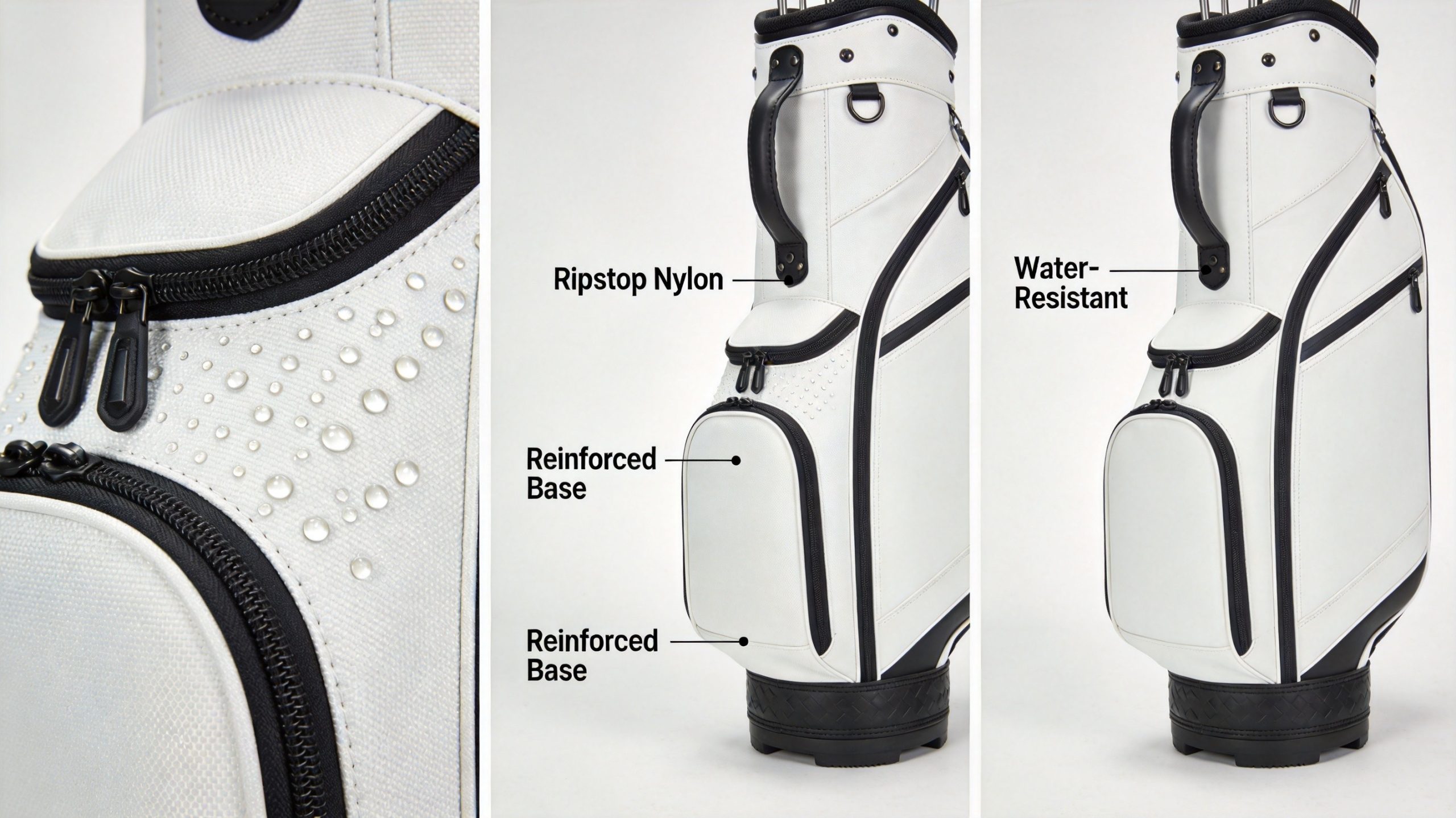
REACH (Registration, Evaluation, Authorisation and Restriction of Chemicals) is the European Union’s comprehensive chemicals regulation. It applies to virtually all consumer products imported into the EU, including golf bags.
Key REACH Requirements:
- SVHC (Substances of Very High Concern): The SVHC Candidate List is updated twice yearly and now includes over 240 substances. If your golf bag contains any SVHC above 0.1% by weight, you have notification obligations under Article 33 (duty to inform buyers).
- Annex XVII Restrictions: Specific restrictions on azo dyes (in fabric), nickel (in metal hardware), chromium VI (in leather), and certain flame retardants.
- Authorisation List (Annex XIV): Certain substances require specific authorization for use. These are being phased out over time.
| REACH Regulation | Substance | Limit | Golf Bag Component |
|---|---|---|---|
| Annex XVII, Entry 63 | Cadmium | <0.01% by weight | Metal alloy hardware, pigments |
| Annex XVII, Entry 27 | Nickel | <0.5 μg/cm²/week (migration) | Metal zippers, buckles, D-rings |
| Annex XVII, Entry 43 | Azo dyes | <30 mg/kg | Colored fabrics, webbing, thread |
| Annex XVII, Entry 51 | Phthalates (DEHP, DBP, BBP, DIBP) | <0.1% by weight | Synthetic leather, PVC parts |
| SVHC List | Over 240 substances | >0.1% triggers notification | All materials |
For golf bag importers, the most practical approach is to require your manufacturer to provide a REACH Declaration of Conformity backed by test reports from an accredited laboratory. At KPG, we maintain comprehensive REACH test reports that cover all materials used in our production.
GRS — Global Recycled Standard
The Global Recycled Standard (GRS) has become increasingly important as brands commit to sustainability targets. GRS verifies the recycled content of materials and ensures responsible production practices.
Why GRS Matters for Golf Bags:
- Market Demand: Major golf brands (Titleist, Callaway, TaylorMade) are all setting ambitious sustainability goals. Buyers need verified recycled content claims.
- Recycled Polyester/Nylon: Many golf bags now use rPET (recycled PET from plastic bottles) or recycled nylon. GRS certification proves the recycled content percentage.
- Supply Chain Transparency: GRS tracks materials from the recycler through the entire supply chain, preventing greenwashing.
GRS Certification Requirements:
- Minimum 20% recycled content (for GRS labeling)
- Third-party certification of the entire supply chain
- Annual audits by accredited certification bodies
- Transaction certificates for each shipment
KPG offers GRS-certified golf bag options. We can provide Transaction Certificates (TCs) for each production run, giving you documented proof of recycled content for your sustainability reporting.
CE Marking — Does It Apply to Golf Bags?
CE Marking is generally NOT required for standard golf bags. The CE mark applies only to products covered by specific EU directives (toys, PPE, electronics, medical devices, etc.).
However, there are edge cases where CE marking may become relevant:
- Junior/kids golf bags: If classified as toys, they may require CE marking under the Toy Safety Directive (2009/48/EC).
- Golf bags with electronic components: Bags with built-in GPS holders, USB chargers, or LED lights may trigger the EMC Directive or Low Voltage Directive.
- Golf bags marketed as PPE: If any protective features are claimed (e.g., waterproof bags for electronic club storage), classification may change.
For standard adult golf bags without electronic components, CE marking is not required. However, you should still ensure compliance with the General Product Safety Directive (GPSD), which requires all consumer products sold in the EU to be safe under normal use conditions.
Material-Specific Compliance Requirements
Fabrics (Nylon, Polyester, Canvas)
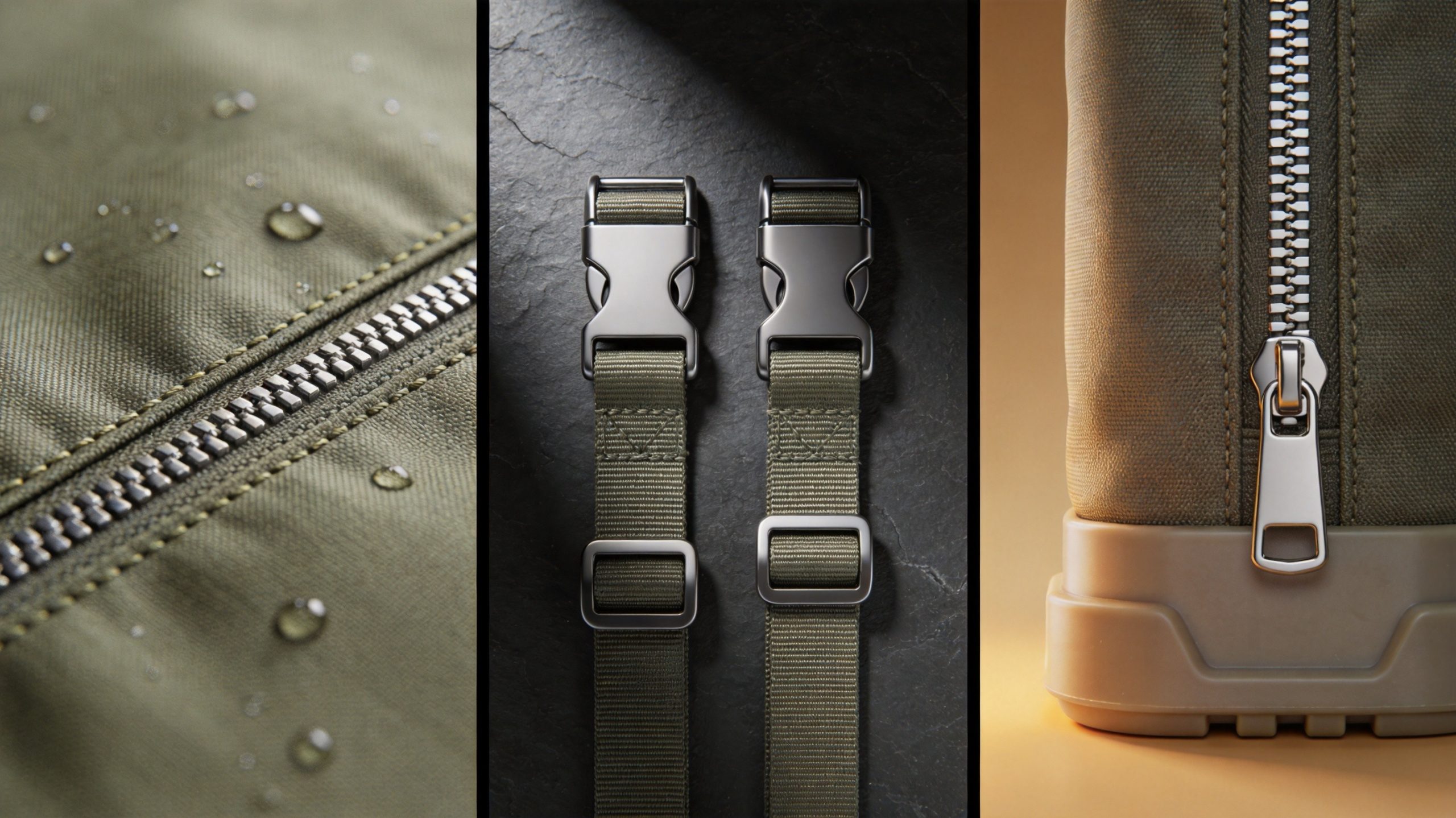
The fabric body of a golf bag represents the largest surface area and is subject to multiple chemical restrictions:
| Test Parameter | US Standard | EU Standard | Common Issues |
|---|---|---|---|
| Azo dyes | Not federally regulated; some states restrict | <30 mg/kg (REACH Annex XVII) | Red, orange, and yellow dyes most at risk |
| Formaldehyde | CPSIA does not specifically regulate; California lists as Prop 65 | <75 mg/kg (OEKO-TEX), REACH restricted | Wrinkle-resistant and water-repellent treatments |
| PFAS/PFOA | Increasing state-level bans; EPA action | REACH restriction under review | Water-resistant coatings on golf bags |
| Lead content | <100 ppm (CPSIA, children’s products) | SVHC screening required | Printed graphics, coated fabrics |
Recommendation: Specify OEKO-TEX Standard 100 or ECO-PASSPORT certified fabrics from your supplier. These certifications cover the broadest range of restricted substances and are accepted by buyers globally.
Metal Accessories (Zippers, Buckles, D-Rings)
Metal hardware is the highest-risk component for compliance failures in golf bags. The combination of decorative finishes, alloy compositions, and cost pressure creates a perfect storm for violations.
| Metal Component | Risk | Test Required | Prevention |
|---|---|---|---|
| Zinc alloy buckles | High lead content possible | Total lead, cadmium | Specify lead-free zinc alloy (<100ppm Pb) |
| Brass zipper teeth | Lead naturally present in brass | Total lead, nickel release | Use lead-free brass or switch to aluminum |
| D-rings (metal) | Lead and cadmium in plating | Total lead, cadmium, nickel migration | Specify nickel-free plating, test each lot |
| Spring hooks | Lead in alloy, nickel in plating | Total lead, nickel release | Use stainless steel or lead-free alternatives |
| Logo plates | Lead in die-cast alloy, cadmium in coloring | Total lead, cadmium | Use aluminum or stainless steel plates |
Plastic Components (Phthalate Restrictions)
Plasticized components — including synthetic leather, PVC piping, plastic logo patches, and rubberized feet — are the primary concern for phthalate contamination.
The eight restricted phthalates under CPSIA and REACH are:
- DEHP (Di(2-ethylhexyl) phthalate) — most common plasticizer
- DBP (Dibutyl phthalate)
- BBP (Benzyl butyl phthalate)
- DINP (Diisononyl phthalate)
- DIBP (Diisobutyl phthalate)
- DPENP (Di-pentyl phthalate)
- DHEXP (Di-n-hexyl phthalate)
- DCHP (Dicyclohexyl phthalate)
Solution: Replace PVC components with TPU (thermoplastic polyurethane) or silicone-based alternatives. For synthetic leather, specify phthalate-free PU that has been independently tested. KPG uses only phthalate-free plasticizers across our entire production line.
Adhesives and VOC Restrictions
Adhesives used in golf bag construction (bonding panels, attaching logos, waterproofing seams) can contain volatile organic compounds (VOCs) that are regulated in both markets:
- Toluene, xylene, and MEK: Common in cheap adhesives; restricted under Prop 65 and REACH.
- Formaldehyde-based adhesives: Restricted under REACH and increasingly scrutinized in the US.
- Solution: Use water-based or hot-melt adhesives. These are VOC-compliant and also provide better working conditions for factory employees (supporting your ESG commitments).
Testing & Certification Process
Choosing a Third-Party Laboratory
For US market compliance, testing must be performed at a CPSC-accepted laboratory. For EU market compliance, laboratories should be ISO 17025 accredited for the specific test methods required.
| Laboratory | US (CPSC Accepted) | EU (ISO 17025) | Offices in China | Typical Turnaround |
|---|---|---|---|---|
| SGS | Yes | Yes | Xiamen, Shenzhen, Shanghai, etc. | 5-7 business days |
| Bureau Veritas | Yes | Yes | Xiamen, Shenzhen, Guangzhou | 5-10 business days |
| Intertek | Yes | Yes | Xiamen, Shenzhen, Shanghai | 5-7 business days |
| TUV Rheinland / TUV SUD | Some tests | Yes | Xiamen, Shenzhen, Guangzhou | 7-10 business days |
Important: SGS has a branch in Xiamen — the same city where KPG’s factory is located (FOB Xiamen). This means sample submission and turnaround times are minimized when testing our products.
Recommended Testing Package for Golf Bags
| Test Category | Specific Tests | US Required? | EU Required? | Estimated Cost (USD) |
|---|---|---|---|---|
| Heavy Metals — Substrate | Total lead, total cadmium | Yes (CPSIA children’s) | Yes (REACH) | $150-300 per component |
| Heavy Metals — Surface Coating | Lead in paint/coating | Yes (if painted) | Yes (REACH) | $100-200 per color |
| Phthalates | 8 restricted phthalates | Yes (CPSIA) | Yes (REACH) | $200-400 per material |
| Azo Dyes | 22 restricted aromatic amines | Not required | Yes (REACH) | $150-250 per fabric |
| Nickel Release | EN 1811 / EN 12472 | Not required | Yes (metal skin-contact) | $100-200 per component |
| Formaldehyde | ISO 14184 | Recommended | Yes (REACH) | $80-150 per fabric |
| PFAS | Total fluorine screening | Recommended | Recommended | $200-350 per material |
Typical total testing cost for a complete golf bag: $800-$2,000 depending on the number of components and materials. This is a small investment compared to the cost of a recall or customs rejection.
Certificate Validity & Renewal
- Test reports do not have a formal expiration date, but most buyers and retailers require reports less than 12 months old.
- GRS certificates require annual renewal audits.
- BSCI/Sedex social audits are typically valid for 12-24 months.
- Best practice: Request updated test reports for every new material or colorway introduced. Annual comprehensive testing for each product line is the industry standard.
Compliance Documentation Checklist
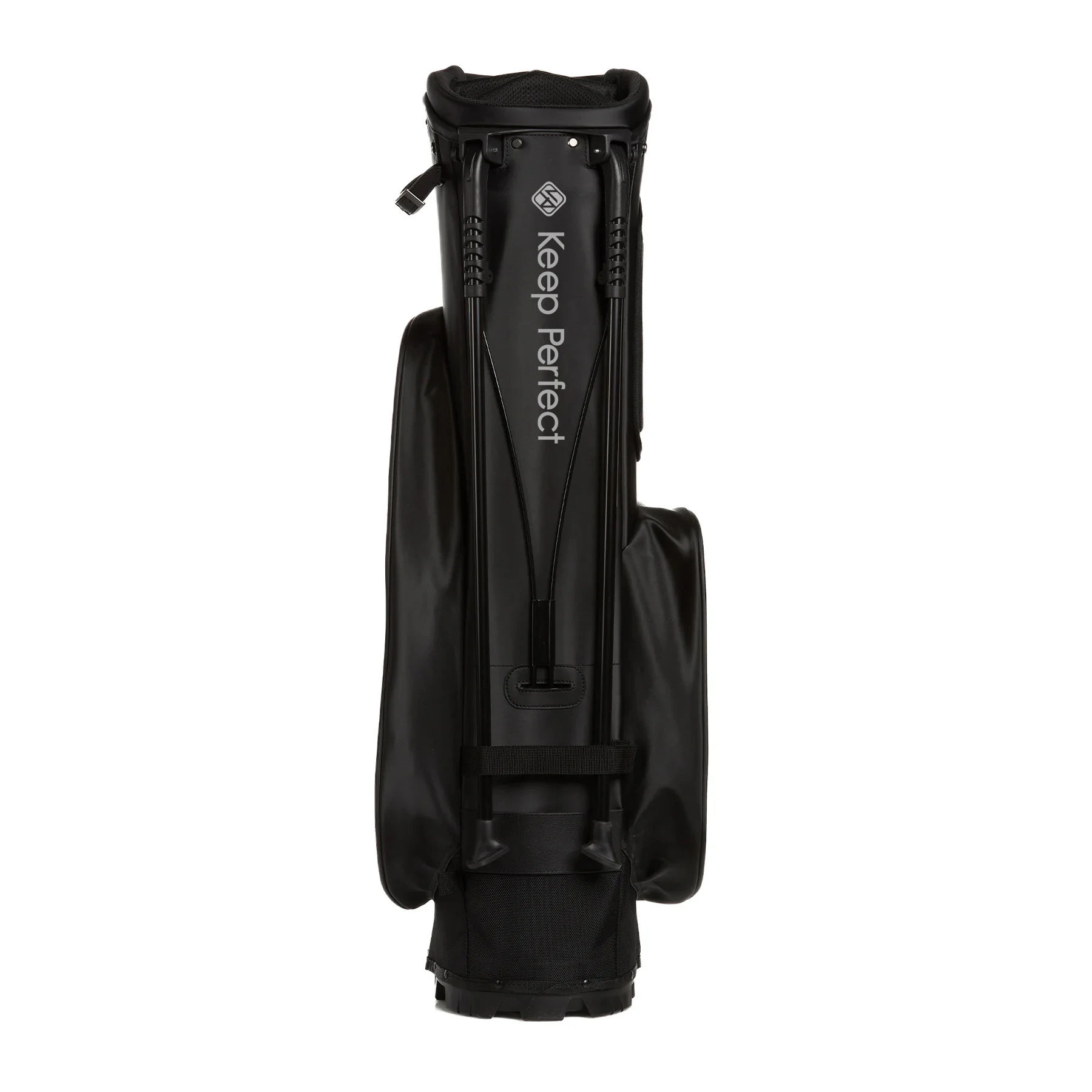
Proper documentation is just as important as passing the tests themselves. Without the right paperwork, your compliant product can still be rejected at customs.
Required Documents for US Market
| Document | Description | When Required |
|---|---|---|
| General Certificate of Conformity (GCC) | Self-issued based on testing or reasonable testing program | All adult consumer products |
| Children’s Product Certificate (CPC) | Based on third-party testing at CPSC-accepted lab | All children’s products (under 12) |
| Test Reports | Full laboratory test reports with results | Supporting documentation for GCC/CPC |
| Tracking Labels | Permanent marks with manufacturer, date, location | Children’s products |
| Prop 65 Warning | Clear and reasonable warning per 2018 regulations | If Prop 65 chemicals present above safe harbor levels |
Required Documents for EU Market
| Document | Description | When Required |
|---|---|---|
| REACH Declaration of Conformity | Statement confirming compliance with REACH requirements | All products sold in EU |
| SVHC Declaration | Declaration of SVHC content (or non-presence) | If any SVHC >0.1%, must inform buyers |
| Test Reports | From ISO 17025 accredited laboratories | Supporting documentation |
| GRS Transaction Certificate | Proof of recycled content per shipment | If GRS claims are made |
| EU Authorized Representative | Named entity within the EU | Required for non-EU manufacturers |
Labeling & Marking Requirements
Beyond regulatory warnings, golf bags must carry proper care/content labeling:
- Material composition labels (required in most US states and all EU countries)
- Country of origin (“Made in China” or equivalent)
- Manufacturer/importer identification
- Care instructions (using standardized symbols per ISO 3758)
- Size/capacity markings
Common Compliance Mistakes to Avoid
After 20+ years in the golf bag industry, we’ve seen importers make the same preventable mistakes over and over. Here are the most common — and most costly:
Mistake #1: Assuming “Compliant Materials” Means “Compliant Product”
Even if every individual material passes testing, the assembled product may still fail. Adhesives can contaminate adjacent fabrics. Metal hardware can transfer lead to fabric through friction. Always test the finished product, not just raw materials.
Mistake #2: Skipping Testing on New Colors or Logos
A new colorway means new dyes, new pigments, potentially new chemical profiles. A new logo means new printing ink, new transfer adhesive. Every variation must be tested. We’ve seen entire shipments held at customs because a single new color wasn’t tested.
Mistake #3: Relying on Supplier Self-Certification
A supplier’s “compliance guarantee” is meaningless without supporting test reports from an accredited laboratory. Always insist on seeing actual test reports, and verify that the lab is CPSC-accepted (for US) or ISO 17025 accredited (for EU).
Mistake #4: Ignoring Prop 65 Until a Lawsuit Arrives
Many importers treat Prop 65 as optional or assume it only applies to California-based companies. In reality, Prop 65 applies to any product sold to California consumers — which includes online sales. The plaintiff’s bar is extraordinarily active, and the financial penalties are significant.
Mistake #5: Not Maintaining an Updated Compliance File
Regulatory frameworks change constantly. The SVHC list grows every six months. CPSIA enforcement priorities shift. State-level regulations (Washington, Oregon, New York) are adding new restrictions. Compliance is not a one-time event — it requires ongoing monitoring and updating.
Mistake #6: Failing to Require Traceability
Without lot-level traceability, you cannot effectively execute a recall or identify the source of contamination. Ensure your manufacturer applies lot codes or date codes to every unit, and maintains records linking those codes to specific material batches and test reports.
Mistake #7: Overlooking Small Components
Importers obsess over fabric and main hardware but forget about small components like zipper pulls, cord ends, rivets, and Velcro. These small parts are often sourced from different suppliers and may use different (non-compliant) materials. Every component that touches the product must be included in your testing scope.
How KPG Ensures Full Compliance

At Keep Perfect Golf, compliance isn’t an afterthought — it’s built into every stage of our production process. Here’s how we protect our brand partners:
Our Certifications
- BSCI (Business Social Compliance Initiative): Annual audits ensuring ethical labor practices, safe working conditions, and environmental responsibility throughout our supply chain.
- ISO 9001:2015: International quality management certification ensuring consistent processes and continuous improvement.
- Sedex/SMETA: Ethical trade audit platform demonstrating our commitment to responsible business practices.
Internal QC Process
Our quality control process integrates compliance at every stage:
- Material Incoming Inspection: All raw materials are inspected upon arrival. We verify supplier test certificates and conduct random in-house testing for high-risk components (metal hardware, synthetic leather).
- In-Process Quality Checks: During production, our QC team monitors assembly processes to prevent cross-contamination and ensure consistent application of compliant materials.
- Pre-Shipment Testing: For every order, we can arrange third-party testing (SGS Xiamen is conveniently located nearby) on finished goods from the production lot.
- Documentation Package: With every shipment, we provide a complete compliance documentation package including GCC/CPC, test reports, material declarations, and (for GRS products) Transaction Certificates.
Compliance Support for Brand Partners
- Free compliance consultation before order placement
- Material selection guidance to meet specific market requirements (US, EU, or both)
- Prop 65-compliant and REACH-compliant material options clearly designated in our catalog
- GRS-certified recycled material options with full documentation
- Annual compliance updates as regulations change
Visit our certifications page to learn more about our quality commitments, or explore our quality control process in detail.
Frequently Asked Questions
1. Do golf bags need to be CPSIA compliant?
Adult golf bags require a General Certificate of Conformity (GCC) based on testing or a reasonable testing program. Children’s golf bags (marketed to under 12) require full CPSIA compliance including third-party testing, a Children’s Product Certificate (CPC), and permanent tracking labels. All golf bags must meet the lead content limits (less than 100ppm in substrate) and phthalates restrictions (less than 0.1%) under CPSIA.
2. What is the cost of Prop 65 compliance for golf bags?
Prop 65 compliance costs vary. Adding a warning label costs virtually nothing but may reduce sales. Reformulating materials to eliminate Prop 65 substances typically adds 3-8% to material costs. Facing a Prop 65 lawsuit settlement costs $15,000-$50,000+ per product. The smart investment is proactive material reformulation.
3. How often do I need to retest golf bags for compliance?
Best practice is to test annually for each product line, and additionally whenever you change materials, colors, suppliers, or decorations. Most US retailers require test reports less than 12 months old. EU buyers typically follow the same standard.
4. Does REACH apply if I sell online to EU consumers from the US?
Yes. Any product sold into the EU — whether through physical retail or online — must comply with REACH. The importer of record (typically the EU-based buyer or their customs broker) bears primary responsibility, but the brand owner can also be held liable.
5. What is the difference between GRS and RCS certification?
GRS (Global Recycled Standard) is the more comprehensive standard — it verifies recycled content AND includes environmental and social criteria. RCS (Recycled Claim Standard) only verifies recycled content without the additional sustainability requirements. Most major brands now prefer GRS.
6. Can KPG provide all compliance documentation?
Yes. We provide a complete compliance documentation package with every order, including test reports from accredited labs (SGS, Intertek), General Certificates of Conformity (GCC) or Children’s Product Certificates (CPC), REACH Declarations, SVHC declarations, GRS Transaction Certificates (if applicable), and material composition labels. Visit our certifications page for details.
7. What happens if my golf bag shipment is rejected at customs?
US Customs (CBP) can detain, refuse entry, or destroy non-compliant products. The financial loss includes the product cost, shipping, storage fees, and potential penalties. In the EU, customs authorities can similarly reject shipments. Working with a compliant manufacturer like KPG and maintaining proper documentation virtually eliminates this risk.
8. Are there upcoming regulations I should prepare for?
Yes. The EU is expected to finalize PFAS restrictions under REACH within the next 1-2 years, which will significantly impact water-resistant golf bag coatings. In the US, several states are proposing expanded phthalate restrictions beyond CPSIA requirements. The EU’s proposed ESPR (Ecodesign for Sustainable Products Regulation) will introduce digital product passports that may require detailed material disclosure.
9. What is the minimum order quantity for compliant golf bags?
KPG’s standard MOQ is 100 pieces for golf bags and 500 pieces for accessories. All orders — regardless of quantity — receive the same compliance documentation and quality control standards. We ship FOB Xiamen and have exported to over 100 countries.
10. How do I verify if my current supplier is truly compliant?
Request the following from your supplier: (1) test reports from a CPSC-accepted or ISO 17025 accredited lab, (2) verify the lab’s accreditation status directly with the accrediting body, (3) request material safety data sheets (MSDS) for all components, (4) conduct your own independent testing of production samples, and (5) visit the factory or hire a third-party inspection company.
Get Your Compliant Golf Bag Quote Today
Navigating compliance requirements shouldn’t slow down your business. With 20+ years of experience manufacturing golf bags for 200+ brands across 100+ countries, KPG has the expertise, certifications, and testing relationships to ensure your products meet every requirement — from CPSIA and Prop 65 in the US to REACH and GRS in the EU.
Our team is ready to help you select compliant materials, arrange testing, and prepare all required documentation. Whether you need a custom golf bag designed from scratch or need to ensure your existing designs meet updated regulations, we’re here to support your OEM/ODM needs.
Ready to discuss your compliance needs?
Contact our team today for a free compliance consultation and quote.
📧 Email: [email protected]
📱 WhatsApp: +86 17750020688
📍 FOB Xiamen, China | MOQ 100pcs (Accessories 500pcs)
🏅 BSCI | ISO 9001 | Sedex Certified