When picking the right material for a custom golf bag, the decision boils down to durability, weight, water resistance, maintenance, and style. Whether you’re a walker, cart user, or someone who values aesthetics, here’s a quick breakdown:
- Genuine Leather: Long-lasting, timeless look, but heavy (10–15 lbs) and requires regular care.
- Synthetic Leather (PU): Lightweight, water-resistant, and affordable, but may crack or peel over time.
- Microfiber Leather: Combines a leather-like feel with better water resistance and durability, but lacks the aging patina of real leather.
- Nylon/Polyester Blends: Lightweight and durable, with nylon excelling in strength and polyester in UV resistance. Ideal for walkers.
- Canvas: Vintage charm, but heavier and less water-resistant unless waxed.
Quick Comparison
| Material | Durability | Weight | Water Resistance | Maintenance | Aesthetic Appeal |
|---|---|---|---|---|---|
| Genuine Leather | High (if cared for) | Heavy (10–15 lbs) | Moderate | High | Classic, polished |
| Synthetic Leather | Moderate | Medium | High | Low | Sleek, consistent |
| Microfiber Leather | High | Medium | High | Low | Premium, uniform |
| Nylon | High | Light | Moderate | Low | Vibrant, modern |
| Polyester | Moderate | Light | High | Low | Matte, UV-resistant |
| Canvas | Medium | Heavy | Low (unless waxed) | Medium | Rugged, vintage |
Each material has trade-offs. Golfers who prioritize lightweight options should go for nylon or polyester, while those seeking a premium look might lean toward genuine leather or PU. For rainy conditions, PU or microfiber leather works best. Choose based on your needs and playing style.
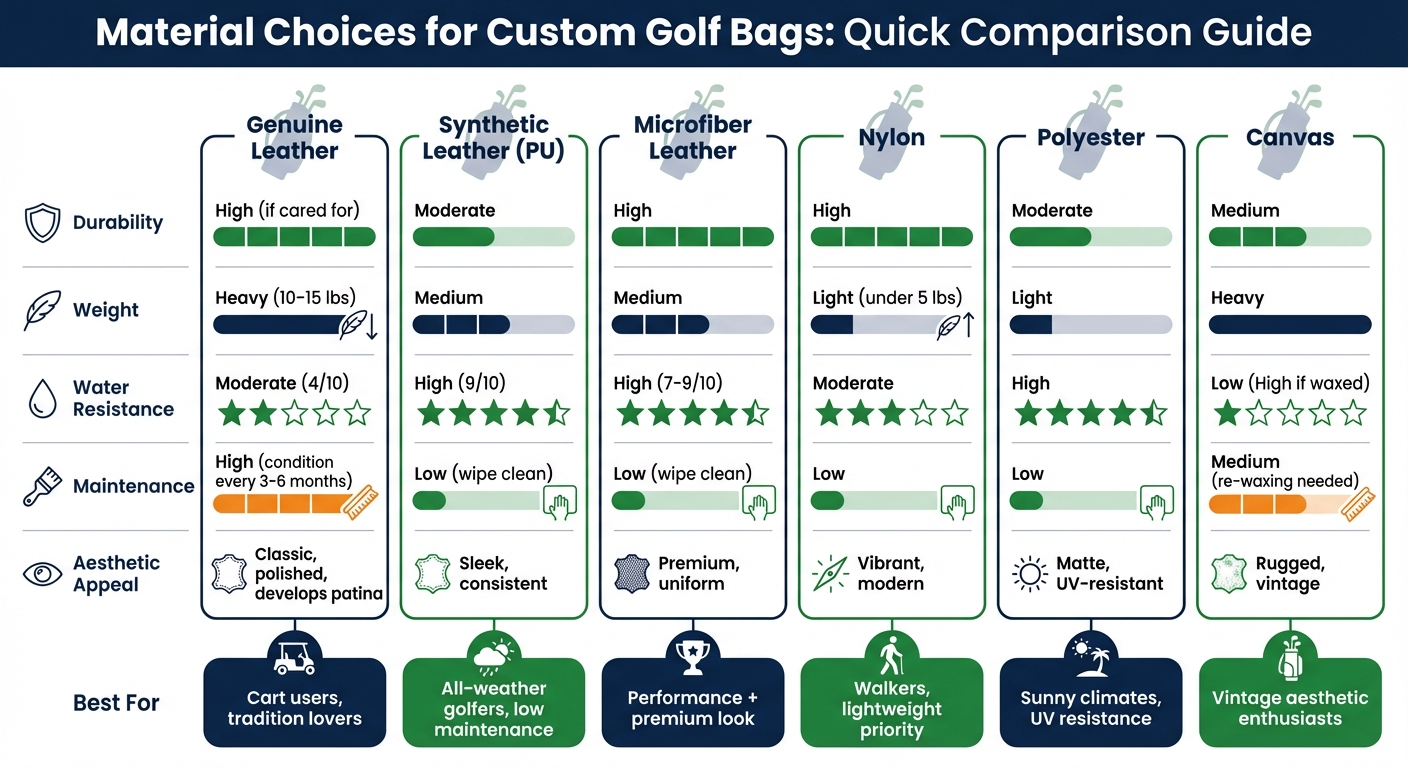
Golf Bag Material Comparison: Durability, Weight, and Water Resistance Guide
1. Genuine Leather
Genuine leather is a top-tier option for custom golf bags, offering a sleek, timeless look that resonates with golfers who appreciate tradition and sophistication. Spencer Lanoue, Founder of Caddie AI, highlights its appeal:
"A true, genuine leather golf bag is the pinnacle of luxury. Often called ‘Tour Bags’ or ‘Staff Bags,’ these are the massive, beautiful bags you see the pros using on TV."
However, this premium choice comes with a few considerations.
Durability
Leather golf bags, when properly cared for, can last for decades. Over time, they develop a patina – a natural sheen that enhances their character. That said, "genuine leather" is a grade below full-grain and top-grain leather, meaning its patina may not be as rich as those higher-quality options. BestLeather.org explains:
"Properly cared for, [genuine leather] will still last several years… but it is not going to stand up to ongoing wear and tear [like full-grain]".
Water Resistance
Leather naturally resists light rain and small spills, but it isn’t fully waterproof. Prolonged exposure to water can lead to absorption, which adds weight and risks staining, stiffness, and cracking. Heavy rain requires protective coatings to shield the material. The Real Leather Co. advises:
"Leather is susceptible to damage from moisture, so it’s essential to keep it dry whenever possible."
If your bag gets wet, gently blot the moisture with a clean cloth and let it air dry at room temperature. Avoid heat sources, as they can damage the leather. These precautions are crucial, especially when considering leather’s weight.
Weight
Empty genuine leather tour bags usually weigh between 10 and 15 pounds. This makes them ideal for golfers who rely on carts or caddies, as the weight can be cumbersome for those who prefer walking the course. Additionally, the material’s density can feel uncomfortable in hot, humid conditions, impacting overall comfort during extended rounds.
Aesthetic Appeal
Few materials rival the classic, polished look of leather. Its premium appearance conveys professionalism and elegance, and as it ages, it only becomes more distinguished – a quality synthetic materials often struggle to match.
Maintenance Needs
Caring for leather requires effort but pays off in longevity and appearance. To keep your bag in top condition:
- Condition Regularly: Apply a leather conditioner every 3–6 months to maintain its natural oils and prevent cracking.
- Clean Gently: Use a soft, dry cloth to remove dust and dirt, particularly in dry or dusty environments.
- Handle With Care: Leather is prone to scratches, so avoid rough handling. Textile engineer Sarah Johnson reminds us that leather’s delicate surface requires attention to prevent damage.
- Store Properly: Keep your bag in a cool, dry, and ventilated area to avoid mildew. Limit exposure to direct sunlight, which can cause fading and cracking.
- Avoid Heat: When drying or conditioning, steer clear of radiators, hair dryers, or other heat sources, as they can make leather brittle and prone to cracking.
For conditioning, apply the product in a circular motion and buff off any excess for a smooth finish. With the right care, a genuine leather golf bag can remain a cherished part of your equipment for years to come.
2. Polyurethane (PU)
Polyurethane – commonly referred to as vegan or synthetic leather – has gained traction as a popular material for custom golf bags. Its appeal lies in offering a premium look without the hefty price tag or weight of genuine leather. Spencer Lanoue, Founder of Caddie AI, highlights its advantages:
"Synthetic leather bags offer a fantastic look for a fraction of the price of the real thing. More importantly, they are significantly lighter and far more water-resistant, making them much more practical."
Let’s break down how PU stacks up in terms of durability, water resistance, weight, aesthetics, and maintenance.
Durability
When it comes to resisting scratches, scuffs, and fading, PU performs exceptionally well. Textile engineer Sarah Johnson points out:
"Synthetic leather is more durable than real leather: Resistant to scratches, scuffs, and fading."
While PU holds up well in the short to medium term, it doesn’t match the decades-long lifespan of high-quality genuine leather. Over time, particularly with heavy use and prolonged sun exposure, PU can become brittle, crack, or peel. Unlike genuine leather, it won’t develop a rich patina as it ages, which may be a drawback for those who value that characteristic.
Water Resistance
PU excels in water resistance, thanks to its engineered plastic coating or lamination. It earns an impressive 9 out of 10 for shielding against water. Kaylin Diaz from Vessel Golf elaborates:
"PU receives a 9 out of 10 for water-resistance because it is specifically treated to protect against water, spills, oils, and sweat."
This makes PU a standout choice compared to genuine leather, which scores only 4 out of 10. PU prevents moisture absorption, keeping your clubs dry during rainy rounds without adding extra weight. Its lamination also shields the material from harsh weather, ensuring it remains practical even in challenging conditions.
Weight
PU strikes a balance in weight. It’s lighter than genuine leather, which can weigh 10–15 pounds, but slightly heavier than ultra-light materials like nylon. This middle ground makes it ideal for golfers who primarily use push carts or ride in golf carts but may occasionally carry their bags for short distances.
Aesthetic Appeal
PU offers the polished, premium look of genuine leather at a fraction of the cost. Its uniform and consistent finish gives golf bags a professional appearance on the course. However, unlike natural leather, PU won’t develop a unique character or patina over time, which may be a consideration for those who appreciate evolving aesthetics.
Maintenance Needs
Caring for PU is straightforward. Forget expensive leather conditioners or oils – simply wipe it down with a damp cloth and mild soap. Avoid harsh chemicals or abrasive cleaners to maintain its finish. Kaylin Diaz notes:
"The polyurethane lamination prevents the material from breaking down when exposed to harshities, so PU does not need constant maintenance like other materials."
To extend its lifespan, store your PU bag away from direct heat and prolonged sunlight. Ensure it’s completely air-dried before putting it away to prevent mildew on any non-PU components. This combination of durability and low maintenance makes PU a practical and versatile choice for golf bags, standing alongside materials like genuine leather.
3. Microfiber Leather
Microfiber leather is a high-quality synthetic material that blends the best of both worlds – offering the luxurious feel of natural leather with enhanced performance. According to a University of California-Davis study, microfiber leather surpasses real leather in resisting abrasion, water, and stains, making it a standout option for various applications.
Durability
Microfiber leather is built to last, withstanding over 3,000 cycles in abrasion tests. It resists scratches, scuffs, and UV fading, areas where natural leather often requires regular maintenance. While it doesn’t crack like some synthetic materials, its lifespan typically ranges from 5 to 10 years, or up to 15 years with proper care. This is shorter than the 30+ years of durability seen with premium full-grain leather. However, one notable difference is that microfiber leather lacks the ability to develop a patina, the unique aging characteristic that many value in natural leather.
Water Resistance
One of microfiber leather’s standout features is its natural water resistance. It holds up well in wet conditions, protecting against moisture, grass stains, mud, and rain. It scores between 7 and 9 out of 10 for water resistance, making it a reliable choice for outdoor use.
Weight
In terms of weight, microfiber leather strikes a balance. It’s lighter than genuine leather, which can weigh 10–15 pounds when empty, but it has more heft and substance compared to ultra-light materials like nylon.
Aesthetic Appeal
Microfiber leather doesn’t just perform well – it looks great, too. It offers a premium, consistent appearance that closely resembles genuine leather. Unlike natural hides, which may have imperfections, microfiber provides uniformity, ensuring full material usage for custom designs. It also holds color exceptionally well and resists fading, maintaining its fresh, out-of-the-box look for longer periods. However, it won’t develop the rich character or aged patina that natural leather acquires over time.
Maintenance Needs
Taking care of microfiber leather is simple. After exposure to wet conditions, a quick wipe with a damp cloth and mild soap is all that’s needed, followed by air-drying. Avoid using harsh chemicals or exposing the material to direct heat, as these can damage the synthetic fibers. With a cost of $1–$5 per square foot, microfiber leather offers an attractive middle ground between budget-friendly synthetics and high-end genuine leather.
4. Nylon and Polyester Blends
Nylon and polyester blends are the go-to choice for lightweight custom golf bags. They offer golfers an affordable and practical solution while still delivering impressive performance. These synthetic materials dominate the carry and stand bag market, combining durability with the convenience of a lighter load – perfect for those long 18-hole walks.
Durability
Nylon is known for its incredible tensile strength, making it resistant to tears and abrasions. Polyester, on the other hand, holds its shape well and doesn’t stretch when exposed to moisture. High-denier nylon, ranging from 840D to 1680D, is often used in tactical and military-grade gear. For golf bags, manufacturers typically use 400D to 600D nylon to balance strength and weight. Many bags also incorporate Ripstop weaves, which include thicker, grid-patterned threads to prevent small tears from spreading.
"Nylon is ideal for golfers who prioritize lightweight construction and durability at an affordable price… Polyester works well for those who need excellent color retention and quick-drying properties." – Sarah Johnson, Textile Engineer & Golf Enthusiast
A key difference between the two materials is how they handle water. Nylon can absorb about 2% of its weight in water, which can lead to stretching and added weight in wet conditions. Polyester, being naturally hydrophobic, repels water and dries much faster. Polyester also offers better UV resistance, which helps it retain color and structural integrity even after prolonged sun exposure, unlike nylon, which tends to fade.
Water Resistance
While both materials repel moisture, neither is entirely waterproof without additional coatings like PVC or PU. Nylon stands out for its resistance to mildew and fungi, making it a great choice for humid or damp environments. Polyester’s moisture-wicking properties allow it to dry faster after a rainstorm. To avoid moisture-related issues, always air dry your bag thoroughly after a wet round.
Weight
Nylon truly excels when it comes to weight. High-quality nylon bags often weigh under 5 pounds, making them a favorite among golfers who prefer walking the course. Spencer Lanoue, Founder of Caddie AI, explains:
"Nylon’s biggest advantage is its strength-to-weight ratio. It allows for the creation of carry bags that weigh less than 5 pounds, a huge benefit for walkers".
Polyester, while slightly heavier in comparable weaves, still falls into the light-to-medium weight category. Both materials rely on molded polypropylene plastic frames at the top cuff and base to maintain the bag’s structure, as synthetic fabrics alone aren’t rigid enough.
Aesthetic Appeal
Nylon offers a smooth finish and vibrant colors, though it’s prone to fading with extended sun exposure. Polyester, with its matte and slightly textured surface, provides superior color retention and UV resistance. For golfers in sunny climates, polyester is a better choice for maintaining a fresh appearance over time. Both materials, however, work well with custom designs, allowing golfers to personalize their bags.
Maintenance Needs
Both nylon and polyester require minimal upkeep. A simple wipe-down with a damp cloth and mild soap, followed by air drying, is usually enough to keep them clean. Nylon tends to be easier to clean, while polyester offers better resistance to mildew and chemical damage. Avoid using harsh chemicals, as they can harm the synthetic fibers or water-repellent coatings.
"If you’re making a performance-driven or heavy-duty bag, nylon may be worth the extra investment. If you need a reliable, budget-friendly option with excellent customization potential, polyester could be the better choice." – Jonathan Abbey, President, Fieldtex Products
sbb-itb-4fa7e8b
5. Canvas and Synthetic Blends
Canvas and synthetic blends bring a classic touch to golf gear, appealing to those who value tradition over cutting-edge performance. While these materials carry a sense of heritage, they come with compromises in durability, water resistance, and weight compared to modern synthetics.
Durability
Canvas is known for its ruggedness, typically weighing between 18–24 ounces, and is considered "Medium" in durability when stacked against contemporary synthetic materials. It can handle rough conditions on the course, but its lower resistance to abrasion means manufacturers often reinforce high-stress areas with leather accents to extend its lifespan. However, canvas tends to absorb dirt and stains easily, which can affect its appearance over time.
"Canvas is a strong and rugged material that can withstand rough treatment on the golf course."
– Joyce HO, Legendtimes Golf Factory
Water Resistance
One of the biggest drawbacks of standard cotton canvas is its tendency to soak up moisture, which increases its weight in wet conditions. Waxed canvas, on the other hand, offers a solution by being treated with paraffin to create a highly water-repellent surface. As Spencer Lanoue, Founder of Caddie AI, notes:
"Waxed canvas is a particularly popular choice… This process makes the fabric exceptionally water-repellent while giving it a classic, weathered look that gets better with age."
– Spencer Lanoue, Founder, Caddie AI
For golfers who want a traditional aesthetic but need better weather resistance, waxed canvas is the way to go.
Weight
Canvas is heavier than materials like nylon or polyester, which can be a drawback for golfers who prefer walking the course. When it gets wet, the material absorbs water, making it even heavier – a factor worth considering for those prioritizing lightweight gear.
Aesthetic Appeal
Canvas stands out with its minimalist, vintage charm, making it a popular choice for Sunday bags and simpler designs. Over time, it develops a weathered appearance with natural creases, giving it character and a timeless appeal that resonates with fans of traditional materials.
Maintenance Needs
Canvas requires a bit of care to maintain its look and functionality. Regular brushing helps keep dirt at bay, and applying fabric protector can improve its moisture resistance. For waxed canvas, re-waxing from time to time is essential to preserve its water-repellent properties. Always air dry canvas bags away from direct heat to avoid shrinkage or mold, and steer clear of dryers or heaters, which can compromise the fabric.
| Performance Factor | Canvas Rating |
|---|---|
| Durability | Medium |
| Water Resistance | Low (Standard) / High (Waxed) |
| Weight | Medium to Heavy |
| Maintenance | Medium |
| Aesthetic Appeal | High (Classic/Vintage) |
Pros and Cons
When picking the perfect material for your custom golf bag, it’s all about finding the right balance between durability, weight, upkeep, and price.
Genuine Leather stands out for its incredible durability and timeless appeal. With proper conditioning every 3 to 6 months, it can last for decades. However, it’s heavy, prone to moisture damage, and comes with a hefty price tag. As Spencer Lanoue, Founder of Caddie AI, puts it:
"A genuine leather bag is a statement piece. It’s for the dedicated golfer who primarily rides, values tradition over pure function, and is willing to invest the time and money to maintain it."
Synthetic Leather (PU) offers solid water resistance and requires minimal upkeep. It’s a mid-range option in terms of cost, but it doesn’t last as long as genuine leather and may crack or peel with prolonged exposure to sunlight. Nylon, on the other hand, is known for its impressive strength-to-weight ratio and tear resistance, making it a practical and affordable choice. However, it can fade under UV light and stretch under heavy loads. Polyester is another lightweight option, excelling in UV and mildew resistance, which makes it great for sunny climates. That said, it doesn’t handle abrasion as well as high-grade nylon.
Each material has its strengths and weaknesses, making it essential to weigh functionality against style when designing a custom golf bag. Here’s a quick comparison:
| Material | Key Strengths | Key Weaknesses | Cost | Maintenance |
|---|---|---|---|---|
| Genuine Leather | Long-lasting; scuff-resistant; develops patina | Heavy (10–15 lbs); moisture-sensitive | Expensive | High (conditioning needed every 3–6 months) |
| Synthetic (PU) | Water-resistant; consistent appearance; lightweight | Prone to peeling and cracking; sensitive to heat | Medium | Low (easy to clean with a wipe) |
| Nylon | Strong yet lightweight; tear-resistant (e.g., 1680D) | Can fade in sunlight; stretches under heavy loads | Low to Medium | Low |
| Polyester | UV and mildew resistant; quick-drying; retains color | Less abrasion-resistant than nylon | Low to Medium | Low |
| Canvas | Rugged vintage look | Absorbs water; vulnerable to mold and stains | Medium | Medium (may need occasional re-waxing) |
For golfers who prefer walking, high-denier nylon (600D or higher) or polyester is often the go-to choice, offering a great mix of durability and lightweight design. If you’re after a premium Tour-style bag but don’t want the upkeep of genuine leather, synthetic leather can provide a sleek look without breaking the bank – or your back.
Conclusion
Selecting the right material for your golf bag depends on your playing style and personal preferences. Synthetic leather (PU) offers a professional look, excellent water resistance, and low maintenance at a mid-range price – perfect for most golfers. If you’re a walker, high-denier nylon (400D–600D) is lightweight and easy to carry. For cart users, genuine leather provides unmatched durability and a patina that develops character over time. Waxed canvas brings a rugged, vintage vibe with natural water repellence, while recycled polyester appeals to environmentally conscious players, reducing environmental impact by up to 60% without compromising performance.
Your local climate also plays a role. Polyester excels in sunny regions due to its UV resistance, while PU-coated fabrics with seam-sealed construction are ideal for rainy or humid conditions. Walkers should prioritize lightweight materials, cart users can explore premium, heavier options, and all-weather golfers should look for specialized waterproof designs.
At Keep Perfect Golf, the customization options let you tailor your bag to suit both performance needs and personal style. Whether you want a lightweight carry bag in 600D Ripstop Nylon or a premium cart bag with synthetic leather panels, their OEM/ODM manufacturing capabilities ensure your bag combines functionality with aesthetics. You can even include practical features like full-length dividers or velour-lined top cuffs to protect your gear.
FAQs
What is the best material for a lightweight and easy-to-carry golf bag?
For golfers seeking a lightweight, easy-to-carry bag, nylon stands out as a top option. It combines durability, water resistance, and an impressive strength-to-weight ratio. This makes it perfect for those who want a convenient bag that doesn’t compromise on performance.
What’s more, nylon offers versatility with a range of colors and finishes. This means you can choose a design that suits your personal style while still enjoying a bag that’s practical for daily use.
How does microfiber leather compare to genuine leather in terms of water resistance?
Microfiber leather offers water resistance comparable to genuine leather, though it often requires extra treatments to boost its water-repellent qualities. Genuine leather, by nature, has some resistance to water but still benefits from conditioning or waterproofing products to handle wet conditions better.
For those seeking a stylish yet water-resistant material, microfiber leather stands out – especially when treated correctly. Genuine leather, while offering timeless appeal, demands consistent care to guard against moisture.
How do you care for synthetic leather golf bags?
Synthetic leather golf bags are incredibly simple to care for and keep in good condition. All it takes is a quick wipe with a damp cloth and a bit of mild soap to clear away dirt or stains. Just steer clear of harsh chemicals or abrasive tools, as these can harm the bag’s finish.
To keep your bag looking its best, clean it regularly to prevent dirt from accumulating. When not in use, store it in a cool, dry spot to help preserve its durability and appearance. Thanks to its low-maintenance nature, synthetic leather is an excellent option for golfers who value both style and ease.
Related Blog Posts
- The Ultimate Guide to Golf Bag Manufacturing: Key Processes, Materials, and Partner Selection
- PU vs. Nylon: Golf Bag Material Comparison
- Top Materials for Portable Golf Bag Storage Systems
- Selecting Optimal Materials for High-Performance Golf Bags: A Manufacturer’s Advice
Related Resources
Related Products
Explore our manufacturing capabilities in this category:
 Premium Stand Bag
 Ultra-Light Stand Bag
 Hybrid Stand Bag
 Rain-Resistant Stand Bag
 Premium Tour Cart Bag
 Lightweight Cart Bag
 Waterproof Cart Bag
 Staff Cart Bag
 Classic Sunday Carry Bag
 Ultra-Light Sunday Bag
Need custom golf bags? Contact us for OEM/ODM quotes — MOQ 100pcs, FOB Xiamen.