When designing a custom golf bag, choosing the right colors is essential for both style and functionality. Whether you’re an individual golfer, a team, or a business, your color choices can reflect your identity, enhance visibility, and maintain brand consistency. Here’s a quick breakdown:
- Personalization: Use colors that reflect your style or personality. Bright colors improve visibility, while neutral tones offer flexibility.
- Branding: Match your bag’s colors to your brand’s official palette using HEX, RGB, or CMYK codes for consistency across gear.
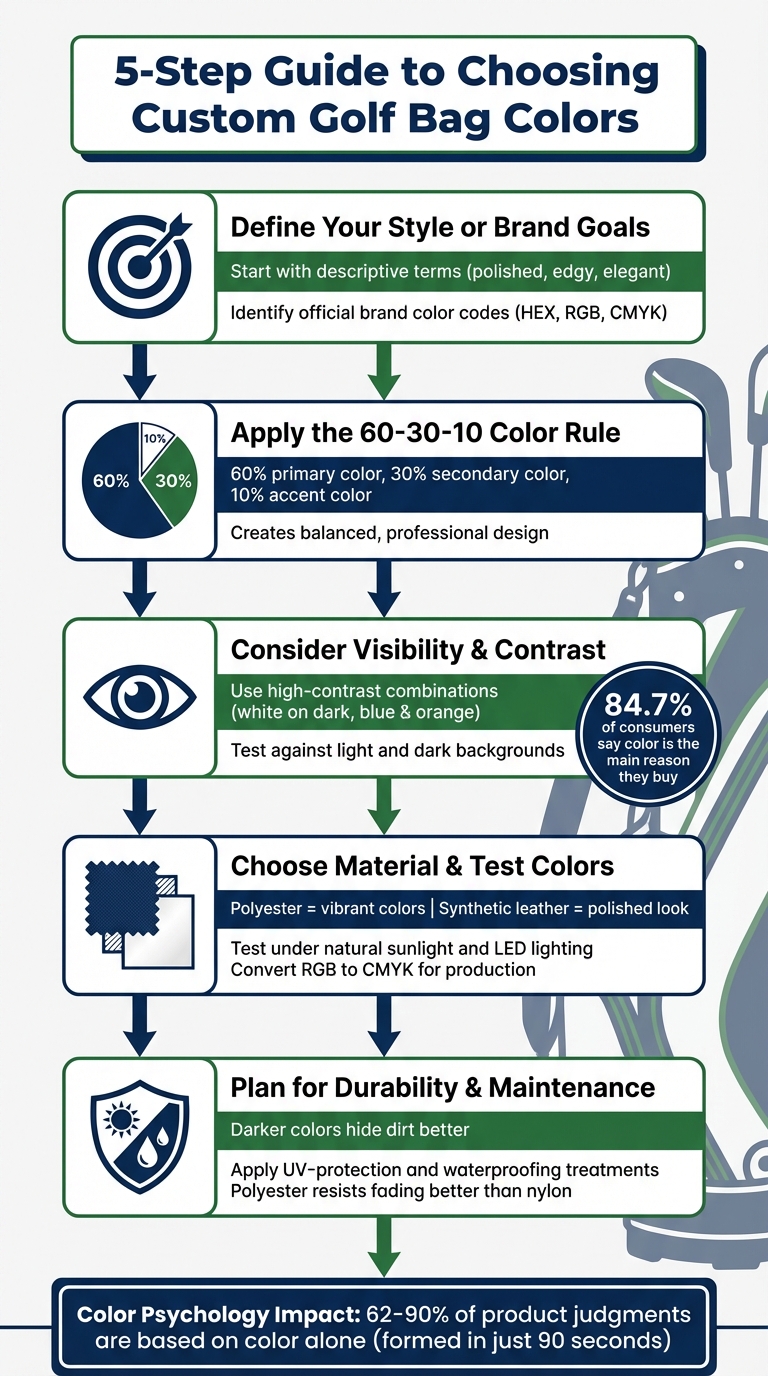
- Color Theory: Follow the 60-30-10 rule for a balanced design: 60% primary color, 30% secondary, 10% accent.
- Practicality: Choose durable materials like polyester for vibrant colors or synthetic leather for a polished look. Test colors under various lighting conditions.
- Maintenance: Darker shades hide dirt better, while lighter colors may require frequent cleaning. Apply UV-protection and waterproofing treatments to maintain vibrancy.
Start with a clear vision of your style or branding goals, and ensure your design is both visually appealing and practical for on-course use.
5-Step Guide to Choosing Custom Golf Bag Colors
Color Selection Basics
How Color Affects Branding and Appearance
Color plays a huge role in how people perceive your golf bag, even before they notice the logo or other details. Research shows that consumers form an opinion about a product in just 90 seconds, and a staggering 62%-90% of that judgment is based solely on color. That makes color one of the most impactful branding decisions you’ll make.
Colors evoke different emotional reactions. Warm tones like red, orange, and yellow convey energy, boldness, and approachability. On the other hand, cool shades such as blue, green, and purple are often associated with trust, professionalism, and calmness. For instance, a navy blue golf bag might give off a sense of authority and responsibility, while a bright orange bag feels more fun and unconventional.
The intensity of the color matters, too. Highly saturated colors create bold, attention-grabbing designs that shine in competitive or public settings. Meanwhile, muted tones offer a more refined and sophisticated vibe, ideal for executive or high-end bags. Neuroscientist Antonio Damasio once said, "How a consumer feels about a brand has more impact than what they think about it", highlighting how colors can instantly spark emotional connections.
To create a balanced and visually appealing design, try following the 60-30-10 rule: dedicate 60% of your bag to a primary color, 30% to a secondary color, and 10% to an accent color. This approach ensures a harmonious look without overwhelming the viewer. For example, black can exude sophistication and power, white can suggest clean modernity, and purple can represent luxury and creativity – perfect for premium custom designs. As you experiment with color theory, remember to factor in practical considerations like durability and material compatibility to maintain your bag’s vibrancy over time.
Color doesn’t just create an emotional impact – it also affects how your bag stands out on the course.
Choosing Colors for Visibility and Recognition
While color influences emotion, it also plays a practical role in making your golf bag easy to spot. High-contrast combinations, like white text on a dark background or complementary pairings like blue and orange, help your bag stand out against the lush greens of a golf course and in varying lighting conditions.
Red is particularly effective for drawing attention in busy environments, which is why it’s a popular choice for brands seeking high visibility. Similarly, yellow offers great visibility while conveying optimism and friendliness.
Testing your color choices against both light and dark backgrounds is crucial to ensure they remain clear and distinct in any setting.
Consistency is another key to recognition. Using the same color palette across all your custom gear – whether it’s bags, headcovers, or towels – creates a cohesive look and reinforces your personal or brand identity. In fact, 84.7% of consumers say color is the main reason they’re drawn to a product. Choosing a bold and distinctive palette can help your bag stand out from the traditional blues and greens that dominate most courses.
sbb-itb-4fa7e8b
Matching Colors to Personal Style and Brand Identity
Incorporating Personal Color Preferences
Start by defining your personal style with descriptive terms like "polished", "edgy", or "elegant", and pick colors that reflect those traits. Random color choices can clash, so it’s important to align your selections with your chosen aesthetic.
A helpful guideline is the 60-30-10 rule: use your signature color as a 10% accent, especially if it’s bold and might overwhelm a professional look. For example, pair a navy base with gray secondary tones and a bold accent color to balance personality and professionalism.
The material you choose also impacts how colors appear. For instance:
- Microfiber leather: Great for vibrant, durable colors in detailed designs.
- Nylon: Works better for simpler patterns since it wrinkles more easily.
- Metallic finishes: These can fade in bright sunlight, so they’re better suited for occasional use.
By applying this thoughtful approach, you’ll naturally create a cohesive and polished brand image across your custom gear.
Maintaining Brand Consistency
If you’re aligning your bag with corporate branding, start by identifying your brand’s official color codes – such as HEX for digital, RGB for screens, and CMYK for print. These codes ensure your bag matches other branded items like apparel, tees, or balls. Keep in mind that some colors may only work with certain materials, so check compatibility before committing.
High-contrast combinations are particularly effective for professional branding. As Golftees.com explains:
"When choosing the color combinations of your items, keep in mind that the best result will be using those colors that offer the most contrast".
Make sure your logo looks clear across different backgrounds. Most custom bags allow for personalization on areas like the side saddle pocket, spine/ball pocket, and apparel pocket. Focus on these spots for maximum visibility.
For corporate or team designs, consider using the script and outline method: select a primary color for your text or logo and add a contrasting outline to make it pop against the bag’s background. If your design includes trademarked logos, be sure to get written permission from the rights holder before proceeding.
Custom bags typically take 5–6 weeks to complete, but if you’re on a tighter timeline, express options can deliver in 10–12 days.
Selecting Color Combinations and Contrast
Color Theory Basics for Golf Bags
To create visually appealing golf bag designs, the color wheel is your best friend. It includes primary, secondary, and tertiary colors, which you can combine in various ways to achieve different effects:
- Complementary colors: These sit opposite each other on the wheel, like blue and orange, and provide high contrast and energy.
- Analogous colors: These are neighbors on the wheel, offering a more harmonious and cohesive look.
- Triadic colors: These are evenly spaced on the wheel, creating a balanced and vibrant palette.
- Monochromatic colors: These use different shades and tints of a single hue, delivering a clean and minimalist feel.
- Split complementary colors: These pair a base color with the two colors adjacent to its complement, offering variety without overwhelming contrast.
For instance, NFL teams like the Miami Dolphins (aqua and orange), Minnesota Vikings (purple and yellow), and Denver Broncos (orange and blue) use complementary color schemes to achieve bold, dynamic visuals.
To keep your design balanced, follow the 60-30-10 rule: dedicate 60% of the design to a dominant color, 30% to a secondary color, and 10% to an accent color. This approach ensures a polished and professional look.
Preventing Color Conflicts
Once you’ve chosen a color scheme, the next step is ensuring the colors work well together. A quick way to check this is by viewing your design in grayscale – this helps confirm that each color stands out clearly. This is particularly important for embroidered or printed details, which need to remain legible against the bag’s base color. As Poppy Townson from Clothes2order puts it:
"The rule you should typically follow when creating your logo or ordering personalising garments is to pick shades that are distinguishable enough from one another. This is to avoid a colour clash between your logo and the garment it’s printed or embroidered on".
If you’re working with bold complementary colors, consider toning down one of the hues by lowering its saturation. This adjustment reduces visual strain and adds a touch of elegance. Neutral colors like black, gray, or white can also act as buffers, helping to separate brighter shades and maintain balance.
Before finalizing your design, convert it from RGB to CMYK to ensure accurate color reproduction during production. Test your material swatches under different lighting conditions, such as natural sunlight and LED lighting, to confirm that the colors look consistent in various environments. This attention to detail can make all the difference in creating a standout golf bag design.
Color Durability and Maintenance Requirements
When choosing a bag, it’s not just about looks – how well the color holds up over time is just as important. Durability often depends on how materials and colors handle exposure to the elements.
Weather Resistance and Color Fading
The durability of a bag’s color can vary significantly depending on the material. For instance, polyester tends to hold its color better under sunlight compared to nylon, which is more prone to fading when exposed to UV rays. UV rays don’t just dull colors; they can also weaken the material itself. To combat this, many high-end bags incorporate UV-stabilized polymers or special coatings designed to resist sun damage.
Natural materials like leather or canvas change over time, developing a patina that gives them a weathered look. While this can add character, it also means the bag won’t look the same as when it was new. On the other hand, synthetic leather resists fading much better, allowing it to maintain that "just out of the box" appearance with minimal upkeep.
Moisture is another challenge, particularly for lighter-colored canvas, which can stain easily and even develop mold if not properly dried. Spencer Lanoue, Founder of Caddie AI, highlights the risks:
"A saturated bag can ruin a nice leather glove, turn your scorecard into pulp, and damage expensive electronics".
These factors directly affect how much effort you’ll need to put into maintaining your bag.
Cleaning and Maintenance Considerations
The right maintenance routine can go a long way in preserving your bag’s appearance. Darker colors tend to hide dirt and stains more effectively, making them a practical choice for players who frequently encounter muddy or dusty conditions.
If you’re looking for easy upkeep, synthetic leather is a great option. It can be cleaned with just a damp cloth and mild soap, and it’s less prone to scuffs compared to genuine leather. Natural leather bags, while durable, require a bit more care. Conditioning them every three to six months helps maintain their texture and prevent cracking. Fabric bags, on the other hand, benefit from waterproofing treatments, which should be reapplied once or twice a season to keep stains and moisture at bay.
Simple habits can also make a big difference. Wipe down your bag with a damp microfiber cloth after each use to remove dirt and debris. For fabric bags, applying a heavy-duty water repellent spray when the bag is new can create an initial barrier against stains and moisture. Finally, proper storage is key – keep your bag in a cool, dry place. Avoid leaving it in hot car trunks or damp garages, as these conditions can accelerate fading and material deterioration.
Material and Customization Options
The material you choose plays a key role in determining the available colors and the overall look of your design. It sets the foundation for creating a personalized style through custom colors and patterns.
Material Types and Color Choices
Each material comes with unique characteristics that influence both color options and durability:
- Nylon: Offers a wide range of colors but tends to fade when exposed to UV light.
- Polyester: Maintains its colors well under sunlight, making it a reliable choice for vibrant designs.
- PU Leather: Delivers a high-end appearance with stable, long-lasting colors.
- PVC: Known for its durability and water resistance, it performs well with darker tones.
The texture and finish of the material also affect how colors appear. For example, synthetic fabrics with a matte finish provide a softer, more understated look, while a glossy finish on PU leather enhances brightness and vibrancy. Natural leather, on the other hand, develops a patina over time, subtly changing its original hue and adding a touch of uniqueness. These material features allow you to align your color choices with both aesthetic goals and practical needs.
Previewing Colors with Design Tools
Before committing to production, you can visualize your design using online tools. These platforms allow you to experiment with bag models, colors, and material textures in real time, giving you a clear picture of how everything will come together. If you need precise color matching for branding, providing Pantone codes to the manufacturer ensures accuracy.
At Keep Perfect Golf, custom colors outside the standard palette cost approximately $200 each, while adding screen-printed patterns incurs an additional $200 per design. To ensure the final product matches your expectations, request a physical stitch-out sample. While digital previews are helpful, only a physical sample can confirm that the material, embroidery, and colors align perfectly. Keep in mind that standard production requires around 60 business days to complete.
Conclusion
Let’s wrap up the key points for finalizing your custom golf bag design. Picking the right colors is about more than just personal preference – it’s a balance of practicality and style. Start by considering your branding needs. Using Pantone codes ensures your colors are consistent across all products. Think about how the colors will look in different lighting conditions on the course, and choose combinations with enough contrast for both visibility and aesthetic appeal.
When it comes to materials, polyester is great for achieving vibrant shades, while leather offers a more refined and consistent tone. Both options ensure your colors hold up well under sunlight and challenging weather.
Before moving into production, request a physical stitch-out sample. This step is crucial to confirm the accuracy of the material, embroidery, and colors, helping you avoid expensive mistakes.
Working with an experienced manufacturer can make all the difference. They’ll guide you through every detail, ensuring your bag is both visually appealing and functional. At Keep Perfect Golf, you’ll get expert advice on material choices, color durability, and seamless design integration. Reach out to them for pricing and production timelines – they’ve streamlined the process to make it efficient and hassle-free.
"A well-designed custom golf bag does more than just hold your clubs. It makes your time on the course better, shows your style, and leaves a great impression." – Joyce Ho, Legendtimes Golf Factory
FAQs
How can I pick the perfect colors for my custom golf bag to match my style?
Choosing the colors for your custom golf bag is an opportunity to let your personality shine. Start by considering colors that resonate with you – your favorites, or ones that carry sentimental value. You could also match the bag to your existing golf gear or incorporate team colors for a unified and polished appearance.
For a bolder statement, try experimenting with striking color pairings or distinctive patterns that reflect your style. If the bag is part of a branding effort, stick with colors that represent your brand’s identity. Personalizing your golf bag isn’t just about aesthetics – it’s about making it unmistakably yours.
What are the best materials to keep the colors on a golf bag vibrant and long-lasting?
For bold, enduring colors on a golf bag, nylon and polyester stand out as top picks. These materials are tough, fade-resistant, and pair perfectly with UV printing, allowing for intricate, vibrant designs that hold up over time.
Additionally, both materials are lightweight and weather-resistant, ensuring your custom golf bag remains both stylish and practical.
How can I make sure my golf bag colors match my brand perfectly?
To make sure your golf bag colors match your brand perfectly, start by selecting colors directly from your brand’s existing palette. Share these color choices with your manufacturer using standardized color codes like Pantone. This ensures precise color matching. For added confidence, ask for sample proofs before production begins to confirm the colors are exactly what you envisioned.
When it comes to production, opt for high-quality methods like embroidery or UV printing. These techniques help keep colors vibrant and durable, ensuring they represent your brand well over time. By focusing on clear communication and paying close attention to design details, your custom golf bags can showcase your branding effortlessly.
Related Blog Posts
- How to Choose the Best Custom Golf Bag: 5 Factors for Durability & Style
- Why Pro Golfers Prefer Custom Bags: Insider Stories & Brand Partnerships
- Customizable Golf Bags: Personalization Trends Taking Over
- Designing Custom Golf Bags for Corporate Gifting
Related Resources
Related Products
Explore our manufacturing capabilities in this category:
Need custom golf bags? Contact us for OEM/ODM quotes — MOQ 100pcs, FOB Xiamen.