International shipping is where many golf bag sourcing projects encounter unexpected challenges — and costs. Damage during transit, customs delays, unexpected duties, and inefficient container loading can erode margins by 15–25% if not properly managed. For B2B buyers importing golf bags from manufacturing hubs in Asia, mastering export packaging and shipping logistics is essential for predictable costs and on-time delivery.
This comprehensive guide covers the critical elements of golf bag export operations: packaging standards, Incoterms, container optimization, customs documentation, and regional compliance requirements. Whether you are a first-time buyer placing your initial order or an experienced procurement manager optimizing an established supply chain, this resource provides the framework you need. All specifications referenced below reflect Keep Perfect Golf’s standard export practices — applied consistently across our full product range including the Premium Stand Bag, Rain-Resistant Stand Bag, and Golf Bag Rain Cover — developed over 22 years of shipping to 100+ countries from FOB Xiamen, China.
Export Packaging Standards for Golf Bags
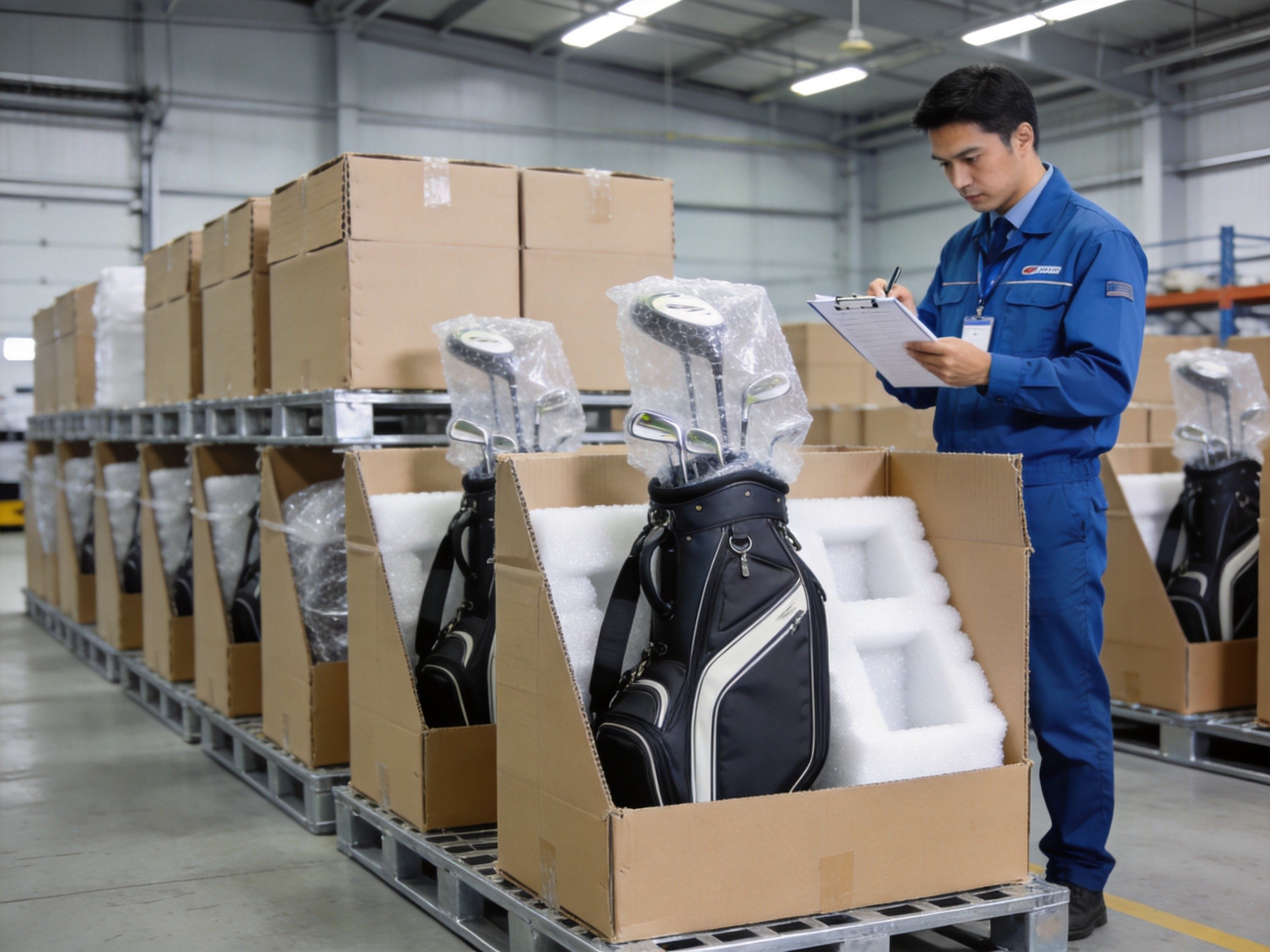
Golf bags present unique packaging challenges due to their irregular shape, rigid components (stand legs, divider tubes, base plates), and susceptibility to damage from crushing and moisture. Proper export packaging must address all three risks simultaneously to ensure products arrive at their destination in sellable condition.
Individual Bag Protection
Each bag is packed in a poly bag with silica gel desiccant packets (minimum 3 packets per bag) to prevent moisture damage during ocean transit, which typically involves 15–35 days at sea with humidity levels exceeding 80%. The bag is stuffed with recycled paper or bubble wrap to maintain its structural shape and prevent internal components — particularly divider tubes and stand mechanisms — from shifting during transit.
Outer Carton Specifications
Export-grade, double-wall corrugated cartons (minimum 275 lb / 1,250 kg burst strength per ASTM D5168) are essential for golf bag shipments. Each carton holds 2–4 bags depending on bag type (stand bags, cart bags, or travel covers), with EPE foam dividers between units to prevent scratching. Cartons are sealed with water-activated kraft tape — not plastic tape, which degrades in the high-humidity environment of container ships.
| Packaging Element | Specification | Purpose |
|---|---|---|
| Inner poly bag | PE bag, 0.05mm thickness | Moisture barrier during ocean transit |
| Desiccant packets | Silica gel, 50g × 3 per bag | Humidity absorption (target: <60% RH inside bag) |
| Internal stuffing | Recycled kraft paper / bubble wrap | Maintain shape, protect stand mechanisms |
| Outer carton | Double-wall corrugated, 275 lb burst strength | Crush resistance during stacking |
| Dividers | EPE foam sheets, 10mm thickness | Prevent inter-bag scratching |
| Carton seal | Water-activated kraft tape | Humidity-resistant sealing |
Shipping Marks and Labeling
Each carton must display: shipping marks (consignee code, PO number, carton number of total), country of origin marking (“Made in China”), and handling symbols (fragile, keep dry, this side up) per ISO 780. Bar code labels with SKU, quantity, and destination information enable efficient warehouse receiving. For shipments to the US, all cartons must comply with CBP (Customs and Border Protection) marking requirements (19 CFR Part 134).
Understanding Incoterms 2020: FOB vs CIF vs DDP for Golf Bag Trade
Incoterms (International Commercial Terms) define the division of costs, risks, and responsibilities between buyer and seller. The three most common Incoterms in golf bag trade from China are:
| Incoterm | Seller Responsibilities | Buyer Responsibilities | Best For |
|---|---|---|---|
| FOB (Free on Board) | Production, inland transport, export customs, loading onto vessel | Ocean freight, insurance, import duties, final delivery | Established buyers with freight forwarding relationships |
| CIF (Cost, Insurance & Freight) | Production + ocean freight + minimum insurance to destination port | Import clearance, duties, final delivery from destination port | Buyers who prefer not to manage ocean freight directly |
| DDP (Delivered Duty Paid) | Everything — shipping, insurance, customs, duties, door delivery | Only receiving goods at their warehouse | Small orders, samples, or buyers new to importing |
All Keep Perfect Golf orders ship FOB Xiamen by default — China’s major port hub for sporting goods exports, located within efficient trucking distance of our Quanzhou manufacturing facility. FOB Xiamen gives buyers maximum control over shipping costs and logistics partner selection. However, CIF and DDP arrangements can be accommodated upon request for buyers who prefer a more streamlined process.
For most established B2B buyers, FOB offers the best balance of cost control and simplicity, provided you have reliable freight forwarding relationships. The cost difference between FOB and CIF typically ranges from $800–$2,500 per 40ft container depending on destination port and current freight rates.
Container Loading Optimization: Maximizing Efficiency
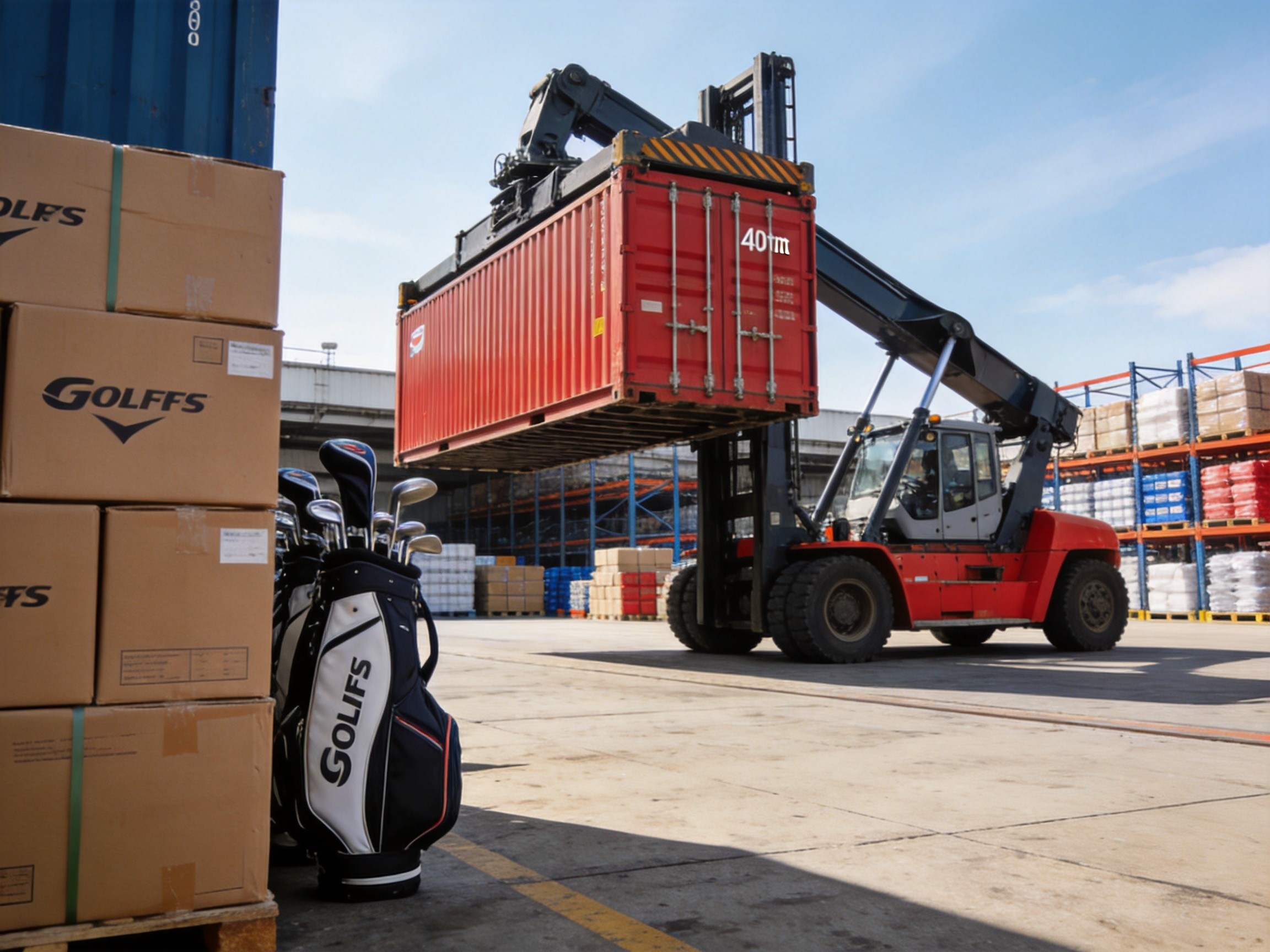
Efficient container utilization directly impacts your per-unit shipping cost. Golf bags are volumetric cargo — they take up more space relative to their weight — making container optimization critical for cost management.
| Container Type | Interior Volume | Stand Bags (approx.) | Cart Bags (approx.) | Best Use Case |
|---|---|---|---|---|
| 20ft Standard | 33.2 m³ | 500–700 pcs | 350–500 pcs | Trial orders, single-product shipments |
| 40ft Standard | 67.7 m³ | 1,200–1,600 pcs | 800–1,200 pcs | Standard production orders |
| 40ft High Cube | 76.3 m³ | 1,400–1,800 pcs | 900–1,400 pcs | Lightweight stand bags, bulky packaging |
Optimization strategies include:
- Vacuum packing: Reduces soft bag volume by 15–20%, enabling higher container utilization
- Nesting: Smaller bags packed inside larger bags for multi-size shipments
- Custom carton dimensions: Packaging engineered to match container interior dimensions (2.35m width standard), minimizing wasted space
- 3D loading plans: Computer-generated loading plans before production ensure every cubic meter is utilized effectively
Keep Perfect Golf provides detailed container loading plans before production begins, ensuring optimal utilization of every container shipped from FOB Xiamen. This proactive approach has helped clients reduce per-unit shipping costs by 8–15% on average compared to industry-standard packaging approaches.
Documentation and Customs Compliance by Region
International golf bag shipments require specific documentation that varies by destination market. Proper documentation prevents customs delays, avoids penalties, and ensures access to preferential duty rates under trade agreements.
Standard Documentation (All Destinations)
- Commercial Invoice: Accurate HS code classification (golf bags: HS 4202.92), unit values, total quantities, Incoterms
- Packing List: Carton count, gross/net weights, dimensions, itemized contents
- Bill of Lading (B/L): Issued by shipping line; required for cargo release at destination
- Certificate of Origin: Required for preferential duty rates under various trade agreements
Regional Compliance Requirements
| Market | Key Compliance Requirements | Documentation | Duty Considerations |
|---|---|---|---|
| United States | CPSIA (lead content for children’s products), California Prop 65 | CPC (Children’s Product Certificate) if applicable, Prop 65 warning labels | HS 4202.92: 17.6% duty (may vary by trade policy) |
| European Union | REACH (chemical safety), CE marking for electronic components | REACH compliance declaration, test reports for restricted substances | HS 4202.92: 2.7% duty (standard MFN rate) |
| United Kingdom | UK REACH (post-Brexit), UKCA marking | UK REACH registration, UKCA compliance documentation | HS 4202.92: 2.7% duty |
| Japan | Japan Agricultural Standards (JAS) for materials, labeling requirements | Japanese language care labels, material composition certificates | HS 4202.92: 13.6% duty |
| Australia | ACCC safety standards, mandatory labeling | Compliance certificates, English care labels per AU standards | HS 4202.92: 5% duty (with ChAFTA: 0%) |
| Middle East (GCC) | GSO standards, Arabic labeling requirements | Certificate of Conformity, Arabic care labels | HS 4202.92: 5–12% duty (varies by country) |
Accurate HS code classification is critical: incorrect classification can result in duty rate differences of 5–15%, triggering unexpected costs or customs audits. Keep Perfect Golf’s export documentation team works with buyers’ customs brokers to verify classification before first shipments to any new market.
Reducing Shipping Costs: Strategies for B2B Buyers
Several proven strategies can reduce international shipping costs for golf bag orders:
- Order consolidation: Combining multiple designs into a single container maximizes utilization and reduces per-unit costs
- Advance booking: Booking ocean freight 4–6 weeks in advance secures better rates versus spot market pricing
- Off-peak shipping: Timing shipments to avoid peak season surcharges (typically August–October for trans-Pacific routes) can save 10–20% on freight costs
- Alternative port routing: Some destinations offer lower total costs via alternative ports (e.g., shipping to Los Angeles and rail to inland destinations vs. direct to inland ports)
- Packaging optimization: Right-sized packaging reduces volumetric waste and enables more units per container
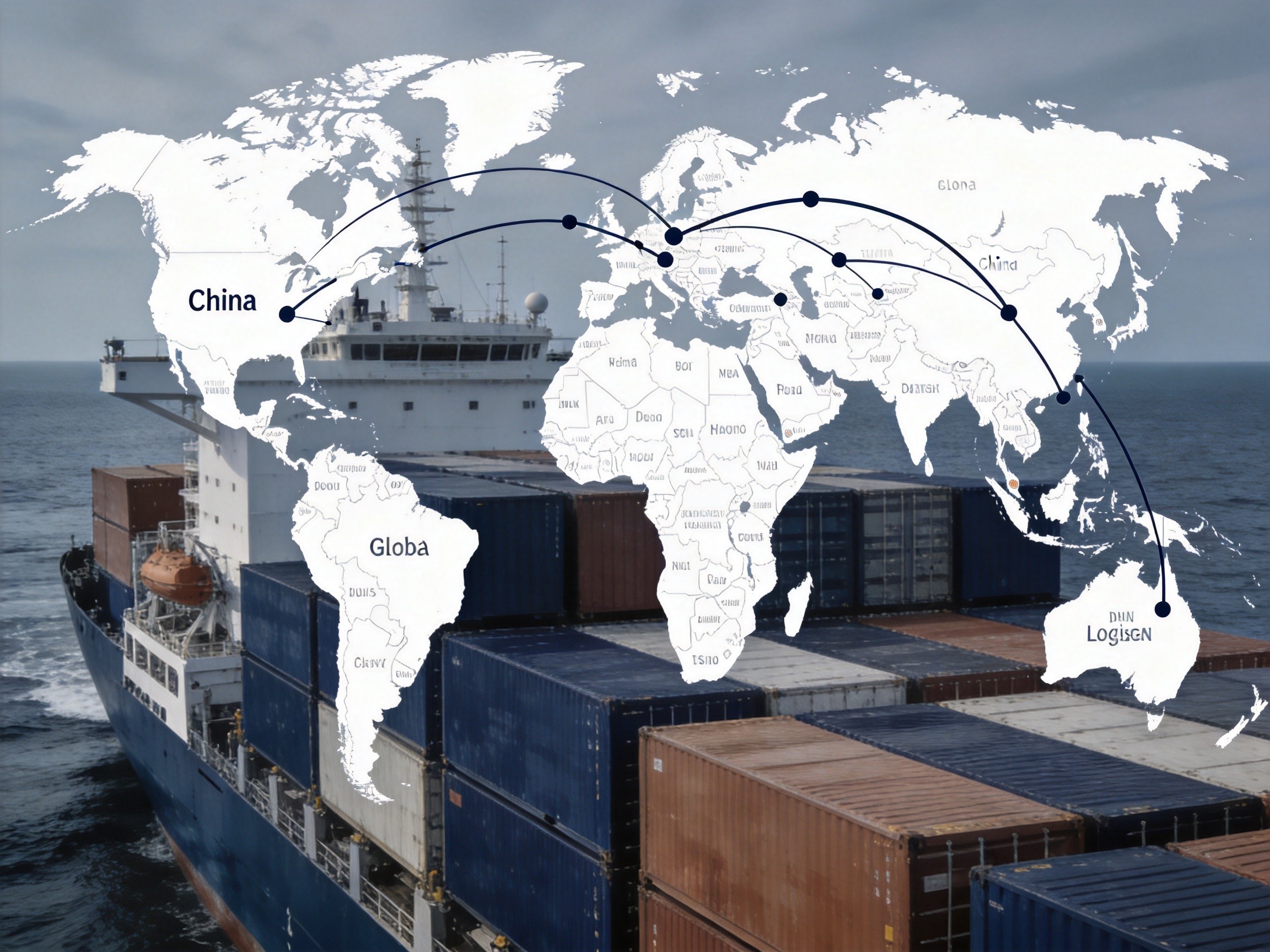
Keep Perfect Golf has shipped products to over 100 countries, developing logistics expertise across every major trade lane. Our shipping team works directly with buyers’ freight forwarders or can recommend reliable forwarding partners, ensuring that your products arrive on time and within budget — whether shipping to North America, Europe, Asia-Pacific, or the Middle East.
Keep Perfect Golf: Export Specifications and Capabilities
| Export Specification | Value |
|---|---|
| Minimum Order Quantity (MOQ) | 100 pieces per design |
| Sample Lead Time | 10–18 days |
| Bulk Production Lead Time | 45–75 days |
| Shipping Port | FOB Xiamen, China |
| Standard Incoterms | FOB (CIF and DDP available upon request) |
| Countries Exported To | 100+ (EU, US, Asia-Pacific, Middle East, Africa, South America) |
| Brands Served | 200+ globally |
| Years in Manufacturing | 22 years (since 2004) |
| Container Loading Plan | Provided before production for every order |
| Quality Control | 3-point inspection before packing |
Insurance and Risk Management for Golf Bag Shipments
While proper packaging significantly reduces damage risk, comprehensive insurance coverage remains essential for international golf bag shipments. The ocean freight environment involves risks beyond physical damage — including weather events, vessel incidents, and piracy in certain trade lanes.
Types of Marine Insurance Coverage
| Coverage Type | What It Covers | Typical Cost (as % of CIF Value) | Recommended For |
|---|---|---|---|
| Institute Cargo Clauses (A) | All risks of physical loss or damage | 0.3–0.5% | Premium golf bags, high-value orders |
| Institute Cargo Clauses (B) | Named perils including fire, collision, overturning | 0.15–0.3% | Standard mid-range orders |
| Institute Cargo Clauses (C) | Major casualties only (vessel sinking, fire) | 0.05–0.15% | Low-risk routes, budget-conscious buyers |
For FOB shipments, buyers are responsible for arranging insurance from the point goods pass the ship’s rail at the port of loading. Keep Perfect Golf recommends Institute Cargo Clauses (A) coverage for all golf bag shipments, as the product’s high value-to-weight ratio makes insurance costs minimal relative to the potential loss exposure. Our documentation team provides accurate CIF values and commodity descriptions required by underwriters.
Damage Claims: Documentation and Process
In the event of transit damage, prompt documentation is critical. Buyers should photograph damaged cartons before opening, photograph individual bag damage with close-ups, note the container number and seal number, and file a claim with their insurer within 3 working days of cargo receipt. Keep Perfect Golf provides full cooperation on damage investigations, including manufacturing quality records and packaging compliance documentation from our quality control process.
Seasonal Planning and Lead Time Management
Successful golf bag import operations require forward planning that accounts for production timelines, seasonal demand patterns, and peak shipping periods. The following timeline framework is based on Keep Perfect Golf’s 22 years of export experience serving brands across 100+ countries.
| Phase | Duration | Key Activities |
|---|---|---|
| Design & Sampling | 2–4 weeks | Design confirmation, material selection, sample production (10–18 days) |
| Sample Approval | 1–2 weeks | Sample review, testing, revision if needed |
| Bulk Production | 6–10 weeks | Material procurement, production, quality control inspection |
| Pre-Shipment | 1 week | Final inspection, packing, container loading plan |
| Ocean Transit | 2–5 weeks | Depends on destination: US West Coast ~18 days, EU ~28 days, Australia ~15 days |
| Customs & Delivery | 1–2 weeks | Customs clearance, inland transport to warehouse |
Total lead time from design confirmation to warehouse delivery: approximately 12–22 weeks. For brands launching seasonal collections, we recommend initiating the sampling process at least 6 months before your target retail launch date. This allows adequate time for design iteration, production, and shipping while avoiding peak season freight surcharges.
Products such as the Premium Stand Bag and Waterproof Cart Bag follow the same timeline, though complex designs with multiple sustainable materials may require an additional 1–2 weeks for material sourcing.
Quality Assurance Throughout the Export Process
Export excellence in golf bag manufacturing extends far beyond the production floor. At Keep Perfect Golf, quality assurance encompasses every touchpoint from raw material inspection through final delivery — ensuring that the product quality achieved during manufacturing is fully preserved throughout the packaging and shipping process.
Our integrated quality management approach includes pre-production material testing (tensile strength verification, color fastness testing per ISO 105-B02, and zipper durability validation), in-process quality checkpoints at each assembly stage, final random inspection per AQL 2.5 standard (ANSI/ASQ Z1.4), and post-production packaging verification to confirm all export packaging specifications are met.
For B2B buyers, this comprehensive approach means reduced risk of damage-related claims, consistent product quality across all production runs, and the confidence that products arriving at their warehouse will meet the same standards as the samples they approved. Our quality control process is fully documented and transparent — buyers can request inspection reports, test certificates, and photographic evidence at any stage of production and pre-shipment inspection.
Frequently Asked Questions
What is the standard export packaging for golf bags?
Each golf bag is individually packed in a PE poly bag with 3 silica gel desiccant packets, stuffed with recycled paper to maintain shape, and placed in a double-wall corrugated carton (275 lb burst strength) with EPE foam dividers. Cartons hold 2–4 bags depending on type, sealed with water-activated kraft tape for humidity resistance during ocean transit.
What Incoterms does Keep Perfect Golf offer for golf bag exports?
Keep Perfect Golf ships all orders FOB Xiamen by default. CIF (Cost, Insurance & Freight) and DDP (Delivered Duty Paid) arrangements are available upon request. FOB Xiamen gives buyers maximum control over freight costs while leveraging the efficiency of China’s major sporting goods export port.
How many golf bags fit in a 40ft container?
A standard 40ft container holds approximately 1,200–1,600 stand bags or 800–1,200 cart bags, depending on packaging configuration. A 40ft High Cube container offers 12% more volume, accommodating up to 1,800 stand bags. Keep Perfect Golf provides detailed container loading plans before production to optimize utilization.
What documentation is required for golf bag exports?
Standard export documentation includes Commercial Invoice (with HS code 4202.92), Packing List, Bill of Lading, and Certificate of Origin. Destination-specific requirements may include CPSIA compliance (US), REACH declarations (EU), or Japanese language labeling (Japan). Keep Perfect Golf’s export team handles all documentation requirements.
What is the production lead time for golf bag orders?
Keep Perfect Golf’s bulk production lead time is 45–75 days depending on order complexity and quantity. Sample lead times are 10–18 days. Orders ship FOB Xiamen, with typical ocean transit times of 15–35 days depending on destination.
How does Keep Perfect Golf ensure product quality before shipping?
Every order undergoes Keep Perfect Golf’s comprehensive quality control process, including 50,000-cycle zipper endurance testing, 48-hour salt spray testing on metal hardware, water resistance testing, and 3-point inspection protocols before packing. All certifications and compliance documentation are verified prior to shipment.
Ready to Start Your Custom Golf Bag Project?
Keep Perfect Golf — 22 years of export expertise, 200+ brands served, 100+ countries shipped. Professional packaging, FOB Xiamen, with full documentation support for any destination market.
📧 [email protected] | 💬 WhatsApp: +86 177 5002 0688
📍 FOB Xiamen, China | MOQ: 100 pieces | Sample: 10–18 days | Bulk: 45–75 days
Related Resources
Related Products
Explore our manufacturing capabilities in this category:
 Premium Stand Bag
 Ultra-Light Stand Bag
 Hybrid Stand Bag
 Rain-Resistant Stand Bag
 Premium Tour Cart Bag
 Lightweight Cart Bag
 Waterproof Cart Bag
 Staff Cart Bag
 Golf Bag Rain Cover
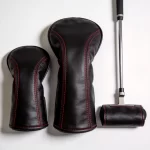 Custom Golf Headcovers Set
Need custom golf bags? Contact us for OEM/ODM quotes — MOQ 100pcs, FOB Xiamen.