What Are Titleist Golf Bags Made Of? Inside the Build
What are Titleist golf bags made of? In short, durable nylon and polyester fabrics (typically 600D to 1680D), water-repellent DWR coatings, quality YKK-style zippers, a structured PE or molded base, full-length dividers and padded dual straps – with premium models adding synthetic leather trims, microfiber panels and, on the top tier, waterproof-membrane layers with fully taped seams. A made-to-spec build in the Titleist class typically carries a factory cost of roughly $70–$110 (typical) while retail sits around $200–$400 (approx.), a markup of about 200–300% driven by four factors: materials (~55%), labor (~20%), tooling (~10%) and brand margin & distribution (~15%). The gap between a “premium” build and a budget one is concentrated in fabric grade, waterproofing and base structure – exactly the lines where a factory-aware buyer saves the most.
TL;DR / Quick Answer
A Titleist golf bag is made of four core things: a durable nylon/polyester shell (600D–1680D), a water-repellent DWR or waterproof-membrane finish, quality zippers and a structured PE/molded base, with full-length dividers and padded straps. Premium tiers add synthetic leather and microfiber. The factory build cost for a comparable made-to-spec bag is typically $70–$110, versus a retail price of roughly $200–$400 – a markup of about 200–300%. If you value the construction over the logo, the same specification is achievable through OEM/ODM at wholesale build cost.
1. The Short Answer: What’s Actually In A Titleist Golf Bag
Strip away the branding and a Titleist bag is built from the same component family as every other serious golf bag on the market. The difference is grade, not category. When our affiliated factory in Quanzhou, Fujian quotes a bag in this tier, the spec sheet reads like this: a hard-wearing fabric shell, a water-repellent or waterproof finish, dependable zippers, a base that holds its shape, dividers that protect club shafts, and a carrying system that survives years of use. The honest phrase for “premium” is simply higher grade on every one of those lines.
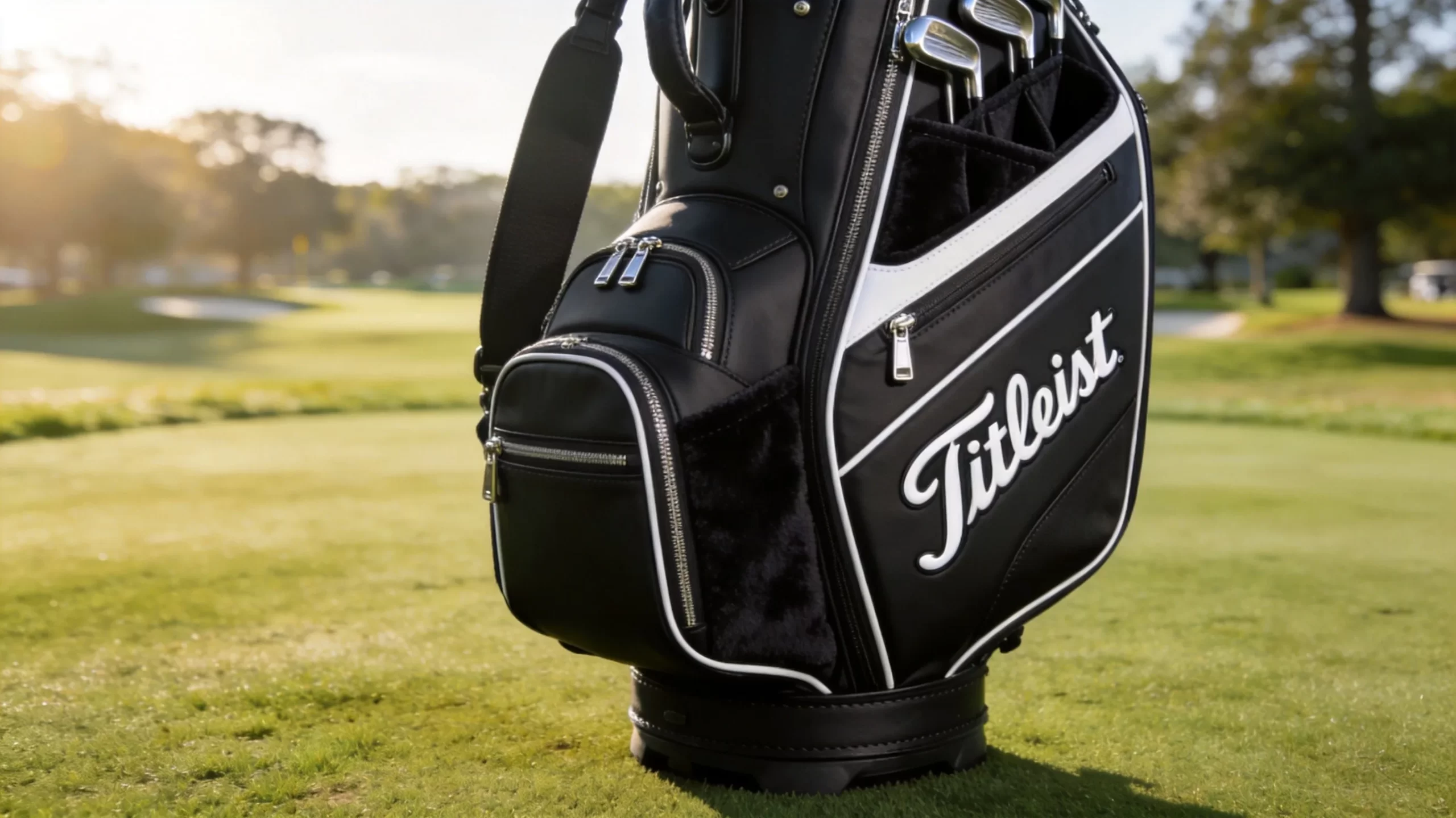
The four component groups every bag shares
- The shell (fabrics). Nylon and polyester in 600D to 1680D, with PU coatings and, on premium builds, synthetic leather or microfiber accents.
- The weather layer. A water-repellent DWR finish as standard, rising to a full waterproof membrane with taped seams on the top tier.
- The hardware. Zippers, buckles, sliders and feet – quality hardware is a large share of the material bill.
- The structure. A formed PE or molded base, full-length dividers and a padded carrying harness.
2. The Materials: A Factory Comparison Table
As a company that manufactures golf bags through our affiliated factory, we see these material grades quoted daily. Here is the honest, tier-by-tier comparison that explains where a Titleist-class bag spends its money:
| Component | Entry/Budget Tier | Mid Tier | Titleist-Premium Class | Why It Costs More |
|---|---|---|---|---|
| Main fabric | 600D polyester / PVC | 840D nylon | 1000D–1680D coated nylon / polyester, synthetic leather accents | Heavier, tougher and more water-resistant; material cost per meter rises 2–4× |
| Weather protection | None / light DWR | DWR + taped critical seams | Waterproof membrane liner + fully taped seams (top tier) | Membrane, lamination and seam-tape add real square-meter cost |
| Base / structure | Thin cardboard / low-density foam | PE board, basic shaping | Structured PE or injected/thermoformed molded base with reinforcing frame | Molded tooling and thicker layers raise material and process cost |
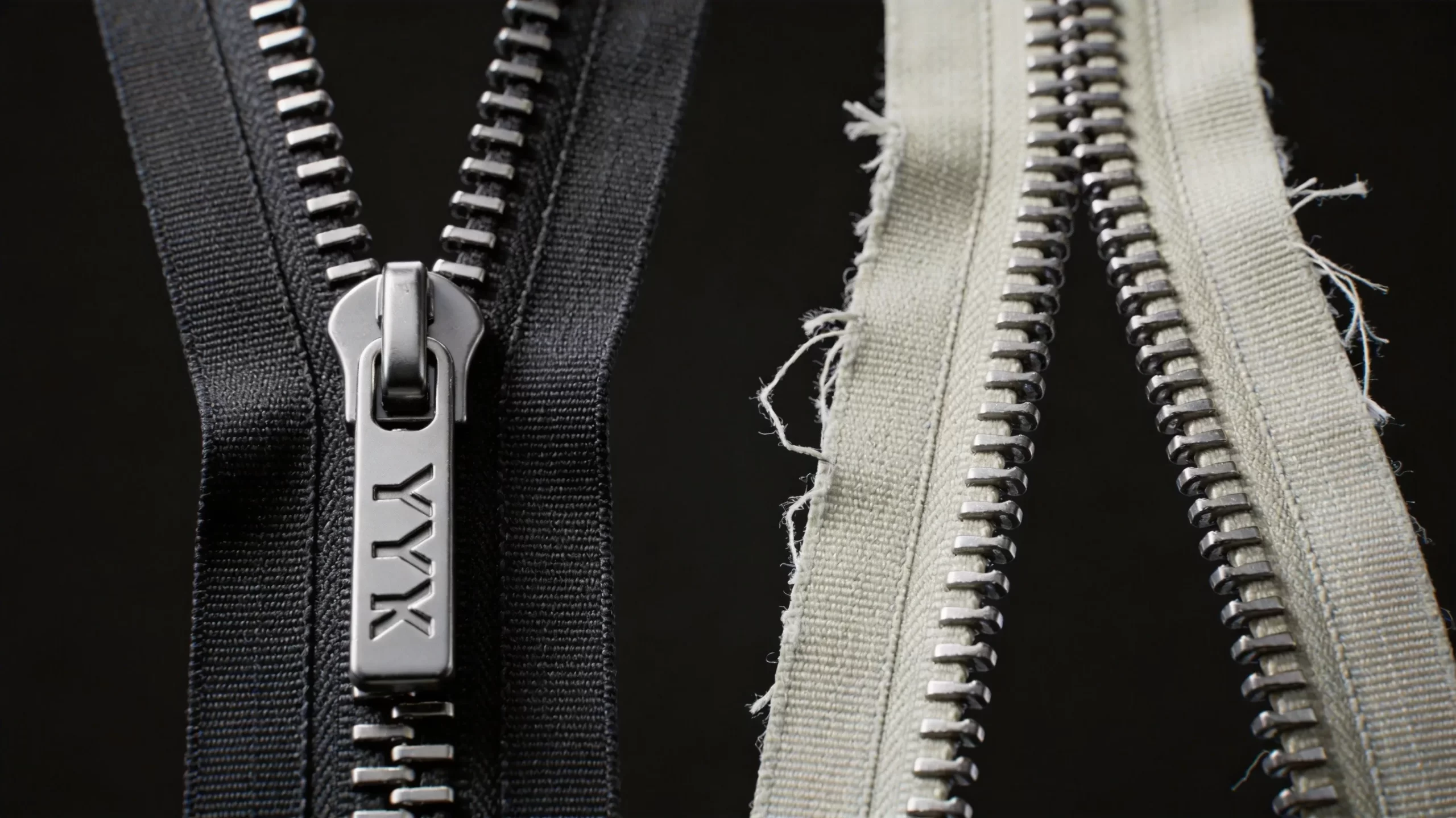
| Zippers & hardware | Standard basic zippers | Quality zippers with water-repellent coating | YKK-class water-resistant zippers, channelled pulls, reinforced mounting | Quality hardware costs several multiples of budget parts |
| Dividers | Shallow, partial | Full-length, basic | Full-length with soft-touch framing | Deeper dividers need more material and precise construction |
| Carrying system | Basic single strap | Padded dual strap | Ergonomic dual-strap harness with reinforced load-tested mounts | More components, more stitching, more reinforcement |
The takeaway is simple: a Titleist-class bag is materially more expensive to produce than a budget bag – the material bill on a premium build typically runs roughly 55% of total factory cost, versus well under 40% at entry level. That gap is real. But materials alone still don’t explain the full retail price; brand margin and distribution sit on top, which is where OEM/ODM saves you money.
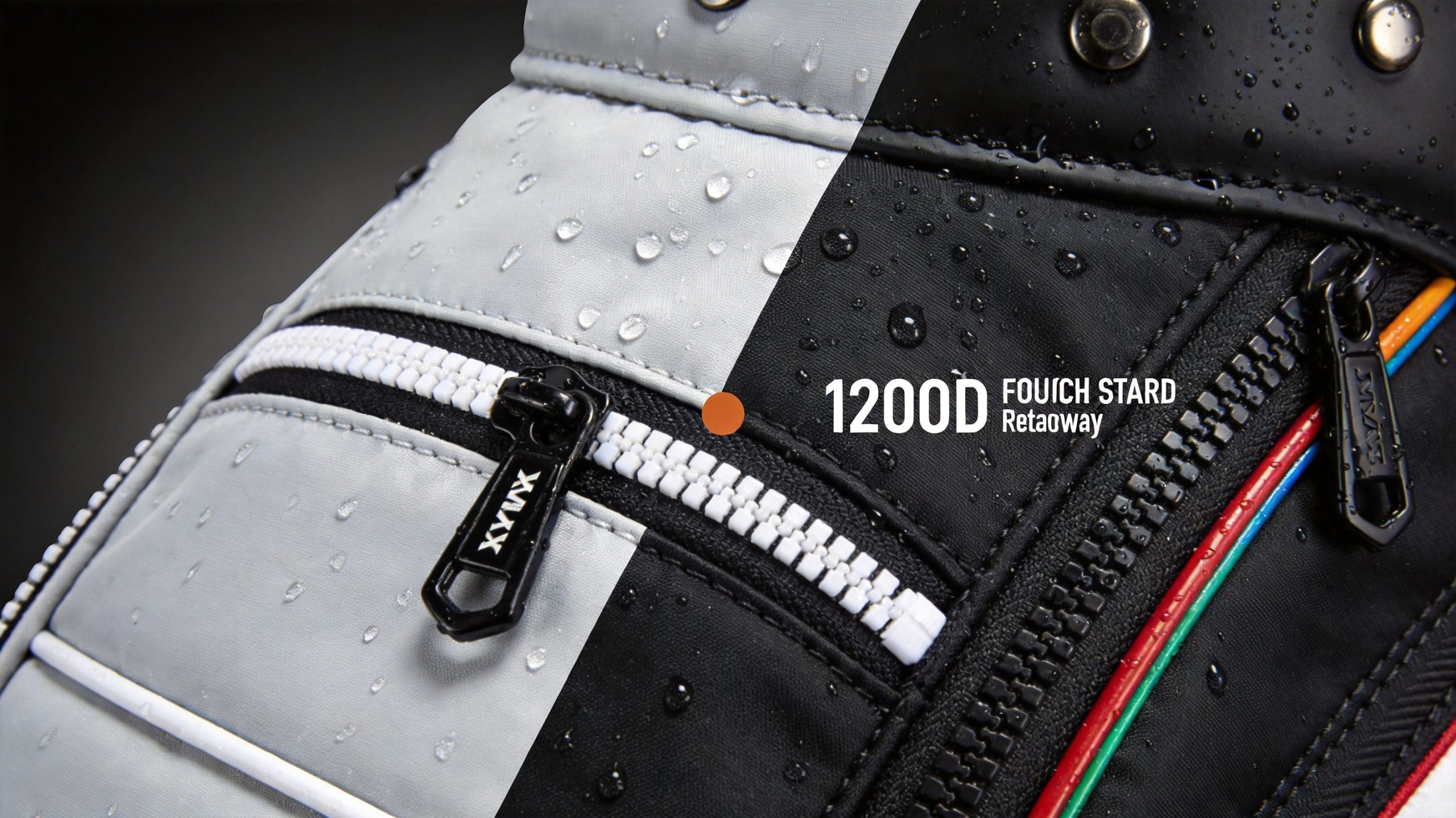
Fabric grade: the detail shoppers miss
When golfers ask what Titleist bags are made of, they usually mean fabric – and this is where the price ladder really lives. “Nylon” and “polyester” are not a single material. They are a ladder, and the rung you stand on drives a large share of the final build cost. The difference between 600D and 1680D isn’t a slogan – it is a measurable jump in abrasion resistance and weight. For a full, expert walk-through of how deniers, weave and coatings work, our guide to golf bag fabric weight (600D vs 1200D vs 1680D) explained breaks down exactly what each grade means, so you can read a spec sheet instead of a tagline.
3. How A Titleist-Class Bag Is Built: The Process
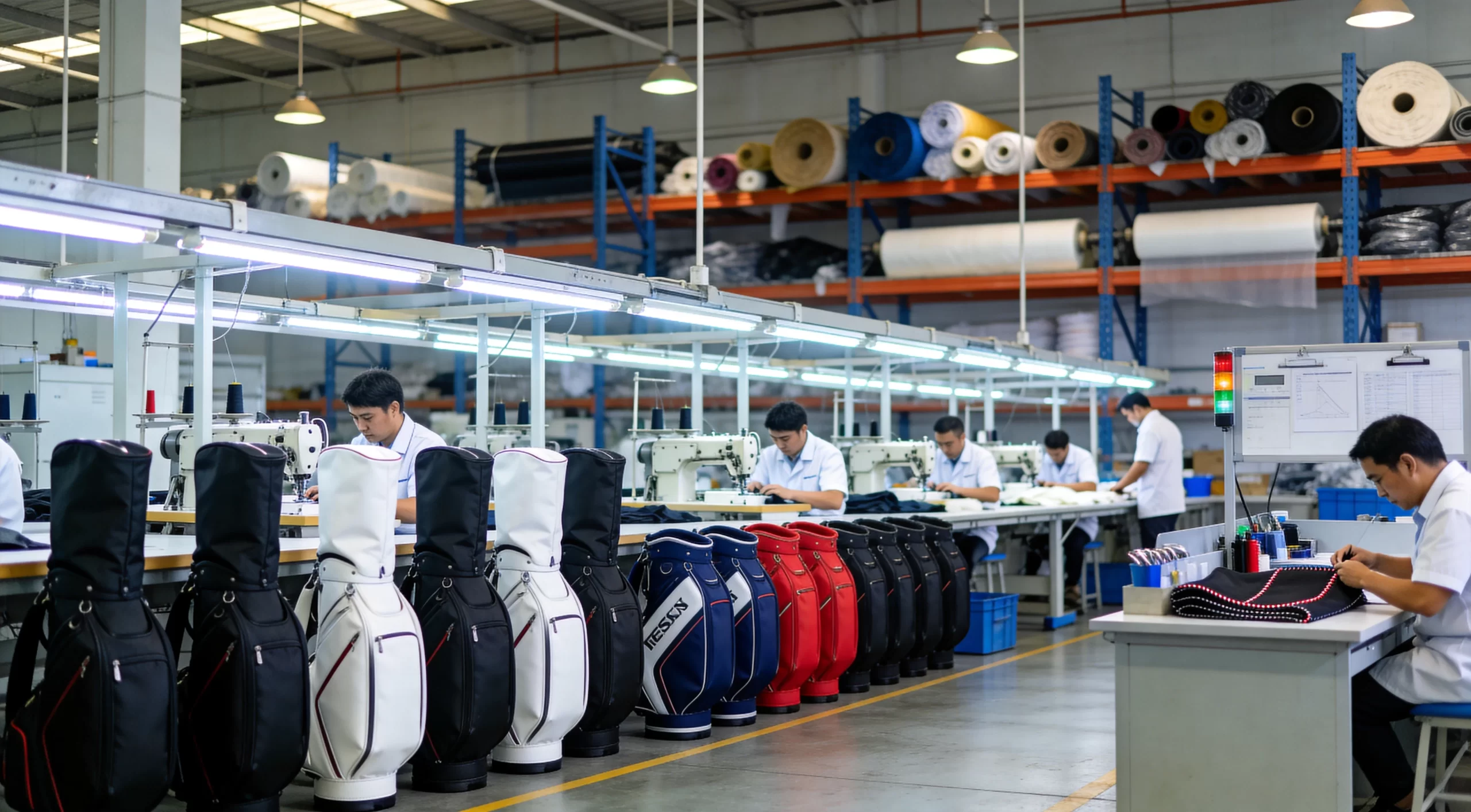
Anyone who thinks a golf bag is “machine-made in seconds” has never stood on a real production line. A stand or cart bag travels through roughly 60 to 120 separate machine-and-hand operations, depending on features. A premium build simply spends more of those steps on waterproofing and structure. In our affiliated factory, that work runs across 7 production lines with 149 machines (126 sewing) and 137 staff, and a trained operator still handles every panel transition by eye.
A rough process map
- Cutting & fusing — panels are cut from roll stock and heat-fused to lining, with membrane layers added on waterproof builds.
- Seam preparation & taping — critical seams are taped and sealed; premium tiers add full tape coverage.
- Sewing & assembly — body, dividers, top cuff and base are joined in sequence.
- Hardware & strap mounting — zippers, buckles, harness and handle are fitted and reinforced.
- Final QC & packing — stitch check, water-resistance spot check, setting check and boxing.
The construction difference between “premium” and “budget” is concentrated in hours per bag. A titleist-class waterproof build absorbs more membrane and taping operations, pushing labor toward roughly 20% of build cost – a genuine cost, not decoration.
4. Tooling And Molds: The Hidden Cost People Forget
Most “what is it made of” articles stop at fabric. They miss tooling – because they don’t build bags. A structured base, molded top cuff, brand plate and custom hardware all require injection or thermoforming molds that must be paid off over a production run. Here is what tooling realistically costs at the factory level (typical ballpark figures, not exact quotes – final quotes depend on your spec):
| Tooling / Mold Item | Typical Investment (USD, ballpark) | Amortized Over | Approx. Cost Per Bag |
|---|---|---|---|
| Structured base mold (injection) | $8,000–$15,000 | 3,000–5,000 pcs | $2–$4 |
| Molded top cuff mold | $5,000–$10,000 | 3,000–5,000 pcs | $1.5–$3 |
| Brand plate / logo tools | $1,000–$3,000 | Full run | $0.5–$1.5 |
| Custom hardware & buckles (molds) | $3,000–$8,000 | Full run | $1–$3 |
| Patterns, samples & pre-production (SMU) | $1,500–$4,000 | Full run | $1–$2 |
Add those per-bag lines together and tooling lands near roughly 10% of factory cost on a moderate run – and it scales down per bag as volume grows. This is the single best argument for OEM/ODM: the very tooling a brand amortizes across thousands of units is the same tooling a private-label buyer gets to amortize.
A buyer’s self-check before paying premium prices
Run this factory-style checklist on any “premium” bag before you buy. Each item is verifiable by eye or touch, and each filters out a bag priced like premium but built like budget:
- Stitch tension: straight, even, dense stitches with reinforced bar-tacks at strap and handle mounts.
- Seam taping: taped or turned hems on every panel edge – more taping equals more weather protection.
- Zipper action: smooth glides without snagging, and water-resistant tape or coating on premium builds.
- Base rigidity: a molded or structured base that resists twisting beats a flat board that flexes under club weight.
- Divider depth: full-length dividers protect shafts; shallow ones let grips clash and rattle.
- Hand-feel: a dense shell reads as a higher fabric grade than a hollow, papery panel.
If a bag passes all six, the price is almost certainly paying for real materials and labor. If it fails two or more, that “premium” markup is mostly margin – and your money is better spent on a spec you can verify.
5. Is A Titleist Golf Bag Worth The Price? An Honest Verdict
The short, non-marketing answer: it depends on how often you play.
- Worth it (probably): you carry or ride 50+ rounds a year, you play in varied weather, and you want a structured base and durable fabrics that survive three-plus seasons. A premium build amortized over several hundred rounds lands near a dollar a round – and the spec is genuinely a higher grade.
- Not worth it (probably): you play a handful of times a season. A well-made mid-tier bag at $120–$180 delivers most of the durability at a fraction of the cost.
Two useful reference points put the premium tier in context. For a deeper dive into how the premium price compares against another top brand, see our factory-built cost breakdown of Vessel golf bags and our Sun Mountain vs Vessel value comparison. And for how Titleist construction stacks up more broadly, read Titleist vs Sun Mountain manufacturing quality and Titleist vs Callaway stand bags.
And there is a third path worth knowing about: buy the spec, not the logo. The same premium specification – durable coated fabrics, structured base, quality zippers, full-length dividers – is manufactured for private labels by OEM/ODM factories around the world. That is not a knock on Titleist; it is simply how premium hard goods work.
6. The Smarter Alternative: Build Your Own Premium Bag
Keep Perfect Golf operates as a golf bag trading company backed by a vetted manufacturing network. Our company, established in Quanzhou, Fujian, is led by a founder with deep bag-industry experience. Production runs through an affiliated factory – SGS-verified for Alibaba.com at 4,950 sqm, 7 production lines, 149 machines and 137 staff, with a monthly line capacity of 200,000 pieces, plus a vetted network of partner factories. We have supplied 200+ brands across 100+ countries.
What that means for you is a single English-speaking contact who can spec, sample and ship a made-to-order premium bag – for your own brand, your shop or your wholesale account. We handle material sourcing, tooling and defect-free QC through our affiliated and partner factories; finished goods ship under your label.
Request a Quote — Get Titleist-Class Construction at Build Cost
Turn the material and construction breakdown in this article into your own product. Our team manages OEM and ODM programs for golf stand bags, cart bags and premium tour bags through our affiliated factory and partner network – from materials and tooling to custom branding and MOQ guidance.
Request a golf bag OEM/ODM quote
You’ll find the same spec thinking across our golf bag programs and, for buyers weighing options, our Sun Mountain vs Vessel comparison.
FAQ: Titleist Golf Bag Materials & Construction
What are Titleist golf bags made of?
Durable nylon and polyester fabrics (often 600D–1680D), water-repellent DWR coatings, quality YKK-style zippers, a structured PE or molded base, full-length dividers and padded dual straps. Premium models add synthetic leather, microfiber and waterproof-membrane layers.
Are Titleist golf bags waterproof?
Most are water-repellent, not fully waterproof. They use DWR and taped critical seams that shed light rain; heavy-weather play needs a rainhood or a dedicated waterproof model. True waterproof builds add a membrane liner and fully taped seams at higher cost.
What materials does Titleist use for the base?
A structured base – a formed PE or molded platform, often with a reinforcing frame – that keeps the bag upright and holds its shape over seasons. This is a higher-cost component than the thin board or foam in budget bags.
What zippers does Titleist use?
Quality zippers with smooth glides and, on premium builds, water-resistant tape or coating. Hardware is one of the most cost-sensitive parts of any golf bag.
How much does a Titleist golf bag cost to manufacture?
A made-to-spec build in this class typically costs roughly $70–$110 at factory build cost, before tooling amortization, branding and distribution. Retail then adds brand margin across the supply chain.
Is a Titleist golf bag worth the price?
For frequent players, yes – a Titleist-class build is a genuinely higher material grade. For occasional golfers, a well-made mid-tier bag delivers most of the durability for less, and OEM/ODM gets the same spec at wholesale build cost.
Where are Titleist golf bags made?
Titleist sources through global manufacturing partners. The category is built in the same specialized factories that produce golf bags for private labels worldwide, which is why the construction methods are widely replicable via OEM/ODM.
Can I get Titleist-quality construction without the brand price?
Yes. The core specification – durable fabrics, structured base, quality zippers, full-length dividers – is manufactured for private labels via OEM and ODM. Keep Perfect Golf can build a made-to-spec bag at wholesale build cost.
Disclaimer: Retail and factory figures in this article are industry-typical approximations used to explain cost structure, not precise quotes or guaranteed prices. Actual pricing depends on your specification, volumes and prevailing conditions. Approx./typical labels apply to every figure above.
Related Products
Explore our manufacturing capabilities in this category:
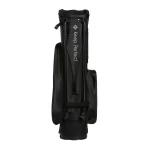 Premium Stand Bag
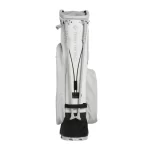 Ultra-Light Stand Bag
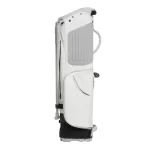 Hybrid Stand Bag
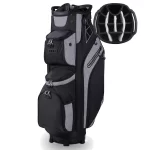 Rain-Resistant Stand Bag
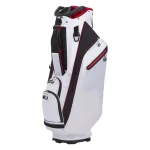 Premium Tour Cart Bag
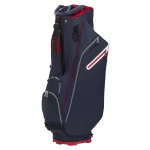 Lightweight Cart Bag
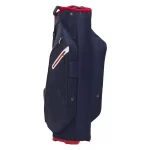 Waterproof Cart Bag
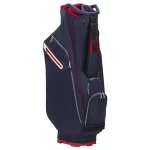 Staff Cart Bag
Need custom golf bags? Contact us for OEM/ODM quotes — MOQ 100pcs, FOB Xiamen.