Why Are Vessel Golf Bags So Expensive? (A Factory-Built Cost Breakdown)
Why are Vessel golf bags so expensive? In short, because of premium synthetic materials and labor-intensive hand craftsmanship, stacked on top of brand positioning that deliberately competes in the premium tier. On average, a premium Vessel-style golf bag costs about $349 retail (approx.) while factory build cost is roughly $85–$120 (typical), a markup of about 200–300% driven by four key factors: materials (~55%), labor (~20%), tooling (~10%) and brand margin & distribution (~15%). Most of that cost difference vs. a $120 bag is real — better fabrics, waterproofing and engineering — but a meaningful slice is brand premium, which is exactly where an OEM/ODM-built, made-to-spec alternative can save you money.
TL;DR / Quick Answer
Vessel bags are expensive because of four stacked costs: premium materials (synthetic leather, waterproof membranes), skilled labor and complex construction, high tooling and mold investment, and brand margin & distribution that almost always sits at low-to-mid double digits. The factory build cost for a comparable made-to-spec bag is typically $85–$120, meaning a $349 retail bag carries roughly a 200–300% markup. The good news: if you value the spec rather than the logo, the same specification is achievable via OEM/ODM at wholesale build cost.
1. What You’re Actually Paying For In A Vessel Golf Bag
Vessel charges a premium for a reason, and it is not (only) the logo. To understand the price, you have to separate bill of materials, cost of labor, tooling and margin. Every golf bag — from a $99 discount cart bag to a $400+ tour bag — is built from the same family of components. The difference is the grade of each component and how much hand-work goes into assembling it.
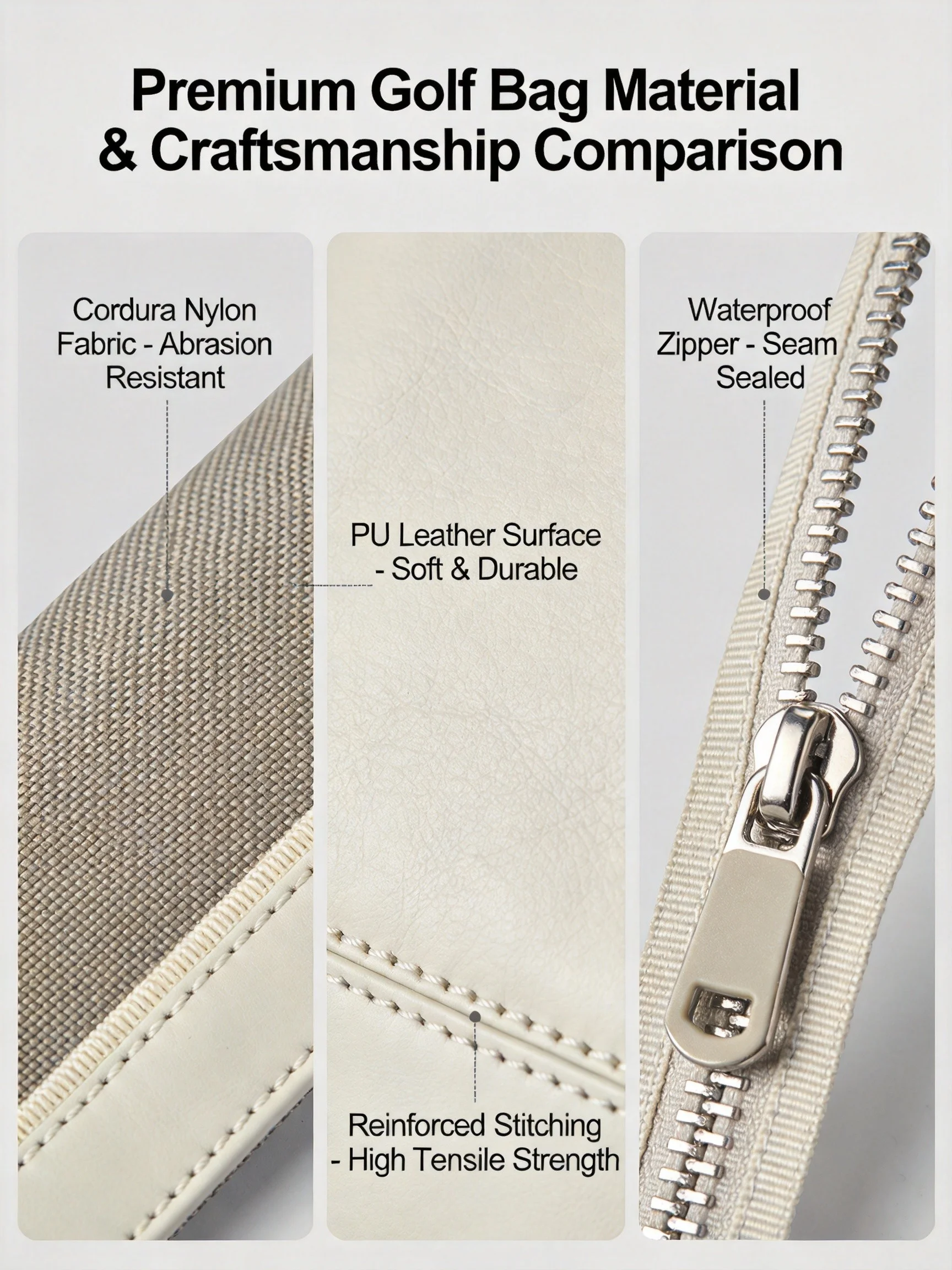
The three things a premium bag does differently
- It keeps the rain out. Premium bags tape-and-stitch waterproof seams and use membrane-backed fabrics, where budget bags use simple polyester with no seam sealing. This is a genuine manufacturing difference, not decoration.
- It keeps its shape. A structured PE/PU-molded base and stiffened panels cost more and hold the bag upright on a cart, which cheap bags lose after a season.
- It stops wearing at the wear points. High-density synthetic leather at the top cuff, handle and strap mounting points triple the abrasion life of the bag.
2. The Factory Cost: A Materials Comparison Table
As a company that manufactures golf bags through our affiliated factory in Quanzhou, Fujian, we see these material grades quoted daily. Here is the honest comparison, by component tier:
| Component | Entry/Budget Tier | Mid Tier | Premium (Vessel-class) | Why It Costs More |
|---|---|---|---|---|
| Main fabric panel | 600D polyester / PVC | 840D nylon | High-density synthetic leather / 1680D PU-coated fabric | Material cost per meter rises 2–4x; heavier, more abrasion- and water-resistant |
| Weather protection | None / light water-repellent (DWR) | DWR + taped critical seams | Waterproof membrane liner + fully taped seams | Membrane + seam-tape + lamination add real square-meter cost |
| Base / structure | Thin cardboard / low-density foam | PE board, basic shaping | Injected or thermoformed PU/PE molded base, internal stiffening frame | Molded tooling + thicker structural layers raise both material and process cost |
| Zippers & hardware | Standard metal/YKK-style basic | YKK with water-resistant coating | YKK water-resistant coil + clamshell pockets, premium pulls and buckles | Quality zippers and molded hardware are several multiples of budget parts |
| Straps & carrying system | Basic padded strap | Double-strap, adjustable harness | Ergonomic dual-strap harness, reinforced mounting, molded handle | More components, more stitching, more reinforcing layers |
| Weight | ~4–5 lb balanced | ~5–5.5 lb | ~5–6 lb (structure weighs more) | Heavier structure = more material = higher cost |
The takeaway is simple: a premium Vessel-class bag is materially more expensive to produce. That gap is real — typically the material bill for a premium build runs roughly 55% of total factory cost, versus under 40% on a budget bag. But that still does not explain the full retail price.
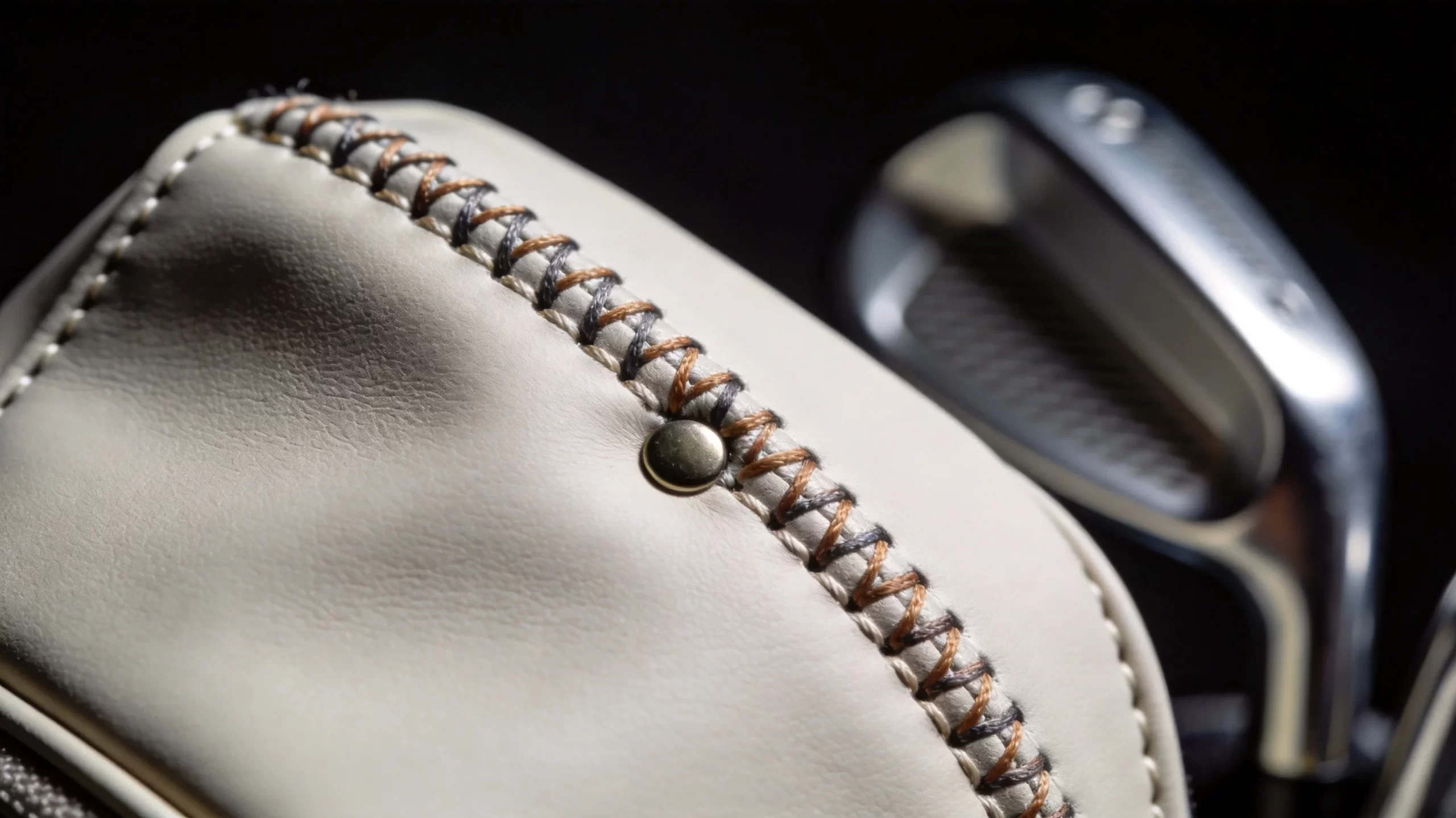
3. The Craftsmanship: Why Labor Is Not Cheap
Anyone who says golf bag assembly is “automated” has never visited a real production line. The bag is built in roughly 60–120 separate machine-and-hand operations, depending on features: cutting and fusing panels, taping waterproof seams, attaching the molded base, fitting the top cuff, installing dividers and club slots, mounting straps and hardware, and final QC and packing. On a premium bag, more of these steps are done by skilled hands than on a budget bag, which is why labor runs about 20% of factory cost.
Our affiliated factory runs 7 production lines with 149 machines and 137 staff, and a skilled sewing operator still handles each panel transition by eye. The difference between a professional-looking stitch and a failing one is training — and a trained operator’s line is a cost that shows up on every bag. There is no shortcut around it if you want the seams that keep a bag alive for years.
A rough process map
- Cutting & fusing — panels are cut and heat-fused to lining and membrane.
- Seam preparation & taping — critical to waterproofing; premium tier tapes all major seams.
- Sewing & assembly — body, pockets, dividers, cuff and base joined in sequence.
- Hardware & strap mounting — zippers, buckles, harness and handle fitted and reinforced.
- Final QC & packing — setting check, stitch inspection, water-resistance spot check, boxing.
4. Tooling And Mold Costs: The First-Hand Data People Forget
This is the part most “why is it expensive” articles miss, because they don’t build bags. A premium golf bag is not just sewn — it is shaped by tooling. A structured base, molded top cuff, brand plate and custom hardware all require injection or thermoforming molds that must be paid off over a production run. Here is what tooling realistically costs at the factory level (typical ballpark figures, not exact quotes — final quotes depend on your spec):
| Tooling / Mold Item | Typical Investment (USD, ballpark) | Amortized Over | Approx. Cost Per Bag |
|---|---|---|---|
| Structured base mold (injection) | $8,000–$15,000 | 3,000–5,000 pcs | $2–$4 |
| Molded top cuff mold | $5,000–$10,000 | 3,000–5,000 pcs | $1.5–$3 |
| Brand plate / logo tools | $1,000–$3,000 | Full run | $0.5–$1.5 |
| Custom hardware & buckles (molds) | $3,000–$8,000 | Full run | $1–$3 |
| Patterns, fit-samples & pre-production (SMU) | $1,500–$4,000 | Full run | $1–$2 |
Add those per-bag figures together and tooling lands near ~10% of factory cost on a moderate run — and it scales down per bag the more you order. This is the single best argument for OEM/ODM: the tooling that a brand spreads across thousands of units is exactly what a private-label buyer gets to amortize too.
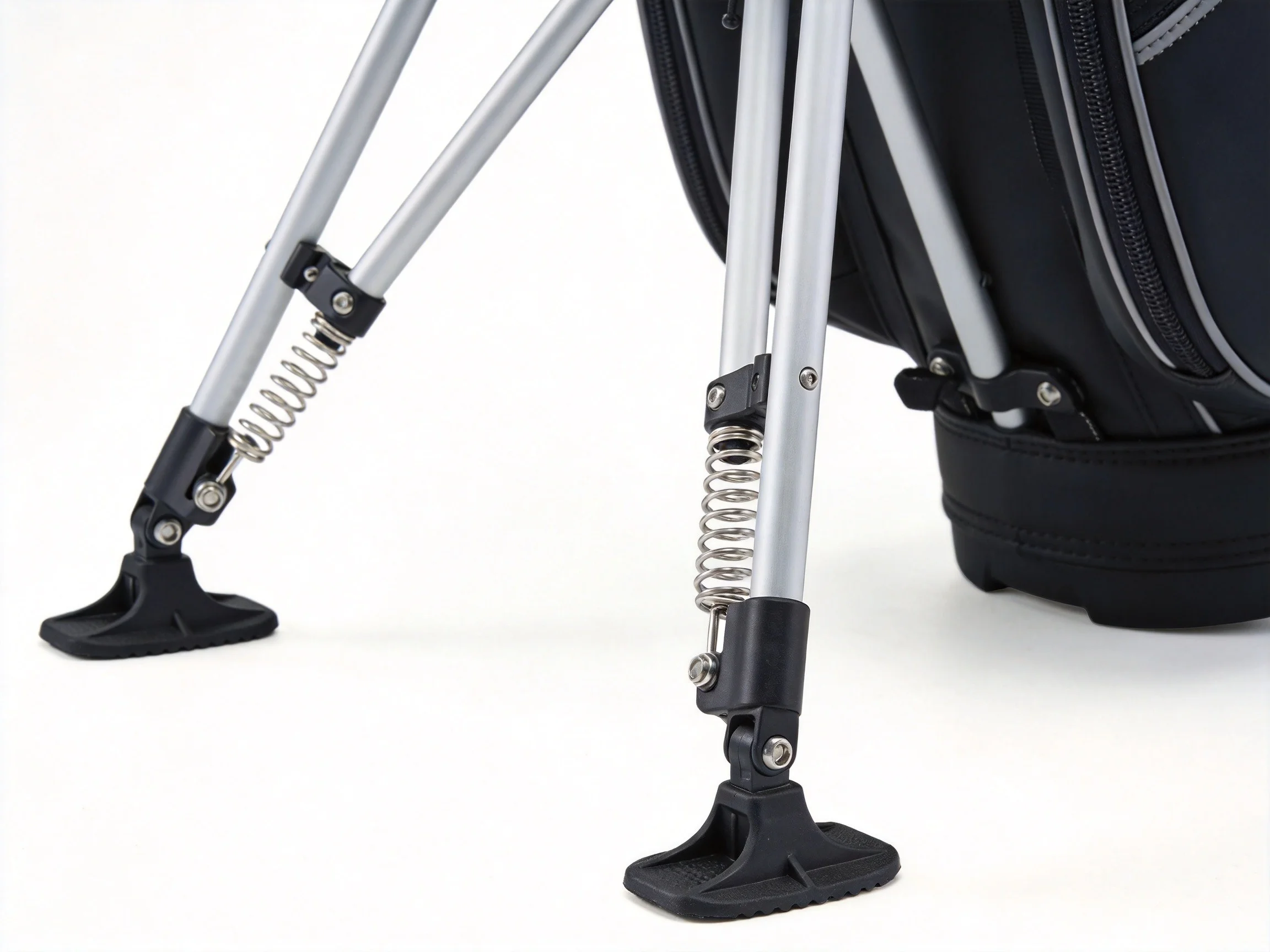
4b. Material Grading: Why The Same “Leather” Is Never The Same Cost
One of the most common misunderstandings about premium bags is that “leather” or “synthetic” is a single material. It is not — it is a ladder, and the rung you stand on drives a large share of the final build cost. When our affiliated factory gets a spec sheet, the very first question we ask is which material tier the client actually means, because the gap is real:
| Material Tier | Where You See It | Approx. Relative Cost | Real-World Effect |
|---|---|---|---|
| PVC / low-grade polyester | Budget bags | Baseline (1x) | Cracks, fades and peels under sun and heat; minimal water resistance |
| 840D–1680D coated nylon | Workhorse / mid-premium | Roughly 1.5–2x | Strong and abrasion-resistant; needs coating for water feel |
| High-denier polyester with EVA / PU foam backing | Structured premium shells | Roughly 2–3x | Adds body and softness; shapes the bag’s silhouette |
| Microfiber leather (micro-suede class) | Vessel-class aesthetic | Roughly 3–4x | Buttery hand-feel, premium look, better wear than PVC at seams |
| Waterproof membrane layers + fully taped seams | Heavy-weather premium | Added on top | Stops rain at the seam level, the single priciest weather upgrade |
Read the ladder carefully: going from the bottom rung to a microfiber-leather plus membrane build roughly triples the material bill — which is the main reason a “premium” label, when it is honest, costs what it costs. When you see a bag advertised as “microfiber,” ask which grade and whether a waterproof layer is included; that one question separates marketing from manufacturing.
4c. An OEM Cost-Scaling Example: Tooling Gets Cheaper As You Grow
Because mold and tooling are amortized, unit cost shrinks fast as order volume rises — and this is where OEM/ODM changes the math. Using typical ballpark tooling from the table above, here is how the per-bag burden moves for a Vessel-class build running at three different, realistic quantities:
| Order Size | Approx. Total Tooling (ballpark) | Per-Bag Tooling Cost | Effect On Build Cost |
|---|---|---|---|
| 500 pcs (first run) | $18,000–$36,000 | $36–$72 / bag | Tooling dominates; a smart pilot to validate spec |
| 2,000 pcs (growing brand) | $18,000–$36,000 | $9–$18 / bag | Tooling falls toward the ~10% line |
| 5,000 pcs (scale run) | $18,000–$36,000 | $3.60–$7.20 / bag | Tooling nearly negligible; material + labor dominate |
The practical lesson mirrors what the big brands do: their low per-unit tooling cost is the reward for volume, not a secret factory advantage. For a private-label buyer, this is the strongest argument for starting with a vetted build, confirming the spec on a small pre-production run, then scaling — which is precisely how our OEM/ODM program walks clients from sample to 5,000-piece order without inflating the per-bag price.
4d. A Buyer’s Self-Check Before Paying Premium Prices
Before you spend on any premium bag, run this factory-style checklist. Each item is verifiable by eye or touch, and each one filters out a bag that is priced like premium but built like budget:
- Stitching tension: straight, even, dense stitches at stress points, with reinforced bar-tacks at strap and handle mounts.
- Seam sealing: taped or turned hems on every panel edge — more taping equals more weather protection.
- Zipper action: smooth glides without snagging, and water-resistant tape or coating on premium builds.
- Base rigidity: a molded base that resists twisting beats any flat board that flexes under club weight.
- Divider depth: full-length dividers protect shafts; shallow ones let grips clash and rattle.
- Hand-feel: a dense, slightly supple shell reads as higher fabric grade than a hollow, papery panel.
If a bag passes all six, the price gap to an entry-tier bag is almost certainly paying for real materials and labor. If it fails even two, that “premium” markup is mostly margin — and your money is better spent on a spec you can verify.
5. Where The Retail Markup Goes
So if materials, labor and tooling explain maybe 85% of build cost, the remaining ~15% is brand margin and distribution. Multiplied across the supply chain, a rough typical route from factory to shelf looks like this: the factory sells at build cost + a small margin, the importing brand layers on design amortization, marketing, warranty and profit, a distributor or retailer adds theirs, and retail pricing ends up roughly 200–300% above the build cost. None of that is dishonest — but it is the part of the price that has nothing to do with how well the bag is made.
The same economics explain why a $120 bag and a $349 bag can both look similar at a glance. On a $120 bag, the factory bill of materials is leaner, the panels are simpler and the waterproofing is skipped, and the brand still takes its margin. On a premium build, every one of those lines rises. When you strip the logo and the distribution layers away, what you are really choosing between is materials grade, waterproofing and structure — and those three alone account for most of the honest difference between price points.
5b. What The Money Buys Over Three Seasons (A Durability View)
One useful way to judge “expensive” is cost per round over the bag’s real service life. A $349 premium bag that survives four seasons of heavy use at, say, 300 rounds works out to roughly $1.16 per round. A $129 mid-tier bag that life-extends to two seasons before the base warps or the seams let in rain works out to roughly $0.65 per round — cheaper now, but you replace it sooner and play in a bag that looks tired. And a budget $80 bag that fails inside eighteen months often works out to more per round than you expect, once the replacement is counted. The honest math favors premium bags only for players who actually use them that much. For everyone else, the smart buy is a solid mid-tier bag whose build quality you can verify — which is exactly what a factory-aware buyer learns to check.
Three quick build checks before you buy any premium bag
- Pinch the top cuff. A molded, reinforced cuff with padding holds its round shape; a folded-foam cuff will collapse after months on a cart.
- Bend the base. A structured injected or thermoformed base resists twisting; a flexible board base signals a shortcut.
- Inspect the seams inside. Taped, sealed seams and clean turned hems are what keep water out and edges from fraying.
6. Is A Vessel Golf Bag Worth It? An Honest Verdict
The short, non-marketing answer: it depends on how often you play.
- Worth it (probably): you carry or ride 50+ rounds a year, you play in weather, and you want waterproofing and structure that survive three-plus seasons. A premium bag at ~$349 amortized over 300 rounds is about a dollar a round — and the spec is genuinely a higher grade.
- Not worth it (probably): you play a handful of times a season or mostly rent carts. A well-made mid-tier bag at $120–$180 delivers most of the durability at a fraction of the cost.
And there is a third path worth knowing about: buy the spec, not the logo. The same premium specification — synthetic leather, waterproof membrane, molded base — is manufactured for private labels by OEM/ODM factories. That is not a knock on Vessel; it is simply how premium hard goods work.
7. The Smarter Alternative: Build Your Own Premium Bag
Keep Perfect Golf operates as a golf bag trading company backed by a vetted manufacturing network. Founded in 2014 in Quanzhou, Fujian, our company is led by a founder with bag industry experience dating from 2004. Production runs through an affiliated factory — SGS-verified for Alibaba.com in March 2026 at 4,950 sqm, 7 production lines, 149 machines and 137 staff, with a monthly line capacity of 200,000 pieces — plus two branch plants and a vetted network of partner factories.
What that means for you is a single English-speaking contact who can spec, sample and ship a made-to-order premium bag — for your own brand, your shop or your wholesale account. We handle materials sourcing, tooling, and defect-free QC through vetted partners; the finished goods ship under your label.
Request a Quote — Build a Premium Bag Without the Brand Surcharge
Turn the cost breakdown in this article into your own product. Our team manages OEM and ODM programs for golf stand bags, cart bags and premium tour bags through our affiliated factory and partner network — from materials and tooling to custom branding and MOQ guidance.
Request a golf bag OEM/ODM quote
You’ll find the same spec thinking behind our golf bag programs and category pages for golf stand bags.
FAQ: Vessel Golf Bags & Premium Bag Cost
Why are Vessel golf bags so expensive?
Because of premium imported materials and hand craftsmanship, plus brand positioning in the $300–$450 retail tier. A typical Vessel-style bag retails near $349 while factory build cost is roughly $85–$120, a markup of about 200–300%.
What materials does Vessel use?
High-density synthetic leathers, waterproof membrane liners, premium water-resistant zippers and structured PU-molded bases. These are materially higher-grade — and more expensive — than the polyester and PVC in entry-tier bags.
Is a Vessel golf bag worth the money?
For frequent players who value waterproofing and structure over seasons of use, yes. For occasional golfers, a well-made mid-tier bag offers most of the durability at a fraction of the cost.
How much does a premium golf bag cost to manufacture?
A comparable made-to-spec premium bag typically lands at $85–$120 factory build cost, depending on material grade and features, before tooling amortization, branding and distribution.
Why do golf bag brands charge high markups?
Markup covers brand development, design and R&D, marketing, distribution, retail margin and amortized tooling. A roughly 200–300% figure above build cost is typical for premium golf hard goods.
Can I get Vessel-like quality without paying retail?
Yes. OEM/ODM factories can build a custom bag to a Vessel-like spec at wholesale build cost, which is exactly what Keep Perfect Golf’s manufacturing network supports.
Disclaimer: Retail and factory figures in this article are industry-typical approximations used to explain cost structure, not precise quotes or guaranteed prices. Actual pricing depends on your specification, volumes and prevailing conditions. Approx./typical labels apply to every figure above.
Related Products
Explore our manufacturing capabilities in this category:
 Premium Stand Bag
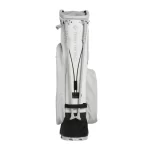 Ultra-Light Stand Bag
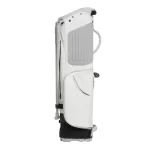 Hybrid Stand Bag
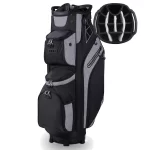 Rain-Resistant Stand Bag
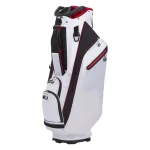 Premium Tour Cart Bag
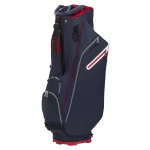 Lightweight Cart Bag
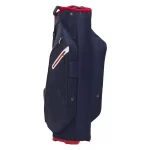 Waterproof Cart Bag
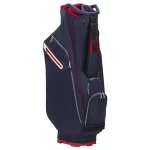 Staff Cart Bag
Need custom golf bags? Contact us for OEM/ODM quotes — MOQ 100pcs, FOB Xiamen.