Sustainable golf bag packaging refers to the use of recycled, biodegradable, or minimal materials in boxing, wrapping, and shipping golf bags from factory to retailer or end consumer—without compromising product protection or brand perception. For OEM/ODM manufacturers, brands, and retailers in the golf equipment industry, packaging represents 8–15% of total landed cost and accounts for roughly 30% of post-sale waste volume. Switching to sustainable packaging is no longer a niche differentiator; it is becoming a procurement requirement for major golf retailers in North America and Europe.
This article examines five proven packaging solutions—recycled cardboard, biodegradable poly bags, minimal design, soy-based inks, and molded pulp inserts—and provides a practical framework for balancing environmental compliance with retail-ready presentation.
The Environmental Cost of Traditional Golf Bag Packaging
A standard golf bag ships from factory to retail in a corrugated cardboard box, wrapped in a virgin LDPE poly bag, stuffed with expanded polystyrene (EPS) foam or virgin kraft paper, and sealed with polypropylene tape. A single shipment of 500 cart bags can generate over 1,200 kg of packaging waste—most of it non-recyclable at the retail or consumer level.
Three material categories drive the problem:
- Virgin cardboard: Each standard golf bag box uses approximately 2.5–3.5 kg of virgin kraft paperboard. The pulp-and-paper industry accounts for roughly 6% of global industrial energy consumption. For a mid-size golf bag brand shipping 50,000 units annually, this translates to 125–175 metric tons of virgin paperboard sourced from forestry operations each year.
- Virgin LDPE poly bags: Conventional polyethylene bags require 2.0–2.5 kg of petroleum per kilogram of film. A typical golf bag inner bag weighs 40–60 g, meaning 50,000 units consume 2,000–3,000 kg of petroleum-derived plastic. Most retail locations lack film recycling infrastructure, so these bags end up in landfill or incineration.
- EPS foam inserts: Expanded polystyrene is technically recyclable but rarely accepted in municipal curbside programs. It fragments into microplastics within 5–10 years in landfill conditions. Golf bag EPS inserts, which typically weigh 150–300 g per unit, add 7.5–15 metric tons of persistent waste per 50,000-unit production run.
For golf bag brands selling into the EU, the Packaging and Packaging Waste Regulation (PPWR) now mandates that all packaging placed on the EU market must be recyclable by 2030, with minimum recycled content thresholds starting at 2025. Non-compliant brands face market access restrictions and potential penalties. In the US, the Federal Trade Commission’s Green Guides impose strict substantiation requirements on environmental marketing claims, making it essential for brands to back any “eco-friendly” or “sustainable” packaging claims with verifiable data.
Five Sustainable Packaging Solutions for Golf Bags
1. Recycled Cardboard Boxes (FSC-Certified)
The most straightforward substitution is replacing virgin kraft corrugated boxes with post-consumer recycled (PCR) cardboard—specifically, boxes made from at least 70% PCR content that carry FSC (Forest Stewardship Council) certification.
Recycled cardboard boxes for golf bags perform identically to virgin boxes in drop tests (ISTA 3A standard) when the flute structure is properly specified. The key specification is edge crush test (ECT) value: a 32 ECT B-flute box provides adequate protection for cart bags up to 5 kg, while 44 ECT BC-flute handles staff bags and travel covers. Manufacturers should request ECT test certificates from their box supplier and verify them against the ASTM D642 standard.
The FSC certification chain-of-custody system tracks recycled fiber from the recovery point through the paper mill and box converter to the final product. This means the FSC label on a golf bag box can be independently audited—a critical feature for brands that make public sustainability claims. The three FSC label types relevant to packaging are: FSC 100% (all virgin fiber from certified forests), FSC Recycled (100% post-consumer or pre-consumer recycled content), and FSC Mix (a blend of certified virgin and recycled content). For maximum environmental benefit, specify FSC Recycled or FSC Mix with at least 70% recycled content.
Cost differential: In our factory production runs, FSC-certified recycled boxes cost approximately 6–10% more than virgin equivalents at current market prices. This premium narrows to 3–5% when ordering in container-load quantities (20ft container holds approximately 800–1,000 golf bag boxes depending on bag type). For brands concerned about the upfront cost increase, the premium can often be offset by reduced waste disposal fees at the retail end and by the marketing value of the FSC label on product listings.
2. Biodegradable and Compostable Poly Bags
Replacing virgin LDPE inner bags with compostable alternatives addresses the single largest waste stream in golf bag packaging. The two most viable materials are:
- PBAT/PLA blend films: Certified compostable under EN 13432 (European) or ASTM D6400 (US) standards. These break down in industrial composting facilities within 90–180 days. PBAT (polybutylene adipate terephthalate) provides flexibility and toughness, while PLA (polylactic acid) contributes stiffness and clarity. The blend ratio is typically 70:30 PBAT to PLA for packaging film applications.
- Mater-Bi (cornstarch-based): A commercially available biopolymer produced by Novamont that performs similarly to LDPE in tensile strength and moisture barrier properties. Mater-Bi films are certified under multiple international compostability standards and are available in thicknesses from 15 to 60 microns, covering the full range of golf bag packaging needs.
Performance caveat: Compostable bags have a shelf life of 12–18 months and require controlled humidity during storage. Warehouses in tropical climates (above 70% relative humidity) may experience premature degradation. For OEM manufacturers shipping to global distributors, we recommend specifying PBAT/PLA bags with an 18-month expiry date printed on the master carton and storing them in climate-controlled environments below 30°C and 60% relative humidity.
Another consideration is the end-of-life infrastructure. Compostable bags require industrial composting facilities to break down effectively—they will not decompose in a home compost bin or in a landfill (where oxygen levels are too low for aerobic degradation). Brands should research the composting infrastructure in their key markets before making packaging claims. In markets where industrial composting is widely available (parts of the EU, California, some Australian states), compostable bags deliver genuine environmental benefits. In markets without such infrastructure, the benefit is primarily in eliminating petroleum-derived plastic from the waste stream.
3. Minimal Packaging Design
Minimal packaging eliminates unnecessary layers. The principle is simple: use only the material required to protect the product during its specific supply chain journey.
For golf bags shipped in containers to retail distribution centers, the typical packaging stack is:
- Inner poly bag (protects from dust and moisture)
- Corrugated box (structural protection during handling)
- EPS foam or paper inserts (prevents movement damage)
- Outer poly wrap on pallet (shipping protection)
Minimal design opportunities:
- Replace EPS foam with molded pulp or corrugated cardboard dividers (100% recyclable in standard paper recycling streams)
- Eliminate the inner poly bag for bags shipped in sealed cartons to climate-controlled warehouses. If the carton is sealed with water-activated tape and the warehouse maintains humidity below 65%, the bag arrives in identical condition with or without the inner poly bag.
- Use water-activated kraft paper tape instead of polypropylene tape. This eliminates plastic contamination of the recycling stream—a corrugated box sealed with poly tape is technically recyclable but the tape fragments contaminate the recycled fiber. Water-activated tape fibers integrate into the recycled pulp.
- Right-size the box: A 2 cm reduction in each dimension saves approximately 12% of corrugated material per box and increases container utilization by 8–10%, reducing per-unit shipping costs.
For golf bag manufacturers working with multiple retail partners, minimal design requires per-channel analysis. A bag shipped DTC to a consumer may need different packaging than one shipped to a big-box retailer’s distribution center. The key is to map each product’s actual supply chain route and eliminate packaging that serves no protective function for that specific route.
4. Soy-Based and Vegetable Inks
Printing on recycled cardboard with petroleum-based inks introduces volatile organic compounds (VOCs) and complicates the de-inking process during recycling. Soy-based and vegetable-based inks solve both problems:
- Lower VOC emissions: Soy ink formulations emit 70–80% fewer VOCs than petroleum-based inks during the printing process. For printing facilities, this translates to reduced ventilation requirements and lower exposure risk for workers.
- Easier de-inking: Soy-based inks detach more cleanly during the recycling pulping process, improving the yield and quality of recycled fiber. The de-inking efficiency of soy inks is approximately 95% compared to 70–80% for petroleum inks, meaning more usable fiber is recovered per ton of recycled cardboard.
- Comparable print quality: Modern soy inks achieve color accuracy within Delta E ≤ 2 of petroleum equivalents—indistinguishable to the human eye. Color gamut has improved significantly in the past decade, and soy inks now cover the full CMYK spectrum required for brand-accurate logo reproduction.
For brands that print logos, barcodes, or handling instructions directly on the corrugated box, switching to soy-based inks adds approximately $0.02–$0.05 per box at current printing volumes. The cost is negligible relative to the environmental benefit and the marketing value of being able to state “printed with soy-based inks” on product materials.
A related option is OEKO-TEX certification for packaging inks, which verifies that ink formulations are free from harmful substances. While OEKO-TEX is more commonly associated with textiles, their ECO PASSPORT standard covers printing inks and can provide an additional layer of credibility for brands making health and safety claims about their packaging.
5. Molded Pulp Inserts (Replacing EPS Foam)
Molded pulp—made from recycled newspaper, cardboard, or agricultural fiber—provides the same cushioning and positioning function as EPS foam but is fully curbside-recyclable and compostable.
For golf bags, molded pulp inserts are designed to cradle the bag head and secure the club shafts during transit. A typical insert weighs 200–400 g compared to 150–300 g for an equivalent EPS piece. The slight weight increase is offset by the elimination of foam disposal fees at the retail end. In jurisdictions with landfill tipping fees above $50 per ton, the disposal cost savings can partially or fully offset the per-unit material cost difference.
Molded pulp inserts can be custom-molded to fit specific bag geometries, including tour bags with oversized heads, cart bags with putter wells, and stand bags with integrated umbrellas. The mold tooling cost is typically $2,000–$5,000 per design, amortized over the production run. For a 5,000-unit order, the tooling cost adds $0.40–$1.00 per unit—a one-time expense that disappears on subsequent orders using the same mold.
KPG Factory Data: Packaging Cost Comparison
The following data comes from Keep Perfect Golf’s Quanzhou factory production records for Q2 2026, comparing standard vs. sustainable packaging for a 500-unit cart bag order:
| Packaging Component | Standard (Virgin) | Sustainable Alternative | Cost Difference |
|---|---|---|---|
| Corrugated box | Virgin kraft, 32 ECT | FSC recycled, 70% PCR | +$0.18 (+8.2%) |
| Inner poly bag | Virgin LDPE, 0.04mm | PBAT/PLA compostable | +$0.22 (+35%) |
| Insert material | EPS foam, 250g | Molded pulp, 320g | +$0.09 (+22%) |
| Sealing tape | Polypropylene, 48mm | Water-activated kraft, 50mm | +$0.01 (+5%) |
| Box printing ink | Petroleum-based | Soy-based, 4-color | +$0.03 (+12%) |
| Total per unit | $3.12 | $3.67 | +$0.55 (+17.6%) |
At a 500-unit order, the sustainable packaging premium totals $275—or roughly $0.55 per bag. For a retail MSRP of $199–$349 per cart bag, this represents a 0.16–0.28% price impact, well within the margin absorption capacity of most brands. At 2,000+ unit orders, the premium drops to approximately $0.38 per unit (+12.2%). At 10,000+ units, our factory data shows the premium further compresses to $0.29 per unit (+9.3%), primarily due to volume discounts on compostable film and recycled cardboard.
The cost trajectory is favorable: compostable film prices have declined 15–20% over the past three years as production capacity has expanded in Asia, and we project a further 10% reduction by 2027. Brands that lock in sustainable packaging specifications now will benefit from both immediate compliance advantages and future cost reductions.
Balancing Sustainability with the Unboxing Experience
Sustainable packaging must satisfy two audiences simultaneously: the procurement team evaluating cost and compliance, and the end consumer forming their first impression of the brand.
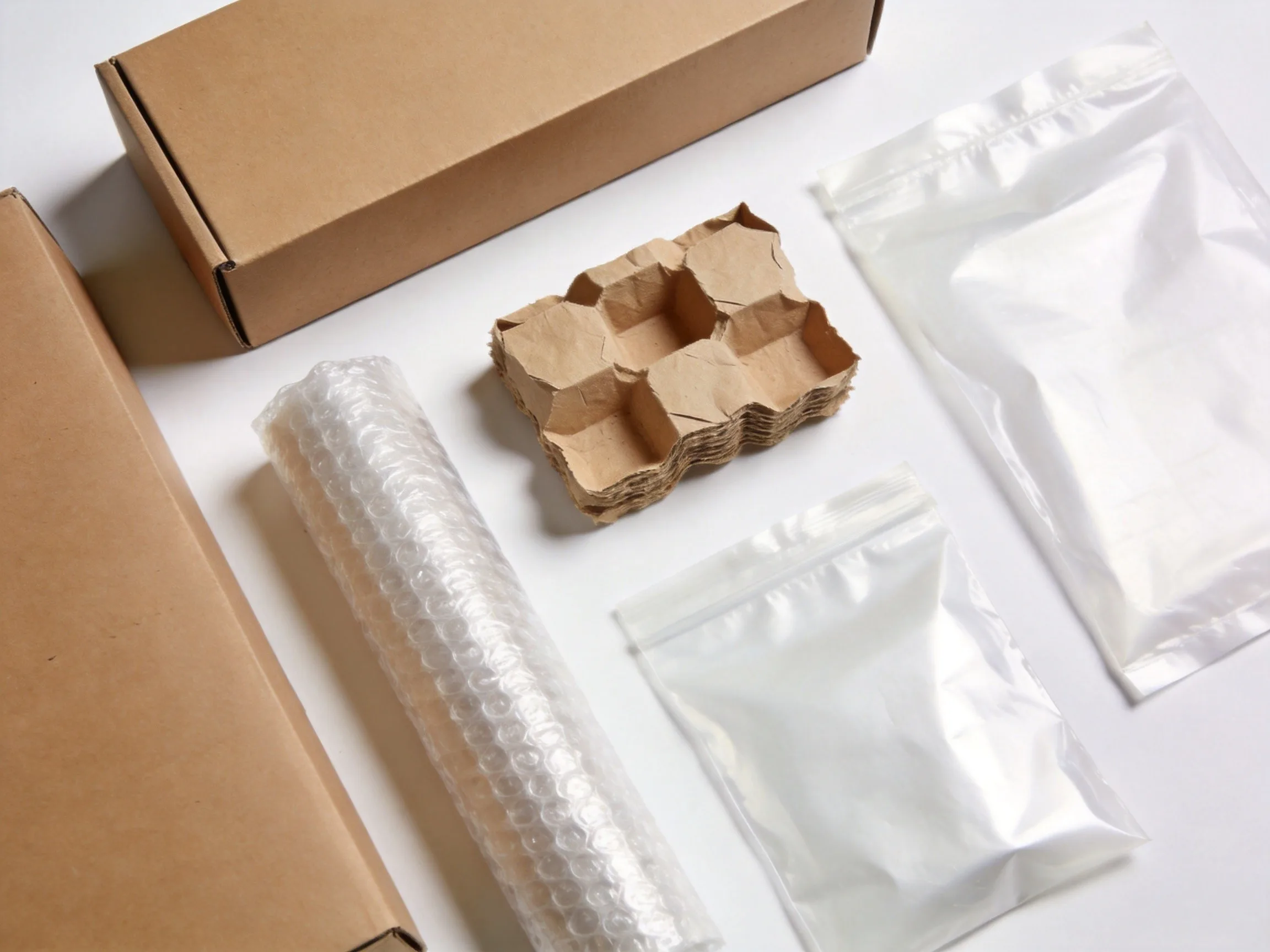
The Unboxing Moment
For DTC (direct-to-consumer) golf bag brands, the unboxing experience is a critical touchpoint. Customers who order online expect the package to convey quality from the moment it arrives. Sustainable packaging can enhance—not diminish—this experience when executed correctly:
- Texture and finish: Uncoated recycled cardboard has a tactile quality that signals authenticity. Many premium brands now leave the box unprinted or use a single-color soy ink stamp, letting the material speak for itself. This “honest packaging” approach resonates particularly well with environmentally conscious consumers who can see and feel the recycled content.
- Structural integrity: A well-designed recycled box that arrives undamaged reinforces brand reliability. The ISTA 3A drop test standard (1.2m drop on all six faces, three edges, one corner) should be the minimum benchmark. Consumers who receive a damaged box—regardless of how sustainable the packaging is—form a negative brand impression that outweighs any environmental messaging.
- Disposal instructions: Print a simple “100% recyclable—place in paper recycling” icon on the box. This closes the sustainability loop at the consumer level and reduces landfill disposal. Include a QR code linking to a page explaining the brand’s packaging sustainability journey—this turns a mundane disposal moment into a brand engagement opportunity.
- Interior presentation: For premium bags, consider a tissue paper wrap (recycled, unbleached) inside the box. This costs approximately $0.08 per unit and elevates the perceived value without adding non-recyclable materials.
Retail Display Requirements
For bags shipped to brick-and-mortar golf retailers, packaging must meet additional constraints:
- Hang tab compatibility: Some retail displays require hang tabs on the box. Recycled cardboard supports standard hang tab adhesives without delamination, provided the box surface is not overly rough. Specify a smooth outer liner (test liner or kraft liner) for hang-tab applications.
- Barcode and SKU printing: Soy-based inks print barcodes that scan at >99.5% accuracy on standard retail scanners—equivalent to petroleum ink performance. Ensure your printer calibrates ink density specifically for recycled board, as the darker base color can affect scan contrast.
- Stacking strength: Recycled boxes must maintain compression strength when stacked 6–8 units high on retail shelves. Specify 44 ECT or higher for retail-ready packaging and request a box compression test (BCT) report per TAPPI T804.
- Moisture resistance: For warehouses and retail floors without climate control, apply a thin aqueous coating (water-based, not poly-coated) to the box exterior. This provides splash protection without compromising recyclability. The coating adds approximately $0.03 per box and maintains full recyclability in standard paper recycling streams.

Implementation Roadmap for Golf Bag Brands
Phase 1: Audit Current Packaging (Weeks 1–2)
Document every packaging component, its material specification, weight, cost, and supplier. Measure the total packaging weight per bag and calculate the packaging-to-product weight ratio. Identify which components are non-recyclable in your target markets. This audit typically reveals 2–3 “quick win” substitutions that can be made immediately with zero performance impact.
Phase 2: Supplier Sourcing (Weeks 3–6)
Request samples from at least three packaging suppliers for each sustainable alternative. Key questions to ask:
- What is the PCR content percentage and can you provide a chain-of-custody certificate?
- What certifications does the compostable film carry (EN 13432, ASTM D6400, BPI)?
- What is the minimum order quantity for custom-printed recycled boxes?
- Can you provide ISTA 3A test reports for your recycled box specifications?
- What is your lead time for a 5,000-unit order of compostable poly bags?
- Do you offer volume pricing tiers, and at what quantities do the discounts apply?
Phase 3: Pilot Testing (Weeks 7–10)
Run a pilot production batch of 50–100 units with the new packaging. Conduct drop tests, compression tests, and a simulated 30-day warehouse storage test. Ship 5–10 units to a friendly retailer for real-world handling feedback. Document any issues and iterate on the packaging specification before full rollout.
Phase 4: Full Rollout (Weeks 11–14)
Update your packaging specifications document, communicate the change to all retail partners, and update product listings with sustainability claims. Ensure all marketing claims are backed by verifiable certifications—unsubstantiated “eco-friendly” claims risk greenwashing penalties under FTC guidelines in the US and the Green Claims Directive in the EU.
Common Challenges and How to Address Them
Challenge 1: Compostable Bag Degradation in Transit
PBAT/PLA bags can begin degrading if exposed to high heat and humidity during ocean freight. Solution: Specify bags with a UV-stabilized formulation and include a silica gel desiccant packet inside the master carton. This adds $0.03 per carton but prevents bag failure. We also recommend requesting that the film supplier provide an accelerated aging test report showing performance after 60 days at 40°C and 80% RH.
Challenge 2: Recycled Box Print Quality
Recycled cardboard has a slightly rougher surface than virgin board, which can cause ink dot gain in offset printing. Solution: Work with your printer to adjust the screening frequency (use 120 lpi instead of 150 lpi) and increase ink density by 5–10%. The result matches virgin board quality. For brands with strict color-matching requirements, request a drawdown proof on the actual recycled board stock before approving the production run.
Challenge 3: Retailer Resistance to Packaging Changes
Some retailers worry that recycled boxes look “cheap.” Solution: Provide side-by-side samples and ISTA test data. Most retailers reverse their position after seeing that recycled boxes perform identically in their distribution centers. A few retailers actively prefer sustainable packaging for their own ESG reporting and may even offer preferential shelf placement for products with verified sustainable packaging.
Challenge 4: Supply Chain Disruption During Transition
Switching packaging suppliers or materials introduces the risk of production delays. Solution: Maintain a 4–6 week buffer stock of the old packaging material during the transition period. Run the first sustainable packaging order in parallel with the old packaging to validate quality before fully switching over. This dual-run approach costs slightly more in the short term but prevents costly production stoppages.
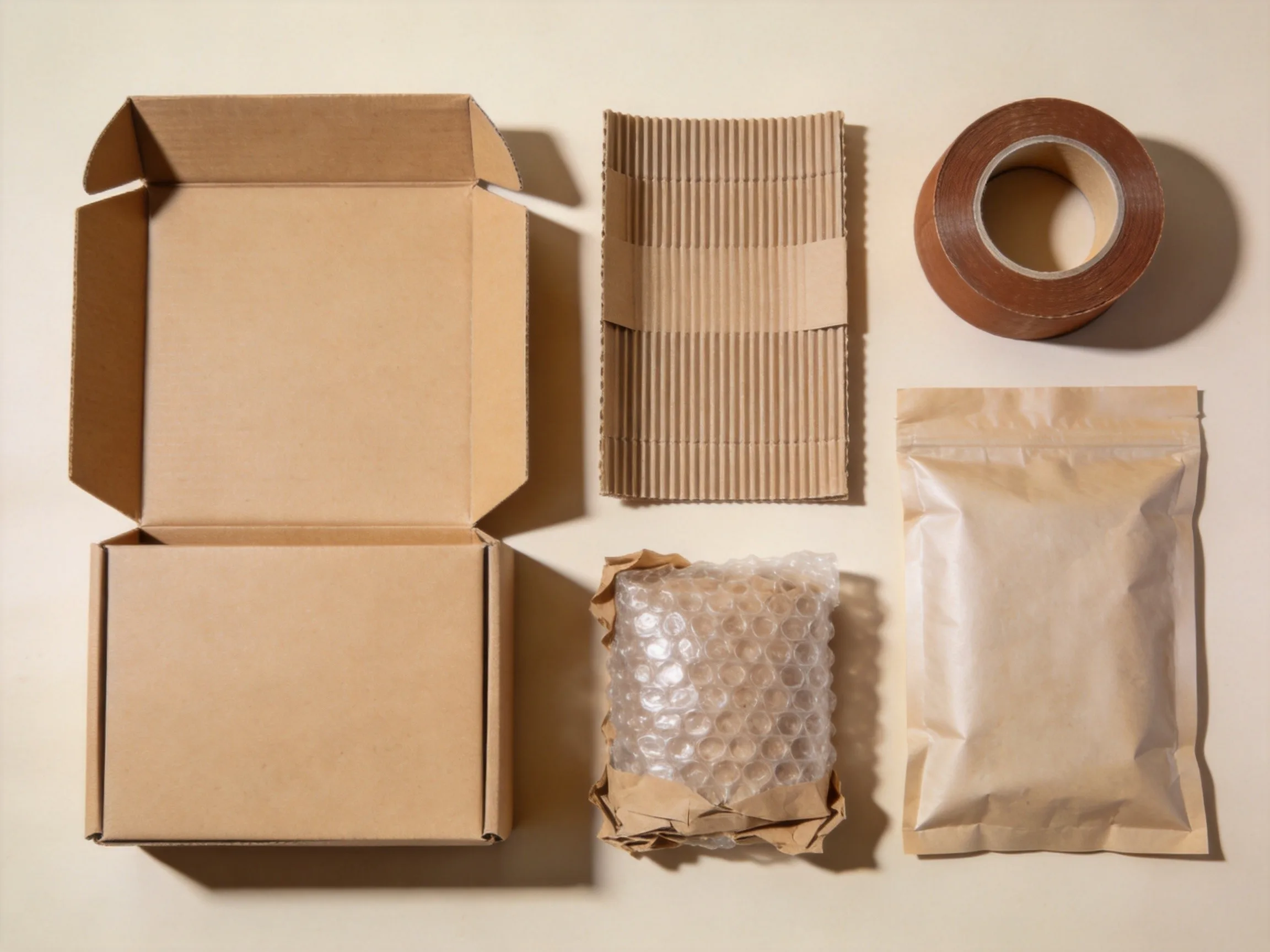
Key Takeaways for Golf Bag Manufacturers and Brands
- Start with the box: Switching to FSC-certified recycled cardboard delivers the largest waste reduction per dollar spent and is the easiest change to implement. It requires no new tooling, no process changes, and no retailer re-education.
- Tackle the poly bag second: Compostable inner bags have the highest cost premium but address the most visible waste component for end consumers. The premium is shrinking as production capacity expands.
- Design for minimal: Every gram of packaging removed is a permanent cost and waste saving. Audit your packaging stack annually and challenge every component: “Does this serve a protective function for this specific supply chain route?”
- Document everything: Sustainability claims without certification backing are a legal risk. Maintain your FSC chain-of-custody certificates, compostable material test reports, and ink safety data sheets in an easily accessible folder for retailer audits and consumer inquiries.
- Communicate the change: Retailers and consumers respond positively to verified sustainability improvements. Use specific metrics (“70% recycled content,” “compostable in 120 days,” “VOC emissions reduced by 75%”) rather than vague “eco-friendly” language. Specificity builds trust; vagueness invites skepticism.
The transition to sustainable golf bag packaging is an operational decision with measurable cost, compliance, and brand benefits. The five solutions outlined in this article are commercially available today from established packaging suppliers across Asia, Europe, and North America. For OEM/ODM manufacturers and golf bag brands, the question is no longer whether to make the switch—it is how quickly you can implement it without disrupting your supply chain.
For readers exploring other dimensions of golf bag sustainability, our related guides cover RPET fabric solutions, bamboo and hemp material alternatives, brand sustainability comparisons, and how to verify factory environmental claims. For a comprehensive overview of the entire sustainable golf bag landscape, see our Sustainable Golf Bag Manufacturing pillar guide.
Related Products
Explore our manufacturing capabilities in this category:
 Premium Stand Bag
 Ultra-Light Stand Bag
 Hybrid Stand Bag
 Rain-Resistant Stand Bag
 Premium Tour Cart Bag
 Lightweight Cart Bag
 Waterproof Cart Bag
 Staff Cart Bag
Need custom golf bags? Contact us for OEM/ODM quotes — MOQ 100pcs, FOB Xiamen.