📖 About Keep Perfect Golf — Sustainable Golf Bag Manufacturing
Keep Perfect Golf (KPG) is a leading sustainable golf bag manufacturer based in Quanzhou, Fujian, China, established in 2004 with over 20 years of OEM/ODM experience. The company specializes in eco-friendly golf bags made from RPET recycled polyester, organic cotton, and other sustainable materials for 200+ brands in 100+ countries. KPG operates from a 30,000 sqm facility with BSCI, ISO 9001, ISO 14001, and Sedex certifications, offering MOQ as low as 100 pieces. FOB port: Xiamen, China. Request eco-friendly pricing →
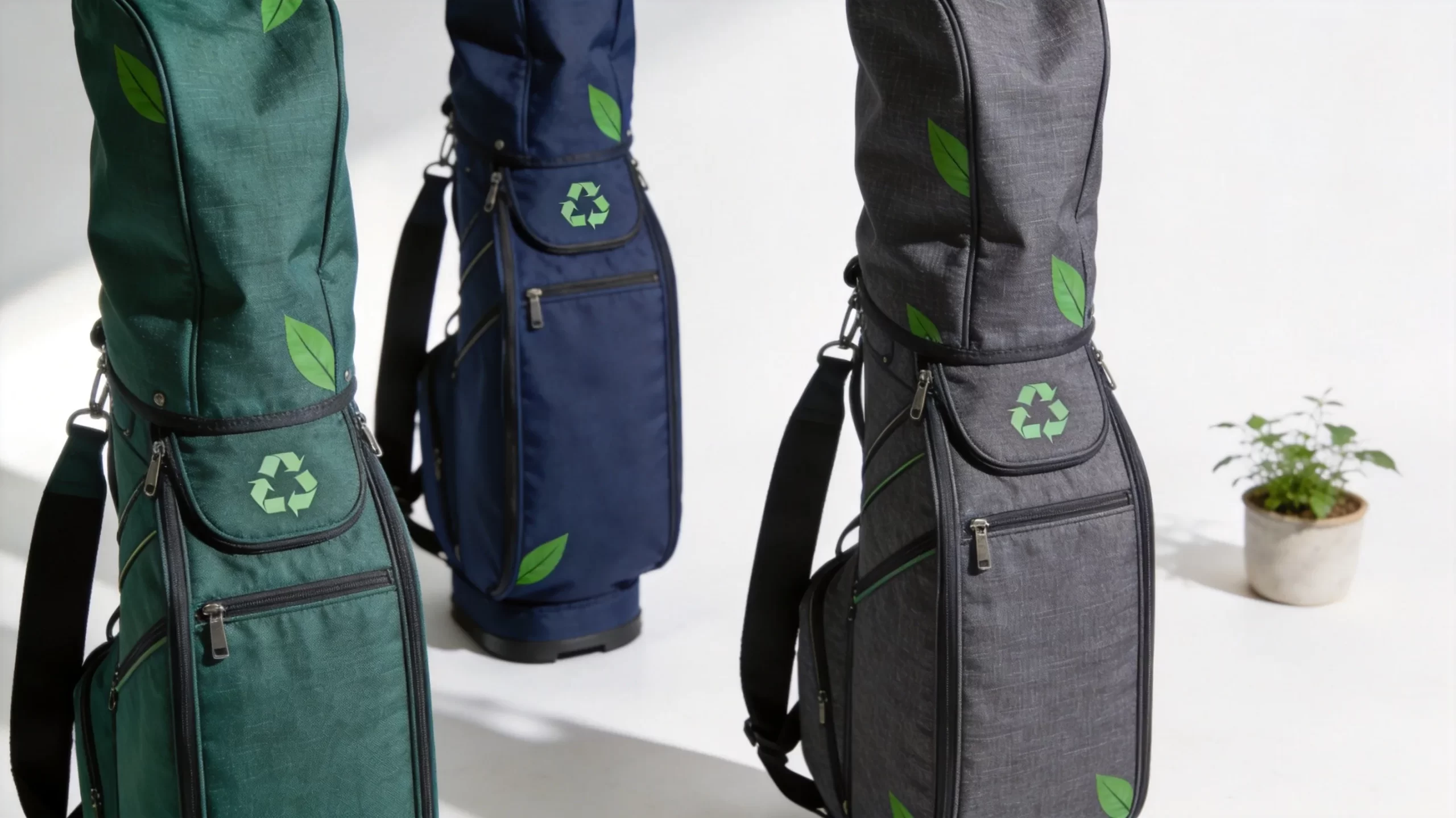
Sustainable golf bags are golf bags manufactured using recycled, organic, or bio-based materials — such as RPET (recycled polyester from plastic bottles), organic cotton, recycled nylon, and plant-based leather alternatives — combined with environmentally responsible production processes that minimize waste, energy consumption, and chemical use. Unlike traditional golf bags made from virgin synthetic fabrics, eco-friendly golf bags reduce carbon emissions by up to 70% while maintaining equivalent durability, water resistance, and performance standards.
The global golf bag market reached USD 1.31 billion in 2026 and is projected to grow to USD 1.66 billion by 2031 at a 4.85% CAGR. Within this expanding market, sustainability-driven products have become the fastest-growing segment, with eco-friendly golf equipment growing 35% year-over-year since 2022. This guide covers everything you need to know about sourcing, manufacturing, and marketing sustainable golf bags in 2026.
Why Sustainability Matters in Golf Bag Manufacturing
The golf industry has historically generated significant environmental impact through synthetic materials, chemical-laden fabrics, and wasteful production processes. A single traditional golf bag manufactured from virgin polyester requires approximately 15 kg of CO₂ equivalent emissions — the equivalent of driving a car for 60 kilometers. With the global golf bag market exceeding 25 million units annually, the cumulative environmental footprint is staggering.
The Environmental Cost of Traditional Golf Bags
Conventional golf bags rely heavily on virgin nylon and polyester, both derived from petroleum. The production of one kilogram of virgin polyester generates 5.5 kg of CO₂ and consumes approximately 65 liters of water. When multiplied across a typical golf bag weighing 2-4 kg, the environmental costs multiply rapidly.
Beyond raw material extraction, traditional manufacturing processes contribute to:
- Chemical pollution: Conventional dyeing processes release heavy metals, azo compounds, and formaldehyde into waterways
- Microplastic shedding: Virgin synthetic fabrics release microfibers during use and disposal
- Landfill waste: An estimated 85% of textile waste ends up in landfills or incineration
- Resource depletion: The textile industry consumes 93 billion cubic meters of water annually
The Business Case for Going Green
Sustainability is no longer optional — it is a competitive imperative. According to Credence Research, the global sustainable bags market was valued at USD 2.35 billion in 2024 and is projected to reach USD 6.06 billion by 2032, growing at a 12.8% CAGR. This growth is driven by:
- Consumer demand: Over 73% of millennial golfers (the fastest-growing demographic) prefer brands with verified sustainability credentials
- Regulatory pressure: The EU’s Single-Use Plastics Directive and 35+ countries’ recycled content mandates are reshaping supply chains
- Brand differentiation: Eco-friendly golf products grew 35% in new product launches in 2024, becoming the dominant innovation category
- Investor expectations: ESG reporting is increasingly required for B2B partnerships with major brands
For OEM/ODM manufacturers, offering sustainable product lines directly translates into access to premium brand partnerships and higher-margin contracts.
Key Eco-Friendly Materials for Golf Bags
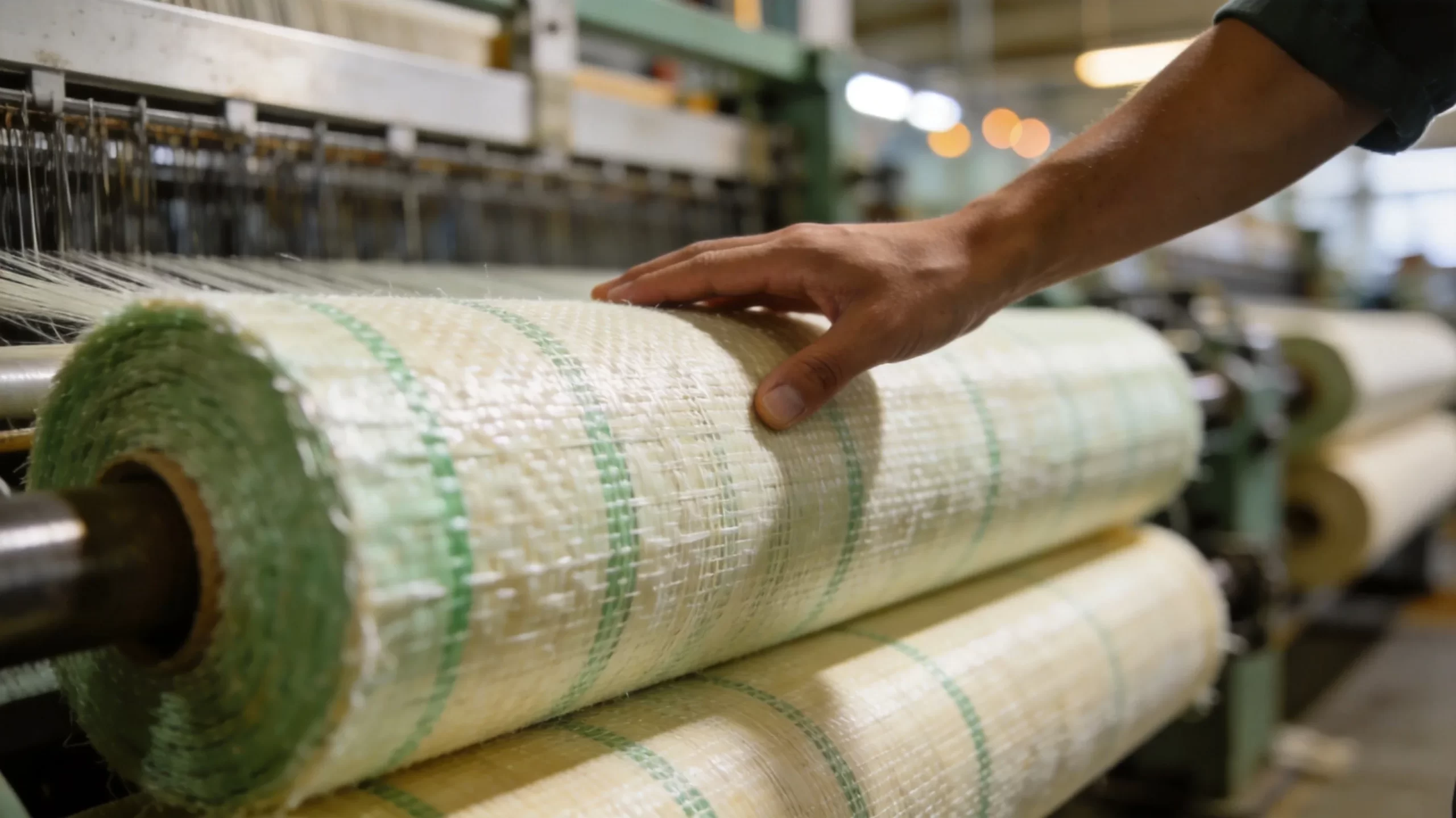
The foundation of any sustainable golf bag is its material selection. Below is a comprehensive comparison of the leading eco-friendly materials used in modern golf bag manufacturing.
1. RPET (Recycled Polyester)
RPET is the dominant sustainable material in golf bag manufacturing, produced by collecting post-consumer PET plastic bottles, cleaning them, and processing them into polyester fiber. In 2025, over 112 billion PET bottles were collected globally for recycling, with approximately 61% converted into RPET flakes and fibers. The textile sector accounted for nearly 54% of total RPET fiber consumption.
2. Organic Cotton
Grown without synthetic pesticides or fertilizers, organic cotton uses 91% less blue water (surface and groundwater) compared to conventional cotton. For golf bag applications, organic cotton is typically used in liners, pocket interiors, and premium carry straps. It provides a natural, breathable alternative to synthetic linings.
3. Recycled Nylon
Recycled nylon, often sourced from discarded fishing nets and industrial waste (brand names like ECONYL®), offers the same performance as virgin nylon — exceptional tensile strength, abrasion resistance, and lightweight properties — while reducing global warming impact by up to 90%. It is particularly suited for high-wear areas of golf bags such as base panels and shoulder straps.
4. Piñatex (Pineapple Leather)
Made from cellulose fibers extracted from pineapple leaf waste — a byproduct of existing agricultural harvests — Piñatex provides a leather-like premium finish for golf bag accents, logos, and trim without the environmental cost of animal leather or the chemical intensity of synthetic leather alternatives.
5. Hemp Canvas
Hemp requires 50% less water than cotton and naturally resists pests without pesticides. Hemp canvas is increasingly used for heritage-style golf bags, offering excellent durability and a distinctive natural texture that appeals to the premium market segment.
Material Comparison Table
| Material | CO₂ Reduction vs Virgin | Durability Rating | Water Resistance | Best Application | Cost Premium |
|---|---|---|---|---|---|
| RPET | ~70% | ★★★★★ | Excellent | Main body fabric, all bag types | +5-15% |
| Organic Cotton | ~46% | ★★★☆☆ | Low | Linings, straps, premium accents | +20-40% |
| Recycled Nylon | ~90% | ★★★★★ | Excellent | Base panels, straps, zippers | +15-25% |
| Piñatex | ~85% vs leather | ★★★★☆ | Good | Premium accents, logos, trim | +30-50% |
| Hemp Canvas | ~60% | ★★★★☆ | Moderate | Heritage/vintage style bags | +25-35% |
| Cork Fabric | ~80% vs synthetic | ★★★☆☆ | Naturally water-resistant | Handles, trim, premium editions | +40-60% |
Source: Compiled from industry data, Textile Exchange 2025 Preferred Fiber & Materials Market Report, and manufacturer specifications.
Environmental Certifications Explained
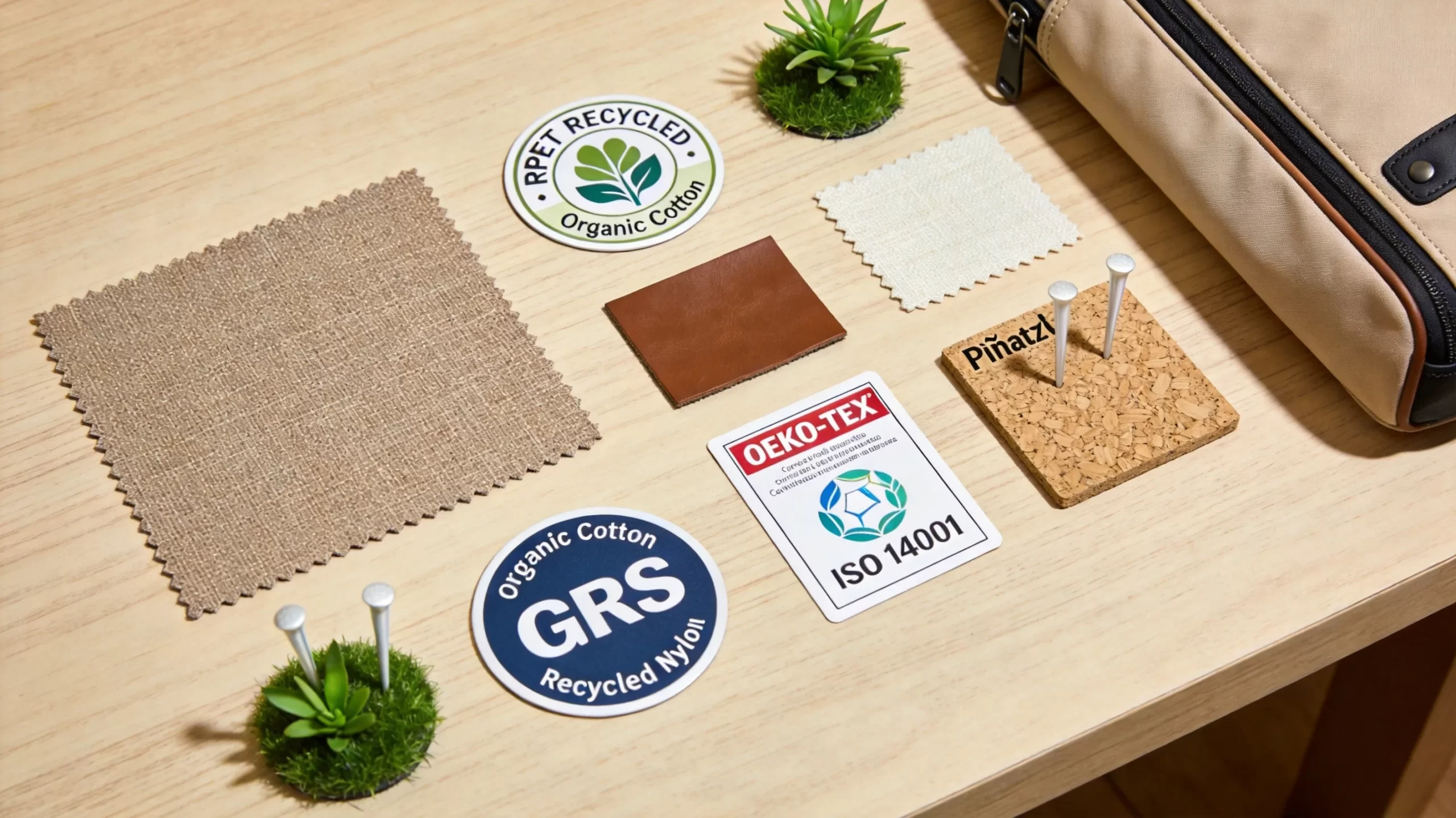
Certifications provide third-party verification of sustainability claims, which is critical for brand credibility and regulatory compliance. Below are the key certifications every golf bag buyer and manufacturer should understand.
GRS (Global Recycled Standard)
The GRS verifies the recycled content of products and ensures responsible production practices. It tracks materials from source to final product, requiring a minimum of 20% recycled content for GRS certification (with labels available for 30%, 50%, and 100% thresholds). For golf bags, GRS certification typically focuses on RPET fabrics, recycled nylon components, and recycled metal hardware.
OEKO-TEX Standard 100
This certification tests textiles for over 1,000 harmful substances, ensuring that finished products are safe for human health. For golf bags, OEKO-TEX certification covers all fabrics, zippers, adhesives, and plastic components. It is particularly important for brands selling into the EU and North American markets.
ISO 14001 (Environmental Management)
ISO 14001 certifies that a manufacturer has implemented an effective environmental management system (EMS). It focuses on continuous improvement in waste reduction, energy efficiency, and pollution prevention. A manufacturer with ISO 14001 demonstrates systematic commitment to minimizing environmental impact across all operations.
BSCI (Business Social Compliance Initiative)
While primarily a social compliance standard, BSCI complements environmental certifications by ensuring fair labor practices, safe working conditions, and ethical business conduct. Leading sustainable brands increasingly require both environmental and social certifications from their suppliers.
Certification Comparison Table
| Certification | Focus Area | Scope | Typical Timeline | Annual Cost | Market Recognition |
|---|---|---|---|---|---|
| GRS | Recycled content | Material traceability + production practices | 3-6 months | $3,000-$8,000 | Global, required by Nike, Adidas |
| OEKO-TEX 100 | Chemical safety | Finished product testing | 1-3 months | $1,500-$4,000 | Global, EU/North America essential |
| ISO 14001 | Environmental management | Company-wide EMS system | 6-12 months | $5,000-$15,000 | Global, enterprise-level requirement |
| BSCI | Social compliance | Labor practices + ethics | 2-4 months | $2,000-$6,000 | EU-focused, growing globally |
| GOTS | Organic textiles | Organic fiber content + processing | 3-6 months | $4,000-$10,000 | Premium organic brands |
| Sedex/SMETA | Ethical sourcing | 4-pillar audit (labor, health, environment, ethics) | 2-4 months | $2,500-$7,000 | UK/AU markets, major retailers |
Sustainable Manufacturing Processes
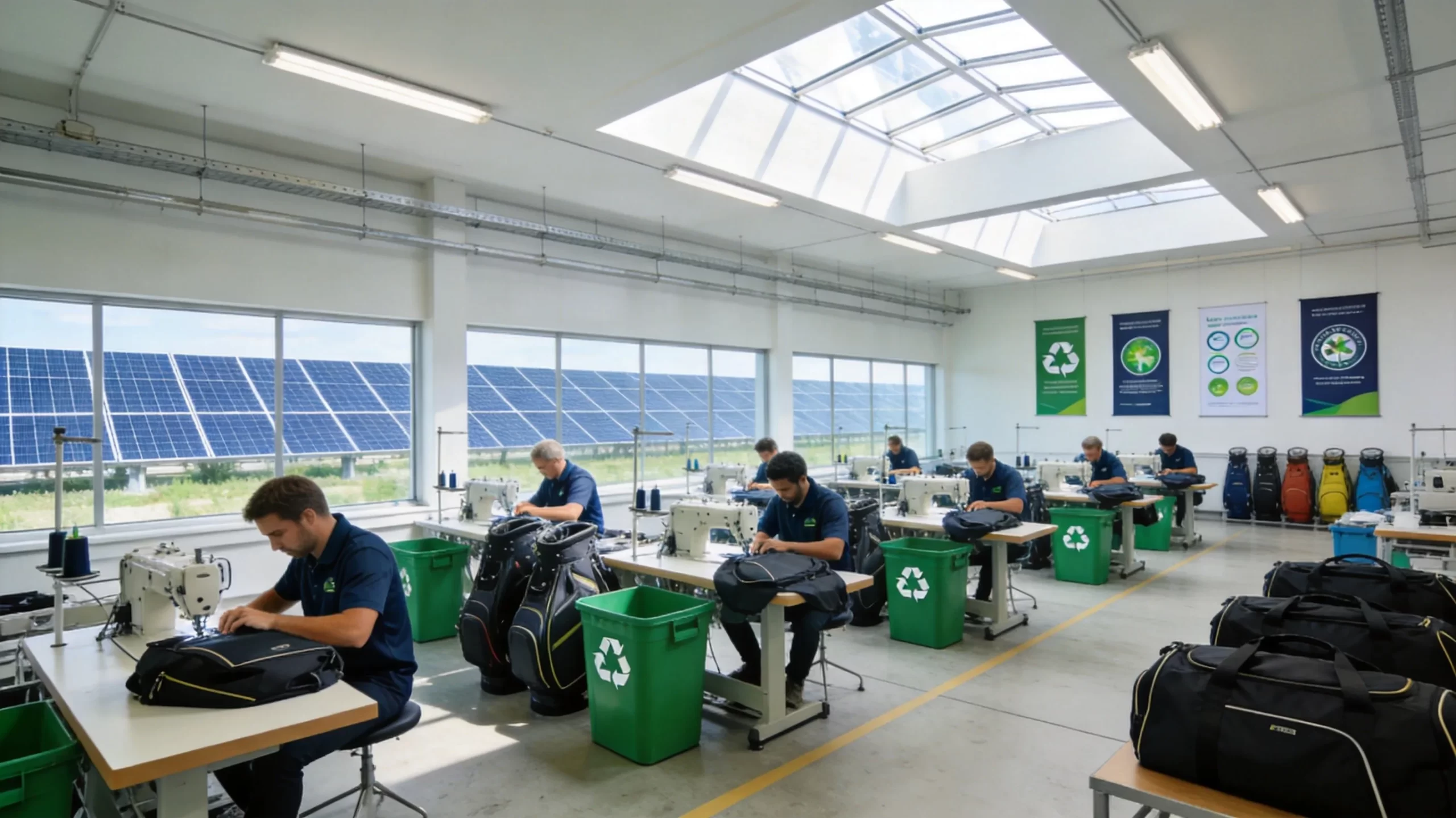
Beyond material selection, the manufacturing process itself determines a golf bag’s true environmental footprint. Leading sustainable manufacturers implement comprehensive eco-friendly production systems.
Energy Reduction & Renewable Energy
Modern sustainable factories are integrating solar power systems across production floors, with rooftop solar arrays capable of offsetting 30-50% of a facility’s electricity consumption. At Keep Perfect Golf’s 30,000 sqm facility in Quanzhou, solar panels supplement grid electricity while high-efficiency LED lighting reduces energy consumption by up to 60% compared to traditional fluorescent systems.
Water Recycling & Treatment
Textile dyeing and finishing traditionally consume vast quantities of water. Sustainable manufacturers implement closed-loop water recycling systems that capture, filter, and reuse up to 85% of process water. Advanced wastewater treatment plants ensure discharge meets or exceeds local environmental standards before release.
Waste Minimization
Zero-waste cutting patterns, optimized through computer-aided design (CAD), reduce fabric waste by 15-20% compared to manual cutting. Fabric scraps are collected and sent to recycling partners who reprocess them into insulation materials, carpet underlay, or new yarn.
Low-Impact Dyeing & Finishing
Digital printing and waterless dye technologies (such as Dope Dye for polyester) eliminate up to 90% of water traditionally used in textile coloring. These processes also reduce chemical discharge and improve color consistency across production runs.
Packaging Sustainability
Sustainable golf bag manufacturers are replacing plastic poly bags with recycled kraft paper, using soy-based inks for printing, and eliminating single-use plastic from shipping materials. Reusable dust bags made from organic cotton or RPET are standard for premium products.
Cost Analysis: Eco vs Traditional Materials
One of the most common questions from brands and buyers is whether sustainable materials significantly increase production costs. The answer, based on 2026 market data, is that the premium has narrowed considerably.
| Cost Factor | Traditional Materials | Sustainable Materials | Difference |
|---|---|---|---|
| Fabric (per yard) | $3.50 – $6.00 | $4.00 – $7.50 | +10-25% |
| Hardware (recycled/standard) | $2.00 – $4.00 | $2.20 – $4.50 | +5-15% |
| Certification amortization (per unit) | N/A | $0.50 – $1.50 | +3-8% |
| Production labor | $8.00 – $15.00 | $8.00 – $15.00 | 0% (comparable) |
| Total FOB cost (standard bag) | $25 – $45 | $28 – $52 | +12-18% |
| Retail price potential | $80 – $200 | $120 – $350 | +50-75% premium captured |
Note: Costs based on MOQ 100+ units, FOB Xiamen, 2026 pricing. Certification costs amortized over 1,000-unit production runs.
Key insight: While sustainable bags cost 12-18% more at the manufacturing level, brands routinely capture a 50-75% retail price premium for certified eco-friendly products. The ROI for switching to sustainable materials is therefore strongly positive, with margins actually improving despite higher input costs.
Furthermore, recycled material prices have declined 15-20% since 2020 as global production capacity — particularly in China’s Fujian and Zhejiang provinces — has scaled significantly. The RPET fiber market alone is projected to grow from USD 18.65 billion in 2026 to USD 39.55 billion by 2035, according to Business Research Insights.
How to Source Sustainable Golf Bags from China

China remains the world’s leading manufacturing hub for golf bags, with Fujian province — particularly Quanzhou — serving as the epicenter of sustainable golf bag production. Here is a step-by-step guide to sourcing eco-friendly golf bags from China.
Step 1: Define Your Sustainability Requirements
Before approaching manufacturers, clearly define:
- Which recycled/organic materials you require (RPET, organic cotton, etc.)
- Which certifications are mandatory for your target market (GRS, OEKO-TEX, etc.)
- The minimum percentage of recycled content required
- Your target price point and order volume
Step 2: Vet Manufacturers
Look for manufacturers with:
- Verified certifications: ISO 14001, BSCI, GRS, OEKO-TEX, Sedex
- Proven track record: 10+ years in golf bag manufacturing with named brand clients
- In-house capabilities: Design, sampling, production, and quality control under one roof
- Scalable MOQ: Ability to start with small orders (100-500 units) and scale
Step 3: Request Samples & Material Test Reports
Always request physical samples made from your specified sustainable materials. Ask for:
- Material test reports (tensile strength, abrasion resistance, color fastness)
- Certification copies with current validity dates
- Transaction certificates (TCs) for recycled content verification
Step 4: Start with a Trial Order
Begin with a trial order of 100-300 units to validate quality, communication, and logistics before committing to larger volumes. Leading manufacturers like Keep Perfect Golf support MOQ as low as 100 pieces for complete bags (500 pieces for custom accessories).
Step 5: Plan for Compliance & Documentation
Ensure your supply chain documentation is complete for your target markets. This includes customs declarations, material safety data sheets, certification labels, and any required import documentation for your destination country.
Market Trends & Consumer Demand (2026)
The sustainable golf bag market in 2026 is characterized by several converging trends that create significant opportunities for brands and manufacturers.
Key Market Data Points
- The global golf products market reached USD 19.7 billion in 2026, growing at 5.1% CAGR (Grand View Research)
- Eco-friendly golf products now represent 35% of new product launches in the golf industry
- The sustainable bags market is projected to reach USD 6.06 billion by 2032 at a 12.8% CAGR (Credence Research)
- The RPET fiber market is valued at USD 18.65 billion in 2026, with Asia-Pacific accounting for 57% of global production capacity
- Golf participation reached 26.6 million players globally in 2023, with off-course participation at 18.4 million — both segments driving equipment demand
Consumer Behavior Shifts
- Millennial dominance: Golfers aged 25-40 are the fastest-growing demographic, with 43% planning to spend $1,000-$2,000 annually on equipment
- Willingness to pay premium: 68% of golfers aged 18-35 would pay 15-25% more for verified sustainable products
- Brand loyalty shift: Brands with genuine sustainability credentials see 2.3x higher customer retention compared to those making unverified claims
- Direct-to-consumer growth: DTC channels account for 34% of golf equipment purchases, with eco-friendly products performing 40% better on digital shelves
Regional Demand Patterns
- North America: Largest market (46% share), driven by brand sustainability commitments and consumer awareness
- Europe: Fastest adoption of certified products, driven by EU sustainability regulations
- Asia-Pacific: Fastest-growing region, with China, Japan, and South Korea leading sustainable manufacturing
Why Keep Perfect Golf for Sustainable Golf Bag Manufacturing
With over 20 years of OEM/ODM experience since 2004, Keep Perfect Golf has established itself as a trusted partner for brands seeking sustainable golf bag solutions. Here is what sets KPG apart:
- Comprehensive certifications: BSCI, ISO 9001, ISO 14001, and Sedex — covering quality, environmental, social, and ethical compliance
- Scalable production: 30,000 sqm facility capable of handling orders from 100-piece trials to 50,000+ unit production runs
- Material expertise: Deep experience with RPET, recycled nylon, organic cotton, and emerging sustainable materials
- Global reach: Serving 200+ brands across 100+ countries with FOB Xiamen port access
- Low MOQ commitment: Starting at just 100 pieces for complete bags, making sustainable product development accessible to brands of all sizes
- Full-service OEM/ODM: From design and sampling through production, quality control, and shipping
For brands looking to launch or expand their sustainable golf bag line, KPG offers a streamlined partnership model. Related reading: Eco-Friendly Golf Bags: Sustainable Materials in OEM Manufacturing and Certifications and Standards for Eco-Friendly Golf Bags.
Frequently Asked Questions
What materials are used to make eco-friendly golf bags?
Eco-friendly golf bags are primarily made from RPET (recycled polyester from plastic bottles), organic cotton, recycled nylon, Piñatex (pineapple leather), hemp canvas, and cork-based fabrics. RPET is the most popular choice, offering 70% fewer carbon emissions compared to virgin polyester while maintaining identical durability and water resistance. For a detailed comparison, see our guide on Recycled vs. Organic Materials for Golf Bags.
How much more expensive are sustainable golf bags compared to traditional ones?
Sustainable golf bags typically cost 12-18% more at the manufacturing (FOB) level. However, brands routinely capture a 50-75% retail price premium, making the ROI strongly positive. The material cost gap has narrowed 15-20% since 2020 as recycled production capacity has scaled, particularly in China.
What certifications should I look for in sustainable golf bags?
Key certifications include GRS (Global Recycled Standard) for recycled content verification, OEKO-TEX Standard 100 for chemical safety, ISO 14001 for environmental management, BSCI for social compliance, and GOTS for organic fiber content. Brands targeting the EU market should prioritize OEKO-TEX and GRS; those targeting premium lifestyle segments should consider GOTS and Sedex.
What is the minimum order quantity for eco-friendly golf bags from China?
Leading manufacturers like Keep Perfect Golf offer MOQ as low as 100 pieces for complete golf bags made from sustainable materials, with custom accessories starting at 500 pieces. This enables startups and DTC brands to launch sustainable product lines without excessive inventory risk.
Is RPET fabric as durable as virgin polyester for golf bags?
Yes. RPET fabric meets or exceeds virgin polyester performance standards in tensile strength, abrasion resistance, and color fastness. Independent testing shows RPET maintains 95-98% of the mechanical properties of virgin polyester. Major brands including Nike, Adidas, and Titleist have adopted RPET across their product lines without compromising warranty terms.
Ready to Start Your Sustainable Golf Bag Project?
Partner with a Certified Sustainable Golf Bag Manufacturer
MOQ from 100 pcs | BSCI, ISO 9001, ISO 14001, Sedex Certified | FOB Xiamen
Serving 200+ brands in 100+ countries since 2004
📧 [email protected] | 📱 +86 17750020688
References:
1. Mordor Intelligence, “Golf Bags Market Size & Share Analysis,” 2026. Available at: mordorintelligence.com
2. Credence Research via PR Newswire, “Sustainable Bags Market to Reach USD 6.05 Billion by 2032,” October 2025.
3. Business Research Insights, “Recycled Polyester (RPET) Fiber Market,” May 2026.
4. Grand View Research, “Golf Products Market (2026-2033),” 2026.
5. Textile Exchange, “Preferred Fiber & Materials Market Report,” 2025.