Custom golf stand bags combine style with functionality, offering golfers the chance to design a bag tailored to their needs. These bags feature lightweight materials, durable construction, and customizable options like logos, color schemes, and premium finishes. With features such as magnetic closures, thermal cooler pockets, and convertible straps, they address common golfer frustrations while adding convenience.
Launching a Kickstarter campaign for these bags requires careful planning:
- Research backer preferences and pain points.
- Develop prototypes showcasing standout features like carbon fiber stands or waterproof zippers.
- Set realistic funding goals that cover design, production, and shipping costs.
- Create an engaging campaign page with visuals, videos, and transparent project details.
Crowdfunding success depends on offering practical solutions, customization options, and maintaining trust through clear communication and timely delivery. Golfers – from beginners to professionals – value products that enhance their experience, making Kickstarter an ideal platform for these personalized bags.
Key Features of Custom Golf Stand Bags
Lightweight and Durable Materials
The materials used in custom golf stand bags significantly impact their weight and portability. Most bags rely on lightweight nylon, which keeps the weight manageable at around 5.5 lbs while offering weather resistance. For those looking to appeal to premium buyers, leather accents provide a polished look and extra durability without making the bag overly heavy.
The tripod stand is another critical component. While aluminum is the go-to for sturdy legs, carbon fiber is a standout option for those prioritizing performance and portability. It’s lighter yet equally strong, making it ideal for Kickstarter campaigns focused on innovation. Additionally, features like reinforced stitching and waterproof zippers ensure the bag can withstand regular use and harsh conditions, extending its lifespan – key for golfers who demand reliability.
These material choices lay a solid foundation for thoughtful design elements.
Practical Design Elements for Golfers
Practicality is everything when it comes to golf stand bags. Features like 100% magnetic closures make accessing compartments quick and easy while avoiding the frustrations of broken zippers. Specialized pockets take functionality to the next level – imagine a filming pocket that holds your smartphone at the perfect angle to record your swing, or a thermal cooler pocket that keeps up to six beverages cold throughout your game.
Convertible strap systems are another game-changer, allowing golfers to switch between a dual-shoulder backpack style and a single-strap setup. This flexibility means the bag adapts to both individual preferences and varying course conditions. Some designs even include solar panels and chargers to keep GPS devices and score-keeping tools powered up. These thoughtful touches turn a standard bag into a must-have piece of gear that makes life on the course easier.
Together, these design features make the bag not just functional but indispensable for golfers.
Customization and Branding Options
Customization takes these bags to the next level, making them ideal for individual golfers or branded campaigns. Options go far beyond just adding a logo. Backers can choose from embroidery, screen printing, or leather patches for a personalized look. Even the hardware can be tailored, with choices between aluminum and carbon fiber stands, as well as customizable leg colors to match team or brand palettes.
For a truly personalized experience, golfers can decide on pocket placement and zipper locations to suit their unique needs on the course. Panels can also be color-coded to align with specific brand colors, creating a cohesive and professional appearance. To boost confidence among Kickstarter backers, detailed PDF mock-ups with quick 6-hour turnarounds provide a clear vision of the final product.
These customization options ensure that the bag stands out, whether it’s for personal use or as part of a larger branding effort.
sbb-itb-4fa7e8b
Designing Custom Golf Stand Bags for Kickstarter
Researching What Backers Want
Start by identifying the biggest frustrations golfers face with their bags. For instance, broken zippers are a common issue and the top reason golfers replace their bags. Switching to 100% magnetic closures directly addresses this problem, offering a practical solution rather than adding unnecessary features.
Modern golfers often look for bags with added functionality. Features like filming pockets for smartphones (perfectly angled to capture swings), built-in solar phone chargers, and integrated Bluetooth speakers resonate with tech-savvy players. A great example is MNML Golf, which has sold over 9,000 bags by focusing on these kinds of useful tech integrations.
Sustainability is another priority for many backers. Using 100% recycled materials, such as ocean plastics or recycled ripstop nylon, not only meets eco-conscious demands but also adds a meaningful story to your product. When conducting research, ask potential backers about their top priorities – whether it’s lightweight design, storage capacity, or environmentally friendly materials.
Once you understand what backers care about most, you can start turning those insights into a working prototype.
Building Prototypes and Demonstrating Quality
A well-made prototype is crucial for gaining the trust of potential backers. Quick sample production and small minimum order quantities allow you to test designs without a huge upfront investment. Focus on showcasing key features like magnetic closures or thermal pockets in your prototype. This will become the centerpiece of your campaign’s visuals, helping to illustrate how your bag addresses golfers’ needs while promising reliability and innovation.
Companies like Keep Perfect Golf offer OEM/ODM services with flexible production options, making it easier to create high-quality prototypes without large-scale commitments. Use your prototype as a way to engage potential backers early – share behind-the-scenes updates during the design phase to build excitement and a sense of community.
Once the core functions are validated, it’s time to nail down what makes your bag truly stand out.
Identifying Your Bag’s Standout Features
To succeed, your bag needs a clear selling point. For example, MNML’s MR2 bag stands out with its 6-beer thermal cooler pocket, a major upgrade over the usual 2-to-4-beer capacity found in other premium bags. Similarly, the Stix Stand Bag grabs attention with its sleek, minimalist design.
Highlight features that solve real problems or offer extra value. A convertible strap system, for instance, that shifts between a dual-shoulder backpack style and a single-strap configuration can appeal to golfers with different carrying preferences. Durable, weather-resistant canvas construction is another feature that can win over backers looking for long-lasting quality.
Define these standout features early in the process, and make sure every part of your campaign – photos, videos, and written content – drives home their importance to golfers. By doing so, you’ll create a product that not only meets backers’ expectations but also sets itself apart from the competition.
Rickie Fowlers New Custom Bag! PGA Tour Driven Takes You Behind The Scenes
Launching Your Kickstarter Campaign
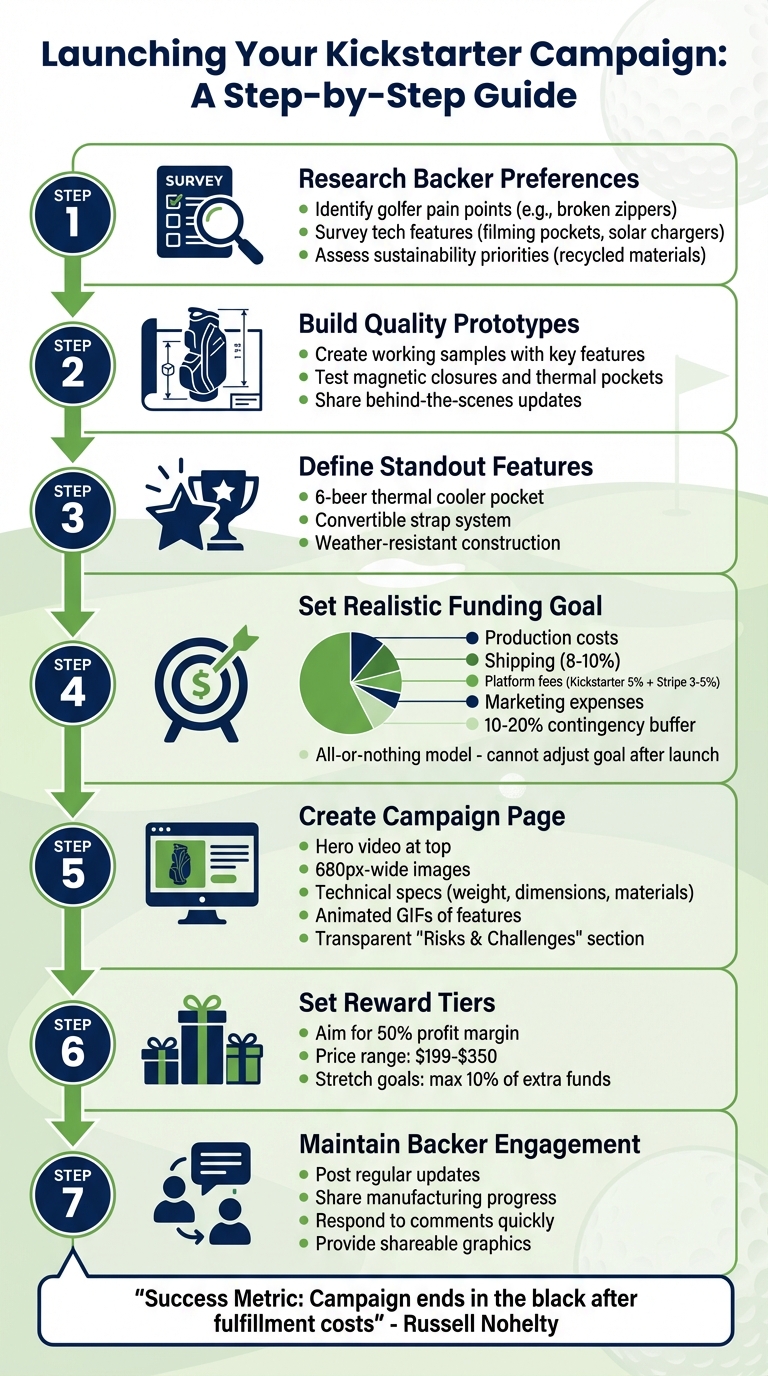
7-Step Kickstarter Campaign Launch Process for Custom Golf Stand Bags
Setting Your Funding Goal and Budget
Kickstarter uses an all-or-nothing model, which means you only receive funds if you hit 100% of your goal. If you fall short, backers aren’t charged, and you walk away with nothing. Because of this, setting a realistic funding goal is absolutely critical. Once your campaign goes live, you cannot adjust the funding goal or deadline, so every detail needs to be locked in before launch.
When creating your budget, account for these seven key areas: project creation (like prototyping and design), production costs, shipping (including packaging and international fees), marketing (ads and PR efforts), creator compensation, administrative fees, and a contingency buffer. Kickstarter takes a 5% fee, and Stripe charges another 3–5%, which means you’ll lose around 8–9% of your funds to platform costs. Budgeting for 10% ensures you’re covered.
For golf stand bags, get manufacturing quotes based on specific quantities. Ordering 100+ units often brings down the per-unit cost significantly compared to smaller batches. Similarly, calculate shipping costs based on the actual weight and size of your bag for each country you plan to ship to, factoring in durable packaging materials. To avoid surprises, include a 10% to 20% contingency buffer for potential delays or rising shipping costs.
"I consider a successful campaign one that ends up in the black at the end of the day, meaning that it raised more than it cost to fulfill." – Russell Nohelty, USA Today–bestselling author and publisher
When setting reward tiers, aim for at least a 50% profit margin to help cover prototyping and design expenses. If you have stretch goals, plan for them in advance and keep their costs to 10% of the extra funds raised to maintain profitability. Use Kickstarter’s Funding Calculator to understand how fees and taxes will impact your goal. If you have a strong network of supporters, set your funding goal at an amount you’re confident they can help you achieve. This approach improves your chances of success.
Creating Your Campaign Page
Kickstarter campaign pages follow a consistent layout: a title and hero video at the top, the main project story in the center, and a rewards sidebar on the right. Since the platform limits text and font options, use 680-pixel-wide images with custom typography to give your page a polished, professional look.
Position your golf bag as a solution to a specific problem golfers face. For instance, you could highlight how traditional bulky bags make commuting a hassle, and present your hybrid design as a practical alternative. Share your development journey, from the first prototype to refined versions showcased at major industry events, to demonstrate your dedication to quality.
Include technical details that matter to serious golfers. For example, specify the bag’s weight (like 6.3 lbs), dimensions, pocket count, and premium components like YKK zippers or water-resistant covers. Use animated GIFs to showcase features like the stand mechanism or how clubs are securely held in place. Highlight modern touches, such as a phone pocket angled for recording swings or a laptop sleeve for transitioning from work to the course.
"Describe what you’re raising funds to do, why you care about it, how you plan to make it happen, and who you are." – Rob Hallifax, Kickstarter Expert
Be transparent in the "Risks and Challenges" section. A thorough and honest explanation builds trust and shows you’ve thought through potential hurdles. Since your page remains live after the campaign ends, include links to your e-commerce site to drive traffic and keep the momentum going.
Building and Maintaining Backer Interest
Once your campaign is live, shift your focus to keeping backers engaged. Start building your audience before launch by sharing behind-the-scenes looks at prototypes or updates from industry events.
During the campaign, stay connected with backers by posting regular updates. Share progress on manufacturing, testimonials from early testers, and respond quickly to questions in the comments. Make it easy for backers to spread the word by providing shareable graphics and clear messaging about what makes your bag stand out.
Focus on features that solve real problems. If your bag includes a dedicated phone pocket or a laptop sleeve, highlight these in updates and promotions. Simple, practical messaging helps backers see the value of your product and makes it easier for them to share your campaign with others in the golfing community.
Lessons from Successful Kickstarter Campaigns
What Made Golf Bag Campaigns Succeed
The lowercase bags campaign, launched in January 2025 by Aaron and Zach, is a textbook example of how solving a specific problem can lead to Kickstarter success. They noticed a glaring issue that big brands overlooked: golfers who commute by bike, motorcycle, or public transit struggled with traditional, bulky golf bags. Their answer? The world’s first pannier golf bag, designed to attach seamlessly to a bike rack using a patent-pending system compatible with 10mm diameter tubing.
Their journey to launch was methodical. Starting with their first prototype in August 2023, they went through four major iterations over 18 months. But they didn’t work in isolation – they sent prototypes to a range of golfers, from casual players to college athletes, and used their feedback to refine the design. By showcasing their product at the 2025 PGA Show’s Inventors Spotlight, they confirmed market interest and even landed a spot in Golf Digest’s list of "best new golf items".
"Three years ago, we walked the PGA Show with Prototype 1 and a simple set of questions: Has this been done? Do people want it?" – Aaron and Zach, Founders of lowercase bags
The campaign resonated with modern golfers juggling busy lifestyles. The bag weighs just 6.3 lbs, holds up to 8 clubs (though some users managed to fit 12), and includes thoughtful features like a laptop sleeve and a phone pocket angled perfectly for recording swings. Priced at $199, it was pitched not just as golf gear but as versatile urban equipment. The campaign’s success was further bolstered by a 12-month warranty, which reassured backers.
With this success in mind, the next step is understanding common challenges in Kickstarter campaigns and how to navigate them.
Common Problems and Solutions
The lowercase bags campaign highlights the importance of tackling early-stage challenges head-on. One frequent mistake is launching too soon before a product is fully developed. Aaron and Zach avoided this trap by dedicating 18 months to refining their design, incorporating user feedback to add practical touches like reinforced handles and modular dividers. Their first prototype may not have been perfect, but it marked a crucial step from concept to reality. Their timeline demonstrates that taking the time to perfect a product can significantly boost backer confidence.
Proving that your product works in real-world conditions is another hurdle. Rather than relying on untested claims, Aaron and Zach validated their concept at the PGA Show, where they quickly confirmed that golfers wanted a compact, commuter-friendly bag. They also provided precise technical details, like the bike rack compatibility, to set accurate expectations and avoid disappointing customers later. For urban markets, where space is often limited, they addressed this directly with compact dimensions of 14" x 6" x 21", ensuring the bag could fit in standard closets.
The key takeaway? Send prototypes to a diverse group of users and let their feedback shape your design. As Aaron and Zach explained, "every piece of feedback helped us sharpen our vision and improve our product". By focusing on user input, you can transform potential issues into selling points before your campaign even goes live.
Conclusion and Next Steps
Key Takeaways
Launching a custom golf stand bag on Kickstarter means tackling challenges that golfers genuinely care about. Your design should prioritize a balance of lightweight construction, high-quality materials like ballistic nylon or premium leather, and durability. Focus on practical features such as full-length dividers and padded straps to appeal to your audience.
Prototyping and early reviews are critical to gaining backer trust. Test your bag with a diverse group of golfers, gather their feedback, and refine your product as needed. Attending industry events and sharing early reviews can help establish credibility. Set a realistic funding goal and create a compelling campaign page with high-quality images and videos that highlight your design.
Customization is key to standing out. Offer backers the ability to personalize their bags with options like chassis colors, embroidered logos, leather patches, or different divider configurations. Pricing your bags in the $300 to $350 range reflects quality while maintaining value. Including a warranty provides extra assurance to buyers.
With these elements in place, expert manufacturing support can help bring your vision to reality.
How Keep Perfect Golf Can Help
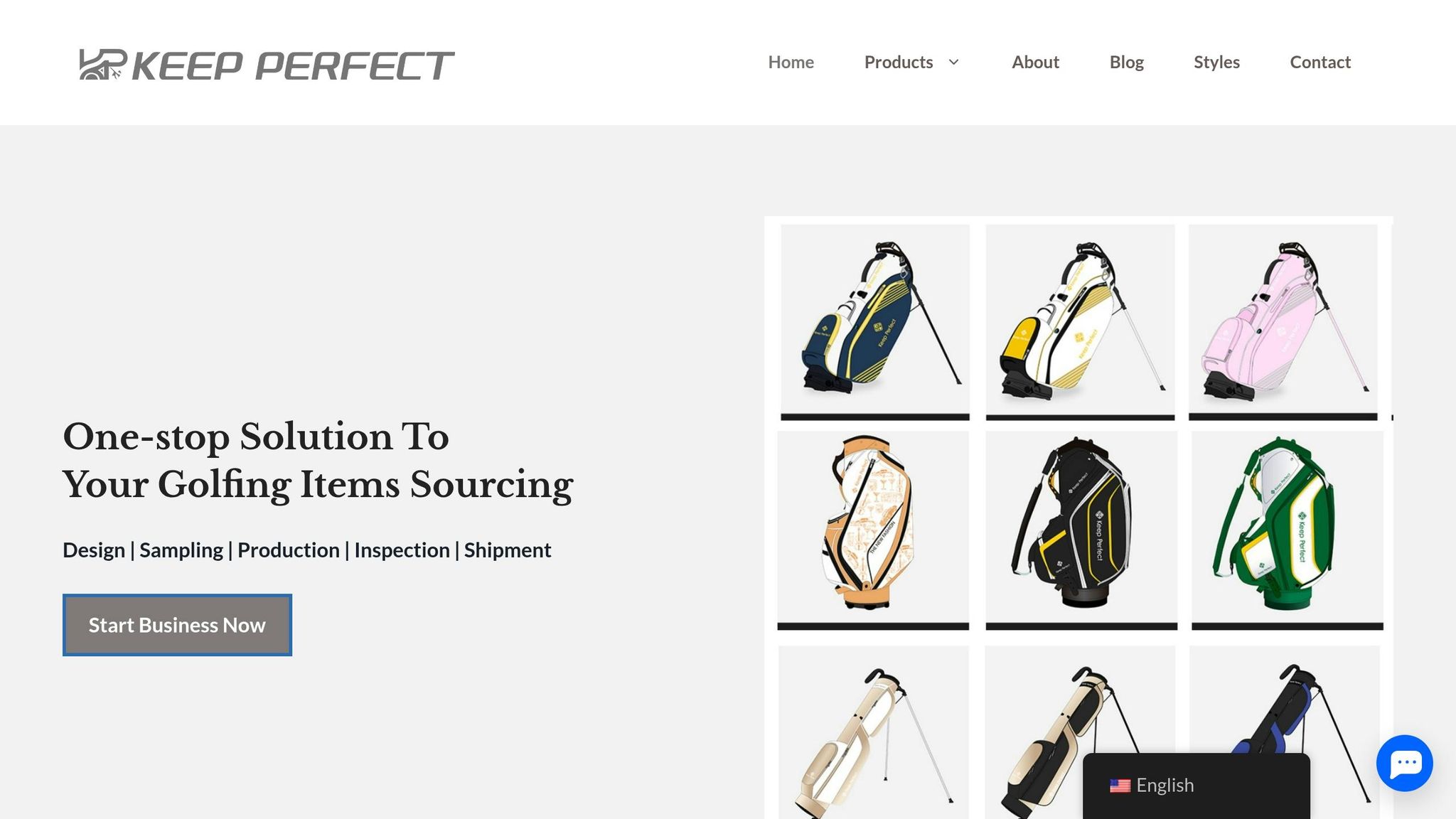
Keep Perfect Golf specializes in manufacturing support tailored for Kickstarter creators. They offer a 6-hour design turnaround to quickly bring your ideas to life, with digital previews available within 24 hours that showcase your logo and color choices. These rapid prototypes can create visuals that instill confidence in potential backers.
Their services cover every aspect of production, from material selection – offering options like nylon, canvas, or premium leather – to advanced features such as waterproof zippers, reinforced stitching, and custom hardware like carbon fiber or aluminum tripod stands. With over 15 years of experience, they simplify production and quality control, providing pre-shipment photos and the ability to scale from single prototypes to bulk orders. They also handle global shipping, including delivery to the USA.
"Keep Perfect delivered exceptional custom golf bags for our sales team. The logo embroidery was flawless!" – Global Sports Brand
Reach out to Keep Perfect Golf for a free design consultation and start transforming your custom golf stand bag idea into a successful Kickstarter campaign. These strategies can help turn your concept into a reality that resonates with backers.
FAQs
How long does it take to go from prototype to delivery?
The entire process usually spans 30–45 days, breaking down into 7–14 days for prototype revisions and an additional 3–4 weeks for mass production. If you’re running a Kickstarter campaign, it’s wise to budget for around 2–3 months total, factoring in shipping times and any potential delays. Partnering with skilled manufacturers can make a big difference in keeping everything on schedule.
What customization choices matter most to backers?
Backers appreciate having choices that allow them to create something tailored to their needs and style. This includes high-quality materials like waterproof fabrics or lightweight nylon, as well as personalized touches such as embroidery or leather patches. Practical features, like extra pockets and durable hardware, are also highly valued.
Additionally, they look for colors and patterns that align with personal preferences or team branding. Thoughtful logo placement adds a polished touch, making the design feel distinctive and well-crafted.
How do I price rewards without losing money on shipping?
When it comes to shipping, keeping costs under control is crucial. Instead of setting shipping fees upfront, consider calculating them closer to fulfillment. This approach allows you to base fees on the actual weight of orders, ensuring more precise charges.
To safeguard against unexpected costs, you can build a small buffer into your shipping budget or slightly overestimate fees. If there are overcharges, you can always adjust or issue refunds later. This not only keeps things fair but also maintains trust with your customers.
Related Blog Posts
- Top 10 Personalized Golf Bag Designs in 2025: Trends & Inspiration
- Customizable Golf Bags: Personalization Trends Taking Over
- Lightweight Stand Bags: Innovation Trends from Golf Bag Factories
- How to Design a Winning Golf Bag for Your Crowdfunding Project
Related Resources
Related Products
Explore our manufacturing capabilities in this category:
Need custom golf bags? Contact us for OEM/ODM quotes — MOQ 100pcs, FOB Xiamen.