
Golfers need bags that can handle wet weather without compromising on durability or weight. The right material is the foundation of a waterproof golf bag, impacting its weather resistance, lifespan, and portability. Here’s a quick breakdown of the top five materials used today:
- PU Coated Nylon: Durable, lightweight, and water-resistant, ideal for cart and stand bags. Commonly used in 420D–1680D nylon for added tear resistance.
- TPU Laminated Fabrics: Superior waterproofing and durability, perfect for heavy rain and professional use. Works well for all-weather bags with sealed seams.
- High Denier Polyester with DWR Finish: Affordable and moderately water-resistant, great for entry-level bags. Requires periodic reapplication of water-repellent spray.
- PVC Coated Fabrics: Tough and waterproof, best for heavy-duty cart bags. Heavier than other options, making it less suitable for walking golfers.
- Lightweight Ripstop Nylon with Advanced Coatings: Tear-resistant and ultra-light, ideal for stand and Sunday bags. Coating quality determines water resistance.
Quick Comparison
| Material | Durability | Weight | Weather Resistance | Best Use |
|---|---|---|---|---|
| PU Coated Nylon | High (3–5 years) | Light–Medium | Excellent | Cart & stand bags |
| TPU Laminated Fabrics | Very High | Moderate | Superior | All-weather & pro bags |
| High Denier Polyester (DWR) | Moderate–High | Moderate | Moderate | Budget cart & stand bags |
| PVC Coated Fabrics | Moderate–High | Heavy | High | Heavy-duty cart bags |
| Lightweight Ripstop Nylon | High | Ultra-Light | Moderate–High* | Stand & Sunday bags |
*Weather resistance depends on coating quality.
Choosing the right material depends on your needs – whether it’s lightweight portability, extreme waterproofing, or a balance of durability and cost.
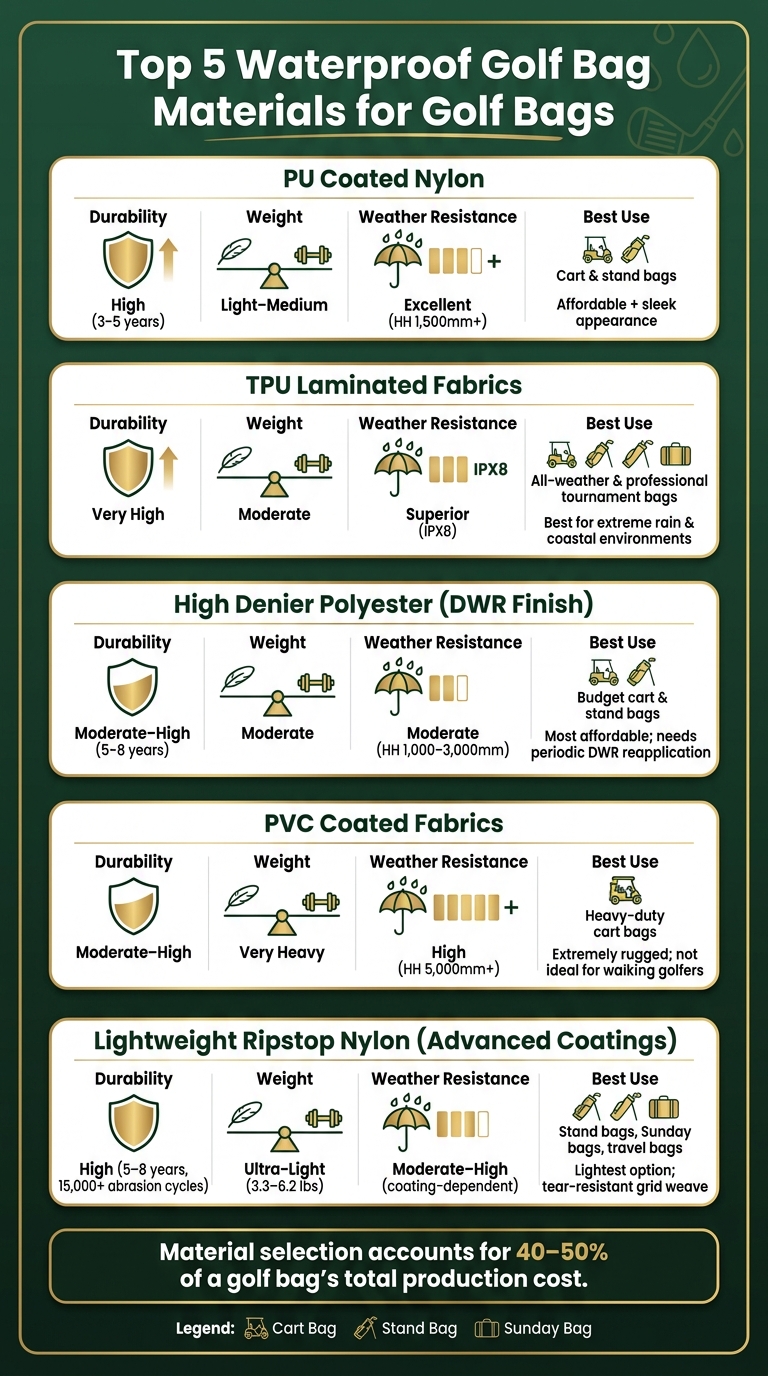
Waterproof Golf Bag Materials Compared: Durability, Weight & Weather Resistance
A verdade sobre os sacos de golfe à prova de água - Precisa mesmo de um?
1. Polyurethane (PU) Coated Nylon
PU coated nylon is a go-to material for waterproof golf bags – and it’s easy to see why. It offers a winning combination of durability, light weight, and weather resistance, all at a price that doesn’t break the bank.
The magic lies in the polyurethane coating, which bonds seamlessly to the nylon fabric. This creates a water-repellent barrier while keeping the bag lightweight – something every golfer appreciates after 18 holes. Most high-quality bags use 420D to 1680D nylon, where the denier count measures thread density. A higher denier means better tear resistance, making the bag tougher without unnecessary weight.
"PU leather offers a fantastic look. More importantly, they are significantly lighter and far more water-resistant." – Spencer Lanoue, Golf Materials Expert
One standout feature of high-grade PU coatings is their ability to resist peeling in humid conditions for 3 to 5 years. This durability is often where cheaper alternatives fall short, so the quality of the material matters when choosing a PU coated nylon bag.
PU coated nylon’s versatility makes it a solid option for different bag types. For stand bags, its lightweight nature is a huge plus. Cart bags benefit from its sleek, premium appearance without adding bulk. Even Sunday bags, designed for lighter, shorter rounds, rely on this material to stay functional and easy to carry.
At Manter o equipamento de golfe perfeito, PU coated nylon is a core material option for their custom cart, stand, and Sunday bags. They offer flexibility in denier weight and finish, ensuring the material matches the specific needs of any golfer.
2. Thermoplastic Polyurethane (TPU) Laminated Fabrics
TPU takes the reliability of PU-coated nylon and steps it up a notch, offering superior protection against moisture. While PU-coated nylon works well for everyday use, TPU is the go-to choice for extreme rain and coastal environments.
This material combines a polyurethane film with a nylon or polyester base, creating a waterproof barrier that doesn’t degrade like standard coatings. The lamination ensures consistent protection across the entire fabric. Paired with sealed seams and waterproof zippers like YKK or SBS, TPU fabrics deliver top-tier moisture resistance.
"TPU-laminated fabrics are becoming the standard for waterproof golf bags, providing unmatched durability and weather resistance." – Chengsheng Golf
Withstanding over 20,000 abrasion cycles and featuring reinforced seams, TPU fabrics hold up to frequent use while remaining lightweight – perfect for stand bags.
Cart bags gain extra protection, while stand bags maintain their lightweight, all-weather performance, making this material especially suited for regions with heavy rainfall. At Manter o equipamento de golfe perfeito, you can choose TPU as an option for custom cart and stand bags. Whether it’s the base fabric or the finish, TPU offers flexibility to meet specific performance needs. This high-quality construction ensures golfers are ready to tackle any weather conditions.
3. High Denier Polyester with Durable Water Repellent (DWR) Finish
High denier polyester is a solid choice for budget-friendly and entry-to-mid-level bags. While polyester itself isn’t waterproof, adding a Durable Water Repellent (DWR) finish allows it to effectively repel water, making it a reliable option in various weather conditions. The fabric’s denier level plays a key role in determining its performance, depending on the intended use of the bag.
The recommended denier range varies by bag type:
- Cart Bags: These benefit from higher denier levels – 840D to 1680D+ – since durability outweighs weight concerns when the bag remains on a cart.
- Stand Bags: A denier range of 400D to 600D strikes a balance between toughness and portability, ideal for golfers who walk the course.
- Sunday Bags: Lower denier levels, around 210D to 420D, keep these bags ultra-light for maximum portability.
| Bag Type | Recommended Denier | Primary Benefit |
|---|---|---|
| Cart Bag | 840D–1680D+ | Maximum durability and abrasion resistance |
| Stand Bag | 400D–600D | Balance of weight and toughness for walking |
| Sunday Bag | 210D–420D | Ultra-lightweight for maximum portability |
High-quality polyester fabrics can handle over 15,000 Martindale abrasion cycles and achieve a hydrostatic head rating of 1,000–3,000mm when treated with DWR or PU coatings. This level of protection works well for casual rounds and moderate rain but doesn’t match the full waterproofing offered by TPU-laminated fabrics in extreme conditions. On average, these bags last 5–8 years with regular use and weigh between 3.3 and 6.2 lbs., making them easy to carry.
It’s important to note that DWR coatings wear down over time, especially with frequent use or improper storage. To maintain water resistance, reapply a water-repellent spray annually. For bags exposed to humid environments, manufacturers should also include mold-resistant treatments to prevent mildew and coating breakdown. To ensure dependable wet-weather performance, pair this fabric with sealed seams e waterproof zippers – such as those made by YKK or SBS. These features make high denier polyester a practical choice for versatile, weather-resistant bags.
sbb-itb-4fa7e8b
4. PVC Coated Fabrics
PVC coated fabrics provide a tough, wear-resistant surface that stands up well to the friction caused by constant bag loading and unloading. Their double-layer coatings are designed to offer reliable protection, even during heavy rain, ensuring your gear stays dry when the weather takes a turn.
While PVC coated fabrics are strong and durable, they are heavier compared to nylon or polyester options. This makes them a better fit for cart and staff bags, which are less dependent on weight, rather than lightweight stand or Sunday bags. To strike a balance, PVC is often applied only to high-wear areas, like the base or around exterior pockets, to enhance abrasion resistance without adding unnecessary weight.
These fabrics excel in providing long-lasting, waterproof protection with minimal upkeep, making them a practical choice for those who value durability and performance over a lightweight design.
5. Lightweight Ripstop Nylon with Advanced Coatings
If keeping your gear lightweight is your main concern, ripstop nylon is a standout option. Its tightly woven, grid-like pattern helps prevent tears, offering durability without adding extra bulk. Bags made from this material typically weigh between 3.3 lbs and 6.2 lbs, making them much lighter than alternatives like PU leather or PVC. However, to make ripstop nylon fully waterproof, additional treatments are necessary.
To handle heavy rain, manufacturers apply TPU lamination or a DWR (Durable Water Repellent) finish to the fabric. These treatments boost the material’s ability to repel water, with some treated versions achieving hydrostatic head ratings ideal for wet-weather use. Combined with taped seams and waterproof zippers, these bags can endure a full round in the rain without letting your gear get soaked.
"True waterproof golf bags require material selection, seam sealing, and zipper integration to work together – not just a single fabric upgrade." – golfbagmfg
High-quality ripstop nylon can withstand over 15,000 Martindale abrasion cycles and typically lasts between 5 to 8 years. However, it’s a good idea to inspect zippers every few months to ensure they’re functioning properly and avoid unexpected failures.
This material is particularly popular for stand bags, Sunday bags, and travel-friendly cart bags, where reducing weight is a top priority. When paired with advanced coatings, ripstop nylon strikes an excellent balance between being lightweight and offering weather resistance. As the golf industry continues to lean toward lighter, more efficient gear through 2030, ripstop nylon is becoming an increasingly popular choice for golfers who prefer walking the course.
Material Comparison Table
Each material comes with its own set of strengths and weaknesses. While no material is flawless, the choice you make will directly affect performance and, importantly, cost. In fact, material selection can account for 40–50% of a golf bag’s total unit cost.
Here’s a quick breakdown of key material properties:
| Material | Durability | Weight | Weather Resistance | Best-Fit Application |
|---|---|---|---|---|
| PU Coated Nylon | High (3–5 years) | Light–Medium | Excellent (HH 1,500mm+) | Cart & staff bags; premium branding |
| TPU Laminated Fabrics | Very High | Moderate | Superior (IPX8) | All-weather & professional tournament bags |
| High Denier Polyester (DWR) | Moderate–High | Moderate | Moderate (UV-resistant) | Mid-range cart & stand bags |
| PVC Coated Fabrics | Moderate–High | Very Heavy | High (HH 5,000mm+) | Budget waterproof & heavy-duty cart bags |
| Lightweight Ripstop Nylon (Advanced Coating) | High (Abrasion-resistant) | Ultra-Light | Moderate–High* | Stand bags, Sunday bags, and travel bags |
*Weather resistance for ripstop nylon depends significantly on the quality of the advanced coating applied.
Key Trade-Offs
- TPU Laminated Fabrics: These stand out for their exceptional weather resistance and durability. However, their premium performance comes with a higher price tag.
- PVC Coated Fabrics: Extremely rugged and waterproof, PVC is great for heavy-duty use but can feel too heavy for golfers who walk the course.
- High Denier Polyester (DWR): A solid middle-ground option – durable, affordable, and capable of handling wet conditions. Keep in mind, though, that DWR treatments may require periodic reapplication.
- PU Coated Nylon: This material offers a sleek, structured appearance, making it a favorite for cart bags. However, it’s essential to dry it thoroughly after cleaning to avoid trapped moisture and mold.
- Lightweight Ripstop Nylon: Ideal for those prioritizing lightweight designs, such as stand or travel bags. Its weather resistance varies based on the quality of its coating.
Maintenance Tips
PVC and PU-coated fabrics are easy to clean with a damp cloth. However, for PU-coated materials, ensure they are completely dry before storage to prevent mold or mildew buildup.
Conclusion
Choosing the right material for a waterproof golf bag is all about matching it to your playing conditions. If you often face extreme weather, TPU-laminated fabrics are your best bet for top-tier waterproofing – though they come at a higher price. For those who use carts and prioritize durability, premium PU-coated nylon provides excellent water resistance along with a sturdy, polished appearance. On the other hand, golfers who prefer walking the course might find lightweight ripstop nylon, PU-coated nylon, or high-denier polyester with a DWR finish to be the perfect blend of protection, weight, and affordability.
Interestingly, material choice alone can account for 40–50% of a golf bag’s total production cost. This makes it a critical factor in both performance and manufacturing.
If you’re designing a waterproof golf bag to meet specific needs, Manter o equipamento de golfe perfeito offers comprehensive OEM/ODM services. From sourcing high-quality materials to adding custom branding – like embroidery, metal logos, or silicone prints – they handle it all. Plus, their flexible minimum order quantities start as low as 50–100 pieces.
"Quality is the core of each product and each client." – Keep Perfect Golf
FAQs
What makes a golf bag truly waterproof?
A waterproof golf bag relies on specialized materials and construction techniques to keep moisture out. These bags often feature durable fabrics like TPU-coated nylon or polyester, ensuring water resistance. To seal any potential weak points, manufacturers use heat-welded or taped seams, which cover the tiny holes created by stitching. Waterproof zippers, often coated with rubber or urethane, provide an additional layer of protection, and some designs even include zipper garages to shield the zippers further from rain.
Marcas como Manter o golfe perfeito incorporate these methods to ensure your gear remains dry, even during heavy downpours.
How do I know if a bag’s denier rating is enough for my use?
A bag’s denier rating reflects the thickness of its fibers, which directly relates to its durability – not its water resistance. Here’s how different ratings match specific bag types:
- Lightweight Sunday bags: Typically use materials rated between 210D and 420D, offering a good balance of lightness and strength.
- Standard carry and stand bags: These often feature materials in the 400D to 600D range, striking a balance between weight and durability.
- High-wear areas or cart bags: For parts like bases or for cart bags, higher ratings such as 840D to 1680D (or more) provide the toughness needed to handle heavy use.
Choosing the right denier depends on how and where you’ll use the bag.
How can I maintain water resistance over time?
To keep your bag water-resistant, make it a habit to wipe it down regularly. This helps remove dirt and moisture, such as morning dew. Proper storage is also key, and for minor seam issues, self-adhesive seam tape can be a quick fix. Manter o golfe perfeito bags are designed with treated materials and heat-welded seams to block moisture effectively. Don’t forget to use the included rain hood – it’s essential for preventing water from collecting inside the bag.

 Português
  English
  Français
  Español
  日本語
日本語