
Launching a golf bag on Kickstarter? Success hinges on offering features golfers truly need while ensuring production is reliable. Here’s what matters:
- Lightweight, Durable Materials: Nylon (420D, 600D) and microfiber leather balance strength and portability.
- Weatherproofing: Seam-sealed TPU-laminated nylon keeps gear dry.
- Ergonomics: Padded straps, ergonomic handles, and smart pocket placement reduce fatigue.
- Storage: Multi-compartment designs with dividers and insulated pockets for drinks or electronics.
- Tech Integration: Features like GPS tracking, filming pockets, or solar charging attract attention.
- Personalização: Personalization options like embroidery or recycled materials appeal to backers.
Prototyping and quality control are critical for credibility. A solid manufacturing plan ensures you deliver on promises. Highlight practical benefits, showcase prototypes, and maintain transparency to win trust and funding.
Core Features for Modern Golf Bags
Lightweight and Durable Materials
The materials used in a golf bag can make or break its appeal. Golfers want something practical yet lightweight, and high-strength nylon in 420D, 600D, or Ballistic weaves fits the bill perfectly. These materials offer excellent abrasion resistance while keeping the bag light – an absolute must for stand and hybrid carry bags. Plus, these synthetics allow for detailed pocket designs without adding bulk.
For a more premium feel, microfiber leather is an excellent choice. It’s tough against tears and scratches, giving the bag a higher perceived value. Many designs smartly combine nylon panels for weight savings with microfiber or PU leather accents on high-contact areas like handles and trim.
Weatherproofing is another key factor. Golfers need to know their gear is safe, rain or shine. TPU-laminated nylon with seam-sealed construction ensures that clubs and electronics stay dry, even during unexpected downpours.
These material choices set the stage for bags that are both practical and comfortable.
Ergonomic and User-Friendly Designs
Comfort is what separates a bag that gets used often from one that gathers dust. Features like padded straps, ergonomic handles, and well-placed pockets make a big difference in reducing fatigue and improving accessibility.
Take Sunday Golf as an example. In August 2020, CEO Ronan Galvin noticed golfers at a San Diego executive course struggling with oversized bags when they only needed a few clubs. His solution? The "Loma" bag, designed to carry up to six clubs, cutting down on unnecessary weight and bulk. This minimalist, ergonomic approach resonated with golfers, propelling Sunday Golf into major retailers like Dick’s Sporting Goods and PGA Tour Superstore. The company even raised $1.2 million through a public stock offering on Wefunder. Galvin explained:
"The longest hole is 140 yards, so most people only carried a handful of clubs, but they had full carry bags, which were cumbersome".
By addressing ergonomic issues, brands can create bags that golfers rave about, driving both sales and word-of-mouth buzz.
Good ergonomics go hand-in-hand with smart organization.
Multi-Compartment Storage
A well-organized golf bag might not sound flashy, but it’s absolutely essential. Golfers need dedicated spaces for clubs, balls, tees, and personal items. Modern cart bags often feature a 14-way divider top to keep clubs protected and easy to access. For lighter carry bags, 4-to-6-way dividers offer a practical balance between organization and portability.
Strategic pocket placement also plays a huge role. Pockets designed for balls, tees, and apparel not only keep things tidy but also help distribute weight evenly. Full-length apparel pockets are especially handy, providing room for rain gear or extra layers without warping the bag’s shape. Small extras like Velcro glove patches and metal towel rings add convenience without complicating the design.
To make sure these features actually meet golfers’ needs, Manter o golfe perfeito’s OEM/ODM services can assist in fine-tuning compartment layouts during the prototype phase. This ensures the bag is as functional as it looks, rather than just being a visual hit in promotional videos.
sbb-itb-4fa7e8b
Advanced Features to Attract Backers
Technology Integration
Adding smart features can make a huge difference in attracting Kickstarter backers. Surveys show that over 35% of golfers are drawn to smart golf bag features, with GPS tracking and mobile connectivity being the most popular. It’s a growing market too, with smart golf equipment expected to expand by 15% annually through 2027.
Tomar o Robera NEO, for example. Launched on Kickstarter in May 2025, this AI-driven smart caddy combined 40,000 GPS course maps with AI for obstacle avoidance. The result? The campaign surpassed its funding goal, proving how much backers value these kinds of features. As the Robera Lead Engineer put it:
"Integrating GPS data with AI-powered obstacle recognition was a major milestone. It means Robera NEO doesn’t just follow, it thinks ahead, creating a safer, more fluid experience for golfers".
Similarly, MNML Golf added innovative tech features like a patented filming pocket, solar-powered battery, and Bluetooth speaker, which not only enhanced functionality but also encouraged social sharing. These additions played a key role in their campaign’s success.
For creators, offering customizable tech add-ons and addressing common design flaws, like replacing zippers with magnetic closures for better durability, can go a long way in boosting backer confidence and campaign appeal.
And if you want to go the extra mile, consider pairing smart tech with practical features like temperature-controlled storage.
Thermal and Insulated Storage
Thermal storage is another feature that resonates with golfers. Lightweight bags with insulated pockets can hold 1–2 cans, while larger cart bags can store up to 6–9 cans, keeping drinks cold for up to 8 hours. For instance, Sunday Golf’s Loma bag, priced at $129.99, includes a frosty pocket, while their Big Rig cart bag offers a more spacious insulated cooler at $299.
Premium bags often use aluminum-coated interiors and leak-resistant liners to maintain temperature and protect items from moisture. Features like side-access zippers – or better yet, magnetic closures – make it easy to grab a drink without disturbing the rest of the bag’s contents. MNML Golf’s Spring 2019 Kickstarter campaign raised $50,000 by including thermal storage alongside smart tech features.
These insulated compartments aren’t just for drinks – they can also protect sensitive electronics like rangefinders from overheating on sunny days. To appeal to a range of backers, consider offering tiered storage options: smaller bags with 1–2 can capacity and premium cart bags with space for six or more cans.
Customizable Design Options
Personalization is a powerful way to attract backers, giving them a product that feels uniquely theirs. Options like hand-painted designs and minimal branding allow golfers to showcase their personal style.
MNML’s MR2 model, priced at $349, offers hand-painted customization as a premium add-on, while their M COMP bag at $299 includes embroidery. Both models are crafted from 100% recycled ocean plastics and come with a 5-year warranty. CEO Sam Goulden summed it up perfectly:
"Five years ago, it was a thing to carry your clubs in and you hoped the zipper didn’t break. Now, we’re giving them reason to buy a golf bag".
Another compelling strategy is the "Trade-It-Forward" program. By donating old golf bags to junior golf programs, backers could reduce the bag price from $249 to $199. This initiative not only made the product more affordable but also donated over 1,200 bags to the Southern California Golf Association’s Junior Foundation.
For creators, working with partners like Keep Perfect Golf, which offers OEM/ODM services, can help streamline customization. Options like logo branding, material selection, and tailored patterns enable you to create multiple reward tiers without overcomplicating production. These thoughtful touches can elevate your campaign and build trust with backers.
Quality Assurance and Production Readiness
Quality Control Measures
Getting quality control right can make all the difference for your Kickstarter campaign. Modern golf bag manufacturers, for instance, often achieve a 98.5% quality rate with only a 1.2% defect rate – and your campaign should aim for similar standards.
Here’s a solid approach: implement a four-tier inspection process. Start with inspecting 100% of incoming materials, then sample 10% during production, fully inspect the final product, and finish with a 5% pre-shipment check. This ensures issues are caught early, long before they reach your backers. Your materials, like fabrics, need to meet strict industrial standards, such as tensile strength (ASTM D5034), water resistance (AATCC 22), UV stability (ASTM G155), and colorfastness (ISO 105). Additionally, components like zippers, straps, and mechanisms should undergo rigorous functional testing.
Words alone won’t convince backers – show them the proof. Use your campaign page to highlight functionality, especially for features that might raise doubts. For example, demonstrate how your bag performs on uneven terrain or how it distributes weight. While renderings can help during pre-launch, Kickstarter requires real prototype photos to build trust. High-end production lines often achieve a 99.2% first-pass yield, and computer-controlled cutting systems ensure precision with a ±0.5mm tolerance.
Another essential step is implementing batch tracking from raw materials to finished products. This allows you to quickly address any defects that arise after launch. By maintaining this level of quality control, you’ll create prototypes that validate both your design and your production readiness.
Prototyping and Fulfillment
Once your quality control is in place, the next step is creating a tested prototype. A validated prototype is the backbone of smooth fulfillment – it helps you nail down production costs and timelines. As Heather O’Neill from 9th Level Games explains:
"The game [or product] needs to be done, playtested, and ready to go into production".
Without a finalized prototype, you’re left guessing on costs and timelines. Prototyping also helps you avoid last-minute feature changes that could derail your project. Many products require a complete redesign for large-scale manufacturing, a process known as "design for manufacturing" (DFM). Partnering with companies like Keep Perfect Golf, which offers everything from design and sampling to inspection and worldwide delivery, can streamline this process.
When it comes to fulfillment, you’ll need to decide between doing it yourself (ideal for fewer than 250 orders) or working with third-party logistics providers (3PL) for larger campaigns. Keep in mind that shipping costs can account for 15–25% of your total funding goal, so plan carefully. To stay on track, add a 25–30% buffer to your production timeline and order at least 20% more stock than you think you’ll need to cover defects and potential shipping losses. A well-executed manufacturing and fulfillment strategy not only ensures your backers get what they were promised but also builds long-term confidence in your brand.
MNML GOLF CO || Golf Bag [Sam Goulden Golf]
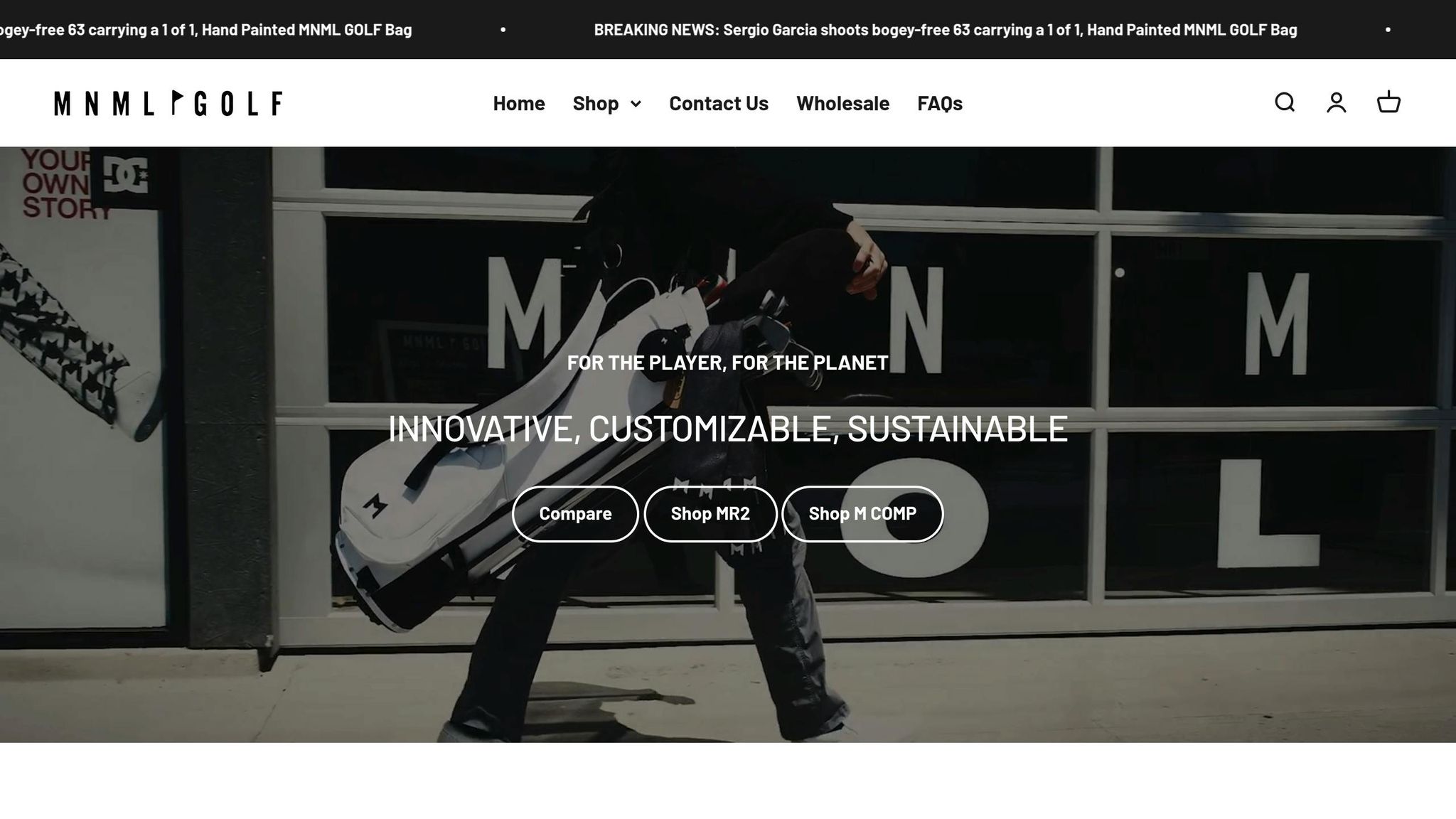
Feature Comparison and Funding Impact
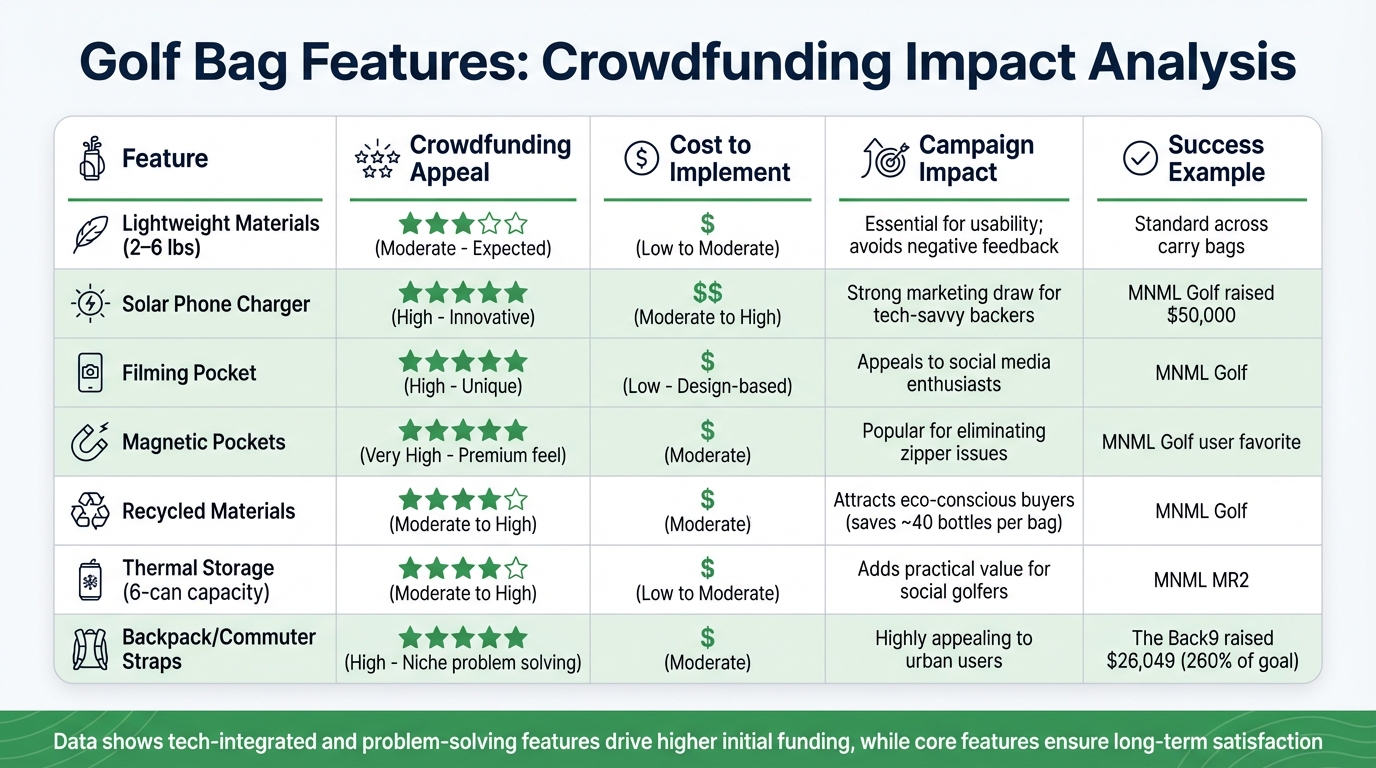
Golf Bag Features Impact on Kickstarter Campaign Success
Feature Comparison Table
When it comes to designing golf bags, blending innovative features with essential functionality can make all the difference – especially in the world of crowdfunding. While advanced features like solar chargers or magnetic pockets generate excitement, core elements like lightweight materials remain crucial for long-term user satisfaction.
Here’s a breakdown of how various features influence crowdfunding success and overall product impact:
| Feature | Crowdfunding Appeal | Cost to Implement | Campaign Impact | Success Example |
|---|---|---|---|---|
| Lightweight Materials (2–6 lbs) | Moderate (Expected) | Low to Moderate | Essential for usability; avoids negative feedback | Standard across carry bags |
| Solar Phone Charger | High (Innovative) | Moderate to High | Strong marketing draw for tech-savvy backers | MNML Golf raised $50,000 |
| Filming Pocket | High (Unique) | Low (Design-based) | Appeals to social media enthusiasts | Golfe MNML |
| Magnetic Pockets | Very High (Premium feel) | Moderate | Popular for eliminating zipper issues | MNML Golf user favorite |
| Recycled Materials | Moderate to High | Moderate | Attracts eco-conscious buyers (saves ~40 bottles per bag) | Golfe MNML |
| Thermal Storage (6-can capacity) | Moderate to High | Low to Moderate | Adds practical value for social golfers | MNML MR2 |
| Backpack/Commuter Straps | High (Niche problem solving) | Moderate | Highly appealing to urban users | The Back9 raised $26,049 (260% of goal) |
The table underscores a clear trend: features that incorporate technology or solve unique problems tend to drive higher initial funding. However, the basics – like weight, durability, and comfort – are just as important for long-term customer satisfaction.
Take MNML Golf’s Spring 2019 Kickstarter campaign as an example. By showcasing standout features like solar charging, Bluetooth speakers, and a filming pocket, the campaign raised $50,000. According to Sam Goulden, this approach reflects a shift in consumer expectations, where innovation takes center stage alongside reliability.
The key to success lies in striking the right balance. Use eye-catching features like solar panels or filming pockets as your campaign’s headline grabbers, but ensure the fundamentals – like weight and comfortable straps – aren’t overlooked. Companies such as Keep Perfect Golf specialize in helping brands navigate this balance during the design and prototyping stages, ensuring that your product delivers both excitement and practicality. This strategy not only maximizes crowdfunding potential but also sets the stage for long-term customer loyalty.
Conclusion
Launching a successful Kickstarter campaign for a golf bag hinges on blending standout features with dependable functionality. While eye-catching elements like solar charging ports and magnetic pockets can spark interest and attract backers, the core essentials – lightweight materials, ergonomic straps, and lasting durability – are what ensure long-term satisfaction. As Roman Khan, Co-founder of Linjer, wisely put it:
"To make a great product, you have to talk to people, ask for feedback early, and continually iterate and improve your product".
Capturing attention is just the first step. To establish credibility, production readiness in 2026 is non-negotiable. Showcasing functional prototypes and using high-quality visuals to demonstrate features can make a big impact. Transparency about your manufacturing process builds trust, and a pre-launch email list with a $1 reservation deposit can identify your most committed supporters. These early backers often convert at rates as high as 51%, giving your campaign a strong start.
Practical considerations can make or break a campaign. For instance, shipping costs for larger golf bags can range from $50 to $80 per unit internationally, and don’t forget the 5% Kickstarter platform fee. Additionally, opting for magnetic closures instead of traditional zippers – known to fail within a year – offers a much longer lifespan, with a half-life of 500–700 years.
To streamline your campaign, working with an experienced manufacturer is key. Keep Perfect Golf offers comprehensive OEM/ODM services, covering everything from design and prototyping to production, inspection, and global shipping. They specialize in customization, ensuring your product meets backer expectations with features like material upgrades, integrated tech, and ergonomic improvements – all while meeting deadlines.
Kickstarter success comes down to smart feature selection, rigorous quality control, and clear communication. By proving that your product not only works but solves real problems for golfers, you’ll gain both initial support and lasting trust from your backers. Combining bold innovations with proven reliability is the winning formula for your campaign.
FAQs
What 3 features will boost pledges the fastest?
If you’re aiming to grab attention and win over backers, focus on these three key features:
- Customizable Designs: Offering personalization options lets users feel connected to the product, making it more appealing and meaningful.
- Smart Technology: Integrating tools like GPS or Bluetooth adds functionality and convenience, catering to tech-savvy golfers.
- Durable, Weatherproof Materials: Reliability is crucial. Using materials that can withstand the elements ensures your product is ready for any condition on the course.
These features align perfectly with what modern golfers look for, giving your product an edge and making it hard for backers to resist.
How do I prove my prototype is real and tested?
To show that your prototype is more than just an idea, it’s crucial to document its functionality and reliability with thorough testing. Provide detailed reports that include performance data, durability results, and user feedback from real-world use. Supplement these reports with photos or videos from the testing phases to serve as visual evidence. This combination of data and visuals helps establish trust and demonstrates to backers that your prototype is a working, tested product.
How do I price rewards and shipping without losing money?
To set the right price for rewards and shipping, start by calculating all the costs involved for each reward. This includes things like manufacturing, packaging, and shipping. Once you have the total, add a profit margin to ensure you’re not just breaking even.
You can also use psychological pricing tactics to make your rewards more attractive. For example, strategies like anchoring (presenting a higher-priced option alongside your main offering) or decoy options (adding a less appealing choice to make another seem like a better deal) can influence how backers perceive value.
When it comes to shipping, estimate costs based on both the destination and the weight of the package. Be sure these expenses are included in your reward pricing to avoid surprises later. A solid budget will help you cover all your costs while still leaving room for profit.
Related Blog Posts
- Os 10 melhores designs de sacos de golfe personalizados em 2025: Tendências e Inspiração
- 5 funcionalidades ocultas para adicionar ao seu saco de golfe personalizado (por exemplo, bolso para GPS)
- Customizable Golf Bags: Personalization Trends Taking Over
- Maximizing Storage: Innovative Pockets in Modern Golf Bags

 Português
  English
  Français
  Español
  日本語
日本語