
Custom golf bags are in high demand, offering golfers a chance to showcase their style while solving practical needs. If you’re an entrepreneur, launching a Kickstarter campaign for these bags can help you fund production, validate your idea, and build a loyal community. Here’s a quick breakdown of what you need to know to succeed:
- Why custom golf bags matter: Golfers value personalization for style, organization, and confidence on the course. Teams and businesses also seek branded solutions.
- Kickstarter benefits: Test your idea, raise funds, and engage backers early. Offer rewards like discounted bags or exclusive designs to attract supporters.
- Key design tips: Use durable, lightweight materials, include functional compartments, and add personalization options like logos or custom patterns.
- Budgeting and costs: Factor in materials, labor, shipping, and marketing. Overestimate expenses by 30% to avoid surprises.
- Reward tiers: Offer early bird discounts and premium bundles to entice backers. Keep a 50% profit margin for sustainability.
- Marketing strategy: Build an email list, use social media ads, and partner with influencers. Pre-launch efforts are critical to gaining early momentum.
- Fulfillment: Work with reliable manufacturers and plan for shipping costs. Include a buffer for delays and defective items.
Launching a Kickstarter campaign for custom golf bags requires careful planning, clear communication, and a focus on quality. By following these steps, you can increase your chances of meeting your funding goals and delivering a product that golfers love.
AEROE GolfPod – The Original Hardshell Golfbag – KICKSTARTER Video
sbb-itb-4fa7e8b
Designing Custom Golf Bags for Your Kickstarter Campaign
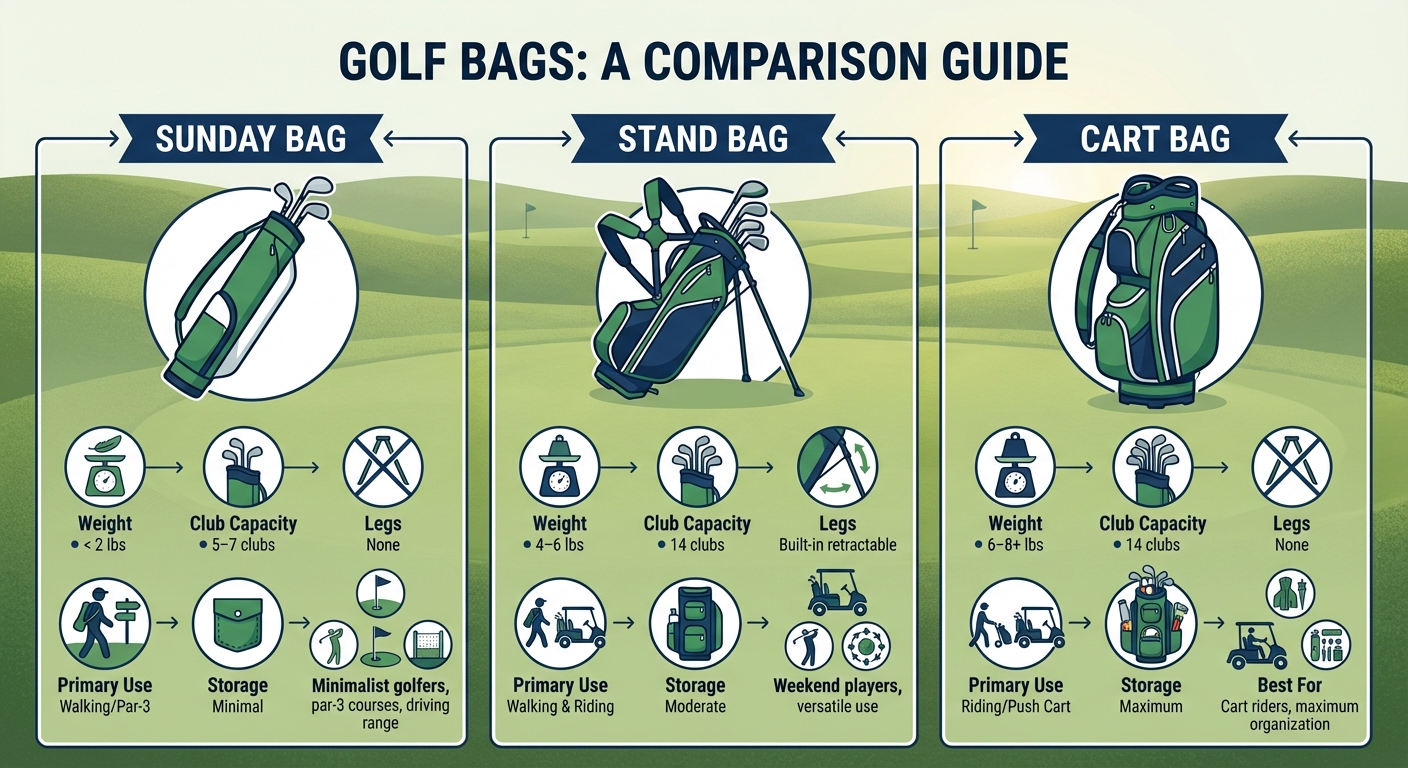
Golf Bag Types Comparison: Sunday, Stand, and Cart Bags
When creating a custom golf bag for your Kickstarter campaign, the design needs to communicate that your product is both functional and stylish. It’s all about finding the right balance between durability, practicality, and visual appeal – all while staying within the limits of what’s feasible for manufacturing. By integrating advanced materials and offering personalized options, you can build trust with backers and make your campaign stand out.
Selecting Materials and Features
The materials you choose can make or break your golf bag. Look for lightweight yet durable fabrics that can handle the wear and tear of regular play. Waterproof or water-resistant materials are a must to protect gear from unexpected rain. Comfort is another key consideration – add adjustable, padded shoulder straps and a dual-strap system to reduce strain for golfers who prefer to walk the course.
Storage is crucial for functionality. Full-length dividers help keep clubs organized and prevent them from clashing, accommodating the standard 14-club setup. Include specialized pockets for valuables like wallets or watches, and create dedicated compartments for balls, tees, and gloves. Magnetic closures can make accessing these items quicker and easier.
To ensure the bag is stable on uneven terrain, use a reinforced base. You can also add tech-friendly features, like built-in GPS holders or USB charging ports, as well as practical extras like insulated pockets, towel rings, and rain hoods. These details enhance the bag’s usability and appeal.
Once the functionality is locked in, it’s time to focus on personalization.
Adding Logos and Custom Patterns
Customization is where your bag can truly shine. Samuel Goulden from MNML GOLF highlights the importance of personalization:
"Your golf bag should reflect your personality, passions, and interests."
"Choosing the right custom artwork can turn your bag into a statement piece, a conversation starter, or even a source of motivation on the course."
Give backers the option to add personal touches like names, initials, or corporate logos through high-quality embroidery. Go beyond the basics – incorporate design elements inspired by hobbies or passions outside of golf, whether that’s sneaker culture, vintage cars, album covers, or family crests. Offer a variety of art styles, from bold graphics to minimalist designs, to cater to a range of tastes.
Coordinate color schemes with personal branding or golf club identities, but ensure decorative elements don’t interfere with the bag’s functional features, like pockets or straps. Work closely with your manufacturer’s design team to turn backer ideas into polished, practical products. Small details like unique zipper pulls, custom stitching, or distinctive accents can further elevate your design.
Types of Golf Bags: Cart Bags, Stand Bags, and Sunday Bags
The type of golf bag you create should align with the needs of your target audience. Sunday bags, for example, are lightweight (under 2 lbs) and designed to carry 5–7 clubs. These are ideal for minimalist golfers who enjoy walking par-3 courses or hitting the driving range. Spencer Lanoue, Founder of Caddie AI, explains:
"The Sunday bag, at its core, represents a simpler approach to golf. It’s not meant for hauling 14 clubs… It encourages you to walk, be creative with your shots, and focus on the company."
Stand bags, which weigh between 4–6 lbs, include built-in retractable legs and are versatile enough for golfers who switch between walking and riding. Cart bags, on the other hand, are heavier (6–8+ lbs) and designed to stay on a golf or push cart. These prioritize storage, with full-length dividers and multiple compartments.
| Feature | Sunday Bag | Stand Bag | Cart Bag |
|---|---|---|---|
| Weight | < 2 lbs | 4–6 lbs | 6–8+ lbs |
| Club Capacity | 5–7 clubs | 14 clubs | 14 clubs |
| Legs | None | Built-in retractable | None |
| Primary Use | Walking/Par-3 | Walking & Riding | Riding/Push Cart |
| Storage | Minimal | Moderate | Maximum |
If your campaign targets minimalist walkers or urban golfers, Sunday bags are a great choice. For weekend players who value versatility, stand bags are the way to go – just remember that reliable leg mechanisms, often made from carbon fiber or aluminum, can increase production costs. If you’re focusing on cart bags, emphasize features like ample storage and full-length dividers, while stand bags should highlight comfort with dual-strap systems.
Planning and Budgeting for Your Campaign
When planning your Kickstarter campaign for custom golf bags, accurate cost estimates and well-defined reward tiers are critical. Start by accounting for production, shipping, and promotional costs, and include a buffer for unexpected expenses. Aaron Hansen, VP of Crowd Ox, emphasizes:
"Setting a goal lower than your known costs could lead to the project being unfunded or additional out-of-pocket costs".
Your funding goal should cover all aspects of production and marketing while ensuring reward tiers are appealing to backers and maintain profitability.
Calculating Manufacturing Costs
Material selection is a major cost driver. Chengsheng Golf explains:
"Material choice (PU vs. Nylon) accounts for 40-50% of the total unit cost".
PU leather offers a high-end "Tour" aesthetic but is more expensive due to lower fabric efficiency. Nylon and polyester, on the other hand, are lightweight and durable, making them ideal for carry or Sunday bags. For eco-conscious customers, GRS-certified RPET fabrics (made from recycled plastic bottles) are a strong option, especially as demand for such materials has surged by 300% in European markets for 2025-2026.
Another significant cost factor is the internal divider system. A 14-way full-length divider, for example, requires three times the labor compared to a simpler 6-way divider. Custom hardware, like branded zippers or unique bases, involves upfront mold costs ranging from $300 to $2,000, depending on complexity. Prototyping costs typically range from $500 to $1,000, with a production time of 7–14 days.
To calculate your "landed cost", factor in manufacturing, shipping, and customs fees. Jonathan Solis, Owner of Whisker Bark, highlights:
"Small businesses like mine will probably adjust prices once we have to import under the new tariffs… at least 15% increases are expected".
Overestimate manufacturing and shipping costs by 30% to account for potential fluctuations. Obtain quotes for both minimum and higher order volumes to prepare for overfunding scenarios. Some manufacturers now accommodate smaller minimum order quantities (MOQs) of 50–100 pieces, which is helpful for new brands.
Finalize a physical prototype – or "golden sample" – before launching to avoid quality issues and costly rework. Budget for compliance testing (REACH/Prop65), which costs $120–$250 per style, and physical durability tests like the "Loaded Drop Test".
| Cost Category | Typical Cost Share |
|---|---|
| Materials (Shell, lining, foam, etc.) | 30%–40% |
| Direct Labor (Cutting, stitching, assembly) | 20%–30% |
| Hardware (Zippers, buckles, D-rings) | 10%–15% |
| Overhead & Admin | 10%–15% |
| Supplier Margin | 15%–18% |
With these costs in mind, design reward tiers that both reflect your expenses and entice backers.
Creating Reward Tiers for Backers
An early bird tier priced 15%–25% below the standard retail price is a great way to attract initial backers. This urgency can help you reach 30% of your funding goal within the first week, a key milestone that gives projects an 80% chance of success. Since the median pledge amount on Kickstarter is $70, aim to structure your core tiers around this price point.
Offer premium bundles with features like embroidered initials, corporate logos, or add-ons such as rain hoods or insulated pockets. These extras boost perceived value without significantly increasing production costs. Ensure a 50% profit margin on every tier to cover your initial expenses and marketing efforts.
When it comes to shipping, avoid charging fees during the live campaign. Brandon Rollins, Director of Marketing at Fulfillrite, explains:
"Don’t charge shipping upfront. It’s too volatile. Rates change. Delays happen. People move".
Instead, use a pledge manager like BackerKit or PledgeBox (which take 2%–4% of collected funds) to charge actual shipping costs closer to delivery. This approach also allows you to update addresses and upsell leftover inventory.
Estimate shipping costs based on a 70% domestic and 30% international backer split. Keep in mind that carriers calculate costs based on the higher of actual weight or dimensional weight (L × W × H ÷ 166), which can impact bulky items like golf bags. Weigh your prototype, including packaging materials, to set accurate shipping prices.
Set an internal goal that covers all expenses, including production, shipping, marketing, and fees. Your public goal can be lower to build momentum, but your internal goal ensures financial stability. Account for a 1%–3% failed transaction rate after the campaign ends, and order at least 20% more stock than pledged to cover defective units, lost shipments, and late backers.
Budgeting for Marketing and Shipping
Marketing and advertising should take up 10%–20% of your funding goal. Keep in mind that Kickstarter platform fees are 5%, with an additional 3%–5% for payment processing, meaning 8%–10% of your pledges will go toward fees. Agencies specializing in Kickstarter campaigns often require a minimum marketing budget of $4,500 for testing and scaling efforts.
Focus most of your marketing budget on the pre-launch phase. Build an email list of at least 1,000 targeted contacts to trigger Kickstarter’s algorithmic boosts. Use low-friction reservation funnels where potential backers pay a small deposit – these individuals are more likely to convert. Conduct validation testing to ensure your lead acquisition costs align with your profit margins.
Allocate funds for creative assets like professional videos, high-quality photos, and compelling copy. Partner with influencers and media outlets to secure two or three features timed for launch day to drive traffic. After the campaign, transition to e-commerce platforms like Shopify and use backer data for targeted advertising.
Fulfillment costs can add up quickly. Professional fulfillment services charge $2–$4 per order, while DIY options range from $7 to $15 per order. Paul Ferrara, Senior Wealth Counselor at Avenue Investment, advises:
"A partner that wrongly handles 3 percent of orders can wipe out profit when each mistake costs a $40 refund on a $15 margin product".
To ensure smooth fulfillment, include a 10%–15% buffer in your budget for non-manufacturing costs like unexpected marketing or promotional expenses. Keep in mind that 67% of successful Kickstarter projects raise less than $10,000. Campaigns with funding goals under $10,000 have a 60% success rate, while those aiming for over $100,000 succeed less than 15% of the time. A realistic goal and healthy margins are key to your campaign’s success.
Creating and Promoting Your Kickstarter Campaign
Once you’ve nailed down your custom golf bag design and budget, it’s time to focus on showcasing your project and connecting with potential backers. A well-crafted campaign page and a solid promotional plan are key to grabbing attention and driving support.
Your campaign page acts as your storefront, so it needs to make an immediate impact. Start with a high-quality hero image – think professional photos or 3D renders that look realistic. Aim for a 3:1 width-to-height ratio to ensure the image fits well on screens without overwhelming viewers.
A standout campaign video is another must-have. Hook your audience in the first 10–15 seconds and keep the video under two minutes. Use a mix of polished digital renderings and prototype footage to strike a balance between professionalism and authenticity. To simplify complex details, like pocket layouts or material features, use visual infographics instead of lengthy text blocks. As Jamey Stegmaier of Stonemaier Games puts it:
"If your project has a concept that would take paragraphs to explain, use an infographic".
Be transparent about your production timeline. Break down key milestones – like design finalization, manufacturing, quality control, and shipping – so backers know what to expect. Add credibility by including third-party endorsements, such as feedback from PGA instructors or results from independent testing.
Building Your Campaign Page
Organize your reward tiers clearly, offering everything from budget-friendly early bird deals to premium collector’s editions. Use concise text and bullet points to make details easy to skim. Make sure critical information, such as shipping policies and product specs, is presented as searchable text rather than being buried in images. And don’t skip the "Risks and Challenges" section – acknowledge potential obstacles like shipping delays and explain how you plan to handle them.
Take inspiration from DV8 Sports, which launched a Kickstarter in 2014 for custom golf clubs and a backpack-style bag. Led by Pat Brady and Richard Stamper, their campaign raised $85,442 from 170 backers by July 2015. They gained trust by featuring validation from Golf Labs and a glowing endorsement from PGA Tour Instructor Rick Smith, who said:
"Whether you travel by subway, bike or sports car, DV8 Sports makes it easier to have your clubs with you, ready to use at any opportunity".
Their campaign also offered flexible reward options, like customizable "Play Packages" with varying numbers of clubs, which appealed to a wide range of backers.
Once your campaign page is ready, shift your focus to pre-launch marketing to build excitement and ensure a strong start.
Pre-Launch Marketing Tactics
Start your marketing efforts 6–12 weeks before launch. The goal? Build an email list large enough to cover around 30% of your funding goal on day one. Campaigns with over 1,000 email subscribers at launch are up to five times more likely to succeed. Consider using a $1 reservation system to offer exclusive perks – backers who participate in these programs are up to 30 times more likely to pledge.
Test your messaging with small Meta ad campaigns and a simple landing page to identify what resonates most with your audience. Share behind-the-scenes content, like prototype testing or design updates, to create a "building in public" vibe that draws people into your journey. Engage with niche communities, such as golf-focused subreddits or Facebook groups, and collaborate with micro-influencers (those with 5,000–50,000 followers) who have strong engagement in the golf world.
For email subscribers, send a welcome series and provide updates every 1–2 weeks. As launch day approaches, ramp up communication with a 7-day countdown, a 24-hour reminder, and a launch-day announcement. Timing matters – launching on a Tuesday morning between 7:00 AM and 10:00 AM Eastern Time can help maximize visibility. With around 35% of funding typically coming in during the first and last 48 hours, hitting 30% of your goal in the first week can boost your chances of success to 75%.
Once your pre-launch efforts are in motion, focus on influencers and ads to expand your reach.
Working with Influencers and Running Ads
Meta ads (Facebook and Instagram) can account for 40–60% of your campaign’s traffic. Use the "Dream 20" strategy to identify 20 influencers, brands, or communities that align with your audience, and use them as interest categories for ad targeting. Start with pre-launch ads to grow your email list and reservation funnel, then transition to conversion-focused ads once your campaign is live.
Treat influencers as collaborators. Send them prototypes early so they can create authentic reviews or unboxing videos. Nano-influencers (1,000–10,000 followers) and micro-influencers (10,000–50,000 followers) often drive better engagement and trust than larger accounts. Test different ad hooks, visuals, and headlines in small batches, and scale up the ones that perform best.
Take a page from Joe, the creator of AstroBrew. By activating a pre-launch email list and VIP community, Joe generated $68,574 in sales within the first 24 hours of launch. This early momentum triggered Kickstarter’s algorithm, resulting in an additional $35,359 (24% of total funds) through organic discovery. If your campaign gains enough traction early on, Kickstarter’s platform can contribute 15–30% of your total funding.
Set aside at least $4,500 for ad testing and scaling. For smaller campaigns, budget between $5,000 and $15,000 for pre-launch ads and creative materials. Use Kickstarter’s "Secret Rewards" feature – introduced in February 2025 – to offer hidden reward tiers via private links. These are perfect for pre-launch VIPs or influencer audiences. And since more than 50% of Kickstarter traffic now comes from mobile devices, make sure all landing pages and ad creatives are optimized for mobile viewing.
Fulfilling Kickstarter Rewards with Manter o golfe perfeito
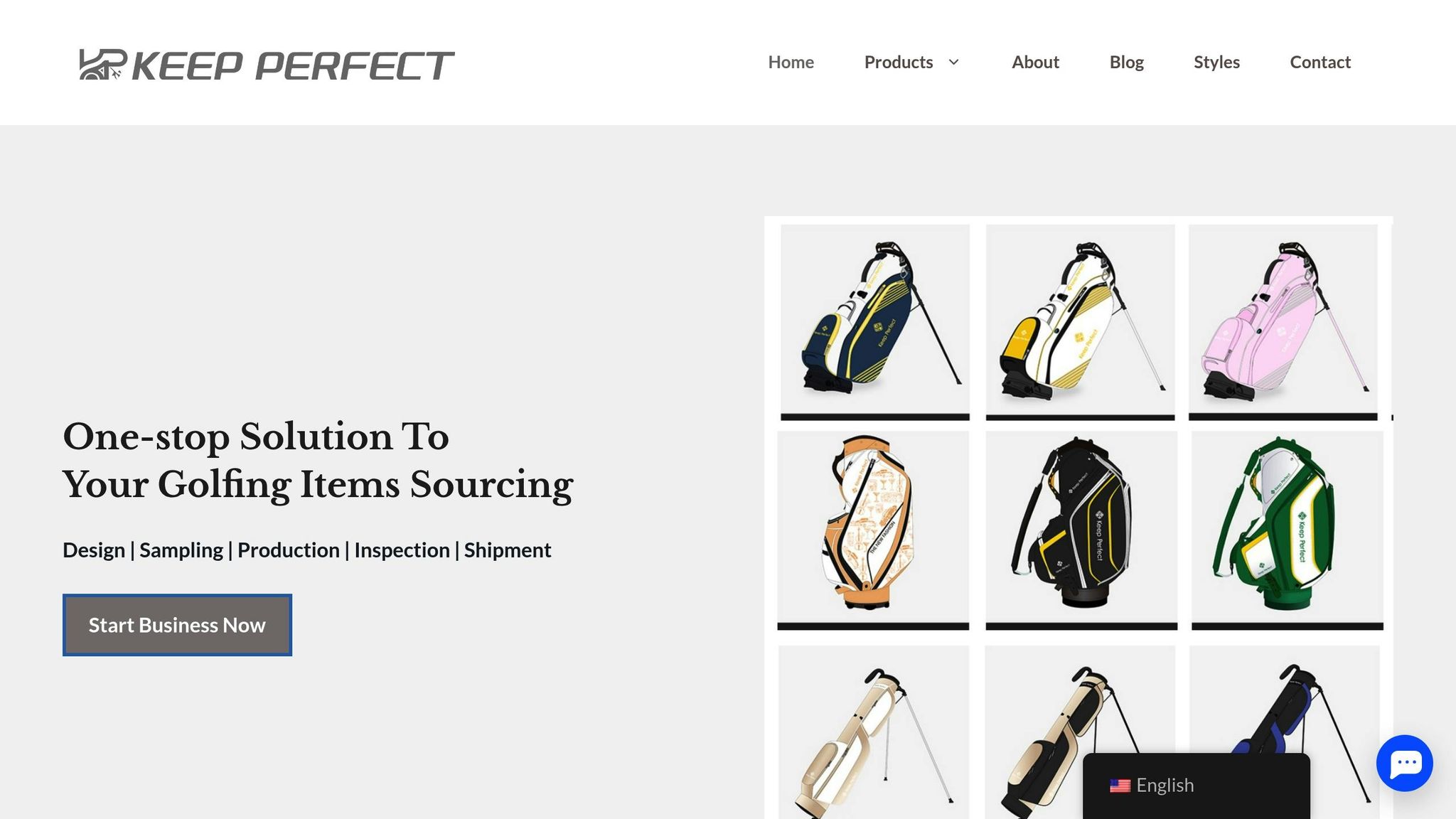
Once your Kickstarter campaign wraps up, there’s a two-week waiting period for funds to clear before production can begin. This short pause underscores the importance of having a solid fulfillment plan in place. That’s where Keep Perfect Golf comes in – they handle everything from transforming your design into physical samples to delivering the finished golf bags to your backers, no matter where they are in the world.
Production Schedules and Quality Control
The production process starts with sampling, which typically takes 7–10 days, followed by full production runs that can take 30–60 days. Since Keep Perfect Golf operates its own factory, there’s no need for middlemen, and they maintain full control over quality by rigorously inspecting each bag to meet industry standards.
To stay on track, it’s smart to build in a 25–30% buffer to your timeline for unexpected delays. Additionally, produce 3–20% more inventory than your backer count to cover any lost or defective items.
The challenges of manufacturing are well captured by the Centerline Engineering Team, who shared their Kickstarter fulfillment experience:
"Manufacturing a consumer product is complicated… we’ve vetted and visited all of our component suppliers… to make sure we won’t dip into the red".
Testimonials from satisfied customers back up the quality of Keep Perfect Golf’s services. Ricky Tetting from the USA described their shipping as the "fastest" and praised the "professional service", adding that the logo golf bags were "perfect". Similarly, Remini from Germany commended the "amazing quality" of the team golf bag designs.
Once production timelines are set, the next big task is organizing storage and shipping to ensure smooth delivery.
Shipping and Storage Options
After production wraps up, efficient logistics are key. Keep Perfect Golf offers warehousing solutions to help you organize inventory before shipping. Their logistics services cover worldwide delivery, customs navigation, and coordinating international shipments.
For international backers, it’s a good idea to use DDP (Delivered Duty Paid) shipping to prevent unexpected customs fees. You can also delay finalizing shipping addresses by setting an "Address Lockdown Date" closer to your shipping timeline – this helps accommodate backers who may have moved. Always opt for tracked shipping to address "never received" claims and maintain trust with your backers.
When budgeting, allocate roughly 30% of your total campaign funds for fulfillment expenses. Keep in mind that shipping alone can eat up to 25% of your funding. As Kickstarter expert Rob Hallifax points out:
"Shipping costs can easily end up being a quarter of your funding total, so you need to fully understand it".
Conclusion and Key Takeaways
Launching a successful Kickstarter campaign for custom golf bags requires careful planning, realistic budgeting, and reliable fulfillment. With only 41.98% of Kickstarter campaigns reaching their funding goals, and those hitting 30% of their target in the first 48 hours having a better chance of success, execution is everything. The process revolves around three core phases: design, marketing, and delivery – each one influencing decisions from start to finish.
To set yourself up for success, start by validating demand early. This could mean researching competitors or creating simple landing pages to gauge interest before diving into production. When designing your golf bags, focus on must-have features like lightweight materials, weatherproofing, and functional club dividers. As for your funding goal, aim for a balance. It should cover production and shipping costs with a small cushion for unexpected expenses. Brandon Rollins from Fulfillrite offers this practical advice:
"Set a goal too low and you won’t be able to fulfill your promises. Set a goal too high and you lower your chances of funding".
Pre-launch preparation is a game-changer. In fact, six out of seven key campaign steps occur before you even hit "Launch". Build an email list well in advance, and consider using a reservation funnel where backers make a small deposit – these convert at rates of 35–40%, compared to just 1–3% for standard email signups.
Fulfillment is another critical area that can make or break your campaign. It typically accounts for 40–60% of total costs, and underestimating shipping expenses is a common pitfall. For example, many creators budget $8 per backer, only to find actual costs closer to $18 – leading to a $20,000 shortfall on a 2,000-backer campaign. A streamlined fulfillment process is key here. Keep Perfect Golf offers factory-direct production, warehousing, and worldwide delivery services, ensuring quality and reliability while freeing you to focus on growing your brand.
Reputation also plays a major role in long-term success. About 81% of backers who support a failed project won’t back that creator again. Additionally, 84% of the highest-funded Kickstarter projects deliver late, and roughly 1 in 10 campaigns never deliver at all. By planning thoroughly, budgeting wisely, and working with experienced fulfillment partners, you can become part of the minority that not only meets funding goals but also builds lasting trust and loyalty with backers.
FAQs
What bag type should I launch first?
A customizable golf stand bag is a smart choice for your first product launch. These bags are lightweight, practical, and perfectly in tune with what golfers are looking for right now. They come packed with features like ample storage, weather resistance, and easy portability – qualities that golfers genuinely appreciate.
By starting with a stand bag, you can showcase these standout features while appealing to a broad audience of golf enthusiasts. Plus, the customization aspect adds a personal touch, making it even more attractive to potential backers.
What should my funding goal include?
When setting your funding goal, make sure it accounts for all expenses tied to producing and delivering your custom golf bags. This includes manufacturing costs, shipping fees, taxes, and the Kickstarter platform fees. To stay prepared for surprises, it’s smart to add an extra 10-20% cushion for unforeseen expenses.
Your goal should strike a balance: it needs to be realistic and achievable based on the number of backers you anticipate and the rewards they’ll pledge for. At the same time, it should be high enough to cover your costs without being so ambitious that it scares off potential supporters.
How can I avoid surprises with shipping costs?
Planning ahead is essential to sidestep surprise shipping costs in your Kickstarter campaign. Start by estimating critical expenses such as freight charges, customs fees, postage, and fulfillment costs. These will largely depend on your product’s size, weight, and shipping destinations.
Build a detailed shipping timeline, factoring in potential duties or tariffs for international orders. If you’re shipping globally, these fees can add up quickly. Working with trustworthy fulfillment partners can also help you get accurate quotes and streamline the process.
By tackling these details early, you’ll have a better handle on your budget and avoid unexpected financial hiccups later on.
Related Blog Posts
- How to Brand Golf Bags for Corporate Events: A Step-by-Step Guide
- Porque é que os jogadores de golfe profissionais preferem sacos personalizados: Histórias e parcerias com marcas
- From Design to Delivery: A Behind-the-Scenes Look at Our Custom Process
- Customizable Golf Bags: Personalization Trends Taking Over

 Português
  English
  Français
  Español
  日本語
日本語