
Your golf bag isn’t just for carrying clubs – it’s a key part of your game. Proper organization can improve your performance, protect your equipment, and save time on the course. Modern bags offer features like 14-way dividers, magnetic pockets, and lightweight designs tailored to how you play. Whether you walk or use a cart, choosing the right bag and keeping it organized is essential for convenience and gear longevity. Here’s what you need to know:
- Stand Bags: Lightweight (3–6 lbs), designed for walking, with retractable legs and dual-strap systems.
- Cart Bags: Heavier (6–9 lbs), optimized for storage with 14–15 dividers and cart-friendly bases.
- Durable Materials: Recycled polyester, ballistic nylon, and ripstop fabrics enhance strength and weather resistance.
- Specialized Pockets: Magnetic closures, insulated cooler pockets, and fleece-lined compartments for valuables.
- Storage Tips: Use wall-mounted racks, silica gel packets, and avoid damp floors to protect your bag.
Organize your bag with a "waterfall" club arrangement, assign specific pockets for gear, and adjust contents seasonally. By investing in quality materials and maintaining proper storage, you’ll extend the life of your bag and keep your gear in top shape.
How to Properly Setup Your Golf Bag (For Every Type Of Player)
Golf Bag Designs for Different Playing Styles
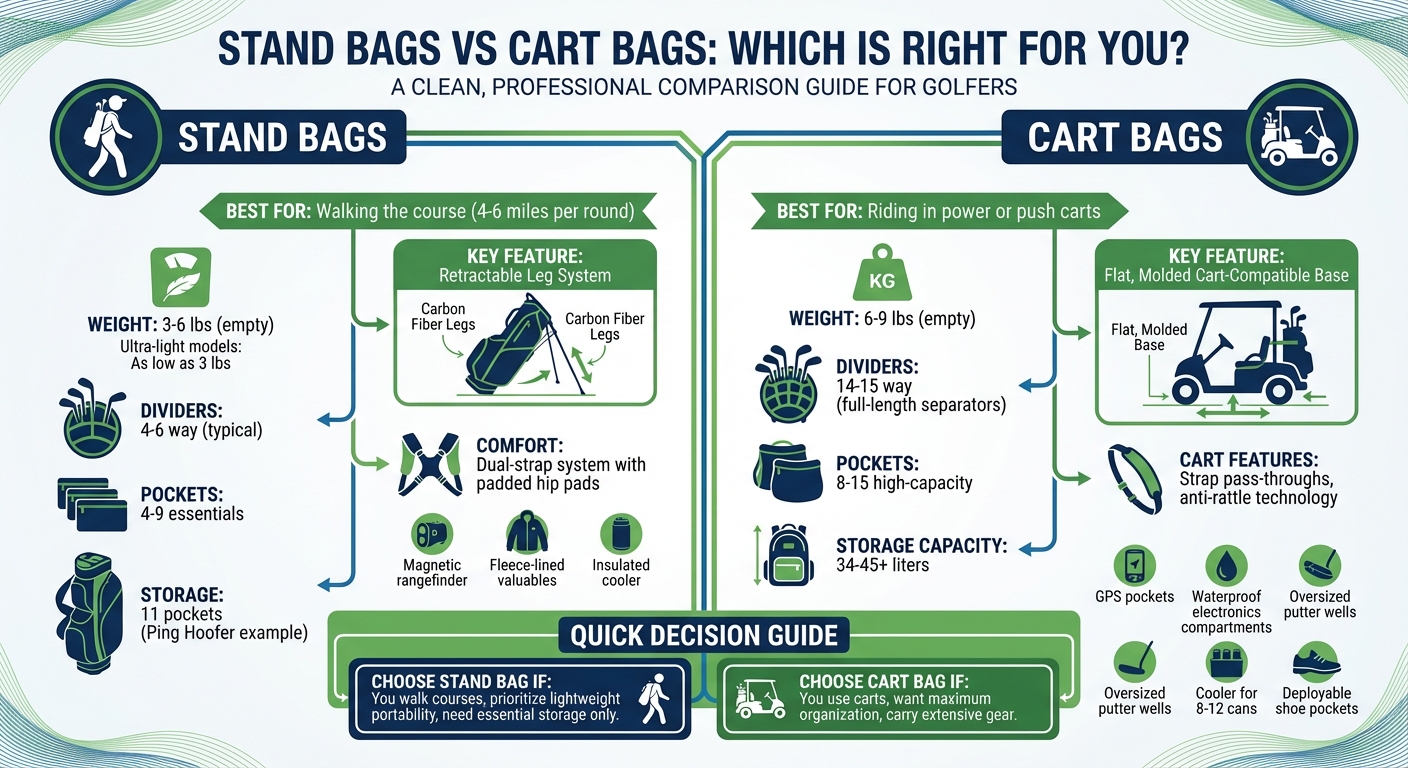
Stand Bags vs Cart Bags: Golf Bag Comparison Guide
Your choice of golf bag should match how you prefer to play. If you walk the course, lightweight portability is key. If you rely on a cart, you’ll need a bag with plenty of storage and easy access to your gear. Let’s dive into the features of each type.
Stand Bags: Lightweight and Built for Walking Golfers
Stand bags are perfect for golfers who enjoy walking the course. Considering that a typical round covers 4 to 6 miles, every pound counts. These bags typically weigh between 3 and 6 pounds when empty, with some ultra-light models tipping the scales at just 3 pounds.
A standout feature of stand bags is their retractable leg system, often made with carbon fiber for durability and stability on uneven terrain. For example, the Vessel VLX boasts a "Rotator Stand" that keeps the base flat even on slopes.
Comfort is a priority, too. Dual-strap systems distribute the weight evenly across your shoulders, reducing fatigue during long rounds. High-end models, like the Vessel Player IV DXR, even include self-adjusting straps and padded hip pads to ease the load on your back.
To keep the weight down, stand bags trade off some storage capacity. Most offer 4 to 6-way dividers and 4 to 9 pockets for essentials. A great example is the Ping Hoofer, which manages to pack 11 pockets into a lightweight design. Many bags also feature modern conveniences like magnetic pockets for rangefinders, fleece-lined compartments for valuables, and insulated cooler pockets.
"The Rover Stand is everything you need and nothing you don’t, which makes it an ideal option for those who don’t want to go completely minimalistic but also don’t want to lug around a bulky bag." – Jack Hirsh, Associate Equipment Editor, GOLF.com
While stand bags excel in portability, cart bags are designed for maximum storage and organization.
Cart Bags: Designed for Storage and Easy Access
Cart bags are all about keeping your gear organized and accessible. These bags weigh in between 6 and 9 pounds when empty and are designed with outward-facing pockets for easy access while attached to a cart.
The defining feature of cart bags is their 14- or 15-way divider systems with full-length separators, giving each club its own slot and protecting graphite shafts. For instance, the Ping 2025 DLX offers 15 pockets with a total capacity of 34 liters, while the Callaway Cargo pushes storage to over 45 liters.
Cart-specific features include strap pass-throughs that secure the bag without blocking zippers or squashing pocket contents. Additionally, a flat, molded base ensures the bag stays stable on the cart.
Modern cart bags come loaded with specialized storage options. For example, the Ask Echo T-LOCK 2.0 includes anti-rattle technology to keep clubs quiet during movement. Other features include magnetic GPS pockets, velour-lined waterproof compartments for electronics, oversized putter wells, and even pouches for e-trolley batteries. High-end models often go further, with extras like deployable shoe pockets and insulated cooler compartments that can hold 8 to 12 cans, complete with drainage systems.
| Feature | Stand Bags | Cart Bags |
|---|---|---|
| Weight (Empty) | 3–6 lbs | 6–9 lbs |
| Dividers | 4–6 way (typical) | 14–15 way (full-length) |
| Pockets | 4–9 essentials | 8–15 high-capacity |
| Base Design | Retractable legs | Flat, cart-compatible base |
| Strap System | Padded dual-strap | Single padded shoulder strap |
| Use | Walking the course | Riding in a power or push cart |
Compartment Systems for Better Organization
Modern golf bags now feature advanced compartment systems that prevent clubs from tangling and make accessing them quicker and smoother. Full-length dividers have become a staple in bag design, running the entire length of the bag instead of just a few inches at the top, as was common in older designs. This ensures that clubs don’t snag and can be easily removed or replaced.
A 14-way divider system gives each club its own dedicated slot, while a 5-way system groups clubs by type, offering a lighter alternative. Some bags go even further with their designs. For instance, the OGIO Silencer includes a molded top that locks clubs securely in place. Premium bags often feature oversized putter wells, allowing for larger mallet heads and thicker grips to fit comfortably without forcing them into standard slots.
"Organization isn’t a one-time task – it’s a habit. The more consistently you maintain your bag, the easier your pre-round prep becomes." – Rod Dunlap, CaddyDaddy Golf
To streamline your routine, assign each club to a specific slot and stick to it. Over time, this builds muscle memory, saving time and effort during your game. And it’s not just about clubs – modern bags also feature innovative pockets to keep your accessories in order.
Specialized Pockets for Equipment and Accessories
While dividers handle club organization, specialized pockets take care of everything else. Today’s golf bags are equipped with purpose-built pockets for all your gear. For example, valuables like phones, keys, and wallets are protected by velour- or fleece-lined pockets with waterproof zippers. Full-length side pockets provide ample space for rain gear or extra layers without crowding other compartments.
For frequently accessed items like rangefinders, magnetic closures have replaced traditional zippers. These closures allow for quick, one-handed access and reduce the risk of leaving pockets open. The Ping DLX cart bag, for instance, includes up to 15 specialized pockets.
"Broken zippers are the number one cause of bag replacements. They are cheap and unreliable. All MNML pockets are 100% magnetic – simply snap open and closed for effortless access." – MNML Golf
Insulated cooler pockets keep drinks cold, with premium models even including drainage holes for easy ice use. Some cart bags also feature deployable shoe pockets, keeping your golf shoes separate from the rest of your gear.
To stay organized, assign a specific purpose to each pocket. For example, keep balls in the bottom front pocket, valuables in a velour-lined side pocket, and tees in a smaller front pouch. This way, muscle memory will help you quickly locate what you need.
sbb-itb-4fa7e8b
Materials and Construction Quality in Golf Bags
Modern golf bags are crafted with a focus on durability, reduced weight, and environmentally conscious materials, ensuring they perform well while lasting longer.
Recycled Materials and Eco-Friendly Manufacturing
Today’s golf bag manufacturers are turning to recycled and bio-based materials to create durable and weather-resistant designs. For example, recycled polyester (rPET) – made from 25–30 plastic bottles per bag – delivers strength comparable to traditional materials. Similarly, recycled nylon, sourced from discarded fishing nets and carpet waste, offers excellent durability and weather resistance.
Another innovative material is sugarcane-based polyethylene, which combines the toughness and weather resistance of nylon with a significantly smaller carbon footprint. By using these sustainable materials, some golf bags can reduce their carbon footprint by as much as 85% compared to conventional manufacturing processes. A great example is the Sun Mountain Eco-Lite Stand Bag, priced at $250, which proves that environmentally friendly options can compete in both performance and price.
Manufacturers are also incorporating advanced production techniques to minimize waste and conserve resources. Closed-loop water systems cut water usage by up to 80%, while computer-aided cutting achieves 95% material efficiency by reducing fabric waste. When shopping for an eco-friendly golf bag, look for certifications that confirm the use of recycled materials.
These innovations in materials and manufacturing not only benefit the environment but also pave the way for construction features that enhance the bag’s longevity.
Construction Features That Extend Bag Life
The durability of a golf bag largely depends on its construction. High-quality materials and thoughtful design ensure these bags can handle years of use. For instance, the denier rating of nylon – indicating fiber thickness – is critical. Lightweight bags use 210D–420D nylon, while areas prone to wear and tear often feature ballistic nylon rated at 840D–1680D for superior resistance to abrasions and tears.
Additional construction elements, like double-stitched seams, reinforced bottoms, and molded bases, add strength and stability, making bags more resilient during travel or cart use. Structural support often comes from polypropylene frames, while linings made from velour, microfiber, or air mesh protect club shafts from scratches and damage. Bags using Ripstop nylon, which incorporates a grid of stronger threads, are particularly effective at stopping small punctures from spreading.
The quality of components also plays a big role in longevity. Features such as YKK zippers and reinforced strap attachment points help prevent mechanical failures over time. To keep zippers functioning smoothly, applying zipper wax monthly and cleaning the teeth with a toothbrush can help avoid snags.
Proper storage can also extend a bag’s lifespan. During the off-season, placing silica gel packets in the pockets can prevent mold, mildew, and rust on club shafts. Storing your bag on a wall rack instead of a damp garage floor helps reduce moisture buildup and keeps it in great condition.
How to Organize Your Golf Gear
Once you’ve invested in durable gear, organizing it effectively can make a big difference. A well-structured golf bag not only keeps your equipment protected but also ensures everything is within easy reach, helping you stay focused on your game.
Club Arrangement Methods
A popular method for arranging clubs is the "waterfall" approach, where clubs are organized from longest to shortest. Place your driver and woods at the back or top of the bag, then arrange your irons and wedges in descending order. This setup makes it easier to grab what you need quickly while safeguarding delicate graphite shafts.
"When you can reach for your 7-iron and grab it without hunting, you eliminate a small but significant distraction."
– Spencer Lanoue, Founder, Caddie AI
If your bag has a 14-way divider, assign each club its own slot. This not only prevents clubs from clattering together but also allows for an instant check to see if any are missing. For irons, arranging them numerically from left to right – such as grouping the 4-, 5-, and 6-irons – can build muscle memory and speed up club selection.
Don’t forget about weight distribution. Keep heavier items like extra balls, rangefinders, and water bottles in the lowest pockets. This helps maintain balance and reduces the risk of your bag tipping over. If you’re walking the course, carrying fewer golf balls – around six to eight – can significantly lighten your load.
After each round, take a moment to clean and reorganize your bag. Wipe down muddy or grassy clubfaces and grips before putting them back. This prevents debris from accumulating inside the bag and keeps your gear in top shape.
Seasonal Adjustments and Storage Accessories
Your golf bag’s contents should adapt to the season. In summer, replace bulky rain gear with items like sunscreen, bug spray, and cooling towels. During colder months, stock up on weather protection essentials. This seasonal rotation keeps your bag lighter and ensures you have what you need most.
Modern golf bags come with specialized pockets designed for specific items. Use large side pockets for clothing layers, while front or center pockets are ideal for frequently used items like balls and tees. Fleece-lined pockets are perfect for protecting valuables such as phones and wallets, while insulated "frosty pockets" can keep snacks and drinks cool. Some bags even feature magnetic rangefinder pockets for quick access without dealing with zippers.
For off-season storage, take a few extra precautions. Place silica gel packets in your bag’s pockets to absorb moisture and prevent mold. Store spare gloves in heavy-duty freezer bags to protect them from air and moisture, which can damage leather. Always remove damp towels and gloves before storage, and take batteries out of devices like rangefinders to prevent leaks.
"A bag packed away with a damp towel inside is a recipe for a smelly, spotted mess come spring."
– Spencer Lanoue, Founder, Caddie AI
When storing your bag, it’s best to keep it off the ground. Use a wall-mounted rack or track system to avoid damp floors, and place the bag against an interior wall for more stable temperatures. If you’re storing it for a long time, consider covering it with a travel cover or even a sheet to keep dust and pests away.
Conclusion
Modern golf bag storage has come a long way, offering not just convenience but also enhanced protection and adaptability. Whether you prefer a lightweight stand bag under 5 pounds for walking the course or a spacious cart bag with 14-way full-length dividers, the right storage setup can improve your pace of play and help preserve your gear.
"A well-organized golf bag isn’t just tidy, it’s a competitive advantage."
– Danny, GolfBags.com
High-quality bags made from materials like ripstop nylon, sealed seams, and YKK zippers provide excellent defense against moisture and wear. Investing in a $300 bag that lasts over five years often proves to be a better deal than opting for a $150 bag that might not survive a full season. Features like reinforced bases, padded dividers, and double-stitched seams further enhance durability.
For home storage, options like wall-mounted magnetic hooks and rail systems that extend 8 inches keep your bags off damp floors, protecting them from potential damage caused by environmental factors.
Choosing the right storage depends on your playing habits, climate, and the amount of gear you carry. Adjustable dividers and specialized pockets allow you to create a setup that adapts to your evolving needs. Together, these advanced bag designs and home organization solutions reflect the growing demands of today’s golfers.
FAQs
What are the advantages of using a 14-way divider in a golf bag?
A golf bag with a 14-way divider brings a range of perks to the table. First, it ensures your clubs stay neatly organized by giving each one its own specific slot. This makes it faster and easier to grab the club you need without fumbling around.
Another big plus? It helps shield your clubs from damage. By keeping them separated, it prevents them from banging into each other during transport, which can cause unnecessary wear and tear.
On the course, this setup adds a layer of convenience. You’ll spend less time searching and more time focusing on your game. For golfers who prioritize both efficiency and protecting their gear, a 14-way divider is a smart, dependable choice.
What’s the best way to keep my golf bag durable and resistant to weather?
To keep your golf bag looking good and ready for action, make cleaning a regular habit. Use a soft, damp cloth with a bit of mild soap to wipe it down. Stay away from harsh chemicals – they can wear out the material faster than you’d like.
When you’re not on the course, store your bag in a cool, dry spot. Avoid places with extreme temperatures or high humidity, as these can weaken the fabric and mess with the zippers. If you can, throw on a protective cover to keep dust and moisture at bay. A little care goes a long way in keeping your bag in top shape for every game.
How can I organize my golf bag for different seasons effectively?
Organizing your golf bag by season ensures you’re always ready for the course, no matter the weather. For colder months, make sure essentials like thicker clothing, hand warmers, and waterproof gear are stored in easily reachable pockets. When the weather warms up, shift your focus to lighter clothing, sunscreen, and hydration supplies.
Take advantage of modular compartments e dedicated pockets to keep your gear neat and secure. A weather-resistant or waterproof bag is a smart choice to protect your equipment from the elements. At the start of each season, take a moment to reorganize your bag so everything is in the right spot. This way, you’ll always have what you need for a great round, rain or shine.

 Português
  English
  Français
  Español
  日本語
日本語