
Golf bag design is entering a period of rapid evolution driven by technological advancement, shifting consumer preferences, and sustainability imperatives. For B2B buyers developing product lines for 2026–2027, staying ahead of design trends is essential for creating products that resonate with tomorrow’s golfers — not yesterday’s.
According to the National Golf Foundation’s 2025 industry report, the global golf equipment market reached $6.8 billion, with the bag segment accounting for approximately $1.2 billion in annual revenue. B2B buyers who align their product development with these 10 design trends will be positioned to capture disproportionate market share in the coming cycle.
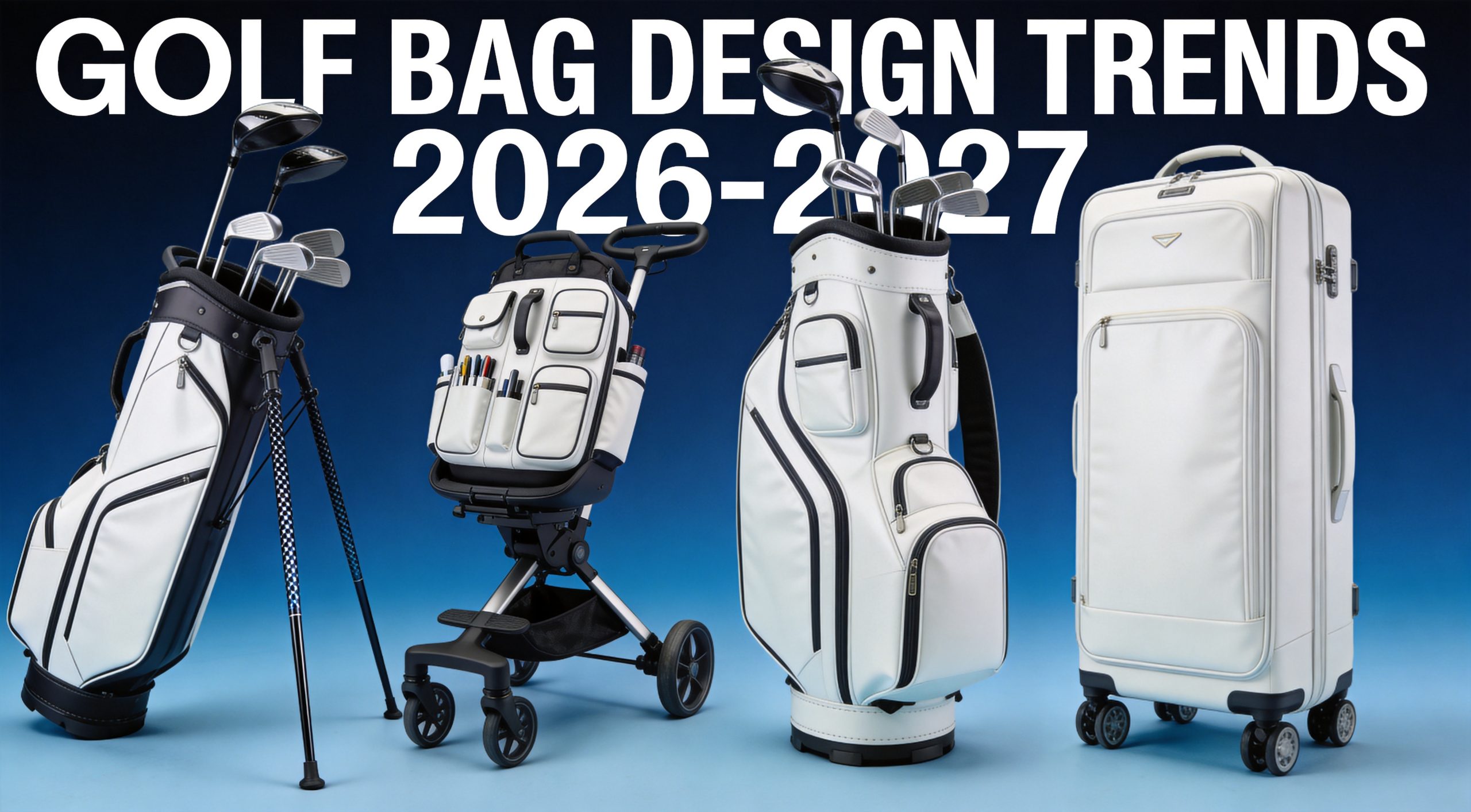
Based on analysis of leading brand launches, consumer research data, and manufacturing innovation trends observed across our production facility in Quanzhou, which has exported to over 100 countries since 2004, here are the ten most significant golf bag design trends shaping the market for the next 18 months.
Trend 1: Ultra-Lightweight Construction Under 3 Pounds
The push for lighter stand bags continues to accelerate. Advances in carbon fiber leg systems, ultra-lightweight fabrics (70D ripstop nylon linings), and minimalist hardware design are enabling premium stand bags to reach the 2.5–3 lb range — a category that barely existed five years ago. According to industry sales data analyzed at trade shows, bags under 4 lbs now account for 35% of stand bag sales, up from just 15% in 2022.
The engineering challenge is maintaining durability and functionality while reducing weight. Successful designs achieve this through strategic material placement — using heavier, more durable fabrics only in high-wear areas (base, club divider) while ultra-light fabrics dominate the body panels. For B2B buyers sourcing from manufacturers like Junyuan Bags’ OEM/ODM services, the key specification to watch is the weight-to-feature ratio: the best 2026 designs deliver full-featured functionality at sub-3-lb weights.
Key specifications for B2B buyers:
| Parameter | 2024 Baseline | 2026 Target |
|---|---|---|
| Total Weight (stand bag) | 3.8–4.5 lbs | 2.5–3.2 lbs |
| Fabric Denier (body) | 210D–420D | 70D–140D ripstop |
| Leg System Material | Aluminum alloy | Carbon fiber composite |
| Stand Mechanism | Spring-loaded | Memory-flex composite |
Products like the Ultra-Light Stand Bag exemplify this trend, utilizing aerospace-grade carbon fiber leg systems that reduce weight by 40% compared to traditional aluminum while maintaining structural integrity over 5,000+ stand-deploy cycles.
From a manufacturing perspective, the transition to ultra-lightweight construction requires significant investment in new tooling and material sourcing relationships. Factories that have already made this investment — particularly those in the Quanzhou industrial cluster exporting FOB Xiamen — offer B2B buyers a significant speed-to-market advantage. These manufacturers have established supply chains for aerospace-grade carbon fiber composites and ultra-high-molecular-weight polyethylene (UHMWPE) fabrics that were previously unavailable at golf industry price points.
Trend 2: Integrated Technology Pockets and Cable Routing
As golfers carry more electronic devices — GPS watches, rangefinders, smartphones, portable speakers — bags are evolving to accommodate this tech ecosystem. The modern golfer’s carry includes an average of 4.3 electronic devices, according to a 2025 Golf Digest equipment survey.
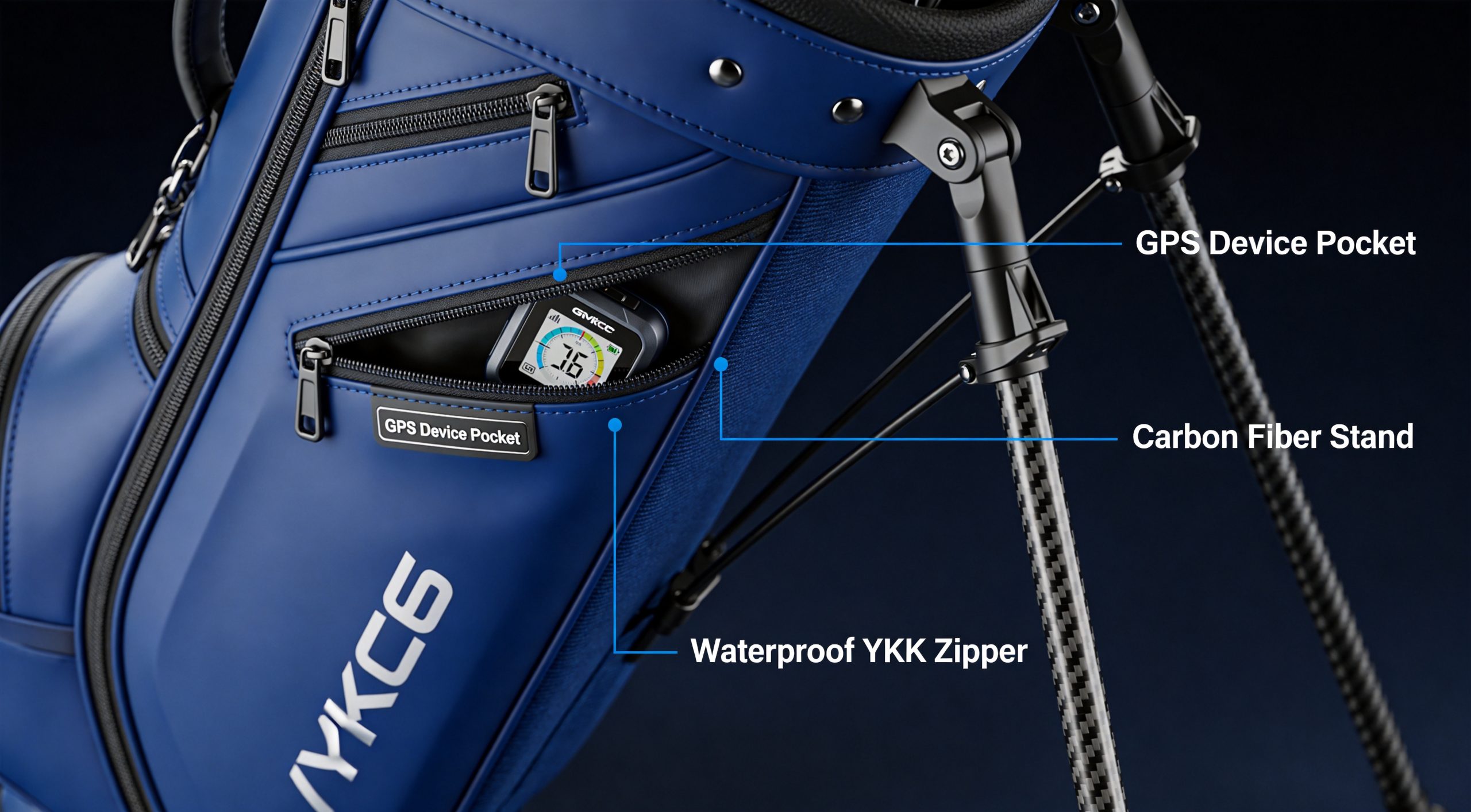
Key design features include:
- Lined electronics pockets with velcro retention straps and moisture-resistant zippers
- Internal cable routing channels that allow charging devices from a portable battery stored in the bag’s side pocket
- RFID-shielded valuables pockets protecting credit cards and passports from electronic theft
- Bluetooth tracker pockets with designated sleeves for AirTag or Tile devices
This trend is particularly strong in bags targeting golfers under 40, a demographic that expects their equipment to seamlessly integrate with their digital lives. B2B buyers should specify tech-ready pocket configurations as standard — not as premium add-ons — when developing their 2026 product lines.
Trend 3: Sustainable and Recycled Materials Going Mainstream
Sustainability is no longer a niche selling point — it’s a baseline expectation. The shift toward eco-friendly materials in golf bag manufacturing represents one of the most significant changes in the industry’s history. In 2025, 62% of golf equipment buyers surveyed said sustainability influenced their purchasing decisions, up from 38% in 2022 (Source: Golf Industry Sustainability Report 2025).
Leading manufacturers are adopting:
- Recycled PET (rPET) fabrics made from post-consumer plastic bottles — now available in 600D and 1000D weights with comparable durability to virgin nylon
- Plant-based leather alternatives derived from cactus, pineapple leaf fiber (Piñatex), and mushroom mycelium
- Water-based PU coatings replacing solvent-based alternatives, reducing VOC emissions by up to 95%
- Recycled metal hardware including zippers, D-rings, and buckle systems made from post-industrial recycled aluminum
For B2B buyers, the cost premium for sustainable materials has narrowed to approximately 8–12% — down from 25–30% just three years ago. Manufacturers based in FOB Xiamen ports, particularly those in the Quanzhou manufacturing cluster, have developed robust supply chains for recycled materials that make eco-friendly production economically viable even at competitive price points.
Trend 4: Modular and Customizable Design Systems
The one-size-fits-all approach is giving way to modular design systems that allow golfers to customize their bag’s configuration. This trend manifests in several ways:
- Interchangeable pocket panels that attach via magnetic or zipper systems, allowing golfers to swap configurations for different rounds or travel needs
- Removable accessory pods for rangefinders, water bottles, or first-aid kits that can be repositioned based on preference
- Adjustable divider systems with moveable walls that accommodate different club configurations (from 14-divider full sets to 6-bag light setups)
The Hybrid Stand Bag category perfectly illustrates this trend — combining the versatility of a stand bag with the storage capacity of a cart bag through modular attachment systems. For B2B buyers, modular designs reduce SKU proliferation: a single base model can serve multiple market segments through configurable accessories, reducing inventory risk while expanding addressable market.
Trend 5: Premium Aesthetics with Performance Materials
The convergence of luxury aesthetics and performance engineering is creating a new category of golf bags that look as good on the first tee as they perform on the 18th. This trend is driven by the “athleisure” influence on golf fashion — golfers want equipment that transitions seamlessly from course to clubhouse to car.
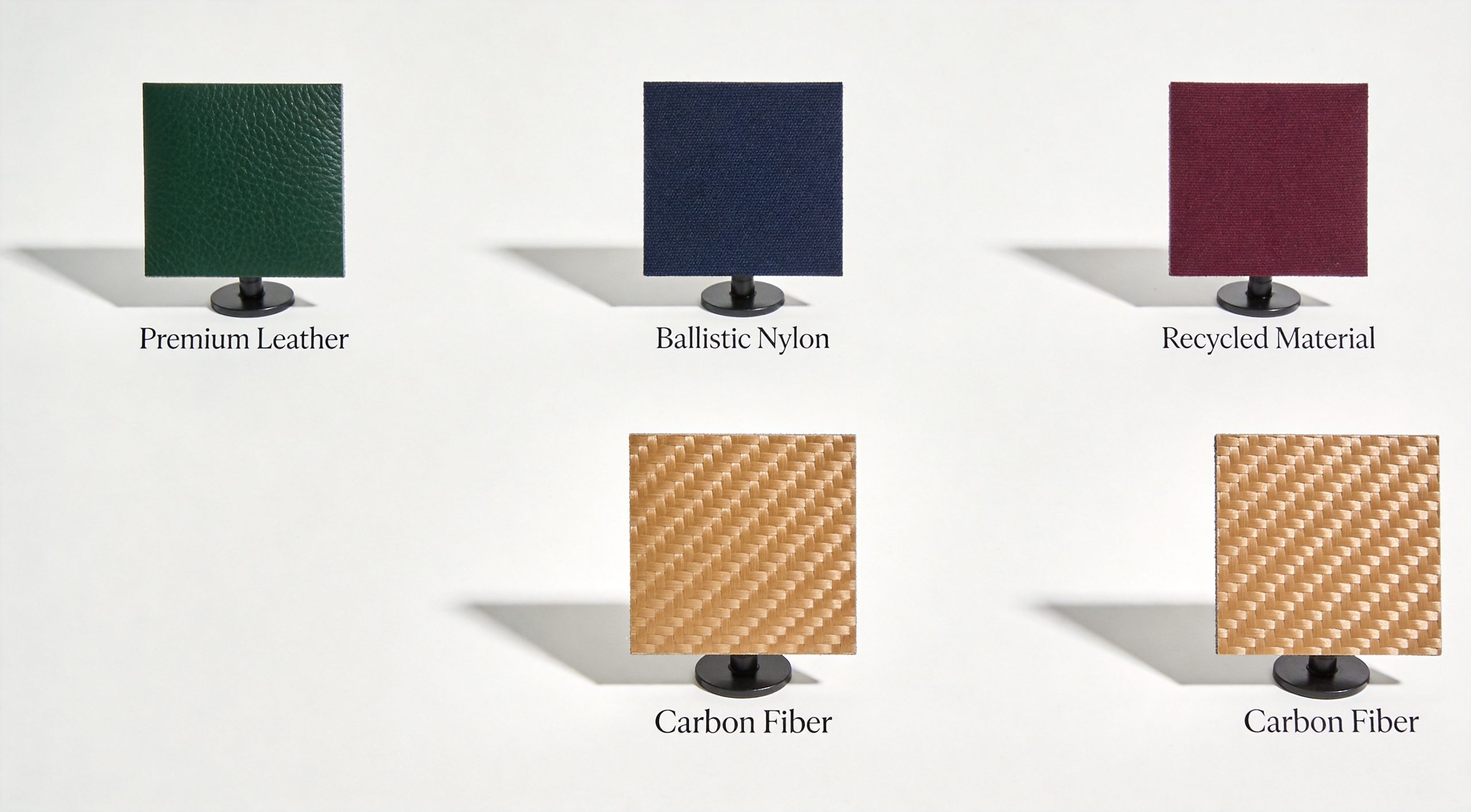
Key aesthetic shifts include:
- Earthy, muted color palettes: Forest green, navy, burgundy, and sand tones replacing bright neons and primary colors
- Mixed-material exteriors: Combining synthetic leather accents with technical nylon panels for visual depth
- Minimalist branding: Subtle tonal logos replacing large graphic treatments
- Textured surfaces: Embossed patterns, woven labels, and matte-finish hardware
B2B buyers should note that premium aesthetics command a 20–35% price premium over equivalent-performance bags with standard visual treatments. The Premium Tour Cart Bag segment demonstrates how luxury finishing — including vegan leather trim, brushed metal hardware, and coordinated color blocking — justifies premium price positioning.
Trend 6: Ergonomic Carry Systems Redefined
Comfort engineering has become a competitive differentiator. The latest strap systems incorporate:
- Dual-density foam padding with moisture-wicking mesh channels that reduce shoulder pressure by up to 40%
- Auto-rotating hip pads that adjust to the golfer’s stride pattern
- Load-distribution frames that transfer weight from shoulders to hips during carry
- Quick-adjust sternum straps with one-hand magnetic buckles
For manufacturers producing OEM/ODM golf bags, investing in proprietary strap system tooling is one of the highest-ROI design decisions available. A well-engineered carry system transforms an otherwise commoditized product into a differentiated offering that commands customer loyalty.
Ergonomic innovation also extends to how bags interact with golf carts. The latest designs feature anti-twist base plates that prevent bag rotation during cart movement, integrated cart strap channels that maintain full pocket accessibility when mounted, and balanced weight distribution systems that position the center of gravity directly above the bag’s vertical axis, reducing perceived carry weight by up to 25%.
Trend 7: Specialized Bags for Growing Demographics
The golf industry’s success in attracting new players — particularly women, juniors, and adaptive golfers — is creating demand for purpose-built bags that serve these demographics’ specific needs rather than simply shrinking or recoloring existing men’s designs.
Key growth segments include:
- Junior golf bags: Designed for younger players with lighter frames, shorter strap lengths, and age-appropriate storage. The Junior Golf Bag for ages 5–8 represents this category with child-optimized ergonomics.
- Women-specific designs: Engineered around female body proportions with wider-set, contoured straps and repositioned balance points
- Adaptive golf bags: Featuring magnetic closures, one-hand access systems, and cart-mount compatibility for golfers with mobility limitations
Junior and women’s golf bags represent the fastest-growing segment in the bag category, with a combined CAGR of 12.3% from 2024–2027.
Industry analysts project that the junior golf equipment market alone will exceed $340 million by 2027, driven by increased youth participation programs from the PGA Tour, LPGA, and national golf federations worldwide. B2B buyers who establish junior product lines now — working with manufacturers experienced in producing age-appropriate junior golf bags — will capture first-mover advantages in this rapidly expanding segment.
Trend 8: Weather-Integrated Protection Systems
With climate patterns becoming more unpredictable, waterproofing and weather protection have evolved beyond simple rain hoods:
- Fully welded seam construction eliminating needle holes that allow water penetration
- Aquaguard water-resistant zippers rated to IPX5 standards across all compartments
- Integrated pop-up rain hoods with one-hand deployment mechanisms
- Drainage-port bases that allow water to escape from the bag bottom
- Hydrophobic fabric treatments that cause water to bead and roll off without affecting fabric breathability
B2B buyers should request IPX4-rated waterproofing as a minimum specification for all 2026 product lines, with IPX6 available as a premium tier.
Manufacturers achieving IPX6-rated waterproofing report that the additional production cost is only $2–4 per unit, yet the feature supports a $15–25 retail price premium. For B2B buyers, this represents one of the highest-margin feature investments available in the 2026 product development cycle. Fully welded seam construction, in particular, has become dramatically more cost-effective with the advent of high-frequency welding machines capable of processing technical fabrics at production speeds exceeding 200 units per day.
Trend 9: Smart Manufacturing and Digital Customization
The manufacturing side is evolving as rapidly as the design side. Advanced production techniques now enable:
- Digital printing on technical fabrics allowing unlimited color customization without minimum order penalties
- Laser-cut ventilation patterns that replace traditional sewn mesh panels with precise, repeatable designs
- 3D-knitted structural elements reducing waste by up to 60% compared to cut-and-sew methods
- AI-assisted design optimization that tests thousands of weight-distribution configurations virtually before physical prototyping
These manufacturing innovations, available at established facilities operating from FOB Xiamen, have reduced sample development timelines to 10–18 days and bulk production to 45–75 days, enabling B2B buyers to bring trend-responsive products to market faster than ever.
Trend 10: Connected Ecosystem and Brand Experience
The final trend transcends physical design — it’s about how the bag connects to the broader brand ecosystem:
- QR code integration linking to digital product passports that verify authenticity, provide care instructions, and enable warranty registration
- NFC-embedded tags that trigger AR experiences showing how the bag was manufactured
- Matching accessory ecosystems where bags coordinate with custom golf headcovers, towels, and divot tools for a cohesive brand presentation
- Direct-to-consumer integration with bags designed to photograph well for social media, driving organic brand exposure
For B2B buyers building brand portfolios, these connected elements transform a bag from a functional container into a brand touchpoint that drives customer engagement and repeat purchases.
Strategic Implications for B2B Buyers
These 10 trends converge on a central theme: the golf bag market is fragmenting into specialized segments that reward innovation and punish commoditization. Buyers who invest in differentiated, trend-aligned products will capture higher margins and build stronger brand loyalty.
Key Decision Framework
| Strategic Priority | 2026 Action | Expected ROI Impact |
|---|---|---|
| Weight Reduction | Source carbon fiber and rPET fabrics | +15–25% margin |
| Sustainability | Offer eco-certified product lines | +20–35% price premium |
| Tech Integration | Specify tech-ready pocket systems | +10–18% ASP uplift |
| Demographic Expansion | Develop junior and women-specific SKUs | +12.3% segment CAGR |
| Modular Design | Create configurable base platforms | −25–30% inventory risk |
Partner Selection Criteria
When evaluating manufacturing partners for 2026–2027 product development, B2B buyers should prioritize suppliers who demonstrate:
- 22+ years of manufacturing experience — established production expertise since 2004 ensures reliable quality and process maturity
- Proven export track record — experience shipping to 100+ countries demonstrates compliance with diverse regulatory requirements
- Flexible MOQ capabilities — the ability to produce as few as 100 pieces per design enables rapid market testing
- Full certification portfolios — ISO, BSCI, and material-specific certifications (GRS for recycled materials, OEKO-TEX for fabric safety)
- OEM/ODM infrastructure — in-house design, sampling, and production under one roof reduces communication overhead and lead times
Company Profile: Manufacturing Excellence Since 2004
With 22 years of golf bag manufacturing experience, Junyuan Bags has served over 200 brands and exported to more than 100 countries worldwide. Based in Quanzhou with FOB Xiamen shipping, we specialize in OEM/ODM golf bag production with MOQs starting at just 100 pieces per design.
Ready to Develop Your 2026–2027 Golf Bag Collection?
If you’re a B2B buyer looking to capitalize on these design trends, partnering with an experienced manufacturer is essential. Junyuan Bags brings 22 years of golf bag manufacturing expertise, having served over 200 brands across 100+ countries. Our OEM/ODM services include full design support, rapid prototyping (10–18 day sample lead time), and flexible production starting at just 100 pieces per design.
Whether you’re developing an ultra-light stand bag, a tech-integrated cart bag, or a sustainable eco-friendly collection, our team can bring your vision to market efficiently. Take a virtual factory tour to see our production capabilities, or review our certifications to verify our quality standards.
Contact us today:
- 📱 WhatsApp: +86 177 5002 0688
- 📧 Email: cco@junyuanbags.com
- 🏭 Shipping: FOB Xiamen, Quanzhou, Fujian, China
Frequently Asked Questions (FAQ)
What are the most important golf bag design trends for 2026–2027?
The most impactful golf bag design trends for 2026–2027 include ultra-lightweight construction under 3 pounds using carbon fiber and 70D ripstop fabrics, integrated technology pockets with cable routing, sustainable recycled materials (rPET fabrics, plant-based leathers), modular customizable design systems, premium earth-tone aesthetics, specialized bags for juniors and women, advanced weather protection (IPX4+), and smart manufacturing techniques enabling digital customization. Bags under 4 lbs now account for 35% of stand bag sales, up from 15% in 2022.
How much does it cost to develop a custom golf bag design with a manufacturer?
Custom golf bag development costs vary by complexity. A standard OEM project with a manufacturer like Junyuan Bags (MOQ 100 pieces) typically ranges from $15–45 per unit depending on materials, features, and customization level. Sample development costs $200–500 per design with 10–18 day lead times. Bulk production runs 45–75 days from approval. For 100-piece orders, initial investment starts around $1,500–4,500 plus sampling fees.
What is the typical MOQ for custom golf bag manufacturing?
Traditional golf bag factories typically require MOQs of 500–1,000 pieces per model. However, forward-thinking manufacturers like Junyuan Bags offer flexible MOQs starting at 100 pieces per design, enabling emerging brands to test multiple designs with lower financial risk. Sample orders can be as low as 1–5 pieces for design validation.
How long does golf bag production take from design to delivery?
The typical golf bag production timeline includes: design consultation and tech pack development (5–7 days), sample production (10–18 days), sample approval and revisions (3–7 days per round), and bulk production (45–75 days). Total timeline from initial concept to FOB delivery is typically 8–14 weeks. Manufacturers shipping FOB Xiamen can coordinate logistics to major global ports efficiently.
Are sustainable materials viable for mass-market golf bags?
Yes. In 2025, the cost premium for sustainable golf bag materials (rPET fabrics, recycled hardware, water-based coatings) has narrowed to 8–12% above conventional materials, down from 25–30% three years ago. With 62% of golf equipment buyers saying sustainability influences their purchasing decisions, the ROI on eco-friendly materials is clear. Recycled PET fabrics now match virgin nylon in durability at 600D and 1000D weights.
What certifications should B2B buyers verify when selecting a golf bag manufacturer?
B2B buyers should verify: ISO 9001 (quality management), BSCI or Sedex (social compliance), GRS (Global Recycled Standard for eco-materials), OEKO-TEX Standard 100 (fabric chemical safety), and product-specific testing reports (waterproof IPX ratings, zipper cycle testing, fabric tear strength). Manufacturers with full certification portfolios like Junyuan Bags’ certifications reduce compliance risk for buyers in regulated markets including the EU, US, and Japan.
Related Resources
Related Products
Explore our manufacturing capabilities in this category:
 Premium Stand Bag
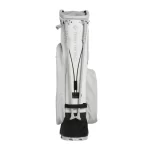 Ultra-Light Stand Bag
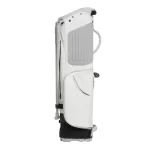 Hybrid Stand Bag
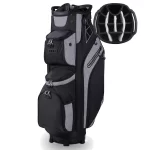 Rain-Resistant Stand Bag
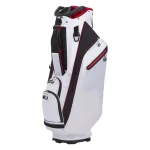 Premium Tour Cart Bag
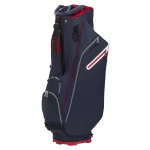 Lightweight Cart Bag
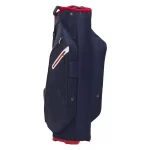 Waterproof Cart Bag
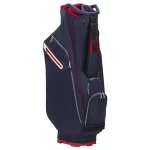 Staff Cart Bag
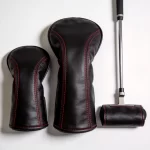 Custom Golf Headcovers Set
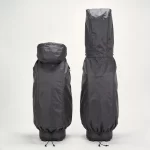 Golf Bag Rain Cover
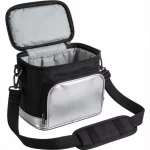 Golf Cooler Bag
Need custom golf bags? Contact us for OEM/ODM quotes — MOQ 100pcs, FOB Xiamen.

 日本語
日本語  English
  Português
  Français
  Español