# Seasonal Golf Bag Demand: How to Time Your Inventory for Spring Surge and Fall Clearance
If you stock golf bags, your profit margin lives or dies by when you buy, not just what you buy. The golf equipment industry runs on a deeply seasonal rhythm, and retailers who misread the calendar end up with overstock in winter or stockouts in spring. Whether you manage a pro shop, an e-commerce golf store, or a regional distribution warehouse, understanding the seasonal demand curve for golf bags is the single most impactful lever you can pull on your bottom line.
This guide breaks down the annual golf bag demand cycle by season, explains how different bag categories peak at different times, gives you a practical OEM procurement timeline, walks you through an inventory depth calculation model based on sell-through rates, and shares proven end-of-season clearance strategies. By the end, you will have a repeatable framework for timing every order you place this year.
Why this matters for B2B buyers: Golf bag demand fluctuates 3-to-1 between peak and trough seasons. Getting your ordering cadence right can reduce carrying costs by 20-30%, prevent costly stockouts during the spring surge, and give you a structured playbook for clearing slow-moving inventory before it becomes dead stock.

The Annual Golf Bag Demand Curve: Spring, Summer, Fall, Winter
Golf is one of the most weather-dependent sports on the planet, and demand for equipment — particularly golf bags — tracks closely with playable days. Understanding the four-phase annual cycle is the foundation for every inventory decision you make.
Phase 1: Spring Surge (March – May) — The Demand Peak
Spring is the undisputed high-water mark for golf bag sales in the Northern Hemisphere. Several forces converge to create this surge. Daylight saving time extends evening playing hours. Snow melts and courses reopen. New golfers who started taking lessons indoors over winter head outside for the first time. And critically, golf manufacturers launch their new seasonal colorways and model refreshes in February and March, giving retailers fresh product to promote.
According to the National Golf Foundation, on-course participation in the United States reached a record 29.1 million players in 2025, with total golf participation (on- and off-course combined) climbing to an all-time high of 48.1 million — the eighth consecutive year of growth (source: NGF Graffis Report, February 2026). This expanding player base means the spring surge is not just seasonal; it is getting larger each year.
For retailers, Q1 and Q2 typically account for 55-65% of annual golf bag revenue. The NGF Golf Industry Research confirms that more than 500 million rounds were played at U.S. courses in 2025, with the heaviest concentration falling between April and October.
Phase 2: Summer Plateau (June – August) — Steady Volume
Once the initial spring rush settles, demand enters a stable plateau. Golfers are playing regularly, but the new-equipment buying frenzy has subsided. Summer sales are driven by replacement purchases (bags that wore out from heavy use), first-time buyers who started playing in spring and now want a dedicated bag, and gift purchases around Father’s Day — which remains one of the top golf equipment buying occasions of the year.
Inventory management during summer is about maintaining stock levels without over-ordering. The Alibaba.com Golf Accessories Wholesale Guide 2026 notes that buyer activity peaks in March on B2B platforms, with a second smaller wave in July-August as retailers replenish for the fall season.
Phase 3: Fall Decline (September – November) — The Markdown Window
As temperatures drop and daylight shortens, walk-off sales decline steadily. However, fall is not a dead period. Southern states, desert climates, and European golf destinations like Spain and Portugal continue to see active play. Additionally, the fall season creates opportunities for clearance promotions and pre-holiday stocking.
Retailers who plan ahead use September and October to discount summer carryover inventory, bundle bags with accessories to increase perceived value, and place advance orders for spring replenishment. The Shun Golf seasonal promotions analysis confirms that fall sales events in September and October are critical for clearing excess stock before winter dormancy.
Phase 4: Winter Dormancy (December – February) — The Quiet Period
Winter is the low point for golf bag demand in most Northern markets. Courses close, golfers hibernate, and retail foot traffic drops sharply. However, winter is not a time to do nothing. It is the ideal window for strategic planning, supplier negotiations, sample evaluation, and pre-season ordering. Many smart retailers use January and February to secure better pricing from manufacturers who are eager to fill production capacity during their own off-peak period.
The global golf bags market was valued at USD 1.2 billion in 2023 and is projected to reach USD 2.3 billion by 2030, growing at a CAGR of 9.5% (source: Grand View Research Golf Bags Market Report 2024-2030). Even in the quiet season, the underlying growth trajectory favors retailers who stay engaged.

Category Seasonal Differences: Not All Bags Sell the Same Way
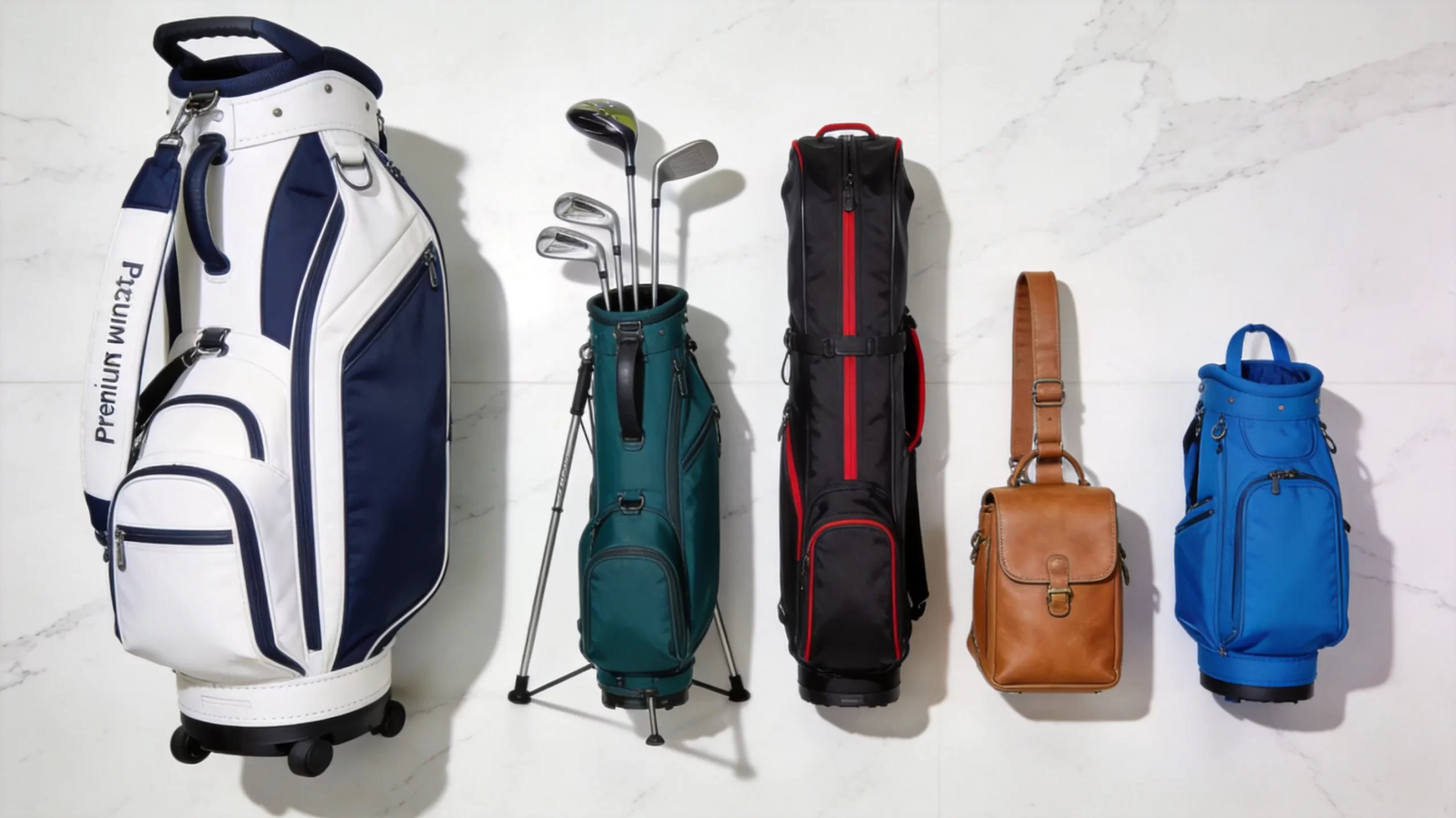
One of the biggest mistakes retailers make is treating “golf bags” as a single category. Different bag types follow distinctly different seasonal patterns, and understanding these nuances lets you optimize your SKU mix month by month.
Cart Bags: The Spring Kings
Cart bags — the full-featured, multi-pocket bags designed for use on push carts and motorized trolleys — see their strongest demand in early spring. Golfers who play primarily on carts are often older, more serious players who plan their season early and want a fresh bag before the first tee time. Cart bags represent the largest revenue segment in the golf bag market and typically account for 40-50% of total bag sales during the March-May window.
If you want to learn more about the different bag types and how to position them in your product lineup, see our comprehensive Golf Bag Types Buyer’s Guide for Retailers and Distributors.
Stand Bags: The Year-Round Workhorse
Stand bags occupy the middle ground. They serve both walking golfers and cart users, making them the most versatile category. Demand for stand bags remains relatively stable throughout the year, with modest peaks in spring and a smaller bump in fall. The lightweight nature of stand bags also makes them popular as travel companions, extending their selling window into the summer vacation months.
Travel Bags: The Holiday and Tournament Spike
Travel bags — the padded, wheeled cases designed to protect clubs during air and road transport — follow a completely different seasonal rhythm. Their demand spikes around major holiday travel periods (Thanksgiving, Christmas, New Year) and peaks again during the summer vacation season (June-August) when golfers fly to destination courses. Winter months can actually be a strong period for travel bag sales as dedicated players head south to escape the cold.
For detailed insights on hardware quality considerations that affect travel bag durability, check out our guide on Golf Bag Hardware and Components.
Staff/Tour Bags: The Aspirational Niche
Full-size staff bags carry premium price tags and appeal to low-handicap players and brand enthusiasts. Demand is concentrated in spring (new model launches) and around major golf tournaments (Masters in April, PGA Championship in May, U.S. Open in June, The Open in July). These bags are lower volume but higher margin, requiring careful inventory planning to avoid long holding periods.
Sunday/Casual Bags: The Impulse Category
Lightweight Sunday bags and minimal carry bags see demand spikes in spring (new golfers looking for an affordable entry point) and summer (casual weekend rounds with friends). These bags have the lowest price points and often function as impulse purchases or add-on items. Keeping a small, rotating selection available throughout the warm months is usually sufficient.
OEM Procurement Timeline: The 4-6 Month Rule
The single most important number in seasonal golf bag inventory management is 4 to 6 months. That is the lead time you should be working with when planning OEM orders from your manufacturing partner. Here is what that timeline looks like in practice:
The Procurement Calendar
January – February: Place orders for your spring/main season inventory. Your manufacturer begins material sourcing, sample approval, and production scheduling. This is also the time to negotiate pricing, confirm MOQs, and finalize custom designs or private label specifications.
March – April: Spring production runs are underway. Final quality checks are completed. Goods are prepared for shipping. Meanwhile, you place preliminary orders for summer replenishment stock.
May – June: Spring inventory arrives at your warehouse. You begin distributing to retail locations or fulfilling e-commerce orders. Production on summer stock continues.
July – August: Summer replenishment arrives. You assess sell-through rates from spring and adjust fall/winter order quantities accordingly. This is also when you place orders for any late-fall or holiday-season inventory.
September – October: Fall stock arrives. Clearance planning begins for any remaining summer inventory. Pre-orders for next year’s spring collection start with your manufacturer.
November – December: Holiday and travel bag demand peaks. You evaluate the full season’s performance, identify best-sellers and underperformers, and begin planning next year’s assortment.
For retailers who want to understand the differences between OEM and ODM models when working with manufacturers, our Golf Bag OEM vs ODM Guide provides a clear comparison.
Why 4-6 Months?
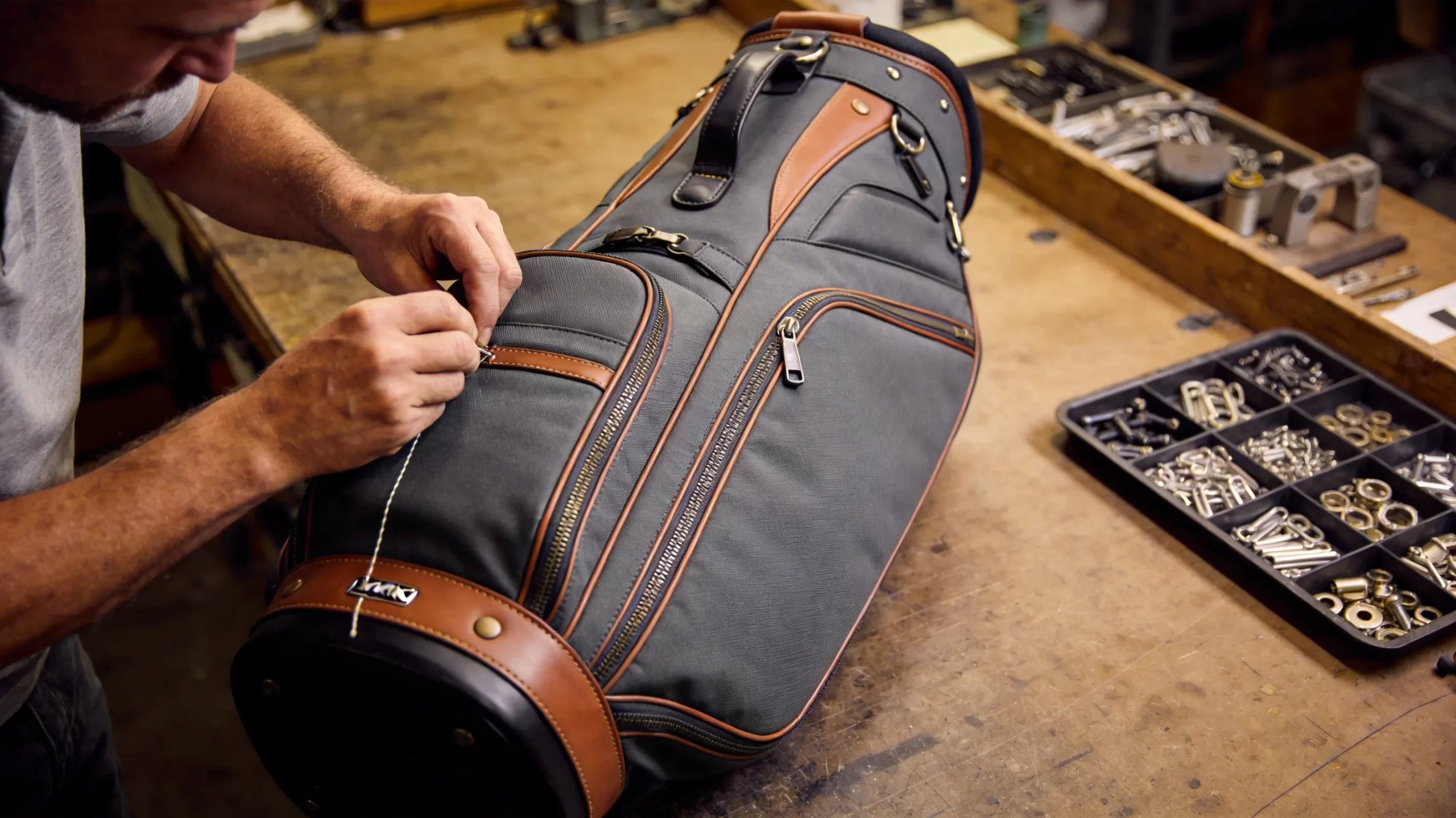
Several factors drive this lead time. Material procurement for premium fabrics like 600D polyester, Cordura nylon, and genuine leather often requires 4-8 weeks alone. Production of a 500-1000 piece order typically takes 30-45 days. Quality inspection, packaging, and export documentation add another 1-2 weeks. Ocean freight from Asia to North America or Europe takes 25-40 days. Air freight is faster (5-7 days) but significantly more expensive.
Building in a 4-6 month buffer gives you time to handle unexpected delays — material shortages, quality rejections, shipping disruptions — without missing your selling window.
Inventory Depth Calculation: The Sell-Through Rate Model
Knowing when to order is only half the equation. Knowing how much to order is equally critical. Here is a practical framework for calculating optimal inventory depth based on sell-through rates.
The Core Formula
Required Inventory = (Expected Weekly Sales × Lead Time in Weeks) + Safety Stock
Let’s break this down with a real-world example.
Suppose your historical data shows that you sell an average of 15 cart bags per week during the peak spring season (March-May). Your lead time from order placement to warehouse arrival is 16 weeks (4 months). You want to maintain a 2-week safety stock buffer.
Required Inventory = (15 units/week × 16 weeks) + (15 units/week × 2 weeks) = 240 + 30 = 270 units
This means you need 270 units of cart bag inventory in the pipeline and on hand to sustain your spring selling rate without stockouts.
Adjusting for Seasonality
The formula above assumes constant demand, which is unrealistic. You need to apply seasonal multipliers. Based on industry patterns:
– Spring (Mar-May): 1.5x to 2.0x baseline weekly sales
– Summer (Jun-Aug): 1.0x baseline (steady state)
– Fall (Sep-Nov): 0.6x to 0.8x baseline (declining)
– Winter (Dec-Feb): 0.3x to 0.5x baseline (dormant)
If your annual baseline is 10 units/week, your spring order should target 15-20 units/week equivalent, while your winter reorder point should be just 3-5 units/week.
The Sell-Through Rate Benchmark
A healthy sell-through rate for golf bags at retail is 60-80% within the first 90 days of a season launch. If you stock 100 units of a new spring cart bag model and sell 70 within the first three months, your 70% sell-through rate is strong. Below 50% indicates over-ordering or weak product-market fit. Above 85% suggests you under-ordered and left money on the table.
Tracking sell-through rates by SKU, category, and season lets you progressively refine your ordering accuracy over time. For guidance on selecting the right manufacturing partner who can deliver consistent quality across seasons, see our How to Choose the Right Golf Bag Manufacturer guide.
MOQ Considerations
Most OEM manufacturers set minimum order quantities of 100-300 pieces per style/color. This creates a tension: you may not need 200 units of a particular color, but the MOQ forces you to order that amount. Smart retailers manage this by consolidating colors (offering 3 core colors instead of 8) or negotiating tiered MOQ structures with their manufacturer. With 20+ years of manufacturing experience serving 200+ brands across 100+ countries, Keep Perfect Golf works with retailers to find the right balance between variety and volume efficiency. Contact us at [email protected] or WhatsApp +86 17750020688 to discuss flexible MOQ arrangements.
End-of-Season Clearance Strategies That Protect Margins
Clearing seasonal inventory before it becomes dead stock is a critical skill. Here are proven strategies ranked by margin preservation effectiveness:
Strategy 1: Bundle and Cross-Sell (Highest Margin Retention)
Instead of discounting bags directly, bundle them with complementary accessories — golf towels, headcovers, rain hoods, or ball markers. The perceived value of the bundle exceeds the sum of its parts, allowing you to move inventory without eroding your bag’s standalone price positioning. This approach typically retains 70-80% of original margin versus 40-50% with straight discounting.
Strategy 2: Channel Diversification
Move slow-selling inventory to channels where price sensitivity is lower or different customer segments shop. Examples include outlet stores, flash sale platforms, B2B bulk sales to driving ranges or golf academies, and international markets where the season is just beginning (e.g., selling Northern Hemisphere winter inventory to Southern Hemisphere retailers entering their spring).
For retailers managing export logistics, our Golf Bag Export Packaging and Shipping Best Practices guide covers the key considerations for international shipments.
Strategy 3: Progressive Markdown Cadence
If direct discounting is necessary, follow a structured cadence rather than slashing prices immediately:
– Week 1-2 of clearance: 10-15% off, targeted to email subscribers
– Week 3-4: 20-25% off, broader promotion
– Week 5-6: 30-40% off, final clearance push
– Week 7+: Transfer to outlet or liquidation channel
This progressive approach captures the maximum willing-to-pay from each customer segment before resorting to deep discounts.
Strategy 4: Pre-Order and Backorder for Next Season
Use end-of-season clearance as a lead generation tool for next year. Offer customers who buy clearance items a discount code or early-access privilege for next season’s new arrivals. This converts a margin-reducing clearance into a customer acquisition investment.

Regional Demand Differences: North America, Europe, Asia
Golf bag seasonality varies significantly by geography. Retailers who operate across multiple regions — or who source from Asia for Western markets — need to account for these differences.
North America
North America accounts for over 50% of global golf bag revenue. The season runs roughly March through October, with peak demand in April-June. Southern states (Florida, Texas, Arizona, California) maintain year-round play, creating a consistent baseline demand that Northern states do not see. Canada’s season is shorter and more compressed, with a sharp spring surge and rapid fall decline.
Europe
European golf seasonality is more fragmented. The UK and Ireland have milder, rainier climates that extend the playing season but compress peak demand. Continental Europe (Germany, France, Netherlands, Scandinavia) follows a pattern similar to the Northern U.S., with a clear spring-to-fall window. Southern Europe (Spain, Portugal, Italy) enjoys a longer season, making it an attractive market for fall and early spring sales.
Asia-Pacific
The Asia-Pacific region is the fastest-growing golf bag market, projected to grow at a CAGR of approximately 10.8% through 2030 (source: Grand View Research). Japan and South Korea have established golf cultures with defined seasons. China’s golf market is expanding rapidly among the urban middle class, with demand concentrated in coastal cities and resort destinations. Southeast Asia (Thailand, Vietnam, Malaysia, Indonesia) offers year-round golf potential due to tropical climates, though monsoon seasons create their own demand fluctuations.
For a deeper look at regional design preferences, our article on Custom Golf Bag Trends by Region explores how aesthetic preferences and feature requirements vary across global markets.
Adjusting Your Calendar
If you are sourcing from Asia for Western markets, the seasonal offset works in your favor. Chinese manufacturers experience their own slowdown around Chinese New Year (January-February), which aligns conveniently with the Western winter dormancy period. Use this natural lull for sample development and pre-season negotiations without competing for factory capacity.
Weather Impact on Demand Patterns
Weather is the most unpredictable variable in seasonal golf bag demand, but it is not unmanageable. Here is how to incorporate weather risk into your planning:
The Temperature Threshold
Golf participation drops sharply when temperatures fall below 40°F (4°C) or rise above 100°F (38°C). In transition zones (Midwest U.S., Northern Europe), a mild winter can extend the season by 2-4 weeks, while a cold, wet spring can compress it. Monitoring seasonal weather forecasts and adjusting your reorder points accordingly is a practical risk management step.
The Rain Factor
Excessive rainfall suppresses play regardless of temperature. Regions with wet spring seasons may see delayed demand surges that push into June or July. If you track weekly play data from local courses or regional golf associations, you can detect these shifts early and adjust your inventory allocation.
The Snow Window
In Northern markets, the last snowfall date and first frost date effectively bracket the golf season. Historical data from NOAA and equivalent agencies in other countries provides reliable averages that you can use for baseline planning, with weather forecasts providing short-term adjustments.
Seasonal Demand Comparison Table
The table below summarizes the key seasonal variables you should track for each golf bag category:
| Season | Peak Bag Category | Inventory Level | Pricing Strategy | Key Action |
|---|---|---|---|---|
| Spring (Mar-May) | Cart Bags, New Models | Highest (100%) | Full MSRP, new arrival premium | Replenish fast-movers, monitor sell-through weekly |
| Summer (Jun-Aug) | Stand Bags, Travel Bags | Moderate (60-70%) | Father’s Day promotions, bundle deals | Maintain core SKUs, reduce color variety |
| Fall (Sep-Nov) | Travel Bags, Clearance | Declining (40-50%) | Progressive markdowns, outlet channel | Clear summer carryover, place spring pre-orders |
| Winter (Dec-Feb) | Travel Bags (holiday), Staff Bags | Lowest (20-30%) | Holiday bundles, next-year pre-orders | Supplier negotiations, sample development, planning |
Frequently Asked Questions
When is the best time to order golf bags from an OEM manufacturer?
The optimal window for placing OEM orders is January through February, targeting delivery by late March or early April to catch the spring demand surge. This gives you a 4-6 month lead time for material sourcing, production, quality inspection, and ocean freight. For summer replenishment, place orders by May-June. For fall and holiday inventory, order by July-August.
How much inventory should I stock for the spring golf bag season?
Use the formula: (Expected Weekly Sales × Lead Time in Weeks) + Safety Stock. For a retailer selling 15 cart bags per week with a 16-week lead time and 2-week safety buffer, the target is 270 units. Apply a seasonal multiplier of 1.5x to 2.0x for spring months. Aim for a 60-80% sell-through rate within the first 90 days of the season.
Which golf bag types sell best in each season?
Cart bags dominate spring sales, accounting for 40-50% of seasonal revenue. Stand bags maintain steady year-round demand. Travel bags peak during summer vacation months and holiday travel periods (November-December). Staff and tour bags see spikes around major golf tournaments. Sunday and casual bags are popular as impulse purchases in spring and summer.
How do I clear excess golf bag inventory at the end of the season?
The highest-margin approach is bundling bags with accessories rather than direct discounting. Other effective strategies include channel diversification (outlet stores, B2B bulk sales), progressive markdowns starting at 10-15% and increasing to 30-40% over 6 weeks, and offering clearance buyers early access to next season’s collection as a customer retention investment.
Do golf bag demand patterns differ by region?
Yes, significantly. North America’s season runs March-October with peak demand in April-June. Europe is more fragmented, with Southern Europe enjoying longer seasons. Asia-Pacific is the fastest-growing region with different seasonal patterns by country. Southern hemisphere markets (Australia, South Africa) have inverted seasons, with their spring surge occurring in September-November. Understanding regional differences is essential for multi-market retailers and helps smooth out seasonal fluctuations when selling across hemispheres.
Start Planning Your Seasonal Inventory Today
Seasonal demand cycles are not a constraint — they are a competitive advantage for retailers who plan ahead. By understanding the four-phase annual demand curve, optimizing your SKU mix by category, following the 4-6 month OEM procurement rule, calculating inventory depth with sell-through data, executing structured clearance strategies, and accounting for regional and weather variations, you can transform golf bag inventory from a guessing game into a predictable profit engine.
Keep Perfect Golf has over 22 years of manufacturing experience, serving 200+ brands across 100+ countries with FOB Xiamen shipping and MOQs starting at just 100 pieces. Whether you need cart bags, stand bags, travel bags, or fully custom private label designs, our team can help you time your orders to match your market’s seasonal rhythm.
Ready to plan your seasonal golf bag inventory?
Email: [email protected]
📱 WhatsApp: +86 17750020688
Related Products
Explore our manufacturing capabilities in this category:
 Premium Stand Bag
 Ultra-Light Stand Bag
 Hybrid Stand Bag
 Rain-Resistant Stand Bag
 Premium Tour Cart Bag
 Lightweight Cart Bag
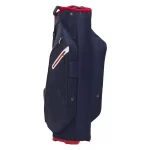 Waterproof Cart Bag
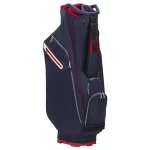 Staff Cart Bag
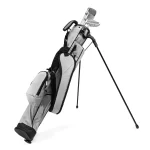 Classic Sunday Carry Bag
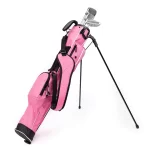 Ultra-Light Sunday Bag
 Custom Golf Headcovers Set
 Golf Bag Rain Cover
 Golf Cooler Bag
Need custom golf bags? Contact us for OEM/ODM quotes — MOQ 100pcs, FOB Xiamen.