Picture this: you’re on the 14th hole at Pebble Beach, the sky cracks open, and rain starts pouring sideways across the fairway. Your playing partners scramble for cover, but your golf bag — and everything inside it — needs to stay bone-dry for the remaining five holes. The difference between a ruined round and a memorable one? The waterproofing technology engineered into your golf bag’s fabric.
For product managers, material engineers, and B2B buyers in the golf equipment industry, selecting the right waterproofing solution isn’t just about keeping clubs dry — it’s about balancing performance, durability, cost, and environmental compliance across diverse global markets. With 22 years of golf bag manufacturing experience since 2004, we’ve sourced and tested every major waterproofing technology across 200+ brands in 100+ countries. This guide breaks down exactly how the three dominant technologies compare.
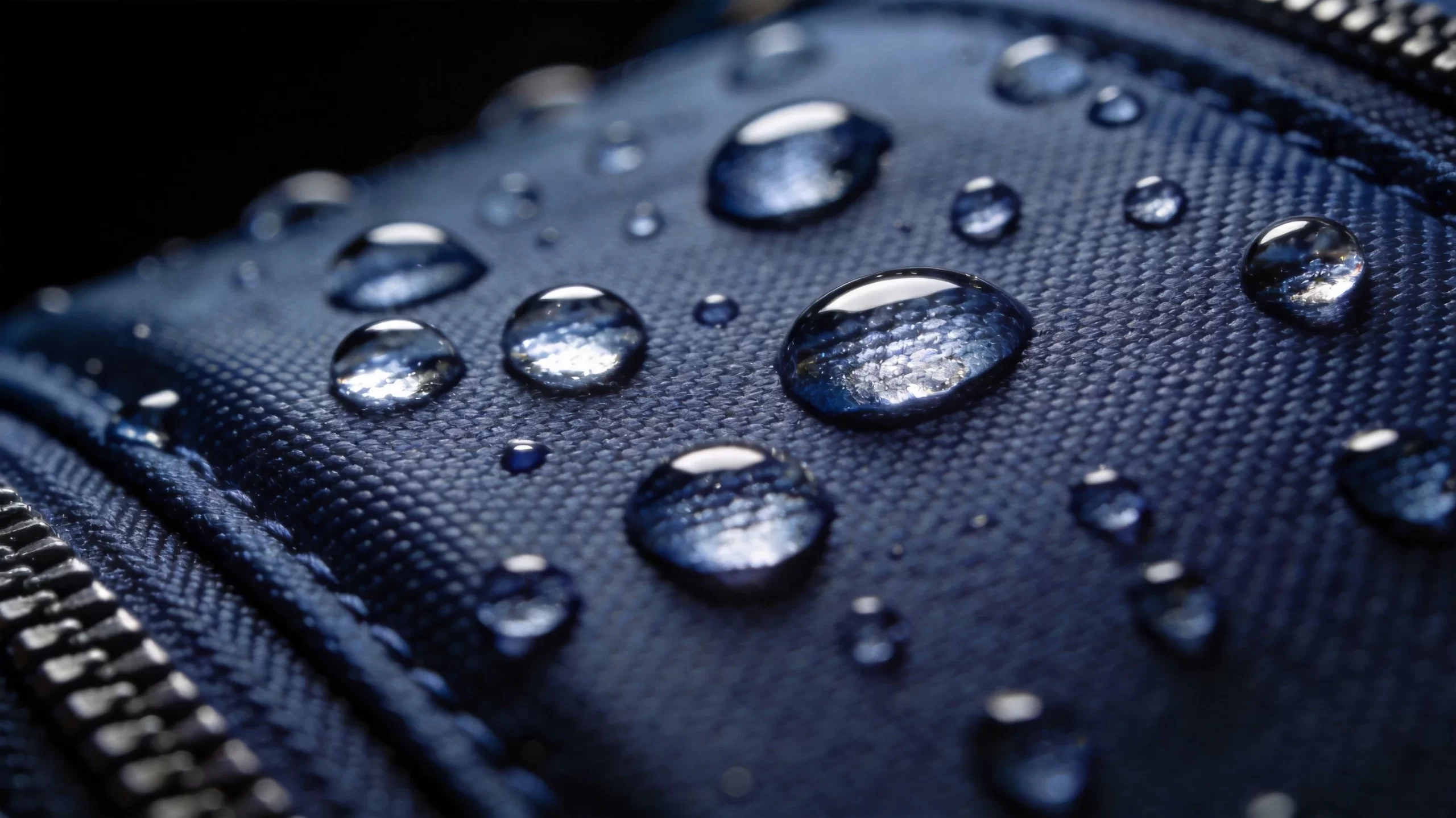
Hydrophobic coating technology: water beads form perfect spheres on treated golf bag fabric, demonstrating effective waterproof protection
Why Waterproofing Matters More Than You Think in Golf Bags
Golf is uniquely exposed to the elements. Unlike most consumer products, a golf bag operates in conditions ranging from morning dew on grass to torrential downpours, salt air at coastal courses, and UV-baked heat in desert climates. According to the USGA Rules of Golf, players are expected to continue play in most weather conditions, making equipment protection essential.
The financial stakes are significant. A set of premium golf clubs can exceed $3,000, and moisture damage to graphite shafts, grip adhesives, and electronic components (GPS units, rangefinders) can cost hundreds in repairs. Beyond club protection, waterproofing directly impacts:
- Product warranty claims: Waterproof failure accounts for 15–20% of warranty issues in mid-range golf bags
- Brand reputation: A single viral video of a “waterproof” bag leaking can damage brand credibility for years
- Market differentiation: Premium brands like Titleist and TaylorMade leverage waterproofing technology as a key selling point
- Regulatory compliance: EU REACH and California Prop 65 regulations increasingly restrict certain waterproofing chemicals
Understanding the technical differences between waterproofing technologies helps you make informed sourcing decisions — whether you’re launching an entry-level private label line or competing in the luxury segment.
Technology #1: Coated Nylon (PU Coating)
How It Works
Polyurethane (PU) coating is applied as a liquid polymer layer to the back face of nylon fabric (typically 420D–1680D base). During the coating process, the PU slurry is spread evenly across the fabric substrate using a knife-over-roll or knife-over-table coater, then cured in a temperature-controlled oven at 120–160°C. The result is a continuous polymer film that bonds mechanically with the nylon weave, creating a waterproof barrier.
Key Technical Specifications:
- Hydrostatic Pressure Rating: 5,000–10,000 mm H₂O (standard); up to 15,000 mm H₂O with multi-layer application
- Taber Abrasion Resistance: 3,000–5,000 cycles (H-18 wheel, 1kg load) before coating degradation
- Low-Temperature Flexibility: Maintains flexibility down to -20°C; becomes stiff below -30°C
- UV Stability: Moderate — PU coatings degrade after approximately 500 hours of QUV accelerated weathering without UV stabilizers
- Weight Addition: 80–150 g/m² depending on coating thickness
- Environmental Compliance: Generally REACH-compliant; solvent-based PU may contain trace DMFa (regulated under REACH Annex XVII)
PU-coated nylon remains the industry workhorse for good reason. It offers an excellent cost-to-performance ratio and is compatible with high-speed manufacturing processes. Most mid-range golf bags from major brands use PU-coated nylon as their primary waterproofing layer.
The technology’s main limitation is breathability — PU coatings create a fully impermeable barrier that traps moisture vapor inside the bag. This is less critical for golf bags than for wearable waterproof garments, but it can contribute to interior mildew if bags are stored while damp. Multi-layer PU coatings improve water resistance but add weight and reduce fabric drape, which matters for lightweight walking bag designs.
Technology #2: TPU Membrane Lamination
How It Works
Thermoplastic Polyurethane (TPU) membrane represents the next evolution in waterproof fabric technology. Unlike PU coating, TPU membranes are manufactured as standalone thin films (10–50 μm thick) with precisely engineered microstructures. These membranes are then laminated to the base fabric using either a flame lamination process or a solvent-free adhesive lamination process.
The key innovation is the membrane’s microporous structure — billions of microscopic pores per square centimeter, each approximately 0.1–1.0 μm in diameter. These pores are small enough to prevent liquid water droplets from penetrating (water droplets are typically 100–3,000 μm), yet large enough to allow water vapor molecules to escape. This is the “waterproof-breathable” principle.
Key Technical Specifications:
- Hydrostatic Pressure Rating: 10,000–20,000 mm H₂O (standard); high-performance variants reach 30,000 mm H₂O
- Taber Abrasion Resistance: 8,000–15,000 cycles — significantly more durable than PU coatings
- Low-Temperature Flexibility: Maintains flexibility down to -40°C; excellent cold-weather performance
- UV Stability: Excellent — TPU chemistry inherently resists UV degradation; less than 10% strength loss after 1,000 hours QUV testing
- Weight Addition: 30–80 g/m² — lighter than equivalent PU coatings
- Breathability (MVTR): 5,000–15,000 g/m²/24h depending on membrane type
- Environmental Compliance: Solvent-free lamination process; REACH-compliant; Prop 65-compliant; OEKO-TEX® certifiable
TPU membrane technology dominates the premium segment of the market. Brands like Titleist and Sun Mountain have adopted TPU laminated fabrics for their top-tier waterproof lines. The technology’s superior durability also means longer product lifespans, supporting brands’ sustainability narratives.
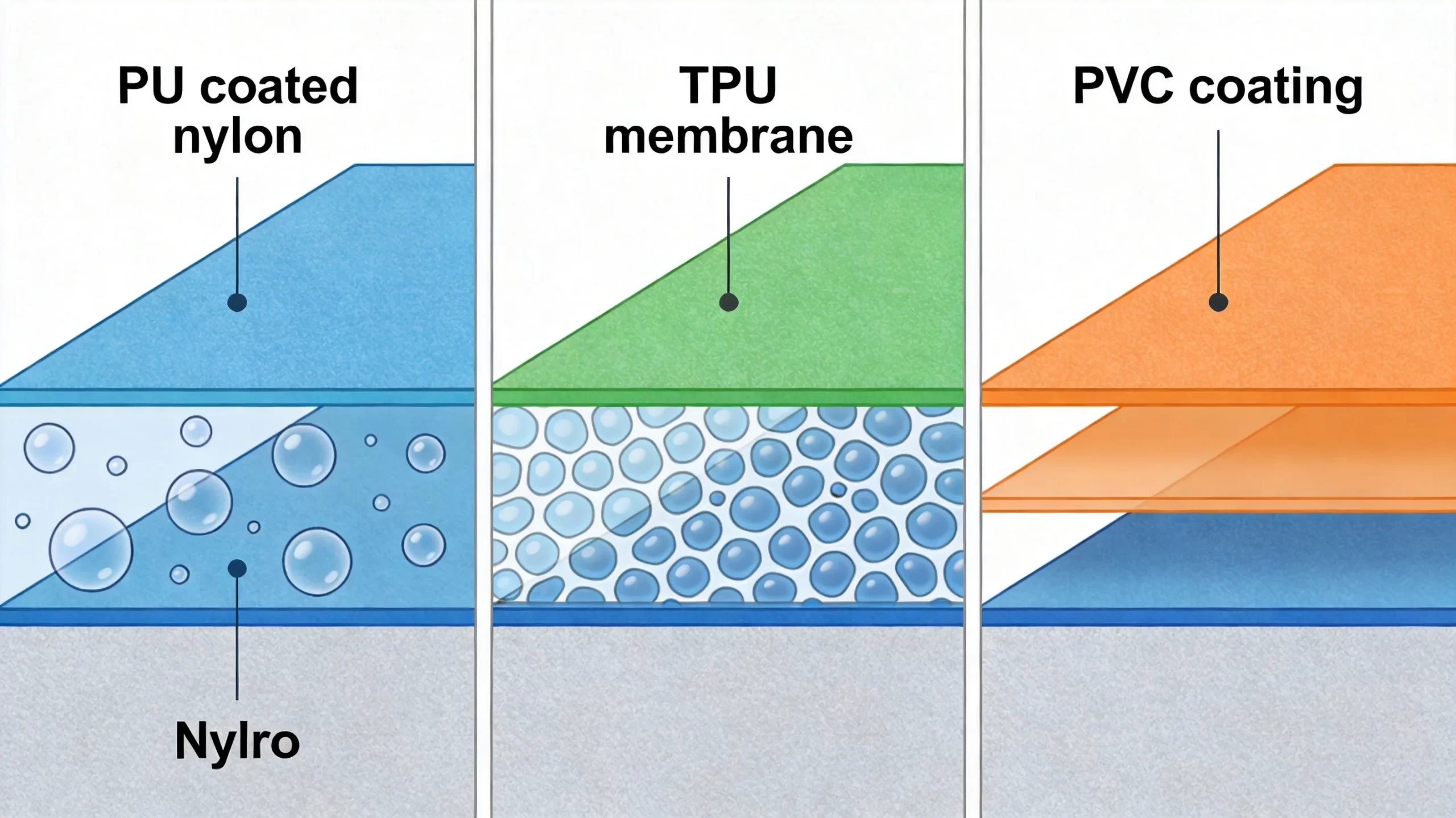
Cross-section comparison: PU coated nylon, TPU membrane laminate, and PVC coating layer structures
The primary trade-off is cost — TPU membranes cost 2–3x more per square meter than standard PU coatings. However, when you factor in the reduced failure rate, longer product warranty periods, and premium positioning advantages, the total cost of ownership often favors TPU for mid-to-high-end product lines.
Technology #3: PVC Coating
How It Works
Polyvinyl Chloride (PVC) coating is the oldest and most straightforward waterproofing technology. PVC resin is mixed with plasticizers (typically phthalates or newer alternatives), stabilizers, and pigments, then applied to fabric using a paste coating method. The coated fabric passes through a curing oven where the PVC fuses into a continuous, flexible film.
PVC coatings are inherently waterproof due to the dense, non-porous nature of the cured vinyl layer. The coating thickness can be easily adjusted by changing the paste application rate, making it simple to achieve different waterproofing levels.
Key Technical Specifications:
- Hydrostatic Pressure Rating: 3,000–8,000 mm H₂O (standard); thick coatings can reach 12,000 mm H₂O
- Taber Abrasion Resistance: 1,500–3,000 cycles — lowest among the three technologies
- Low-Temperature Flexibility: Becomes brittle below -10°C to -15°C; plasticizer migration accelerates cracking in cold climates
- UV Stability: Poor to moderate — PVC degrades and yellows after 300–400 hours QUV exposure; requires heavy UV stabilizer packages
- Weight Addition: 150–300 g/m² — heaviest option due to high coating weight
- Environmental Compliance: Increasingly restricted — many phthalate plasticizers are on REACH SVHC list; Prop 65 listed; being phased out in EU markets and several US states
PVC’s advantage is pure economics — it costs 40–60% less than PU coating and 70–80% less than TPU membrane per square meter. For ultra-budget golf bags targeting price-sensitive markets, PVC remains competitive.
However, the environmental writing is on the wall. The EPA’s increasing scrutiny of PVC manufacturing and the EU’s Restriction of Hazardous Substances (RoHS) directive make PVC an increasingly risky choice for brands with global distribution. Several major retailers, including Dick’s Sporting Goods, have publicly committed to reducing PVC in their product lines.
Comprehensive Performance Comparison
The following table presents a head-to-head comparison across all critical performance parameters:
| Performance Parameter | Coated Nylon (PU) | TPU Membrane | PVC Coating |
|---|---|---|---|
| Hydrostatic Pressure (mm H₂O) | 5,000–10,000 | 10,000–20,000 | 3,000–8,000 |
| Taber Abrasion (cycles) | 3,000–5,000 | 8,000–15,000 | 1,500–3,000 |
| Low-Temp Flexibility | -20°C | -40°C | -10°C to -15°C |
| UV Stability (QUV hours) | ~500 hrs | ~1,000+ hrs | ~300–400 hrs |
| Weight (g/m² added) | 80–150 | 30–80 | 150–300 |
| Breathability (MVTR) | None (impermeable) | 5,000–15,000 g/m²/24h | None (impermeable) |
| Material Cost (relative) | 1.0x (baseline) | 2.0–3.0x | 0.4–0.6x |
| REACH Compliance | ✓ Standard | ✓ Standard | ⚠ Restricted (phthalates) |
| Prop 65 Compliance | ✓ Standard | ✓ Standard | ⚠ Requires testing |
| Manufacturing Complexity | Low | Medium-High | Low |
Cost-Performance-Compliance Matrix
For product managers balancing the three competing priorities, here’s how each technology maps to market segments:
| Market Segment | Recommended Technology | Target FOB Cost Impact | Key Competitive Advantage |
|---|---|---|---|
| Entry-Level ($50–100 retail) | PVC or Light PU Coating | +$2–4 per bag | Price competitiveness; adequate for occasional use |
| Mid-Range ($100–250 retail) | PU Coated Nylon (multi-layer) | +$5–8 per bag | Reliable waterproofing; strong cost-performance ratio |
| Premium ($250–500 retail) | TPU Membrane Laminate | +$10–18 per bag | Superior performance; brand differentiation; warranty support |
| Luxury ($500+ retail) | TPU + DWR Face Treatment | +$15–25 per bag | Maximum protection; premium hand feel; sustainable positioning |
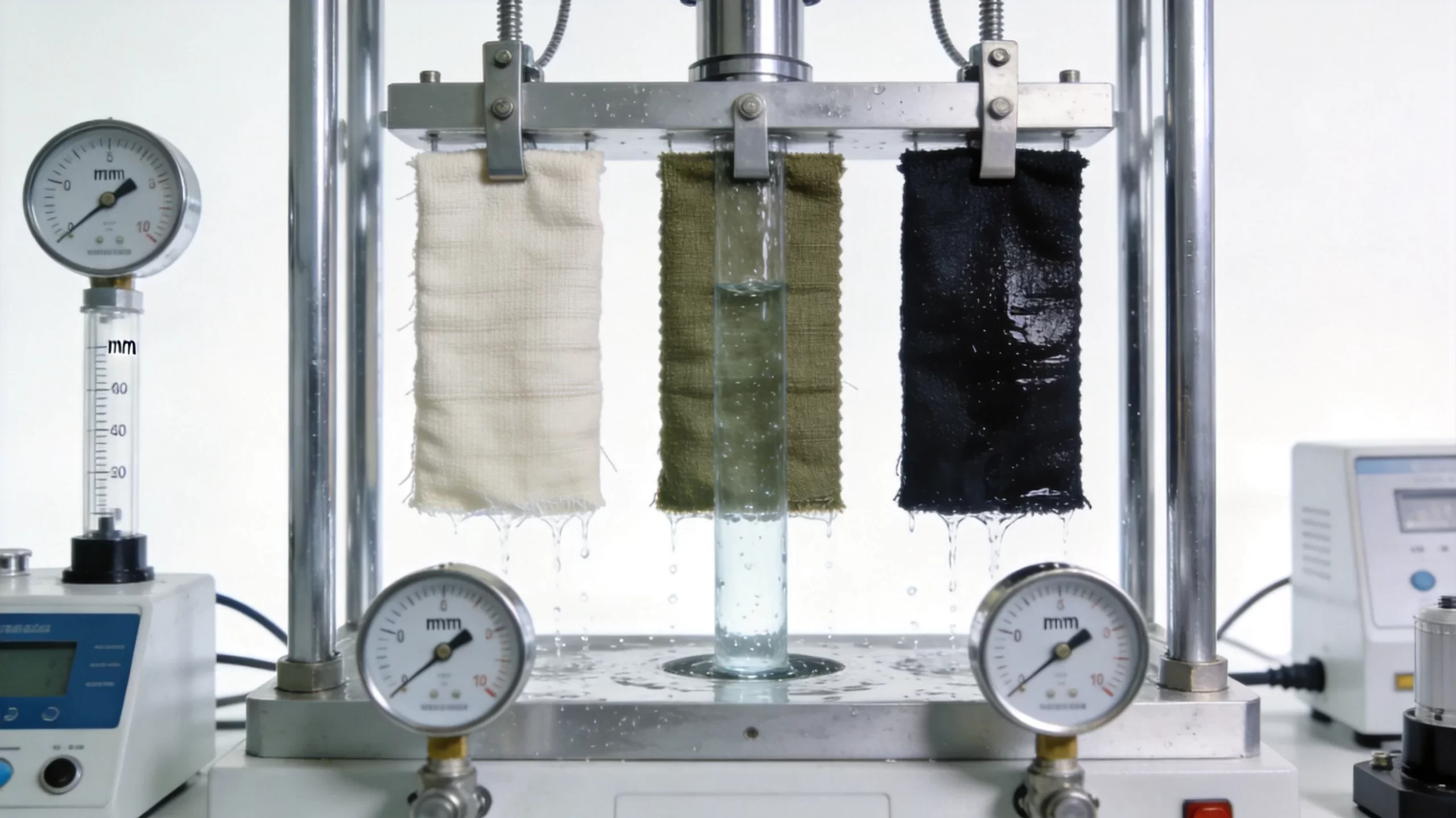
Hydrostatic pressure testing in our QC laboratory — every waterproof fabric batch is tested to verify performance specifications
Waterproofing Recommendations by Use Case
🏌️ Entry-Level / Promotional Golf Bags
Recommended: PVC coating at 200–300 g/m² or light single-layer PU coating at 50–80 g/m²
Why: At this price point, basic water splash resistance is sufficient. PVC provides adequate protection for occasional rain exposure. Target 3,000–5,000 mm H₂O hydrostatic rating. Ensure Prop 65 testing if selling in California markets.
🏌️ Mid-Range / Branded Retail Golf Bags
Recommended: Multi-layer PU coating at 100–150 g/m² on 600D–840D nylon base
Why: This is the sweet spot for value-conscious consumers who expect reliable waterproofing. Two-pass coating with a 5,000–8,000 mm H₂O rating handles most real-world conditions. Pair with waterproof YKK zippers and sealed seams for complete system waterproofing.
🏌️ Premium / Tour-Grade Golf Bags
Recommended: TPU membrane lamination (25–40 μm) on 420D–600D ripstop nylon
Why: Tour players and serious amateurs demand guaranteed protection regardless of conditions. TPU membranes deliver 10,000–15,000 mm H₂O protection with minimal weight penalty. The superior abrasion resistance extends bag life — critical when justifying premium pricing. Brands like Vessel and Honma use this tier of technology.
🌧️ Extreme Weather / All-Season Golf Bags
Recommended: TPU membrane + DWR (Durable Water Repellent) face treatment + waterproof seam sealing
Why: For bags marketed as fully waterproof systems, a multi-barrier approach is essential. The TPU membrane handles hydrostatic pressure; the DWR face treatment prevents face fabric saturation (which adds weight and reduces breathability); sealed seams eliminate the most common failure point. Target 15,000+ mm H₂O with full seam sealing.
Emerging Waterproofing Technologies
The golf bag waterproofing landscape continues to evolve. Here are the technologies gaining momentum:
DWR (Durable Water Repellent) Treatments
DWR is a surface treatment applied to the face fabric that causes water to bead and roll off. Modern C0 (non-fluorinated) DWR treatments, based on dendrimer or silicone chemistry, achieve water repellency ratings of 90–100 on the AATCC spray test without PFAS chemicals. DWR doesn’t replace membrane waterproofing but extends the functional life of the waterproof system by preventing face fabric wet-out.
Nano-Coatings
Silica-based nanocoatings create a hydrophobic surface at the molecular level, with contact angles exceeding 150° (superhydrophobic). While still expensive for full-bag application, nano-coatings show promise for high-wear areas like zipper garages and pocket openings. Current R&D focuses on improving coating durability to withstand abrasion.
Solvent-Free PU Coatings
New generation solvent-free PU coating systems eliminate DMFa and other harmful solvents from the coating process. These 100% solid-content coatings achieve comparable waterproofing performance to traditional solvent-based systems while meeting the strictest environmental standards. The transition cost is moderate (10–15% premium over solvent-based PU), making this an accessible upgrade.
Bio-Based TPU
Several chemical companies have developed TPU formulations derived from renewable feedstocks (castor oil, corn-based diols). Bio-based TPU maintains identical performance to petroleum-based TPU while reducing carbon footprint by 30–50%. This aligns with the broader sustainable golf bag manufacturing trend.
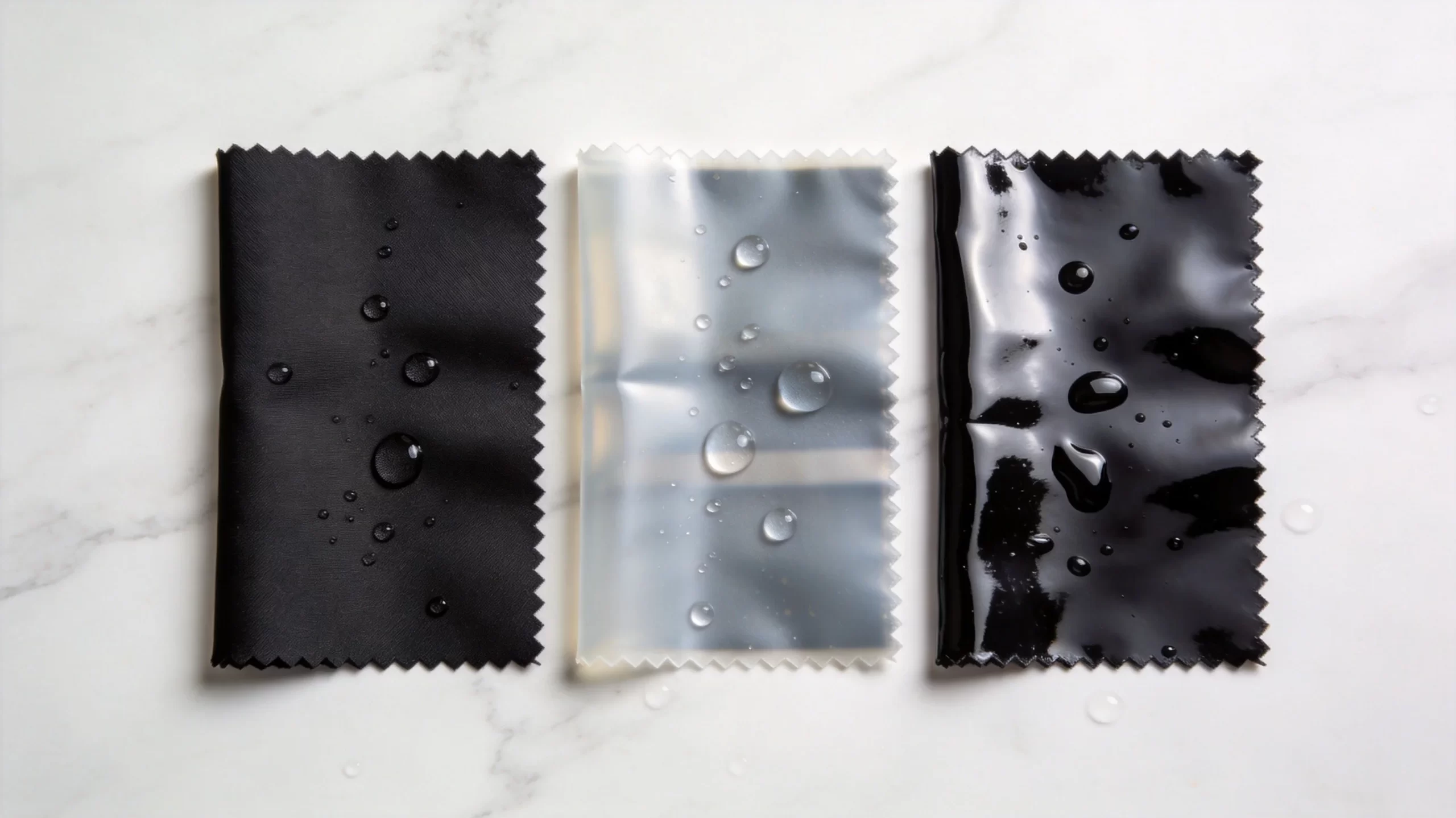
Fabric sample comparison: left — coated nylon with matte PU finish; center — TPU membrane laminate with subtle sheen; right — PVC coating with characteristic glossy surface
Quality Testing: What Buyers Should Require
Regardless of which technology you specify, your quality assurance protocol should include these standardized tests, as referenced in our golf bag quality testing guide:
| Test Standard | What It Measures | Minimum Acceptable (Mid-Range) |
|---|---|---|
| ISO 811 / AATCC 127 | Hydrostatic pressure resistance | 5,000 mm H₂O |
| ASTM D3884 (Taber) | Abrasion resistance of coating | 3,000 cycles to coating failure |
| ISO 7854 | Flex cracking resistance at low temperature | No cracking at -20°C, 50,000 flexes |
| AATCC 22 (Spray Test) | Surface water repellency | Rating 80 (for DWR-treated fabrics) |
| ASTM G154 (QUV) | UV weathering resistance | 500 hours with <20% strength loss |
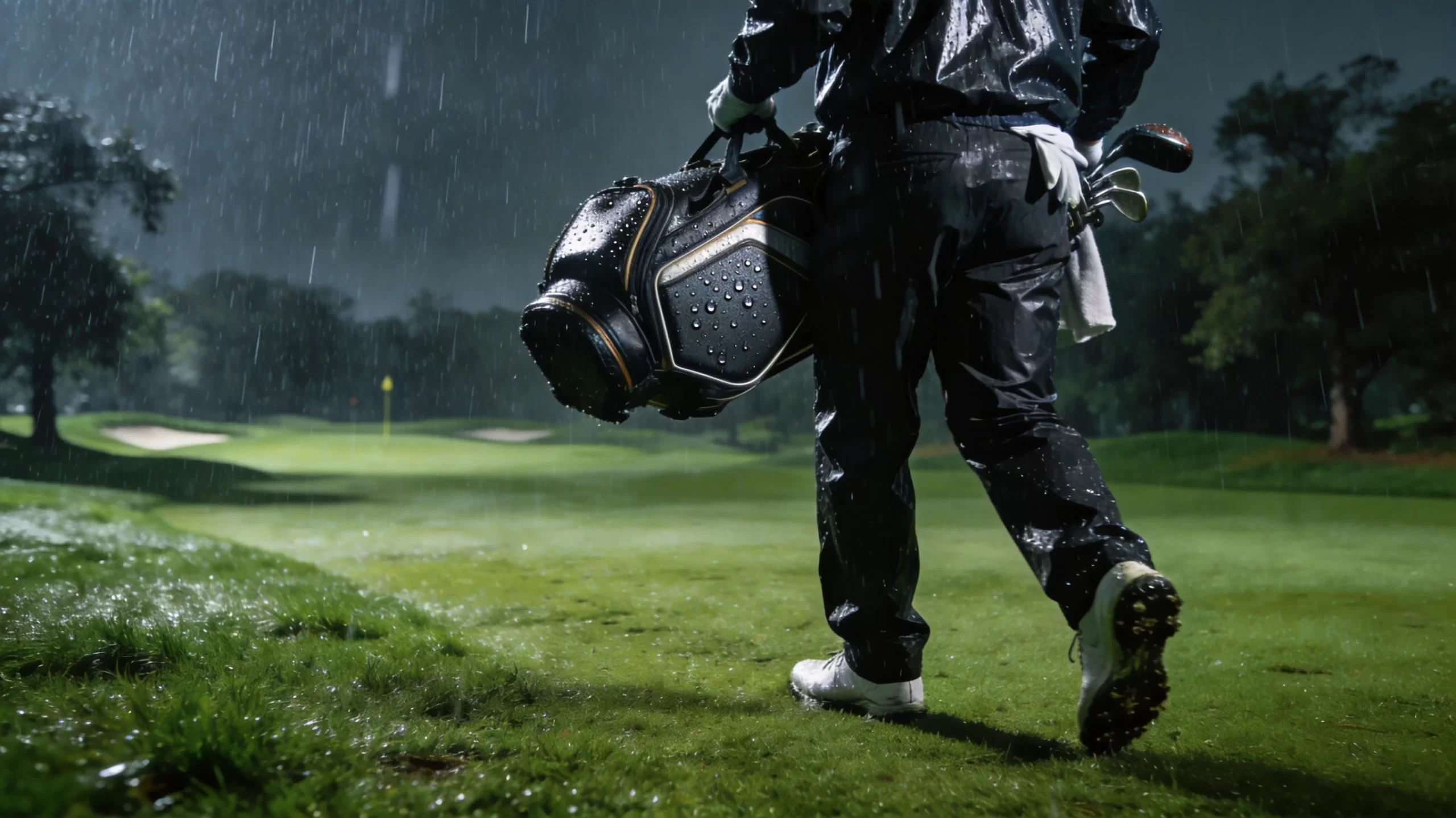
Real-world conditions: premium waterproof golf bags protect equipment during play in challenging weather
Frequently Asked Questions
1. What is the best waterproofing technology for golf bags?
For most commercial applications, PU-coated nylon offers the optimal balance of performance and cost. For premium lines where maximum protection and durability are paramount, TPU membrane lamination delivers superior waterproofing (10,000–20,000 mm H₂O), better abrasion resistance, and full environmental compliance. PVC remains viable only for ultra-budget segments with limited rain exposure expectations.
2. How long does waterproofing last on a golf bag?
PU coatings typically last 3–5 years under normal use before showing degradation (cracking, delamination). TPU membranes last 5–8+ years due to superior UV and abrasion resistance. PVC coatings generally last 2–3 years before plasticizer migration causes brittleness and cracking. Actual lifespan depends heavily on UV exposure, storage conditions, and frequency of wet/dry cycling.
3. Is PVC waterproofing safe for golf bags?
Traditional PVC coatings containing ortho-phthalate plasticizers (DEHP, DBP, BBP) are restricted under EU REACH and California Prop 65 regulations. Modern PVC alternatives using DOTP or DINCH plasticizers are compliant but still face consumer perception challenges and retailer restrictions. For brands targeting EU, California, or environmentally conscious markets, PU or TPU alternatives are strongly recommended.
4. What is the difference between water-resistant and waterproof golf bags?
Water-resistant bags (typically DWR-treated or lightly PU-coated) repel light rain and splashes but will eventually wet through under sustained rainfall or hydrostatic pressure. Waterproof bags (with membrane lamination or heavy PU coating rated 5,000+ mm H₂O) prevent water penetration even under sustained rain and standing water conditions. The distinction matters for warranty claims and marketing accuracy.
5. How does waterproofing affect golf bag weight?
TPU membranes add the least weight (30–80 g/m²), followed by PU coatings (80–150 g/m²), with PVC coatings adding the most (150–300 g/m²). For a standard cart bag using approximately 3–4 m² of fabric, the waterproofing layer adds between 90 g (TPU) and 1,200 g (PVC) to total bag weight. For lightweight stand bags where every gram matters, TPU’s weight advantage is particularly significant.
Ready to Engineer Your Next Waterproof Golf Bag?
With 22 years of golf bag manufacturing expertise and partnerships across 200+ brands in 100+ countries, we help you select and implement the right waterproofing technology for your target market and price point. MOQ starts at just 100 pieces — perfect for testing new product lines.
Get a Free Quote → [email protected]
WhatsApp: +86 17750020688 | FOB Xiamen | Since 2004
Conclusion: Choosing the Right Technology for Your Market
The “best” waterproofing technology doesn’t exist in isolation — it depends entirely on your target market, price positioning, environmental compliance requirements, and brand promise. Here’s the decision framework we recommend to our B2B partners:
- Price-sensitive markets (Southeast Asia, South America, Africa): PVC or light PU coating delivers adequate performance at the right cost point
- Mass-market retail (US big-box, European sporting goods chains): Multi-layer PU coating hits the performance/price sweet spot
- Premium and tour segments (specialty golf retailers, pro shops): TPU membrane lamination justifies the premium price with demonstrably superior performance
- Regulated markets (EU, California): Avoid PVC unless using non-phthalate plasticizers; prefer PU or TPU for compliance simplicity
For product managers navigating these decisions, our engineering team provides material consultation as part of our OEM/ODM service. Whether you need help selecting fabric specifications for a new private label program or upgrading waterproofing on an existing product line, we’re here to help. Explore our materials guide to learn more about golf bag fabric options.
References: (1) ISO 811:2018 — Textile fabrics: Determination of resistance to hydrostatic pressure; (2) U.S. EPA — Polyvinyl Chloride (PVC) Manufacturing Regulations, 40 CFR Part 61; (3) AATCC Technical Manual — Water Repellency: Spray Test (AATCC 22); (4) European Chemicals Agency (ECHA) — REACH Annex XVII Restriction Entries for Phthalates.
Related Products
Explore our manufacturing capabilities in this category:
 Premium Stand Bag
 Ultra-Light Stand Bag
 Hybrid Stand Bag
 Rain-Resistant Stand Bag
 Premium Tour Cart Bag
 Lightweight Cart Bag
 Waterproof Cart Bag
 Staff Cart Bag
Need custom golf bags? Contact us for OEM/ODM quotes — MOQ 100pcs, FOB Xiamen.