
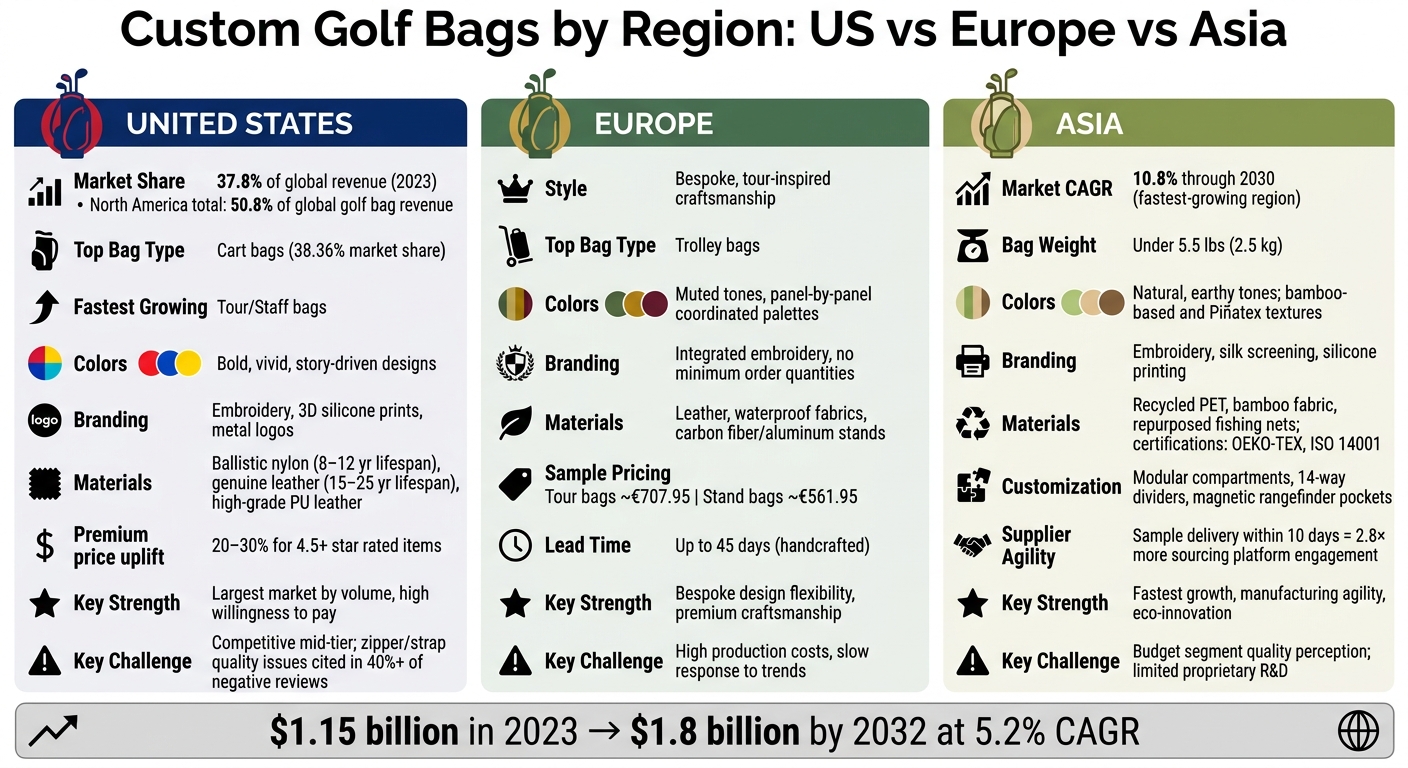
Custom golf bags are more than just functional gear – they reflect personal style and regional preferences. The global market, valued at $1.15 billion in 2023, is expected to grow to $1.8 billion by 2032 with a steady CAGR of 5.2%. But growth varies by region, shaped by local tastes in color, branding, materials, and customization.
Key Insights:
- United States: Dominates with 37.8% of global revenue in 2023. Bold designs, premium materials like ballistic nylon, and high customization (e.g., ergonomic features) are in demand. Cart bags lead the market.
- Europe: Known for understated elegance and bespoke craftsmanship. Muted tones, leather, and panel-by-panel personalization are preferred. Trolley bags are especially popular.
- Asia: Lightweight, eco-conscious designs dominate. Materials like bamboo and recycled PET are trending. Quick, small-batch production is a key strength.
Manufacturers must tailor their designs to regional priorities – durability in the U.S., refined aesthetics in Europe, and sustainability in Asia. With the market rapidly expanding, understanding these preferences is vital for success.
1. US Custom Golf Bag Aesthetics
In the US, golf bags are no longer just functional tools; they’ve become a way for golfers to showcase their personality and style. As Howard from Keep Perfect Golf explains:
"For the avid golfer, your golf bag is more than just a practical golf accessory – it’s an extension of your personal style and brand on the golf course."
This shift in perception has fueled bold, eye-catching designs that reflect individual and cultural identity.
Color Preferences
Vivid, story-driven designs are a hallmark of custom golf bags in the US. A standout example is the collaboration between Swag Golf and U.S. Ryder Cup captain Keegan Bradley, which resulted in bags featuring iconic American symbols and references to legendary golf courses.
Branding Style
American golfers prefer branding that stands out. Techniques like embroidery, screen printing, leather patches, metal logos, and 3D silicone prints are common choices. These methods allow for striking, multi-dimensional designs. Custom bags are particularly popular for corporate events and tournaments, where uniform branding across stand bags, cart bags, and travel bags helps create a cohesive team look.
Material Choices
When it comes to materials, durability and style are top priorities. Ballistic nylon is favored for its ability to last 8–12 years or more, while high-grade PU leather offers a sleek, low-maintenance option. Genuine leather, known for its luxurious feel, can last 15–25 years with proper care. However, in humid areas like the Southeast, nylon with taped seams is often preferred over PU leather, which may peel under such conditions.
Customization Depth
American golfers demand a high level of customization, tailoring their bags with features like dedicated putter wells, rangefinder pockets, and ergonomic suspension systems. In 2023, cart bags led the market with a 38.36% share, while tour/staff bags became the fastest-growing segment. Quality hardware, especially reliable YKK zippers, is a must-have, as over 40% of negative reviews cite zipper issues.
These preferences highlight the balance between style, functionality, and durability that defines the US custom golf bag market.
2. European Custom Golf Bag Aesthetics
European golf bag designs are known for their focus on craftsmanship and a subtle elegance. These bags often showcase a tour-inspired style, relying on high-quality materials, precise construction, and personalized detailing.
Color Preferences
European designs lean heavily toward muted tones and timeless color schemes. Instead of flashy graphics or bold imagery, golfers in Europe prefer clean, coordinated palettes. A unique feature in these designs is the panel-by-panel approach, where each section of the bag uses distinct yet complementary muted hues to create a cohesive and polished look.
Branding Style
Branding in European custom golf bags reflects a professional tour-level standard. Companies like Bridge Golf (UK) have gained recognition for their bags featured on prestigious tours, including the DP World Tour and the Ladies European Tour. The focus is on integrating logos and embroidery directly into the bag’s design rather than simply attaching them to pre-made products.
As BagLab explains:
"Every custom bag is hand-made to order, we do not use a stock bag and simply logo it. We have no minimum order quantity. You can choose the colour of every panel and the positioning of every logo or embroidery."
This approach highlights the European dedication to fully customized, high-quality designs. The choice of premium materials further reinforces this ethos.
Material Choices
Leather remains a top choice for premium European golf bags due to its durability and sophisticated appearance. For more casual or everyday use, materials like nylon and canvas provide lightweight strength. Given Europe’s often unpredictable weather, waterproof fabrics are a popular option. Additionally, modern stand bags are increasingly incorporating carbon fiber or aluminum tripod stands, which reduce weight while maintaining structural integrity.
Customization Depth
In Europe, trolley bags are especially popular, reflecting a preference for walking the course. Customization goes far beyond adding logos, extending to details like zipper pullers, towel rings, umbrella holders, and other hardware that complements the bag’s primary material. For example, custom tour bags from specialists like BagLab start at around €707.95, while stand bags are priced near €561.95.
3. Asian Custom Golf Bag Aesthetics
Asian golf bag designs emphasize simplicity and ease of use. They often feature lightweight builds, with bags weighing less than 5.5 lbs (2.5 kg), making them perfect for urban lifestyles and aligning with the preferences of eco-conscious consumers. This focus influences color choices, branding, materials, and customization trends in the region.
Color Preferences
In Asia, natural and earthy colors dominate, reflecting the growing environmental awareness among consumers. For example, manufacturers in Vietnam are using bamboo-based fabrics, while those in the Philippines incorporate pineapple leaf fiber (Piñatex). These materials create subtle, textured finishes that stand out. Adding to this, Thai silk details lend a regional flair, making the designs distinctly local.
Branding Style
Branding in the Asian market serves dual purposes: personal expression and corporate identity. Techniques like embroidery, silk screening, leather patches, metal logos, and silicone printing are tailored to reflect regional aesthetics. This approach helps brands, clubs, and corporate clients establish a unique identity that contrasts with Western branding styles.
Material Choices
Sustainability is at the forefront of material selection. Asian manufacturers are turning to eco-friendly options like recycled PET from Thailand’s textile industry and fishing nets repurposed from Andaman Sea communities. These durable materials are not only environmentally responsible but also highly sought after, especially when backed by certifications like OEKO-TEX or ISO 14001, which significantly boost supplier interest.
Customization Depth
Vietnamese and Thai manufacturers are leading the way in customization, offering quick, small-batch production. Suppliers who can deliver samples within 10 days experience 2.8× more engagement on sourcing platforms. Beyond aesthetics, buyers frequently request practical features like modular compartments, 14-way dividers, magnetic rangefinder pockets, and ambidextrous layouts. These functional and flexible designs highlight Asia’s ability to adapt quickly to market demands, setting a benchmark for global trends.
SBB-ITB-4FA7E8B
Pros and Cons by Region
Custom Golf Bags by Region: US vs Europe vs Asia
This section highlights the main strengths and challenges associated with different regional markets for golf bags.
| Region | Key Advantage | Main Disadvantage |
|---|---|---|
| United States | The largest market by volume, with North America accounting for 50.8% of global golf bag revenue in 2023. Consumers show strong willingness to invest in durable, high-quality products, with premium-rated items (4.5+ stars) commanding a 20–30% price premium. | The mid-tier segment is highly competitive. Even minor quality issues, such as broken zippers or torn straps, can quickly harm a product’s reputation. |
| Europe | Renowned for bespoke craftsmanship and cutting-edge design. Brands benefit from panel-by-panel personalization with no minimum order quantities, allowing significant creative flexibility. | Higher production costs and extended lead times – handcrafted products often require up to 45 days – reduce the ability to respond quickly to trends. |
| Asia | The fastest-growing market globally, with a projected CAGR of 10.8% through 2030. Manufacturers excel in agility, offering quick small-batch runs and flexible customization at competitive prices. | Budget segments face ongoing perceptions of lower quality, and a focus on OEM/ODM production over proprietary R&D limits long-term brand differentiation. |
Each region reflects distinct priorities and trade-offs that influence market strategies. In the U.S., durability concerns in budget options push buyers toward premium-quality bags. Europe’s strength in bespoke design comes with the challenge of longer production times, often around 45 days. Meanwhile, Asia’s growth and manufacturing flexibility stand in contrast to lingering quality concerns in lower-cost segments.
Conclusion
These regional insights highlight how golf bag designs need to align with cultural values and playing styles. For instance, American golfers prioritize durability and practicality, Europeans gravitate toward refined craftsmanship and bespoke aesthetics, while Asian markets favor trend-driven designs with a focus on versatility. This diversity in preferences requires manufacturers to adopt tailored approaches for different markets.
When targeting multiple regions, a one-size-fits-all design simply doesn’t work. A golf bag designed for a U.S. corporate client might feature reinforced zippers, ergonomic straps, and eco-friendly nylon, while a European boutique buyer would likely prefer hand-stitched leather panels and intricate personalization.
Manufacturers that provide flexible OEM/ODM services – offering a range of materials, logo techniques, hardware options, and bag types – are better positioned to meet these varied demands. Companies like Keep Perfect Golf (https://keepperfectgolf.com), with over 15 years of factory-direct experience and partnerships with over 200 global clients, serve as a prime example of how production partners can deliver regionally tailored custom bags.
With the global golf bag market projected to surpass $1.8 billion by 2032, growing at a rate of 5.2%, manufacturers who not only recognize regional preferences but also understand the reasons behind them will be best placed to capitalize on this growth.
よくあるご質問
Which bag type should I choose for my region (cart, stand, or trolley)?
The perfect golf bag largely hinges on your playing habits and the environment you’re in. If you’re navigating walking courses or tackling hilly terrains, a lightweight stand bag with built-in legs is a smart choice – it’s easy to carry and keeps your bag upright when you stop. On the other hand, if you rely on a cart or trolley, a cart bag provides extra storage and better stability, making it ideal for those setups.
Traveling frequently or dealing with unpredictable weather? A durable hard case or premium bag can offer the protection your gear needs. Ultimately, the right bag comes down to balancing your mobility preferences with the typical conditions you face on the course.
What materials hold up best in humid or rainy climates?
Materials like nylon with waterproof coatings, sealed seams, and fabrics such as Gore-Tex® or TPU-coated textiles are perfect for humid or rainy weather. These options provide strong water resistance and long-lasting durability, ensuring your gear stays protected even when the weather takes a turn.
How can I make a custom bag look premium without over-branding it?
To achieve a high-end aesthetic without overwhelming branding, aim for minimalist designs featuring clean lines and premium materials like leather or carbon fiber details. Incorporate subtle touches of personalization, such as understated monograms or refined embroidery, to add a unique flair. Stick to elegant color schemes, favoring monochrome or muted tones, and avoid oversized logos. Instead, choose small, tasteful branding to keep the look polished and sophisticated.

 日本語
日本語  English
  Português
  Français
  Español