
When sourcing custom golf bags from overseas manufacturers, two fundamental production models dominate the global supply chain: OEM (Original Equipment Manufacturer) そして ODM (Original Design Manufacturer). While newcomers to the golf equipment industry sometimes use these terms interchangeably, they represent fundamentally different approaches to product development — each with distinct cost structures, lead times, intellectual property implications, and strategic advantages for your brand.
According to a 2024 report by the Sporting Goods Manufacturers Association, the global golf bag market reached $2.8 billion in retail value, with custom and private-label golf bags growing at a CAGR of 6.3% since 2020. The shift toward private-label and custom-branded golf bags is particularly pronounced in North America and Europe, where retail chains, e-commerce platforms, and direct-to-consumer brands collectively account for over 35% of new product launches in the category.
For brands evaluating manufacturing partnerships in China’s Quanzhou industrial region — recognized as one of the world’s largest bag manufacturing hubs — choosing between OEM and ODM is the single most consequential sourcing decision you will make. This guide provides a definitive framework for making that choice, drawing on production data from Keep Perfect Golf — a golf bag manufacturer established in 2004, with 22 years of continuous operation, serving over 200 brands, and exporting finished products to more than 100 countries across six continents.
Key Industry Statistic: According to China National Light Industry Council data, Quanzhou and the surrounding Fujian province account for approximately 28% of China’s total bag and luggage export volume, making it the single largest concentration of bag manufacturing capability in the world.
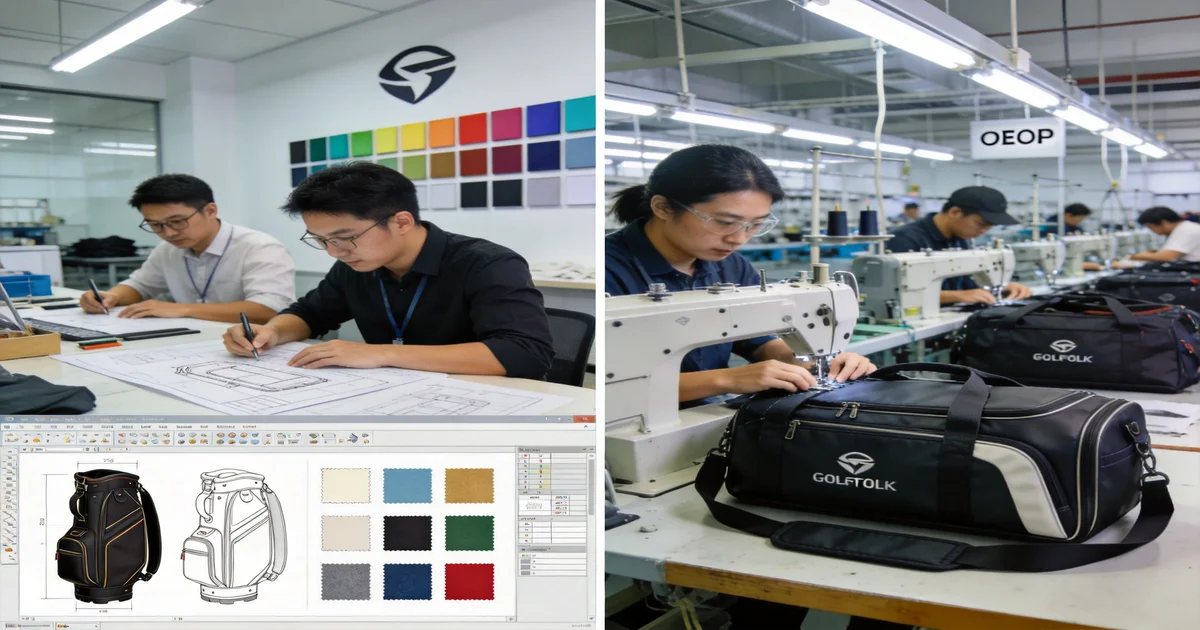
What Is OEM Golf Bag Manufacturing?
In an OEM (Original Equipment Manufacturer) arrangement, you — the brand owner — provide complete design specifications, including technical drawings (CAD files), material selections, colorways, hardware details, logo placement, branding requirements, and performance specifications. The manufacturer’s role is purely executional: sourcing materials per your bill of materials (BOM), cutting patterns, sewing components, performing quality control, and shipping finished goods strictly according to your design blueprint.
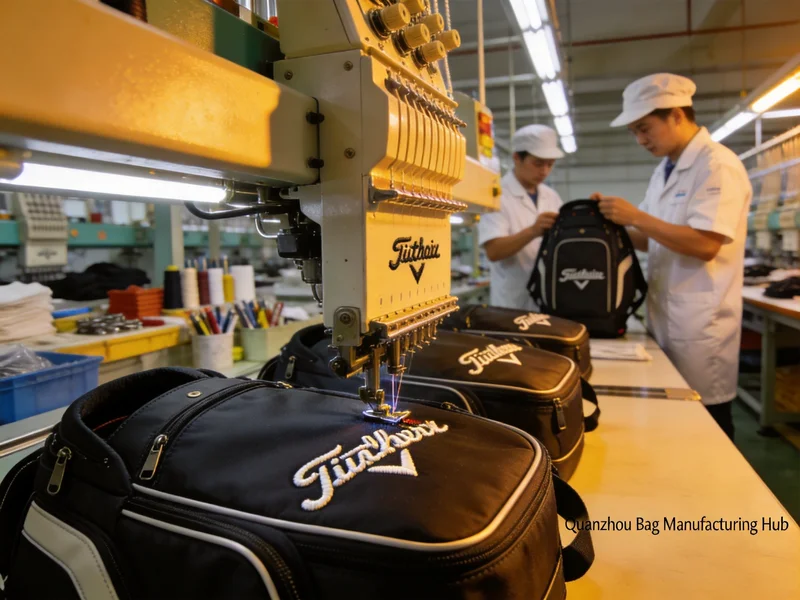
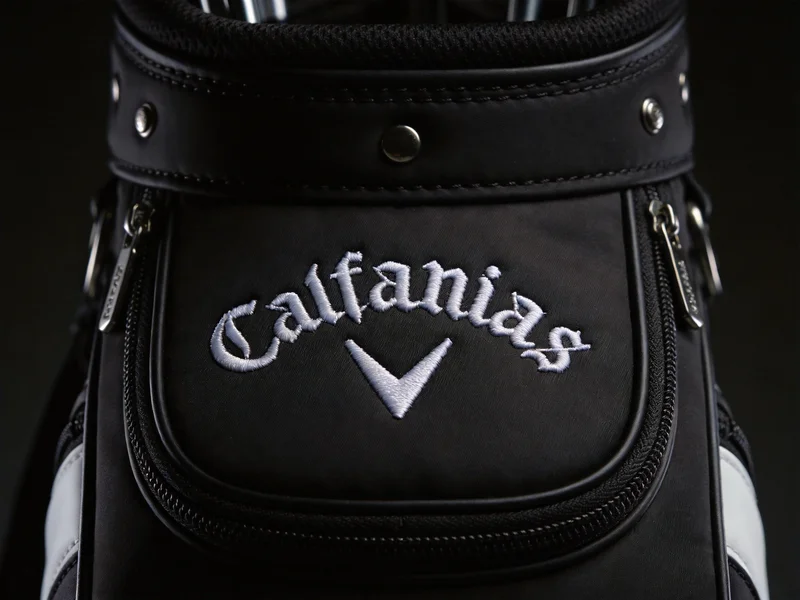
OEM is the manufacturing model of choice for established golf brands like Titleist, TaylorMade, and Callaway, whose bag designs are integral to their brand identity and intellectual property portfolios. These companies maintain in-house design teams of 10-50 industrial designers and treat bag architecture as a competitive differentiator that cannot be outsourced to a factory’s design department.
As a golf bag manufacturer based in Quanzhou — the Fujian province city recognized globally as a premier bag manufacturing hub — Keep Perfect Golf operates a dedicated OEM division that has produced over 500,000 custom-designed golf bags annually for brands across North America, Europe, Japan, South Korea, Australia, and the Middle East.
Key Advantages of OEM Golf Bag Manufacturing
- Complete design control and brand differentiation: Every stitch, panel, pocket configuration, divider system, and material choice reflects your brand’s unique identity and product vision.
- Full intellectual property ownership: Your designs remain proprietary — the factory cannot offer them, nor any derivative designs, to competing brands.
- Specification precision: Ability to specify exact materials (e.g., 1680D ballistic nylon, YKK #10 zippers, EVA-molded bases, carbon fiber reinforcement), constructions, and performance features tailored to your target market.
- Competitive moat: Products that cannot be easily replicated by other brands sourcing from the same factory or region.
- Long-term cost efficiency: Once tooling and patterns are established, per-unit costs decrease significantly with volume — typically 15-25% lower than equivalent ODM products at scale above 500 units.
OEM Investment Requirements and Considerations
OEM requires more upfront investment in design and development. Brands should budget for detailed tech pack creation, prototype iterations (typically 2-3 rounds at 10-18 days each), mold/tooling fabrication for custom hardware, and a thorough understanding of manufacturing constraints. The following table outlines typical OEM project parameters at Keep Perfect Golf:
| Parameter | OEM Specification |
|---|---|
| Minimum Order Quantity (MOQ) | 100 pieces per colorway |
| Sample Lead Time | 10–18 days per prototype round |
| Bulk Production Lead Time | 45–75 days after sample approval |
| Shipping Terms | FOB Xiamen, China |
| Design Input Required | Full tech pack (CAD files, material specs, bill of materials) |
| Prototype Rounds | 2–3 rounds typically required |
| IP Protection | Full — all designs remain brand property under NDA |
| Development Cost Range | $2,000–$8,000 depending on complexity |
For brands entering the OEM process for the first time, Keep Perfect Golf’s OEM/ODM service team provides engineering support to translate conceptual designs into manufacturable specifications, reducing typical development cycles by 20-30% through design-for-manufacturing (DFM) optimization.
What Is ODM Golf Bag Manufacturing?
In an ODM (Original Design Manufacturer) arrangement, the manufacturer provides pre-designed product platforms that you can customize with your branding elements — logo placement (embroidery, screen print, debossing, heat transfer), color selections, hardware finishes, and sometimes minor modifications to pocket configurations or strap systems. The core design belongs to the factory, and the same platform may be offered to multiple brands with superficial cosmetic differences.
ODM is the preferred entry model for brands launching into the golf bag market for the first time, retailers developing house brands, e-commerce sellers expanding product lines, and companies in the promotional and corporate gifting segment. According to industry sourcing data from Alibaba and Global Sources, approximately 40% of new golf bag brands launch with ODM products before transitioning to OEM as their market presence and revenue grow.
Key Advantages of ODM Golf Bag Manufacturing
- Faster time-to-market: Pre-existing designs reduce the total development timeline from months to weeks — critical for brands targeting seasonal selling windows.
- Lower initial investment: No tech pack creation, pattern development, or extensive prototyping costs required.
- Proven designs: Factory platforms are already tested for manufacturability, structural durability, and consumer acceptance.
- Lower MOQ flexibility: ODM orders can often start at smaller quantities for market testing and initial inventory builds.
- Reduced development risk: Established designs with known production outcomes minimize costly errors and material waste.
ODM Parameters and Limitations
| Parameter | ODM Specification |
|---|---|
| Minimum Order Quantity (MOQ) | 100 pieces (standard); lower for select platforms |
| Sample Lead Time | 7–12 days (existing platform customization) |
| Bulk Production Lead Time | 35–60 days after approval |
| Shipping Terms | FOB Xiamen, China |
| Customization Scope | Logo, colors, hardware finishes, minor feature modifications |
| Design Ownership | Factory retains platform design rights |
| Exclusivity | Limited — same platform may serve multiple brands in different markets |
| Development Cost Range | $500–$2,000 (customization setup only) |
Keep Perfect Golf maintains a catalog of 50+ ODM golf bag platforms spanning tour cart bags, stand bags, Sunday bags, staff bags, and travel bags — all available for branding customization. Explore our current Premium Tour Cart Bag そして Premium Stand Bag platforms as examples of ODM-ready designs with extensive customization options. Additional platforms include the Waterproof Cart Bag for wet-climate markets and the Tour Staff Bag with Wheels for premium brand positioning.
OEM vs ODM: Head-to-Head Comparison for B2B Buyers
The following comparison matrix provides a comprehensive decision framework for B2B buyers evaluating manufacturing models for golf bag sourcing from China:
| Decision Factor | OEM | ODM |
|---|---|---|
| Design Control | Complete — 100% brand owned | Limited — factory platform base |
| IP Protection | Full ownership and exclusivity | Shared platform, brand customization only |
| Time to Market | 60–120 days (incl. development) | 35–60 days |
| Development Cost | $2,000–$8,000 (tooling, samples) | $500–$2,000 (customization only) |
| Per-Unit Cost (500 pcs) | $28–$65 depending on specs | $22–$48 depending on platform |
| Per-Unit Cost (1,000+ pcs) | $22–$48 (economies of scale) | $18–$38 (limited reduction) |
| MOQ | 100 pieces per colorway | 100 pieces (flexible) |
| Best For | Established brands, proprietary designs | New brands, market testing, promotions |
| Scalability | High — economies of scale apply | Moderate — platform constraints exist |
| Long-Term Brand Value | High — unique products build equity | Moderate — differentiation limited |
Industry Benchmark: Based on Keep Perfect Golf’s production data across 200+ brand partnerships, OEM orders above 500 units achieve a per-unit cost reduction of 15-25% compared to ODM equivalents, while delivering exclusive designs that command 20-40% higher retail price points.
This data is drawn from Keep Perfect Golf’s production records spanning two decades of manufacturing excellence from their Quanzhou base — strategically located 90km from FOB Xiamen port for efficient global shipping with competitive ocean freight rates to all major markets.
Strategic Decision Framework: 5 Factors for Choosing OEM vs ODM
The optimal choice between OEM and ODM depends on five critical business factors. B2B buyers should evaluate each dimension systematically before committing to a manufacturing partner.
1. Brand Maturity and Design Capability
If your company has an established design team with golf bag engineering expertise, OEM delivers maximum competitive advantage through fully proprietary products. If you are a startup, a traditional retailer expanding into golf accessories, or a promotional products company, ODM provides a lower-risk entry point with proven designs. Many of today’s successful golf bag brands — including several top-10 direct-to-consumer brands in the US market — started with ODM platforms and transitioned to fully custom OEM designs as revenue and market understanding grew.
2. Intellectual Property Strategy
Brands investing in proprietary technology (e.g., integrated GPS pockets, proprietary strap suspension systems, patented divider configurations, proprietary waterproofing membranes) must use OEM to protect their innovations. ODM platforms, by nature, cannot offer exclusive IP protection for their base designs — a critical limitation for technology-driven brands.
3. Volume Projections and Unit Economics
At volumes below 300 units per order, ODM’s lower development costs provide better unit economics and cash flow management. Above 500 units, OEM’s reduced per-unit pricing and design exclusivity deliver superior ROI over a 12-month horizon. Keep Perfect Golf’s manufacturing facility optimizes production scheduling to support both models efficiently, with dedicated production lines for OEM and ODM orders.
4. Compliance and Market Requirements
Different export markets impose varying compliance requirements that influence manufacturing model selection:
- European Union: REACH chemical safety standards for all materials in contact with skin
- United States: CPSIA compliance for lead content; California Proposition 65 for chemical disclosures
- Japan: JIS-standard material testing; formaldehyde limits for textile components
- Australia: ACCC safety standards for sporting goods; mandatory recall reporting
OEM allows precise material specification to meet these requirements from the design stage, eliminating costly retrofits. ODM platforms may require compliance verification and potential material substitutions per destination market. Keep Perfect Golf maintains certifications covering all major international compliance frameworks, ensuring products ship smoothly to any destination.
5. Timeline and Capital Availability
If speed-to-market is the priority (e.g., launching before the spring golf season or a major trade show), ODM’s shorter development cycle of 35-60 days provides a decisive advantage. If your timeline allows 3-4 months for development and you have capital allocated for tooling investment, OEM builds a stronger long-term competitive position with products unique to your brand.
The Hybrid OEM/ODM Strategy: An Emerging Best Practice
An increasing number of golf bag brands are adopting a hybrid OEM/ODM approach: using ODM platforms for seasonal promotional products, gift-with-purchase items, and market-testing launches, while investing in OEM development for flagship product lines and core brand collections.
This strategy allows brands to maintain a steady product pipeline with minimal development lead time through ODM, while simultaneously building proprietary flagship products that define brand identity through OEM. It also enables market testing of new segments with lower financial risk before committing to full OEM development, and optimizes capital allocation across product portfolio tiers.
Keep Perfect Golf supports this hybrid model seamlessly, with dedicated teams managing both OEM and ODM production under the same quality control system — ensuring consistent quality standards regardless of the manufacturing model chosen. Our custom golf headcovers and accessories lines are also available in both OEM and ODM configurations.
Why Quanzhou Is the Global Hub for Golf Bag Manufacturing
Quanzhou, located in Fujian Province in southeastern China, has established itself as one of the world’s premier bag manufacturing clusters. The city’s competitive advantages for golf bag sourcing include:
- Complete supply chain ecosystem: All raw materials — nylon, polyester, leather, EVA foam, plastic hardware, metal zippers, and textile components — sourced within a 50km radius, reducing material lead times by 40-60% compared to factories in other regions.
- Skilled workforce: Generations of sewing and bag-making expertise concentrated in the region, with average production worker experience exceeding 8 years.
- Port proximity: FOB Xiamen port access — one of China’s busiest container ports, just 90km from Quanzhou factories, enabling same-day container loading and competitive ocean freight rates.
- Export infrastructure: Established logistics networks shipping to 100+ countries with experience in US, EU, Japanese, Australian, and Middle Eastern customs documentation.
- Compliance expertise: Factories experienced with US CPSIA, EU REACH, Japanese JIS, and Australian ACCC import regulations, reducing compliance-related delays.
Keep Perfect Golf, operating since 2004 in this manufacturing ecosystem, leverages these regional advantages while maintaining independent quality assurance standards that have earned the trust of over 200 global brands — from startup DTC labels to Fortune 500 sporting goods companies.
Common OEM vs ODM Misconceptions in Golf Bag Sourcing
Several persistent myths cloud the OEM/ODM decision for golf bag buyers. Addressing these misconceptions helps B2B purchasers make more informed sourcing decisions:
Myth 1: “ODM quality is inferior to OEM.” This is categorically false. At Keep Perfect Golf, both OEM and ODM products pass through identical quality control processes at our quality control facility. The difference lies in design ownership, not construction quality. ODM platforms are often developed using the same premium materials and construction techniques as OEM products — the factory has equal incentive to maintain quality across all production models.
Myth 2: “OEM is always more expensive.” While OEM carries higher development costs, the per-unit cost at volume (500+ pieces) is often comparable to or lower than ODM, because OEM eliminates the platform licensing component built into ODM pricing. Total cost of ownership over a 24-month product lifecycle frequently favors OEM for brands with consistent volume.
Myth 3: “ODM designs are copycats.” Reputable manufacturers like Keep Perfect Golf invest significantly in original ODM platform design. These platforms are protected by the factory’s own design IP and developed through extensive market research, consumer testing, and manufacturing optimization. They represent legitimate product innovation — not copies of branded designs.
Frequently Asked Questions (FAQ)
What is the minimum order quantity (MOQ) for OEM golf bag manufacturing?
Keep Perfect Golf’s standard MOQ is 100 pieces per colorway for both OEM and ODM orders. This threshold balances manufacturing efficiency with accessibility for growing brands and market-testing launches. For first-time OEM clients, we recommend starting with 100-200 pieces per colorway to validate market response before scaling.
How long does it take to develop a custom OEM golf bag from concept to delivery?
A typical OEM project timeline is: tech pack finalization (1-2 weeks), first sample (10-18 days), revision samples if needed (10-18 days each), sample approval (1 week), bulk production (45-75 days), and shipping from FOB Xiamen (2-4 weeks by sea). Total lead time from concept to delivery is approximately 90-150 days, depending on design complexity and revision rounds.
Can I start with ODM and transition to OEM later?
Absolutely. Approximately 40% of Keep Perfect Golf’s current OEM clients began with ODM orders. The transition is seamless — your market insights, customer feedback, and sales data from ODM products directly inform OEM design specifications, creating a data-driven development process that reduces the risk of custom design investments.
What shipping terms does Keep Perfect Golf offer?
Standard shipping terms are FOB Xiamen, China. The factory is located in Quanzhou, Fujian Province, approximately 90km from Xiamen port. CIF, DDP, EXW, and other Incoterms are available upon request based on order volume and destination country.
Does Keep Perfect Golf provide intellectual property protection for OEM designs?
Yes. All OEM designs remain the exclusive intellectual property of the client. Keep Perfect Golf executes comprehensive NDA agreements before project initiation and maintains strict design segregation in production and ERP systems. The factory’s compliance framework includes IP protection protocols verified by independent third-party audits.
What is the cost difference between OEM and ODM golf bags at various volumes?
At the 100-300 piece range, OEM development costs (tooling, sampling) add approximately $2,000-$8,000 upfront, making per-unit ODM pricing more economical for small orders. At 500+ pieces, OEM per-unit costs typically drop 15-25% below ODM equivalents. At 1,000+ pieces, the gap widens further as OEM benefits from full economies of scale. Request a detailed quotation through WhatsApp (+86 177 5002 0688) or email (cco@junyuanbags.com) for project-specific pricing.
Related Resources
Related Products
Explore our manufacturing capabilities in this category:
 Premium Stand Bag
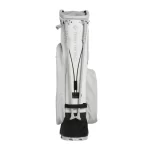 Ultra-Light Stand Bag
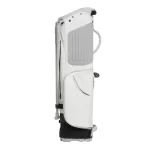 Hybrid Stand Bag
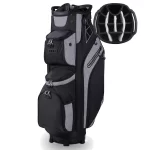 Rain-Resistant Stand Bag
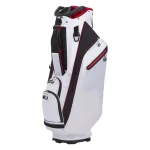 Premium Tour Cart Bag
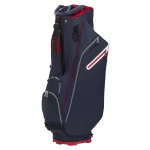 Lightweight Cart Bag
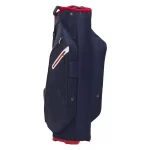 Waterproof Cart Bag
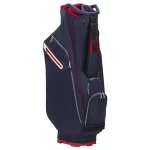 Staff Cart Bag
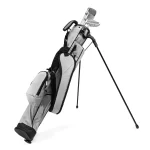 Classic Sunday Carry Bag
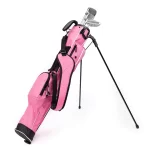 Ultra-Light Sunday Bag
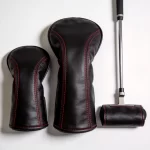 Custom Golf Headcovers Set
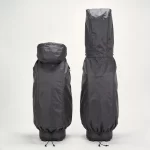 Golf Bag Rain Cover
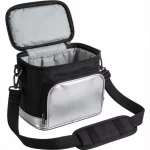 Golf Cooler Bag
Need custom golf bags? Contact us for OEM/ODM quotes — MOQ 100pcs, FOB Xiamen.

 日本語
日本語  English
  Português
  Français
  Español