
When choosing a golf bag, you’ll need to decide between GPS-enabled bags with advanced tech features or classic bags that focus on simplicity and durability. Here’s a quick breakdown:
- GPS Bags: Offer built-in distance tracking, shot analysis, and course mapping. Ideal for golfers who prioritize data and play with carts. Prices start at $250 and can exceed $500.
- Classic Bags: Lightweight, durable, and easy to maintain. Great for walkers or those who prefer a straightforward design. Prices range from $50 to $350.
Key Differences
- Weight: GPS bags are heavier due to electronics, while classic bags are lighter.
- Features: GPS bags integrate tech tools; classic bags focus on physical storage and organization.
- Cost: GPS bags are pricier; classic bags are more budget-friendly.
Your choice depends on your play style. Walkers may prefer lighter classic bags, while cart users might benefit from the tech in GPS bags.
What Are Traditional Golf Bags?
Traditional golf bags are designed to carry clubs, balls, and other gear using straightforward features like straps, pockets, and dividers. Over time, they’ve transitioned from heavy leather constructions to lightweight synthetic materials such as nylon, polyester, and Cordura®. This shift has significantly reduced their weight – from 7–10 lbs in the past to as little as 1.5 lbs for minimalist models. Below, we’ll explore the features that define these bags.
"A golf bag is an essential part of any golfer’s gear, not just for carrying clubs and accessories, but also as a reflection of the sport’s heritage and tradition."
Key Features of Traditional Golf Bags
Club Dividers:
Keeping clubs organized is a priority for any golfer. Traditional bags offer divider systems ranging from simple single-compartment designs to advanced 14-way dividers that protect graphite shafts from tangling or wear during transport.
Pocket Systems:
Modern designs come with specialized pockets to hold everything from phones, keys, and wallets to rangefinders and beverages. Some models even include insulated compartments and mesh pockets for wet items. High-end bags can feature up to 8–12 pockets, though this added storage can make them heavier.
Strap and Base Designs:
Stand bags are equipped with retractable, spring-loaded legs made from materials like carbon fiber or aluminum, ensuring stability on uneven surfaces. Cart bags, on the other hand, feature reinforced, slip-resistant bases and strap pass-throughs to keep them secure on riding carts. The dual-strap system, introduced by IZZO in 1991, has become a favorite for evenly distributing weight, reducing strain during long rounds.
Weather Resistance:
To protect gear, many traditional bags now include features like sealed zippers, waterproof linings, and UV-resistant coatings.
When Golfers Use Traditional Golf Bags
Traditional golf bags are ideal for players who value simplicity and affordability. Prices range from around $50 for basic Sunday bags to $350 for premium cart bags, making them a cost-effective choice compared to more tech-heavy alternatives. These bags don’t require charging or software updates, which adds to their appeal.
For walking golfers, stand bags are a popular choice due to their lightweight design (3.5–5.5 lbs when empty) and ergonomic features that reduce fatigue over a full round. Meanwhile, the growing use of push carts has made cart bags a staple for players who want maximum storage without carrying the weight themselves.
Durability is another draw. Traditional bags, free of electronic components, can last 5–10 years with basic care. With 70% of U.S. golf rounds played using riding carts, cart bags remain a common sight. However, a 2024 survey revealed that 35% of golfers regretted their bag choice, often because they felt their bag was either too large for walking or too small for riding.
"Your bag carries everything for 4+ hours. Choose wrong and you’ll feel it on the back nine."
- TSP Research
This traditional style stands in stark contrast to the high-tech features of GPS-enabled golf bags, which we’ll cover next.
SBB-ITB-4FA7E8B
What Are GPS Golf Bags?
Golf bags have come a long way, and GPS-enabled models are changing the way players approach the game while still offering the storage and protection golfers rely on. These bags combine traditional functionality with modern technology, integrating GPS systems, IoT sensors, and mobile connectivity. The result? Real-time data at your fingertips as you play. Beyond holding your clubs, these smart bags provide precise tracking, 3D course mapping, shot recording, and navigation. They’re even equipped with built-in power systems to keep everything running smoothly throughout your round.
The demand for smart golf gear is on the rise. The market is expected to grow by 15% annually through 2027, with over 35% of golfers showing interest in GPS tracking features. Many systems now come pre-loaded with more than 40,000 mapped courses, and they’re updated weekly to reflect changes on these courses.
Features of GPS Golf Bags
GPS golf bags and electric caddies offer a range of high-tech features designed to elevate your game. Many include high-resolution color touchscreens that display course layouts, distances, and potential hazards. These systems provide reliable signals with impressive accuracy, and top-tier models even achieve RTK-level precision.
Connectivity is another highlight. Bluetooth 5.0, WiFi 6, and sometimes even 5G ensure seamless syncing with smartwatches, rangefinders, and mobile apps. This creates a connected ecosystem where all your devices share data effortlessly. Advanced models go even further with features like "Green Reading" to analyze slopes and suggest putting lines, and "Hazard Alerts" to warn you of upcoming bunkers or water hazards.
Power systems are built to last, with integrated battery packs powering the GPS and offering charging ports for phones and other gadgets. Some models, like the Garmin Approach G20 Solar, even include solar panels to extend battery life when exposed to direct sunlight. For those looking for more, GPS-enabled electric trolleys like the MGI AI 500 そして ZIP Navigator are available, typically priced between $1,495 and $1,499.
These features don’t just add convenience – they offer real, on-course advantages.
How GPS Technology Helps Golfers
The benefits of GPS technology on the golf course are clear. These bags provide instant yardages to key points – such as the front, middle, and back of the green, as well as hazards and layup zones – all without needing a direct line of sight, unlike laser rangefinders. This "bird’s eye" perspective helps golfers plan their strategy before choosing their club.
Features like "PlaysLike" distance adjustments go a step further by factoring in elevation, wind, and temperature. For example, a 150-yard uphill shot in cold weather might require more club than the same shot on flat ground during summer.
Shot tracking technology is another game-changer. It automatically records swings and builds a performance database over time. Golfers using this feature often see improvements of around 4.1 shots, as the data reveals actual distances for each club under various conditions. Some systems even suggest clubs based on your historical performance.
"Tagmarshal is a management tool to help us provide an exceptional experience. It’s a lot more powerful than a tool simply for golfers to get themselves around the course."
- Pat Stein, PGA, Director of Golf, Wild Rock Golf Club
For those tackling unfamiliar or complex courses, 3D terrain models and turn-by-turn directions make navigation a breeze. Features like "PinPointer" can even guide you to the pin on blind shots, making these bags especially useful on intricate layouts or resort courses.
GPS Golf Bags vs. Traditional Golf Bags: Direct Comparison
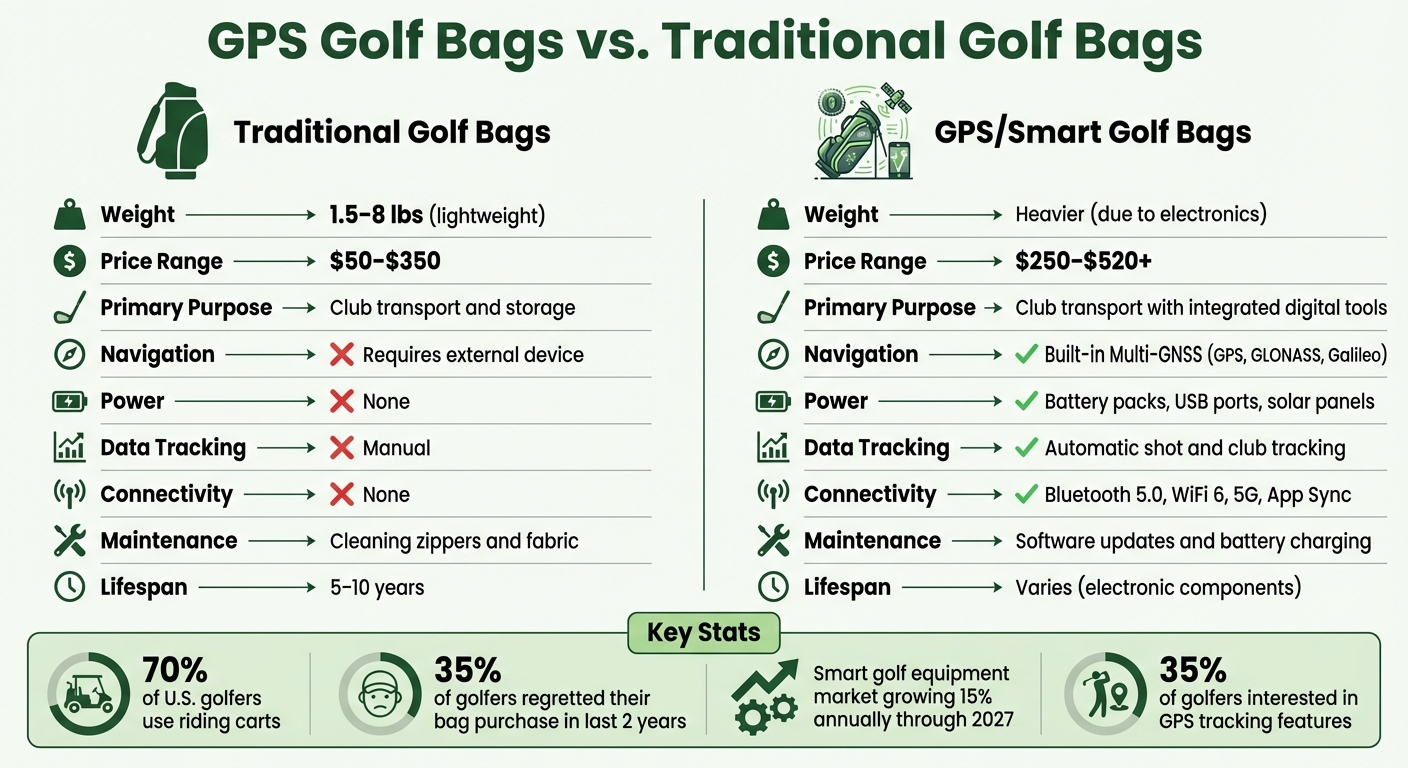
GPS vs Traditional Golf Bags: Features, Weight, and Price Comparison
Feature Comparison
Traditional golf bags focus on physical organization, while GPS bags integrate digital tools for navigation and tracking. With traditional bags, you’ll need a separate device for yardage and course details. GPS bags, on the other hand, combine these functions with built-in multi-constellation GNSS systems (GPS, GLONASS, Galileo), offering precise distance measurements to pins, hazards, and layup zones. These bags often come equipped with rechargeable batteries, USB ports, and even solar panels to keep your devices powered during a round.
| Feature | Traditional Golf Bag | GPS / Smart Golf Bag |
|---|---|---|
| Primary Purpose | Club transport and storage | Club transport with integrated digital tools |
| Navigation | Requires external device | Built-in Multi-GNSS |
| Power | None | Battery packs, USB ports |
| Data Tracking | Manual | Automatic shot and club tracking |
| Connectivity | None | Bluetooth, WiFi, 5G, App Sync |
| Weight | Lighter (1.5–8 lbs) | Heavier due to electronics |
| Maintenance | Cleaning zippers and fabric | Software updates and battery charging |
Weight is a key difference. Traditional bags are lighter, making them ideal for golfers who walk the course. Meanwhile, the added electronics in GPS bags increase their weight and may influence your decision depending on how you play.
Advantages and Disadvantages of Each Type
Traditional bags shine in their simplicity and durability. Without electronics, there’s no need to worry about charging batteries or updating software. They’re also easier to maintain and often last longer – 5 to 10 years for high-quality models from brands like Ping or Titleist. Most issues, like zipper wear, are minor and easy to fix.
GPS bags, however, bring modern convenience. They offer instant yardages, track your performance automatically, and sync with devices like smartwatches or phones via Bluetooth or WiFi. While these features are undeniably appealing, they come with trade-offs: GPS bags are heavier, cost more, and may require electronic repairs or replacements sooner than their traditional counterparts.
| Aspect | Traditional Bags | GPS / Smart Bags |
|---|---|---|
| Pros | Lightweight, simple, reliable, affordable, long-lasting | Real-time data, automatic tracking, built-in power, course navigation |
| Cons | Needs external devices for yardage, lacks performance tracking | Heavier, more expensive, requires charging, potential electronic failures |
Weather resistance is another point of difference. Traditional bags are built to keep your gear dry, while GPS bags use special compartments and TPU-coated materials to shield electronics from water and UV exposure.
Price Differences
The cost disparity between traditional and GPS-enabled bags is notable. Basic traditional bags, such as Sunday bags, start around $50. Stand and cart bags typically range from $150 to $350. GPS bags, packed with tech features like USB ports and battery compartments, fall into a higher price bracket, starting at $250 and reaching up to $520.
For instance, the Callaway Org 14 cart bag retails for $259.99, while the tech-savvy Vessel Lux Cart 2.0 Pro costs about $519. Ultra-premium models, like those made with carbon-fiber, can soar to $1,999. These higher prices reflect the advanced technology and specialized materials required to protect electronic components.
Maintenance costs also differ. While traditional bags mainly face issues like zipper or strap wear, GPS bags may need battery or power bank replacements over time. A 2024 survey revealed that 35% of golfers who purchased a bag in the last two years regretted their choice, often because the bag’s features didn’t match their playing style. This highlights the importance of evaluating whether the extra cost of GPS features aligns with your needs. The next section will explore how to choose the right golf bag for your game.
How to Choose the Right Golf Bag
Think about this: How do you typically play golf? If you’re among the 70% of U.S. golfers who regularly use a cart, a cart bag is probably your best bet. These bags typically weigh between 5 and 8 pounds and come with 8–12 pockets, giving you plenty of storage without being overly cumbersome. On the other hand, if you’re someone who prefers walking the course, a lighter stand bag or a Sunday bag can save your back and shoulders from unnecessary strain over 18 holes.
When it comes to cost, traditional golf bags are relatively affordable. A basic Sunday bag might cost around $50, while premium cart bags can go up to $350. If you already own a rangefinder, you may not need to spend extra on a GPS-enabled bag. Many newer traditional bags now include thoughtful features like magnetic rangefinder pockets and microfiber-lined compartments for easy access to your gear.
Durability is another factor to consider. A high-quality traditional bag can last anywhere from 5 to 10 years, depending on the type. Cart bags often outlast stand bags – lasting around 7 to 10 years – because they’re not subjected to as much wear and tear from being placed on the ground. However, picking the wrong bag can lead to regret. In fact, one survey revealed that 35% of golfers who purchased a bag in the last two years were unhappy with their choice, often because they picked a bag that was either too heavy for walking or too small for riding.
Finally, think about whether you prefer high-tech features or a more classic, no-fuss design. Let’s break down when each type of bag makes sense.
When GPS Golf Bags Make Sense
A GPS golf bag is perfect for players who rely on data to make decisions and play often enough to justify the added expense. If you’re someone who checks yardages several times per hole, tracks performance metrics, or likes syncing game data with your phone or smartwatch, a GPS bag can simplify your routine. Features like automatic shot tracking and club mapping let you analyze your performance after every round.
These bags are especially convenient for golfers who primarily use carts. Since the bag stays on the cart, the added weight of the technology won’t be a problem. Plus, some GPS systems can adjust carry distances in real time based on factors like elevation, temperature, and wind – giving you precision that rivals what the pros use.
While GPS bags are great for tech-savvy players, they’re not for everyone.
When Traditional Golf Bags Are the Better Choice
Traditional golf bags are ideal for beginners, occasional players, or anyone who prefers to keep things simple. If you’re just getting started, a versatile stand bag offers flexibility – you can walk or ride without being locked into one style. And if you decide you need GPS later, you can always add a handheld device or rangefinder.
For golfers who walk the course, traditional bags are a great choice. Their lighter weight makes a big difference over 18 holes. If you often play in wet conditions, look for a bag with waterproof materials and sealed zippers to keep your gear dry. And if you use graphite-shafted clubs, a bag with 14-way full-length dividers can help protect your clubs from tangling or scratching.
Another advantage of traditional bags is their low maintenance. There’s no software to update or batteries to charge, and they’re built to last. Repairs are usually simple – like replacing a strap or fixing a zipper. With regular care, such as cleaning the zippers monthly, you can extend the life of your bag and avoid common issues. For most players, a well-made traditional bag provides everything you need without the added complexity of built-in electronics.
Conclusion
Choosing the right golf bag boils down to your playing style and the features you prioritize. GPS bags come packed with technology like real-time distance tracking, shot analysis, and built-in power systems – perfect for players who rely on data and typically ride carts. On the other hand, traditional bags focus on lightweight designs, durable materials, and practical storage, keeping things simple without the hassle of electronics.
Interestingly, over 35% of golfers have shown interest in smart features like GPS tracking and mobile connectivity, and the smart golf equipment market is expected to grow by 15% annually through 2027. Still, traditional bags continue to hold their ground, thanks to their affordability, versatility, and long-lasting construction.
When it comes to cost, traditional stand bags usually range between $130 and $415, while cart bags are priced around $250 to $475. GPS bags are more expensive, but for those who use their advanced features, the investment can pay off. If you already own a rangefinder or handheld GPS, a traditional bag might cover all your needs without the extra cost. It’s worth balancing these expenses against the potential in-game advantages.
Your choice may also depend on your typical playing conditions. For walkers, a stand bag weighing under 6 lbs can help minimize fatigue. For riders, the integrated tracking in GPS bags may be a game-changer. And for beginners, the simplicity and reliability of a traditional bag might be the best starting point.
よくあるご質問
Do GPS golf bags work without my phone?
Most GPS-enabled golf bags require a connection to an external device, such as a smartphone, to activate their GPS features. They usually can’t function on their own without being paired with a phone or having access to a power source.
How long does a GPS golf bag battery last per round?
A GPS golf bag battery is designed to last through an entire 18-hole round, typically using around 60-70% of its charge. Certain models, especially solar-powered ones, can extend their runtime by recharging in sunny conditions while in use. However, factors like the bag’s features and surrounding environmental conditions can influence overall battery performance.
Can a traditional bag be upgraded with GPS features later?
Traditional golf bags can be equipped with GPS functionality by adding external devices like handheld GPS units or wearable GPS watches. While these options work well, fully integrating GPS technology often means upgrading to a golf bag specifically designed with built-in GPS features. If you prefer to stick with your current bag, you can still enjoy GPS capabilities by attaching compatible accessories.

 日本語
日本語  English
  Português
  Français
  Español