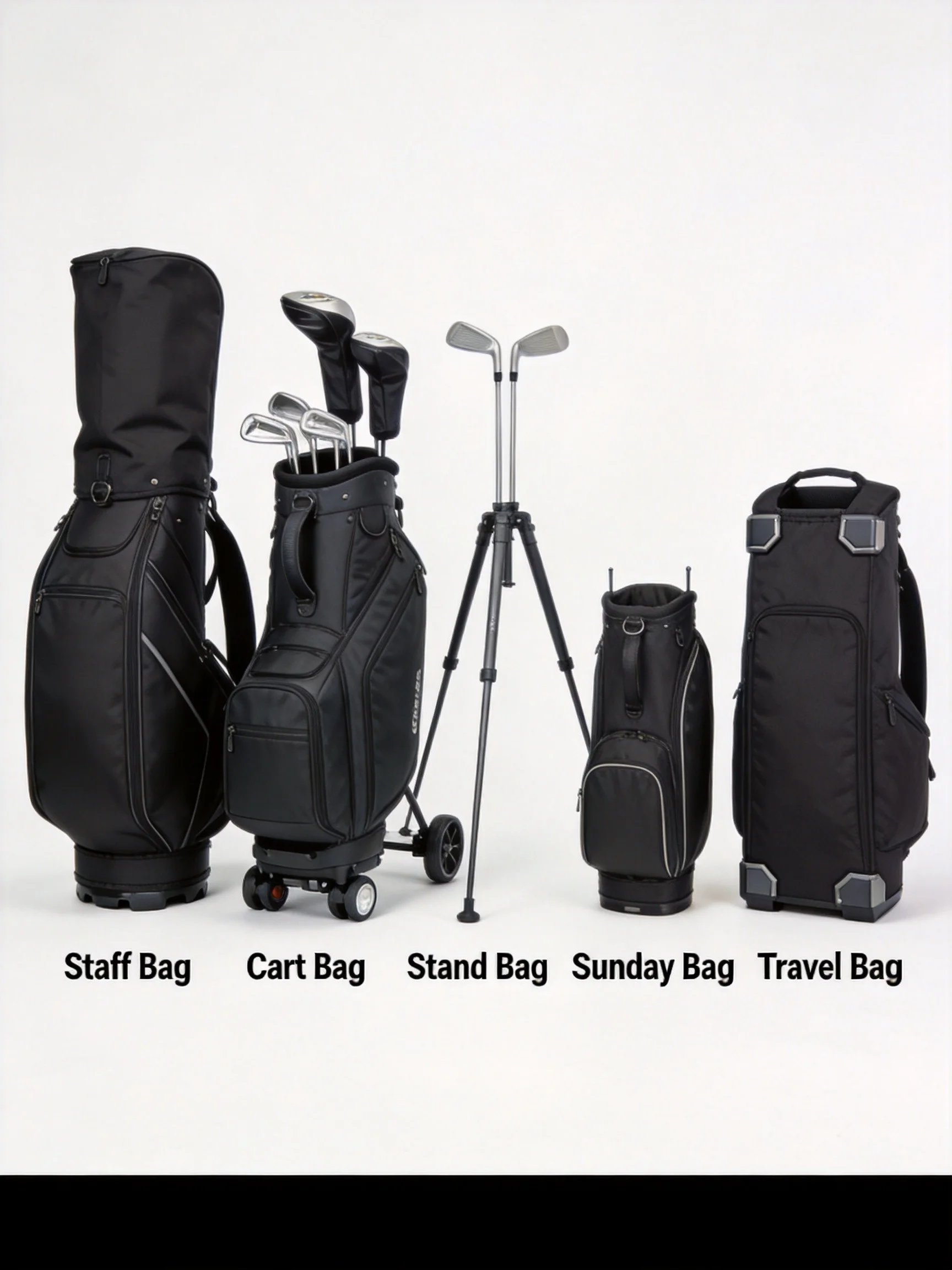
A golf bag is an essential piece of equipment designed to carry, organize, and protect golf clubs during play. The five main types are staff bags, cart bags, stand bags, Sunday (pencil) bags, and travel bags. Each type serves a different playing style—from walking golfers who need lightweight carry bags to cart users who prioritize storage and organization. Choosing the right golf bag depends on how you play, how often you play, and what you need to carry on the course.
Why Choosing the Right Golf Bag Matters
Your golf bag is more than just a container for your clubs—it is a critical piece of equipment that affects your comfort, efficiency, and overall experience on the course. According to the National Golf Foundation (NGF), there are approximately 25.6 million golfers in the United States alone, and the global golf equipment market, including bags, is projected to exceed $4.5 billion by 2027.
The right golf bag can:
- Reduce physical strain — A properly fitted bag with ergonomic straps distributes weight evenly, protecting your back and shoulders during walking rounds.
- Keep clubs organized — Full-length dividers and dedicated putter wells prevent club tangling and make club selection faster.
- Protect your investment — Quality materials and construction shield expensive clubs from weather, impact damage, and wear.
- Enhance convenience — Thoughtful pocket placement, accessory rings, and integrated stands let you focus on your game.
- Reflect your brand — For retailers and private-label brands, a well-designed bag communicates quality and professionalism.
Whether you are a weekend golfer, a touring professional, or a retailer sourcing wholesale golf bags for your brand, understanding the nuances of each bag type is essential for making the right choice.
The 5 Main Types of Golf Bags: Complete Overview
Golf bags have evolved dramatically over the past century. Today, manufacturers like Keep Perfect Golf produce bags engineered for every style of play. Here is a detailed breakdown of the five primary categories.
1. Staff Bags (Tour Bags)
Staff bags are the largest and heaviest type of golf bag, typically seen on professional tours. They are constructed from premium leather or high-grade synthetic materials and offer maximum storage space.
- Weight: 5–7 lbs (empty)
- Storage: 9–10 pockets including valuables-lined, insulated, and full-length compartments
- Dividers: 14-way full-length, individual club slots
- Best for: Professional golfers, caddies, brand ambassadors, and golfers who ride in carts exclusively
- Price range: $300–$700+
Staff bags are the flagship product for most golf brands. Their prominent surface area makes them ideal for logo placement, which is why major brands invest heavily in staff bag designs as marketing tools during tournaments.
2. Cart Bags
Cart bags are designed specifically for use on golf carts—both push carts and riding carts. They are the most popular bag type among recreational golfers who prefer not to carry their clubs.
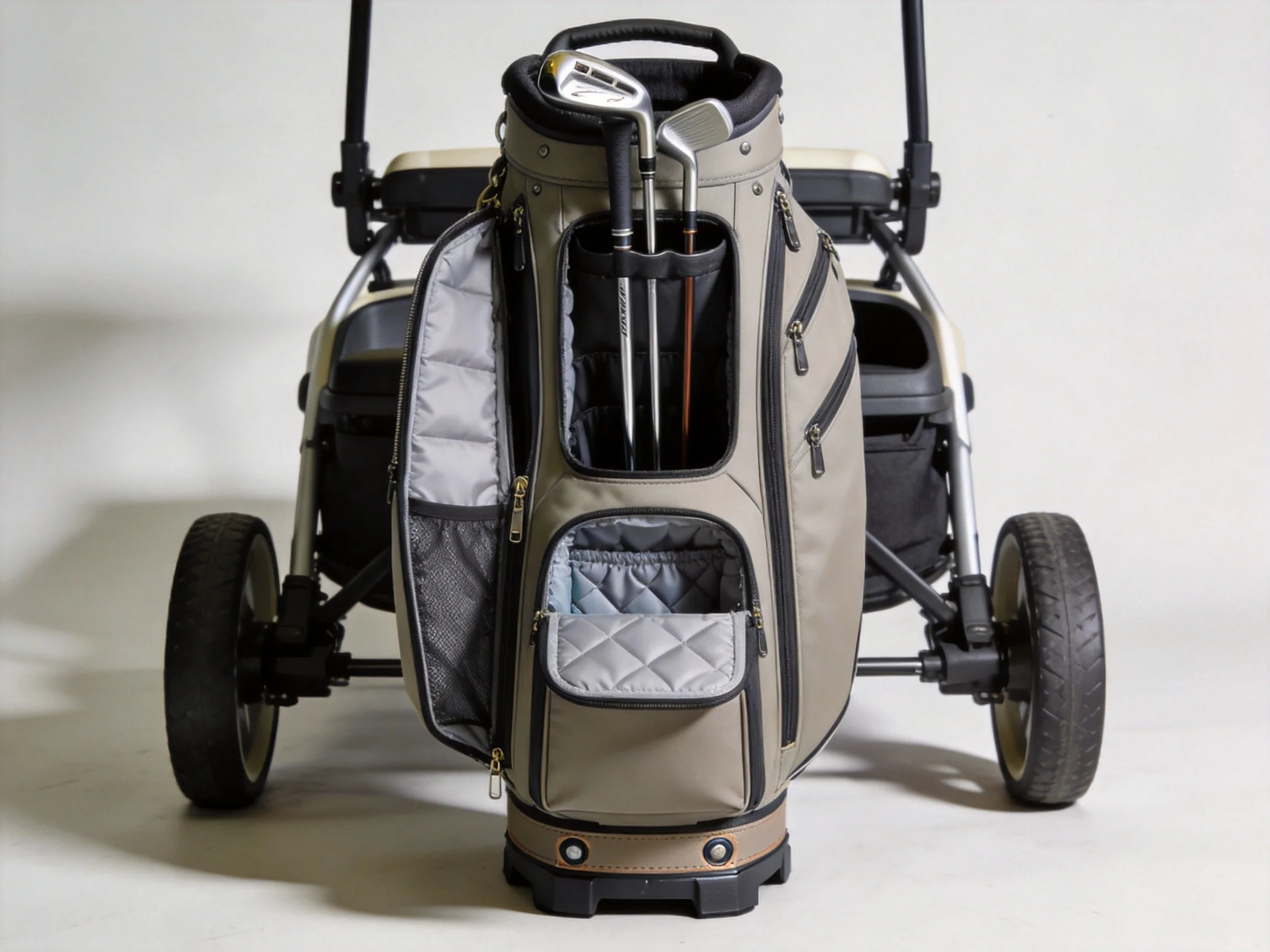
- Weight: 4–6 lbs (empty)
- Storage: 8–10 pockets, often including a dedicated cooler pocket, oversized apparel pocket, and valuables pocket
- Dividers: 14-way full-length or 14-way with putter well
- Best for: Golfers who primarily ride in carts or use push carts
- Price range: $150–$450
Cart bags typically feature a non-slip base that locks securely into cart straps, and pockets are oriented for easy access while the bag is mounted on a cart. Many models also include integrated handles for easy lifting in and out of the cart.
3. Stand Bags
Stand bags are the most versatile type, combining lightweight portability with adequate storage. Built-in retractable legs allow the bag to stand upright on the course, keeping clubs clean and accessible.
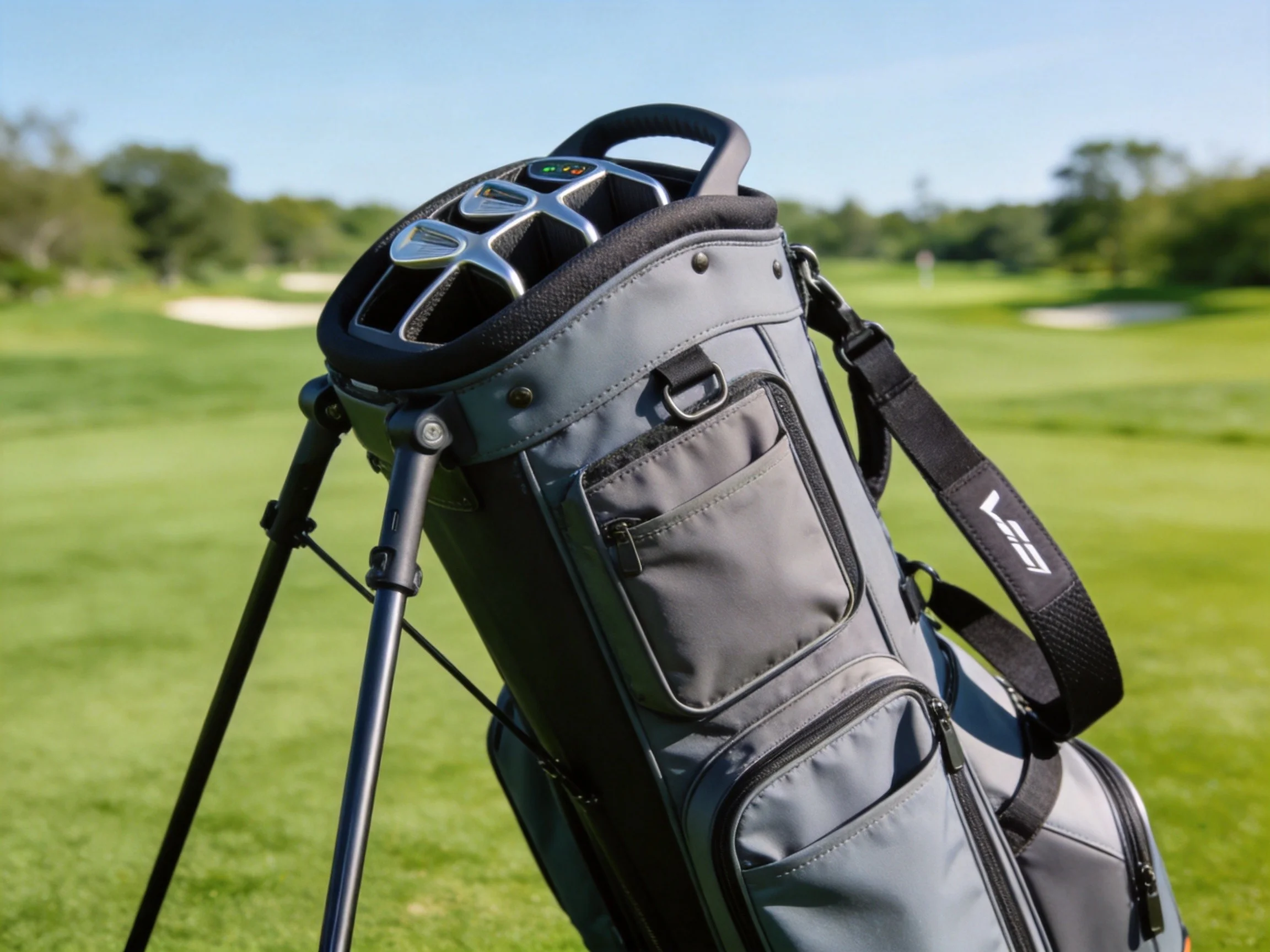
- Weight: 2.5–5 lbs (empty)
- Storage: 4–6 pockets including a waterproof valuables pocket and apparel pocket
- Dividers: 4-way to 14-way top, typically with full-length separators
- Best for: Walking golfers, caddies, golfers who alternate between walking and riding
- Price range: $100–$400
Stand bags are the best-selling category in the golf bag market, according to industry data. Their dual-purpose design—usable on carts and walkable—makes them the default choice for the majority of amateur golfers.
4. Sunday Bags (Pencil Bags / Minimalist Bags)
Sunday bags are ultra-lightweight, minimalist golf bags designed for golfers who want to carry only the essentials. They are ideal for short rounds, practice sessions, or golfers who want to simplify their game.
- Weight: 1–3 lbs (empty)
- Storage: 1–3 pockets, usually just a zippered valuables pocket
- Dividers: 0–5 dividers; most are open-top or have minimal separation
- Best for: Par-3 courses, practice rounds, golfers carrying 6–10 clubs
- Price range: $50–$200
The growing popularity of “speed golf” and minimalist golf culture has driven renewed interest in Sunday bags. Brands are now offering modern interpretations with technical fabrics, sleek designs, and improved functionality while maintaining the lightweight ethos.
5. Travel Bags
Travel bags are protective cases designed to shield golf clubs during air travel, road trips, or storage. They are not used during play but are essential for golfers who transport their clubs.
- Weight: 8–15 lbs (empty, including padding and structure)
- Storage: Interior storage pockets for shoes, accessories, and clothing
- Protection: Hard-shell or soft-shell with dense foam padding, reinforced corners
- Best for: Golfers who fly to tournaments, vacation golf trips, long-distance travel
- Price range: $100–$500
Airlines are notoriously rough with luggage, and a quality travel bag can prevent thousands of dollars in club damage. Most premium travel bags feature integrated wheels, telescoping handles, and interior club stabilization straps.
Stand Bag vs Cart Bag: Which Is Right for You?
The stand bag versus cart bag debate is the most common question golfers face when purchasing a new bag. The answer depends on your playing style, physical condition, and preferences.
| Feature | Stand Bag | Cart Bag |
|---|---|---|
| Average Weight | 2.5–5 lbs | 4–6 lbs |
| Walking Comfort | Excellent — dual strap systems | Fair — not designed for carrying |
| Cart Compatibility | Good — fits most carts | Excellent — designed for carts |
| Storage Capacity | 4–6 pockets | 8–10 pockets |
| Divider Options | 4-way to 14-way | 14-way standard |
| Standalone Ability | Yes — retractable legs | No — must lean or mount |
| Price Range | $100–$400 | $150–$450 |
| Best For | Walkers, hybrids, caddies | Cart riders, maximum storage |
The verdict: If you walk more than 50% of your rounds, choose a stand bag. If you almost exclusively ride in a cart and prioritize storage, a cart bag is the better option. Many retailers stock both categories, and versatile stand bags that also fit securely on carts remain the most popular SKU.
Key Features to Consider When Choosing a Golf Bag
Beyond the basic type, dozens of features differentiate one golf bag from another. Here are the most important factors to evaluate.
Weight
Every ounce matters when you are walking 18 holes. Ultralight stand bags can weigh under 3 lbs, while staff bags can exceed 7 lbs. Consider whether you will carry, push, or ride—and choose accordingly.
Pocket Configuration
Look for:
- Waterproof/fleece-lined valuables pocket — for phone, keys, wallet
- Insulated cooler pocket — for beverages
- Full-length apparel pocket — for rain gear or extra layers
- Range finder pocket — magnetic or GPS-sized
- Ball pocket — quick-access, usually on the lower side
Divider System
Divider tops range from 4-way to 14-way configurations. Full-length dividers that extend the entire length of the bag prevent club tangling. Individual full-length dividers (one per club) offer the best organization but add slight weight.
Rain Hood
An integrated rain hood protects clubs and grips during sudden downpours. Most mid-range and premium bags include a built-in rain hood; budget bags may not.
Strap System
For carry bags, look for dual straps with padded, adjustable designs. A single strap is lighter but can cause shoulder strain on long rounds. Some stand bags offer a hybrid strap system that tucks away when using a cart.
Base Design
A molded, non-slip base keeps the bag stable on carts and prevents it from tipping when loaded. Some cart bags feature a rigid, structured base with integrated lifting handles.
Material Comparison: Nylon, Polyester, Leather, and Synthetic
The material of your golf bag affects its durability, weight, weather resistance, and aesthetic. Here is how the four primary materials compare.
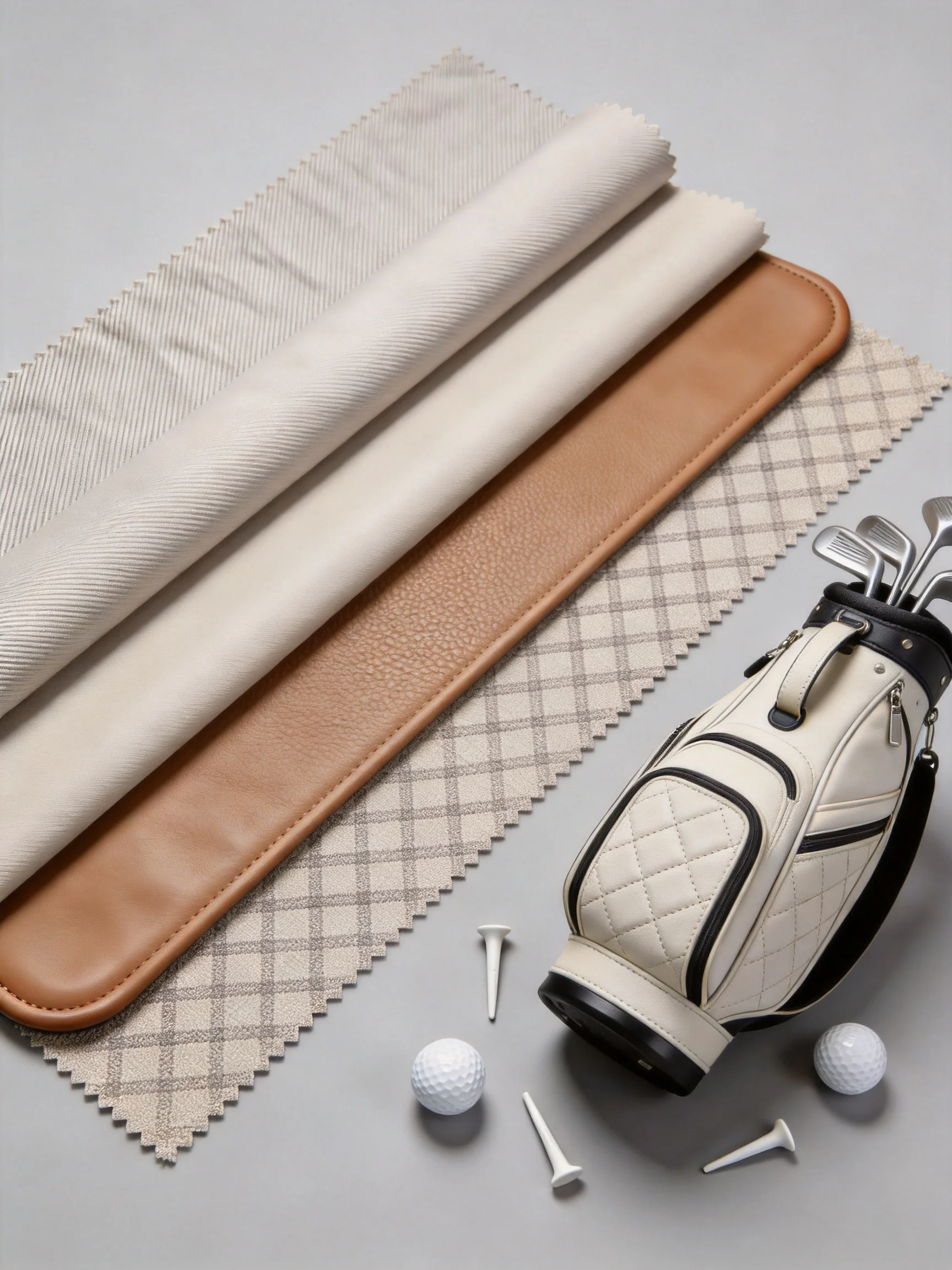
| Material | Weight | Durability | Water Resistance | Cost | Best For |
|---|---|---|---|---|---|
| Nylon | Light | High | Good (with coating) | $$ | Stand bags, travel bags |
| Polyester | Light-Medium | Medium-High | Moderate | $ | Budget-friendly bags, promotional bags |
| Leather | Heavy | Very High | Low (needs treatment) | $$$$ | Premium staff bags, luxury bags |
| Synthetic (PU/PVC) | Medium | High | Excellent | $$–$$$ | Cart bags, all-weather bags |
Industry trend: According to a Grand View Research report, the shift toward high-performance synthetic materials is one of the key trends in the golf equipment market. These materials offer leather-like aesthetics at a fraction of the weight and cost, making them the preferred choice for most mid-range and premium bags in 2026.
Golf Bag Price Ranges: What You Get at Each Level
Golf bags span a wide price spectrum. Understanding what each price tier delivers helps buyers, retailers, and brand owners make informed sourcing decisions.
| Price Tier | Range | Materials | Features | Target Market |
|---|---|---|---|---|
| Budget | $30–$100 | Polyester, basic nylon | 3–4 pockets, 4-way divider, lightweight | Beginners, juniors, promotional giveaways |
| Mid-Range | $100–$250 | Ripstop nylon, synthetic leather | 5–7 pockets, 14-way divider, rain hood, padded straps | Recreational golfers, club fittings, mid-tier brands |
| Premium | $250–$450 | Technical fabrics, premium synthetics | 8–10 pockets, full-length dividers, integrated rain hood, molded base | Serious amateurs, brand flagship models |
| Luxury | $450–$800+ | Genuine leather, carbon fiber accents | Maximum storage, hand-stitched details, premium hardware | Tour professionals, luxury brands, collectors |
For OEM/ODM manufacturers, the mid-range tier represents the sweet spot for wholesale production—balancing quality, margin, and market demand.
How to Choose a Golf Bag for Retail or Your Brand
Selecting the right golf bag assortment for retail or private-label programs requires a strategic approach. Here are the key considerations:
Know Your Customer
Are your customers walkers or riders? Weekend players or daily golfers? Budget-conscious or brand-driven? A pro shop at a private club has different needs than a big-box retail chain.
Assortment Strategy
A well-balanced retail assortment should include:
- 40% stand bags (highest volume category)
- 30% cart bags (growing segment)
- 15% staff/tour bags (brand image and prestige)
- 10% Sunday bags (trending category)
- 5% travel bags (seasonal/accessory purchase)
Quality Benchmarks
Regardless of price tier, every bag should meet baseline quality standards: reinforced stitching at stress points, YKK or equivalent zippers, waterproof lining in valuables pockets, and UV-resistant materials for bags displayed in retail windows.
Sourcing Considerations
When evaluating golf bag manufacturers, consider:
- Factory certifications (BSCI, ISO 9001, ISO 14001, Sedex)
- Minimum order quantities and flexibility
- Sampling speed and customization capability
- Production capacity and lead times
- Experience with your target markets
Customization Options for Brands & Retailers
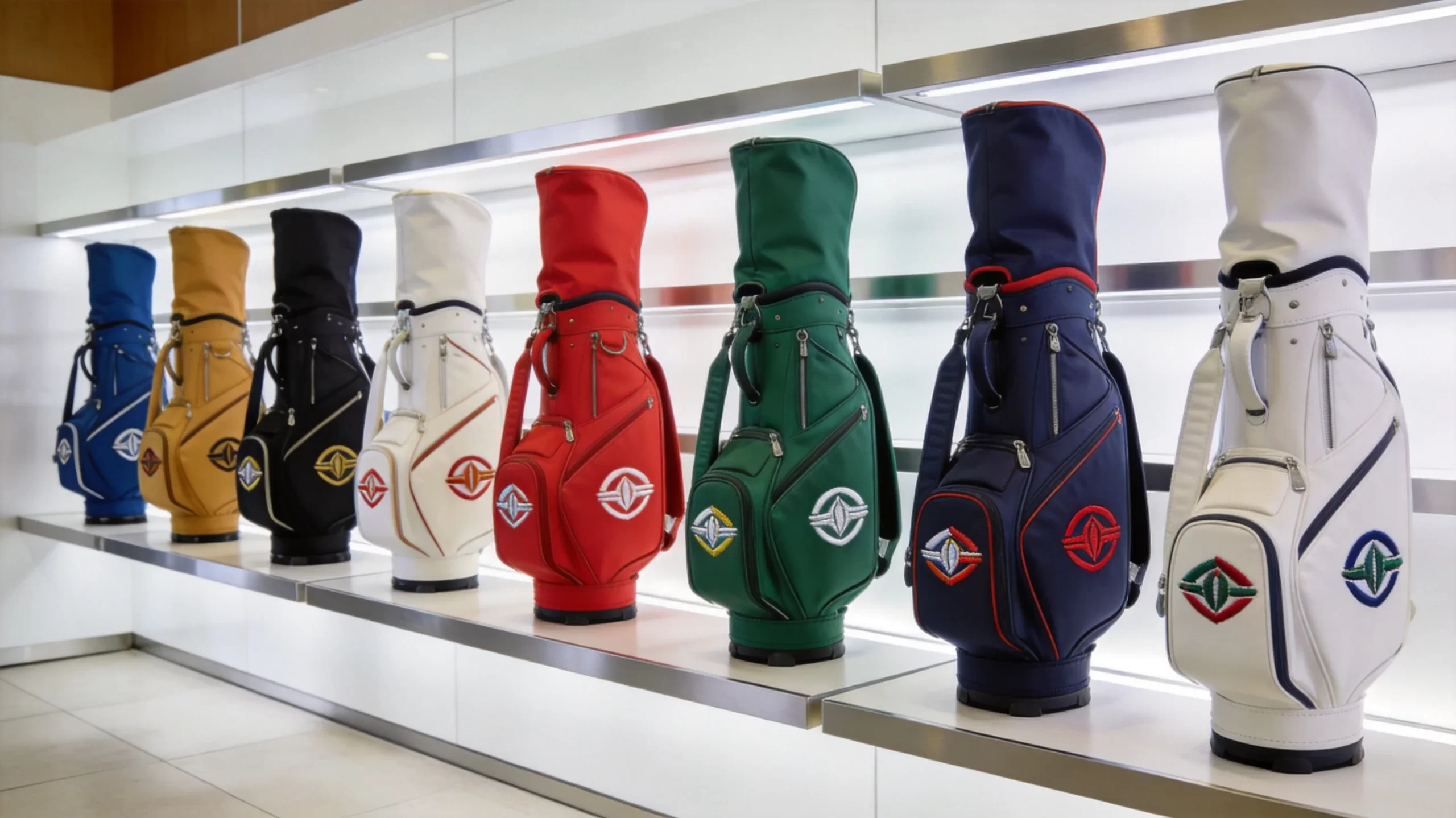
Private-label and custom golf bags represent a significant opportunity for brands, retailers, golf courses, and corporate programs. A quality custom golf bag program can transform a simple accessory into a powerful brand statement.
Customization Capabilities
- Logo Application: Embroidery, screen printing, heat transfer, debossing, rubber patches, metal badges
- Color: Custom Pantone matching for body, zippers, piping, and lining
- Materials: Choice of nylon, polyester, synthetic leather, or genuine leather
- Hardware: Custom zipper pulls, branded rivets, metal feet with logos
- Divider Configuration: 4-way, 5-way, 14-way full-length, with or without putter well
- Pocket Layout: Custom pocket placement based on target market needs
- Packaging: Branded dust bags, hang tags, UPC labeling, retail-ready packaging
Private Label vs Custom Design
Private label programs use existing bag designs with your branding applied—a fast, low-risk entry into branded golf bags. Full custom programs involve original design work, from silhouette to material selection, creating a truly unique product. Both approaches are viable depending on your brand maturity, timeline, and budget.
Market Trends in Golf Bag Design (2026)
The golf bag market continues to evolve, driven by changing consumer preferences, technological innovation, and sustainability mandates.
1. Sustainability & Eco-Friendly Materials
Recycled polyester (rPET), water-based adhesives, and PFC-free water repellent treatments are becoming standard requirements for premium brands. The R&A’s sustainability initiative has encouraged equipment manufacturers to adopt circular economy principles.
2. Ultralight Construction
Advances in ripstop nylon, carbon fiber struts, and minimalist frame designs have pushed stand bag weights below 3 lbs without sacrificing durability. This trend aligns with the growing emphasis on walking and fitness in golf.
3. Smart Integration
GPS device pockets with charging pass-throughs, Bluetooth tracker pockets, and integrated USB ports are emerging in premium segments. While still niche, smart features are differentiating brands in the crowded mid-to-premium market.
4. Modular & Convertible Designs
Some 2026 models feature removable strap systems, detachable pockets, and convertible configurations that allow a single bag to function as both a stand bag and a cart bag—reducing inventory complexity for retailers.
5. Color & Aesthetic Trends
Earth tones, military greens, and muted colorways are replacing traditional bright athletic colors. Custom color-blocking and minimalist branding appeal to the younger, style-conscious golfer demographic entering the sport.
Why Keep Perfect Golf Is Your Ideal Manufacturing Partner
With 20+ years of experience since 2004, Keep Perfect Golf (Junyuan Bags) has established itself as a trusted global leader in golf bag manufacturing. Here is why brands, retailers, and distributors choose us as their production partner:
Proven Manufacturing Excellence
- 200+ brands served across 100+ countries worldwide
- Annual production capacity exceeding 1,500,000 pieces
- Vertically integrated factory with in-house design, sampling, and quality control
- FOB Xiamen shipping — one of China’s premier port cities for international trade
Certified Quality Systems
- BSCI — Business Social Compliance Initiative
- ISO 9001 — Quality Management Systems
- ISO 14001 — Environmental Management Systems
- Sedex — Supply Ethical Data Exchange
These certifications demonstrate our commitment to quality, environmental responsibility, and ethical labor practices—requirements that major global brands now mandate from their suppliers.
Flexible Partnership Terms
- MOQ: 100 pieces for standard bags, 500 pieces for accessories
- OEM & ODM: Full private-label and custom design capabilities
- Sampling: 7–15 day turnaround for prototypes
- Production lead time: 30–45 days for bulk orders
Dedicated Support
Our team provides end-to-end support from initial design consultation through production, quality inspection, and logistics coordination. Every client receives a dedicated account manager fluent in English.
Ready to Start Your Golf Bag Project?
Whether you are launching a new brand, expanding your product line, or sourcing reliable supply for existing programs, Keep Perfect Golf is here to help.
Email: [email protected]
WhatsApp: +86 17750020688
Partnership Inquiry: Visit our Partnership Page
Frequently Asked Questions (FAQ)
What is the most popular type of golf bag?
Stand bags are the most popular type of golf bag globally. They offer the best balance of weight, storage, and versatility—usable on carts and walkable with shoulder straps. Stand bags account for approximately 45–50% of all golf bag retail sales.
How much should I spend on a golf bag?
For most recreational golfers, a quality stand bag in the $150–$300 range offers the best value. This price point delivers durable materials, 14-way dividers, comfortable straps, and adequate storage. Budget options under $100 work for beginners, while premium bags above $400 cater to serious players and brand-conscious buyers.
What is the difference between a stand bag and a cart bag?
A stand bag has retractable legs that allow it to stand upright on the course and is designed to be carried. A cart bag is larger, heavier, and designed to be mounted on a golf cart or push cart with no legs. Stand bags are more versatile; cart bags offer more storage and organization.
What material is best for a golf bag?
Nylon is generally the best all-around material for golf bags, offering an excellent balance of lightweight construction, durability, and water resistance. For premium bags, synthetic leather provides luxury aesthetics without the weight of genuine leather. Polyester is the most cost-effective option for budget and promotional bags.
Can I order custom golf bags with my brand logo?
Yes. Keep Perfect Golf specializes in OEM and ODM custom golf bag manufacturing with a minimum order of just 100 pieces. Customization includes logo embroidery, screen printing, custom colors, material selection, pocket configuration, and branded packaging. Contact us at [email protected] to discuss your project.
Conclusion: Find Your Perfect Golf Bag
Choosing the right golf bag comes down to understanding how you play, what you need to carry, and what level of quality you expect. Whether you are a golfer shopping for your next bag, a retailer building your assortment strategy, or a brand owner developing a private-label program, the principles remain the same: prioritize quality, match the bag type to the use case, and partner with experienced manufacturers who can deliver consistency at scale.
With over two decades of expertise, Keep Perfect Golf stands ready to support your golf bag needs—from concept to delivery. Start the conversation today.