Golf bags in 2026 are built to withstand tough weather conditions like rain, heat, and UV rays. Manufacturers have shifted focus to materials and features that protect both the bag and your gear. Here’s what you need to know:
- Rain Protection: Modern bags use TPU-laminated nylon, welded seams, and aqua-guard zippers to keep water out. Hydrostatic ratings over 10,000mm ensure heavy rain resistance.
- Heat Resistance: Heat-stable materials and UV-stabilized polymers prevent warping and fading in high temperatures. Insulated compartments protect electronics and beverages.
- UV Protection: UV-resistant coatings and ASTM G155-tested fabrics maintain durability and color under prolonged sun exposure.
- Seams & Zippers: Reinforced seams and rubberized zippers address common weak points, ensuring long-lasting performance.
- Custom Features: Adjustable rain covers, modular accessories, and ventilated compartments help tackle sudden weather changes.
When choosing a golf bag, look for weatherproof labels like "H2NO" or "StaDry", prioritize high-quality materials, and maintain your bag with waterproof sprays and proper drying. These advancements ensure your bag lasts longer and protects your gear in any conditions.
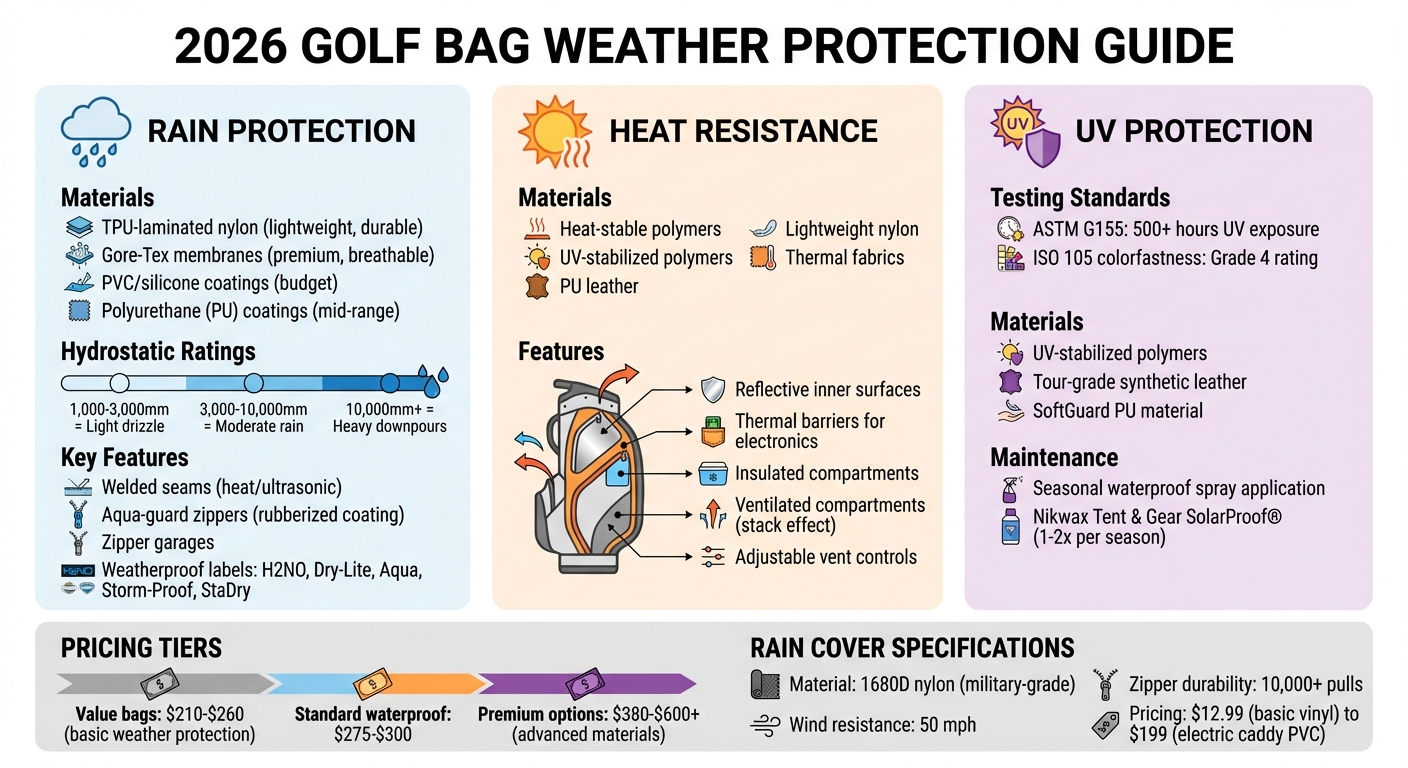
2026 Golf Bag Weather Protection Features and Material Specifications
Rain-Resistant Materials: Keeping Your Gear Dry
Waterproof Linings and Coatings
When it comes to battling rain, modern waterproof materials are designed to protect both the gear and the user. A standout in 2026 is TPU-laminated nylon, which delivers excellent water resistance and durability while remaining lightweight. For those willing to splurge, Gore-Tex membranes offer a blend of top-tier waterproofing and breathability, though they come with a higher price tag.
The effectiveness of waterproof materials is measured by hydrostatic ratings. Basic fabrics with ratings between 1,000–3,000 mm can handle light drizzle, while premium materials with ratings exceeding 10,000 mm are built for heavy downpours. These numbers indicate how much water pressure the fabric can withstand before leaking.
Pricing varies with material quality. Budget-friendly options often use PVC or silicone coatings, which are heavier and less breathable. Mid-range products rely on polyurethane (PU) coatings, while high-end items feature TPU laminates or Gore-Tex, offering lighter, more comfortable solutions.
To maintain waterproof performance, reapply a silicone or fluoropolymer spray each season. Look for industry labels like "H2NO", "Dry-Lite", "Aqua", "Storm-Proof", or "StaDry", which signify reliable waterproof technologies. These treatments and materials ensure your gear stays protected and functional, even in harsh weather.
Sealed Zippers and Reinforced Seams
High-tech fabrics alone aren’t enough; seams and zippers must also resist water. Even the most advanced materials can fail if water sneaks in through these weak points. That’s why many bags now feature welded seams, created using heat or ultrasonic welding to eliminate the needle holes left by traditional stitching. To check for proper sealing, turn the bag inside out and look for a continuous rubber tape covering the seams.
Zippers are another critical area. Many bags now include aqua-guard zippers coated with rubber or urethane, forming a tight seal when closed. To identify these, feel for a smooth, plasticky texture on the zipper track rather than a rough or metallic one. Additionally, zipper garages – small fabric hoods at the ends of the zipper track – add extra protection by blocking water entry.
"Look for zippers with a rubberized or urethane coating over the teeth. These ‘aqua-guard’ style zippers create a seal when closed, which is one of the most common failure points on a water-resistant bag." – Spencer Lanoue, Founder, Caddie AI
For added defense in heavy rain, apply zipper wax or candle wax to the zipper teeth to enhance the seal. After exposure to wet conditions, empty the bag and let it air-dry for 24–48 hours to prevent mildew and preserve the waterproof coatings. Together, these features ensure your bag remains durable and reliable, even in the toughest conditions.
sbb-itb-4fa7e8b
Heat-Resistant Features: Handling High Temperatures
Thermal-Resistant Materials
Modern golf bags are built to handle more than just rain – they’re also designed to withstand extreme heat. High temperatures can wreak havoc on traditional materials, causing them to soften, warp, or even crack. That’s why golf bags in 2026 are made with heat-stable materials, including advanced polymers and fabrics that can hold up in conditions like 95°F Arizona summers or unpredictable temperature swings.
These bags incorporate UV-stabilized polymers and reflective inner surfaces to combat sun damage and deflect heat. This not only prevents fading but also protects the bag’s structural integrity, which was a common issue with older models. Some high-end designs take it a step further by adding thermal barriers to safeguard sensitive electronics, such as rangefinders and GPS devices. These barriers help prevent battery issues and screen malfunctions caused by overheating.
The materials used are just as important as the design. Many 2026 bags feature hybrid constructions with PU leather, lightweight nylon, and thermal fabrics to strike a balance between durability and weight. Additionally, insulated compartments are a must-have for keeping beverages cool and electronics safe, even during the hottest rounds.
Ventilated Compartments for Temperature Control
Thermal resistance alone isn’t enough – ventilation plays a key role in keeping your golf bag’s interior cool and functional. Many modern bags use the stack effect (also known as the chimney effect), where warm air rises and escapes through upper vents while cooler air is drawn in from below. This natural airflow system keeps the bag from overheating without the need for mechanical parts.
Features like strategically placed mesh panels and a pressure differential between lower inlets and upper outlets ensure consistent airflow. Premium bags for 2026 even include adjustable vent controls, allowing you to adapt the ventilation based on the weather.
To maintain your bag’s heat-resistant properties, it’s a good idea to empty it after playing in extreme heat. Proper airing helps prevent material degradation and ensures your bag stays in top condition for years to come.
The Best WATERPROOF Golf Bags You Need This Winter!
UV-Protective Fabrics: Preventing Sun Damage
As golf bags continue to adapt to withstand heat and moisture, they also need to protect against sun damage. UV protection plays a key role in creating a truly weather-resistant design.
UV-Resistant Coatings
UV radiation doesn’t just fade colors – it weakens fabric, especially at seams and attachment points, making them brittle over time. The World Health Organization reported over 2.5 million skin cancer cases and 1.5 million cases of blindness linked to UV exposure in 2022, emphasizing the growing intensity of outdoor radiation.
To fight UV damage, modern golf bags incorporate UV-stabilized polymers enhanced with organic and inorganic UV absorbers that block harmful rays. High-end models like the Vessel Lux Pro Cart II ($519) and PING DLX ($375) use tour-grade synthetic leather and vinyl leather, materials specifically engineered to retain their structure under prolonged sun exposure.
Professional-grade bags are rigorously tested to meet the ASTM G155 standard, ensuring they can withstand 500+ hours of UV exposure. Additionally, manufacturers aim for an ISO 105 colorfastness rating of Grade 4, which ensures colors stay vibrant even after extended outdoor use. When shopping, prioritize bags labeled "UV-stabilized" over those marketed as merely "weather-resistant" – this distinction is crucial for long-term durability.
Beyond structural integrity, preserving the bag’s color and appearance is equally important.
Color Retention and Long-Term Appearance
Sun exposure doesn’t just dull a bag’s color – it can also compromise the protective coatings that guard against further damage. For example, the Big Max Dri Lite Silencio ($235) features SoftGuard PU material, designed to resist scratches and maintain its look over time.
"Normal wear and fading of product is not considered a manufacturer’s defect." – Sun Mountain
This warranty exclusion highlights why investing in UV protection from the start is essential. If your bag doesn’t come with factory-applied UV coatings, you can add an extra layer of defense with products like Nikwax Tent & Gear SolarProof®, applied once or twice per season. Before applying, clean the bag with mild soap and water, and ensure it’s completely dry so the protective spray adheres properly to the fabric.
Custom Features for Weather Protection
As weather challenges become more unpredictable, custom accessories are stepping up to transform ordinary bags into reliable, weather-ready gear. These features, aligned with 2026 manufacturing trends, enhance durability and adaptability, ensuring your bag can handle sudden weather shifts with ease.
Adjustable Rain Covers and Hoods
When it comes to rain covers, 1680D nylon is the reigning champion in 2026. Known for its military-grade tear resistance, this material provides full protection against rain and snow. The most effective covers use heavy-duty snap buttons and adjustable hook-and-loop straps that stay secure even in winds reaching 50 mph.
"A rain cover keeps your grips bone-dry between shots, so you can pull a club, wipe your hands with a dry towel… and swing with the same confidence you would on a sunny day." – Spencer Lanoue, Founder, Caddie AI
Premium rain covers take convenience up a notch with dual-zipper systems, allowing access to clubs from either the top or bottom without removing the cover entirely. These systems also feature zipper garages – small fabric hoods at the end of the zipper tracks – that protect against grit and corrosion. High-quality zippers are built to withstand over 10,000 pulls, ensuring they hold up through years of use.
Rain cover pricing varies depending on material and features. Basic transparent vinyl covers start at $12.99, while universal 1680D nylon models with snap closures range from $25 to $50. For electric caddies, specialized PVC covers can cost as much as $199. One standout option is the MGI Rain Cover (rated 4.1/5), which features a "concertina" opening for quick and easy club access without exposing the rest of the bag.
Proper attachment is key. Always secure the back snaps first, then stretch the cover over your clubs. Avoid leaving a wet cover crumpled in your trunk – air-dry it completely to prevent mold and unpleasant odors.
To complement these rain covers, modular accessories provide additional tools to tackle a variety of weather conditions.
Modular Accessories for Weather Conditions
Modern modular accessories are designed for quick deployment, often featuring magnetic or snap closures that can be operated with one hand. This is especially useful when you’re racing to protect your gear from a sudden downpour.
Options include insulated pouches with reflective interiors to keep items cool in extreme heat and weatherproof compartments equipped with desiccant pockets to absorb moisture in humid conditions. For coastal environments, marine-grade hardware resists salt air corrosion, while desert golfers benefit from sealed zippers that block up to 98% of dust and sand.
Full-length poncho covers provide comprehensive protection for the entire bag, featuring elastic bases and zippered side access for grabbing tees or balls without exposing your clubs. To prevent flapping in high winds, consider adding Velcro or buckle straps at the mid-section.
These custom features and accessories ensure your bag is ready to face any weather challenge, keeping your gear protected and your game on track.
Conclusion: Choosing the Right Weather-Resistant Golf Bag in 2026
Golf bags in 2026 bring together advanced materials and precise craftsmanship. The best options blend features like TPU laminates or Gore-Tex membranes for top-tier water resistance, welded seams for durability, and UV-stabilized polymers to withstand prolonged sun exposure. Look for labels such as "H2NO", "Dry-Lite", or "StaDry" to identify bags with specialized weatherproofing. Our exploration of rain, heat, and UV challenges provides a solid foundation for choosing or designing golf bags that excel in all conditions.
Key Takeaways for Manufacturers
To meet the demands of 2026, manufacturers should prioritize material innovation. Polyester is ideal for maintaining vibrant colors in sunny regions, while high-denier ballistic nylon (ranging from 840D to 1680D+) strengthens wear-prone areas without adding unnecessary weight. Full-length dividers are essential for preventing grip lock and reducing internal wear, and marine-grade hardware is crucial in coastal markets to resist corrosion caused by salt air.
Pricing aligns with these advancements, falling into three categories:
- Value bags: Basic weather protection ($210–$260)
- Standard waterproof models: ($275–$300)
- Premium options: Advanced materials and features ($380–$600+).
Tips for Golfers: Balancing Durability and Style
While manufacturers refine their designs, golfers should focus on bags with proven weather resistance. Pay attention to water resistance ratings: 1,000–3,000 mm for light rain, 3,000–10,000 mm for moderate coverage, and 10,000 mm+ for heavy rain protection. Ensure seams are sealed, and zippers have rubberized coatings for added defense.
"A quality golf bag endures for years, and therefore, its robustness and durability are a non-negotiable." – Today’s Golfer
To extend the life of your bag, empty it and let it air-dry for 24–48 hours after wet rounds to prevent mold. Reapply a waterproofing spray each season for added protection. For synthetic leather models, like the Vessel Lux XV 2.0, maintenance is simple – just wipe with a damp cloth, no conditioners needed. By following these steps, you can ensure your bag stays in great shape and ready for any weather.
FAQs
What waterproof rating do I actually need?
For heavy rain and wet conditions, a waterproof rating of at least 10,000mm hydrostatic head is essential. This level of protection ensures your gear stays dry and shielded, even in intense downpours.
How can I tell if seams and zippers are truly sealed?
To ensure seams and zippers are watertight, check for heat-welded or RF-welded seams – these create a seamless, waterproof barrier. For zippers, you can test their integrity by spraying water on the bag or briefly submerging it to identify any leaks. Since seams and zippers are often the most vulnerable parts of waterproof gear, making sure they’re properly sealed is key to maintaining durability.
Do I need a UV-stabilized bag or is weather-resistant enough?
A UV-stabilized bag is designed to withstand extended exposure to sunlight, helping to prevent the material from degrading over time. That said, a weather-resistant bag made with waterproof fabrics and durable materials – especially one that also incorporates UV protection – usually provides enough durability to handle most weather conditions.
Related Blog Posts
- Waterproof Golf Bags: How Custom Materials Protect Your Gear in Rain
- Ultimate Guide to Golf Bag Material Innovations
- Top 10 Trending Golf Bags of 2025: Ultimate Buyer’s Guide
- The Impact of Weather Conditions on Golf Bag Design
Related Resources
Related Products
Explore our manufacturing capabilities in this category:
Need custom golf bags? Contact us for OEM/ODM quotes — MOQ 100pcs, FOB Xiamen.