Most golfers never think about zippers until one fails on the first tee. But for brands sourcing from OEM factories, hardware quality isn’t an afterthought — it’s the single biggest driver of product returns, warranty claims, and damaged retailer relationships.
After 20+ years manufacturing golf bags for 200+ brands across 100+ countries, we’ve seen firsthand how a $0.15 zipper can trigger a $89 product return. This guide breaks down every hardware component in a golf bag — zippers, buckles, bag feet, rivets, strap attachments, and Velcro — from a quality control perspective that OEM buyers, quality managers, and retail procurement teams need to understand.
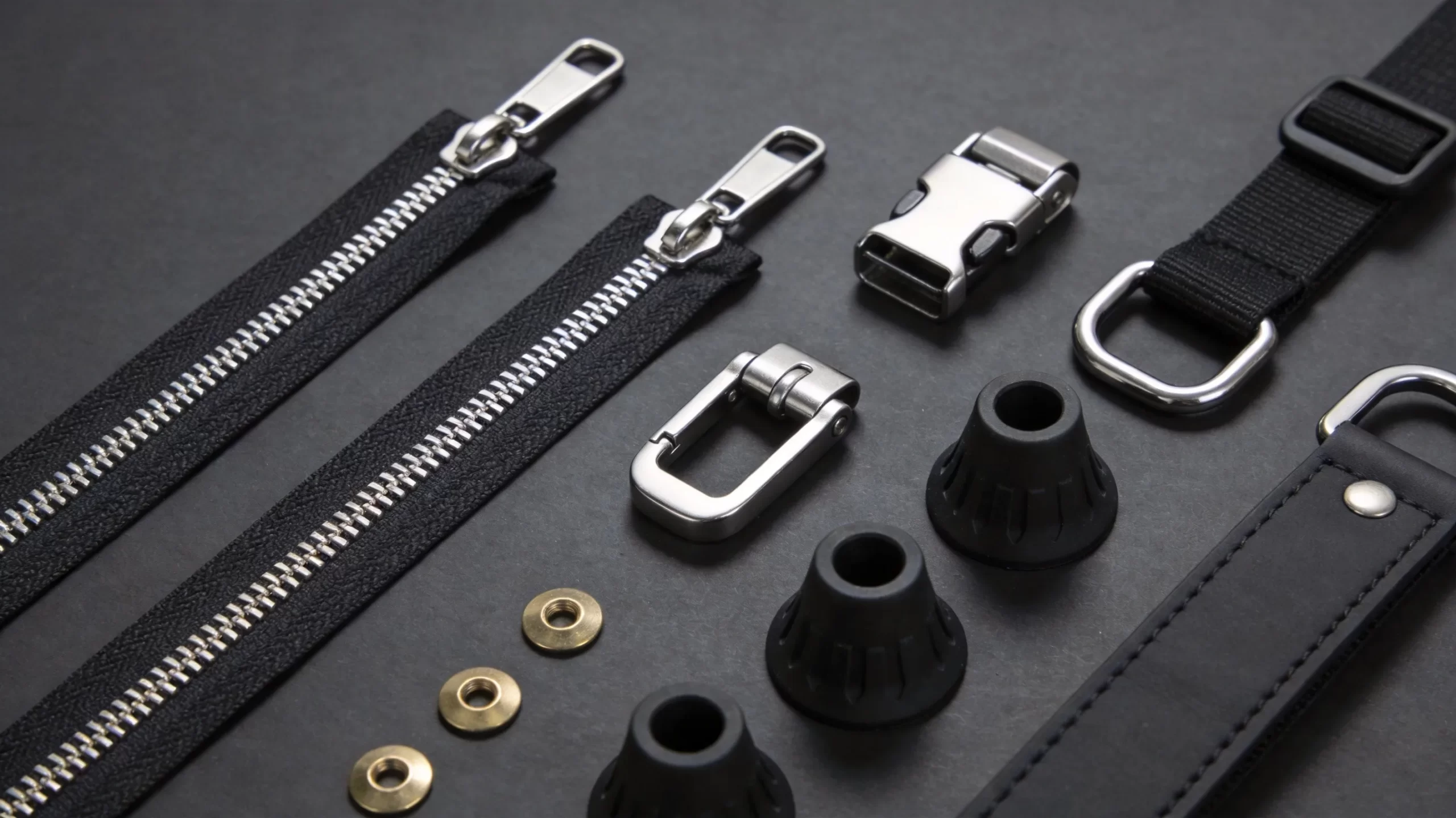
Why Hardware Quality Determines Retail Return Rates
Golf bag returns don’t happen randomly. According to a 2024 National Retail Federation report, the average retail return rate for sporting goods sits at 8.8%, but bags and accessories consistently rank among the highest-return categories. For golf bags specifically, hardware failures — broken zippers, cracked buckles, and detached feet — account for an estimated 60-70% of all warranty and return claims.
The problem is structural: hardware is the most stress-concentrated part of any golf bag. Unlike fabric panels that distribute load evenly, every zipper tooth, buckle prong, and rivet point bears concentrated force during daily use. A single weak component can compromise the entire product.
For OEM golf bag manufacturers, this means hardware specification isn’t a cost-cutting opportunity — it’s a risk management decision.
Component #1: Zippers — The #1 Failure Point
Zippers are the single most failure-prone component in any golf bag. Industry data from the American Closing & Zipper Association shows zipper-related failures represent 40-50% of all bag product defects.
Coil Zippers vs. Molded Zippers
Coil zippers use a continuous nylon coil wound into a spiral shape. Lightweight, flexible, and corrosion-resistant — ideal for golf bag pockets. High-quality coil zippers rated at 5mm+ withstand 10,000-25,000 open-close cycles.
Molded plastic zippers use individual plastic teeth injection-molded onto the tape. More rigid with premium appearance, common on main compartments. They handle 8,000-20,000 cycles but are more susceptible to UV degradation.
Metal zippers (brass/aluminum) appear on luxury bags for aesthetics. Heavier, more prone to corrosion, and can damage golf club grips. Limit to decorative, non-club-contact areas.
YKK vs. SBS vs. No-Brand Zippers
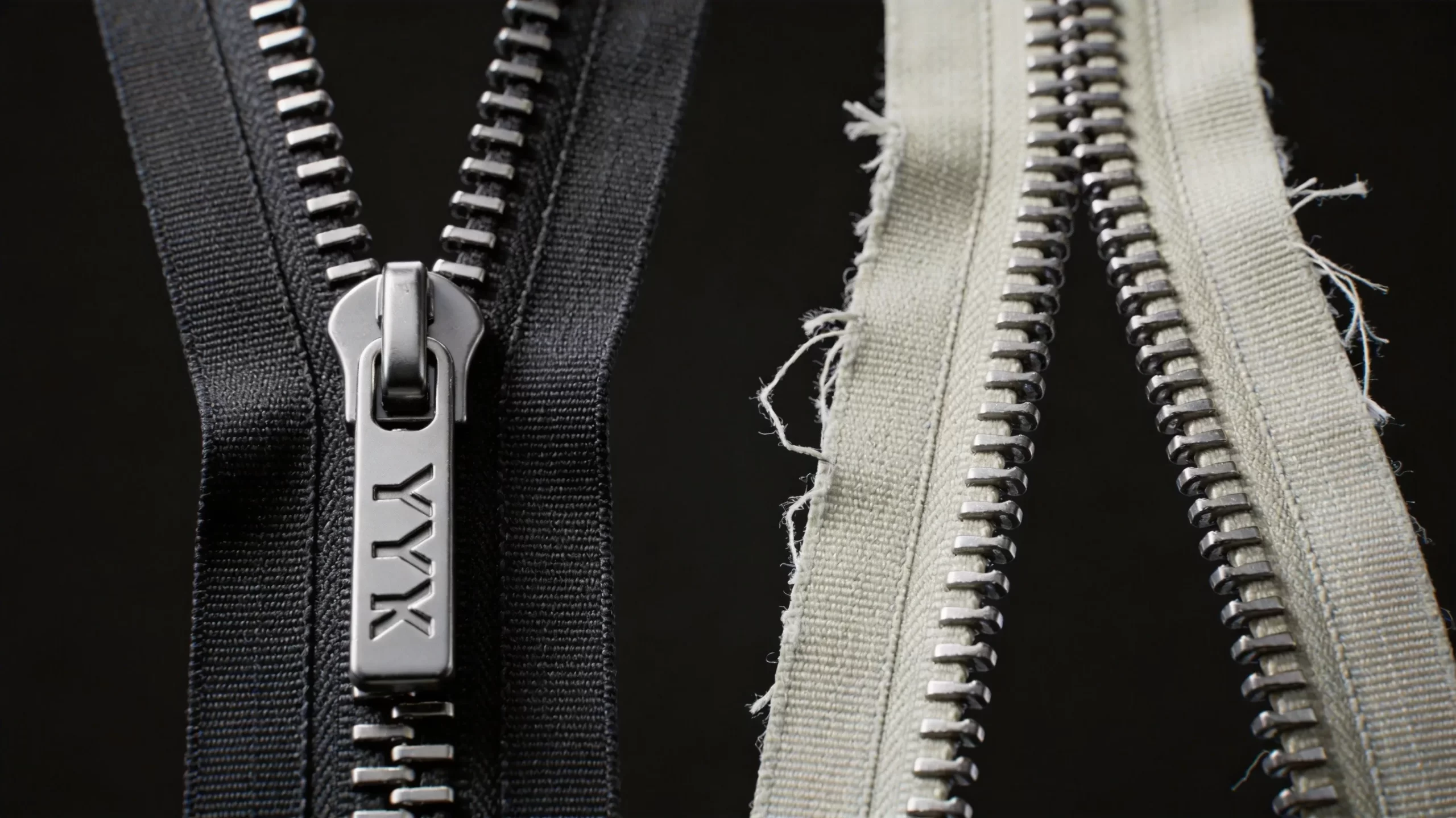
YKK (Yoshida Kogyo Kabushikigaisha) is the global gold standard with 90+ years of engineering. YKK zippers rate for 15,000-30,000+ cycles. Their Vislon line (molded plastic) is particularly popular in premium golf bags.
SBS (Shenzhen SBS Zipper) is China’s largest zipper manufacturer — a solid mid-tier option rating 10,000-15,000 cycles at 40-60% lower cost than YKK. Good for mid-range products at $150-$300 retail.
No-brand zippers cost $0.05-0.10/unit but fail within 2,000-5,000 cycles. Issues: slider deformation, tooth separation, tape fraying. Leading cause of premature returns in the budget segment.
| Zipper Brand | Cycle Rating | Cost/Unit | Typical Failure Mode | Best For |
|---|---|---|---|---|
| YKK Vislon | 25,000+ | $0.80-1.50 | Extremely rare | Premium bags, main compartments |
| YKK Coil | 20,000+ | $0.50-1.00 | Slider wear after 18,000 cycles | Mid-to-premium pockets |
| SBS Molded | 12,000-15,000 | $0.30-0.60 | Slider deformation | Mid-range bags |
| Generic Coil | 3,000-5,000 | $0.05-0.15 | Tooth separation, tape fraying | Budget bags (not recommended) |
Component #2: Buckles & Clips
Buckles and clips serve critical functions: securing shoulder straps, adjusting strap length, attaching accessories, and holding the bag closed.
Side-Release Buckles
Side-release buckles are the most common type in golf bags for quick-release shoulder strap adjustments. The key differentiator is the acetal (POM) resin. High-grade acetal from Woojin Plastics or Duraflex maintains integrity through temperature extremes (-20°C to 80°C) and resists UV degradation. Low-quality buckles use recycled plastics that become brittle — the internal locking mechanism cracks, causing unexpected strap release. A serious safety concern for walking golfers.
Ladder Lock Buckles
Ladder lock buckles provide fine-tune strap length adjustment on premium bags. Quality versions use stamped or die-cast metal (zinc alloy or stainless steel) with spring-loaded cam mechanisms maintaining tension through 5,000+ adjustment cycles.
D-Rings
D-rings serve as attachment points for accessories, towel clips, and umbrella holders. Welded D-rings are significantly stronger than open D-rings. For golf bags carrying 15-30 lbs of clubs, welded stainless steel D-rings rated at 200+ lbs tensile strength are the minimum standard.
Component #3: Bag Feet
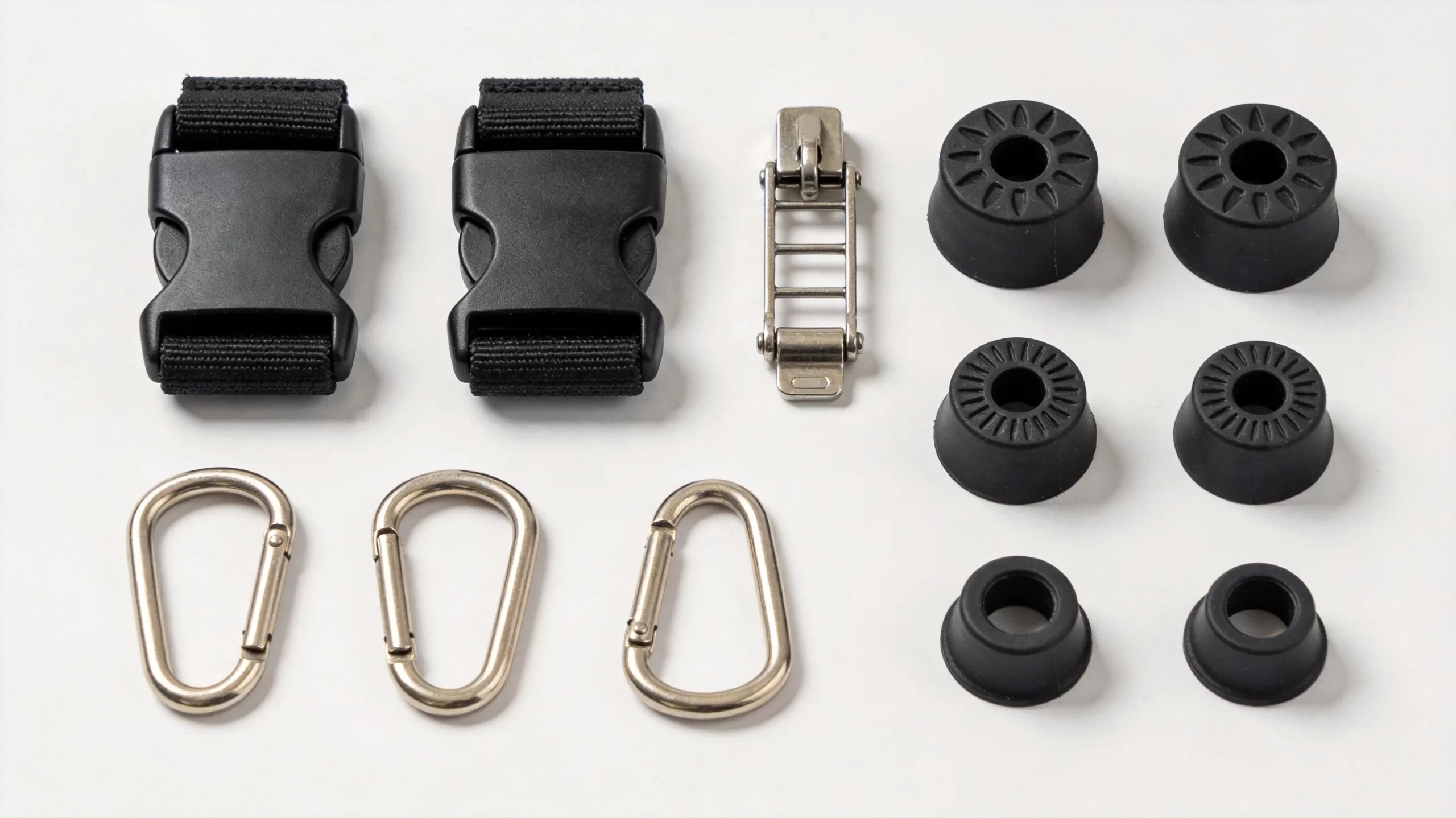
Bag feet protect the base from abrasion, prevent moisture wicking, and provide stability. Among the most commonly under-specified components in OEM production.
Rubber vs. Plastic Feet
Molded rubber feet offer superior grip, shock absorption, and durability. High-quality rubber maintains flexibility across temperatures and resists cracking. Premium anti-rattle designs incorporate internal ribbing that dampens vibration when clubs move inside the bag.
Plastic feet (ABS or polypropylene) are cheaper but offer inferior grip and shock absorption. They crack on hard surfaces and develop squeaking/rattling noise. Unacceptable for premium golf bags.
Anti-Rattle Design
Rattling of clubs hitting the bag base is a common online complaint. Effective anti-rattle designs use: concentric ribbing inside the foot cavity, multi-density rubber (hard outer shell + soft inner core), and elevated foot profile (15-25mm height) creating an air gap.
Component #4: Rivets & Stress Points
Rivets reinforce high-stress connection points — strap attachments, handle mounts, and pocket corners. In a golf bag carrying 20-35 lbs, these points experience significant shear and pull forces.
Brass rivets are the premium choice: corrosion-resistant, temperature-stable, with subtle aesthetic quality. Specify solid brass (not plated steel) for all strap attachment points.
Bar tacking — dense zigzag stitch — should supplement rivets. Industry standard: 30-40 stitches per bar tack with 150-300 Newton tensile strength. As covered in our golf bag durability testing guide, strap attachments should withstand 300 Newton pull force.
Component #5: Strap Attachments & Padding
The shoulder strap system is the primary interface between golfer and bag. Quick-release clips should use metal-on-metal locking (stainless steel or zinc alloy). Plastic clips degrade under UV and can fail catastrophically during use.
Strap padding depends on foam density. High-density EVA foam (40-60 kg/m³) maintains shape for years. Low-density foam compresses permanently within months. Cover should be moisture-wicking mesh interior with ballistic nylon exterior.
Component #6: Velcro / Hook-and-Loop Fasteners
Three quality grades of hook-and-loop fasteners:
- Grade A (Premium): Woven nylon hooks, high loop density. 80%+ holding strength after 10,000 cycles. VELCRO® Brand or Kuraray Fastening are leaders.
- Grade B (Standard): Extruded plastic hooks, standard loop density. 60-70% holding strength after 5,000 cycles.
- Grade C (Budget): Low-density extruded hooks losing 50%+ strength within 1,000-2,000 cycles. Avoid entirely.
Quality Control Standards for Hardware
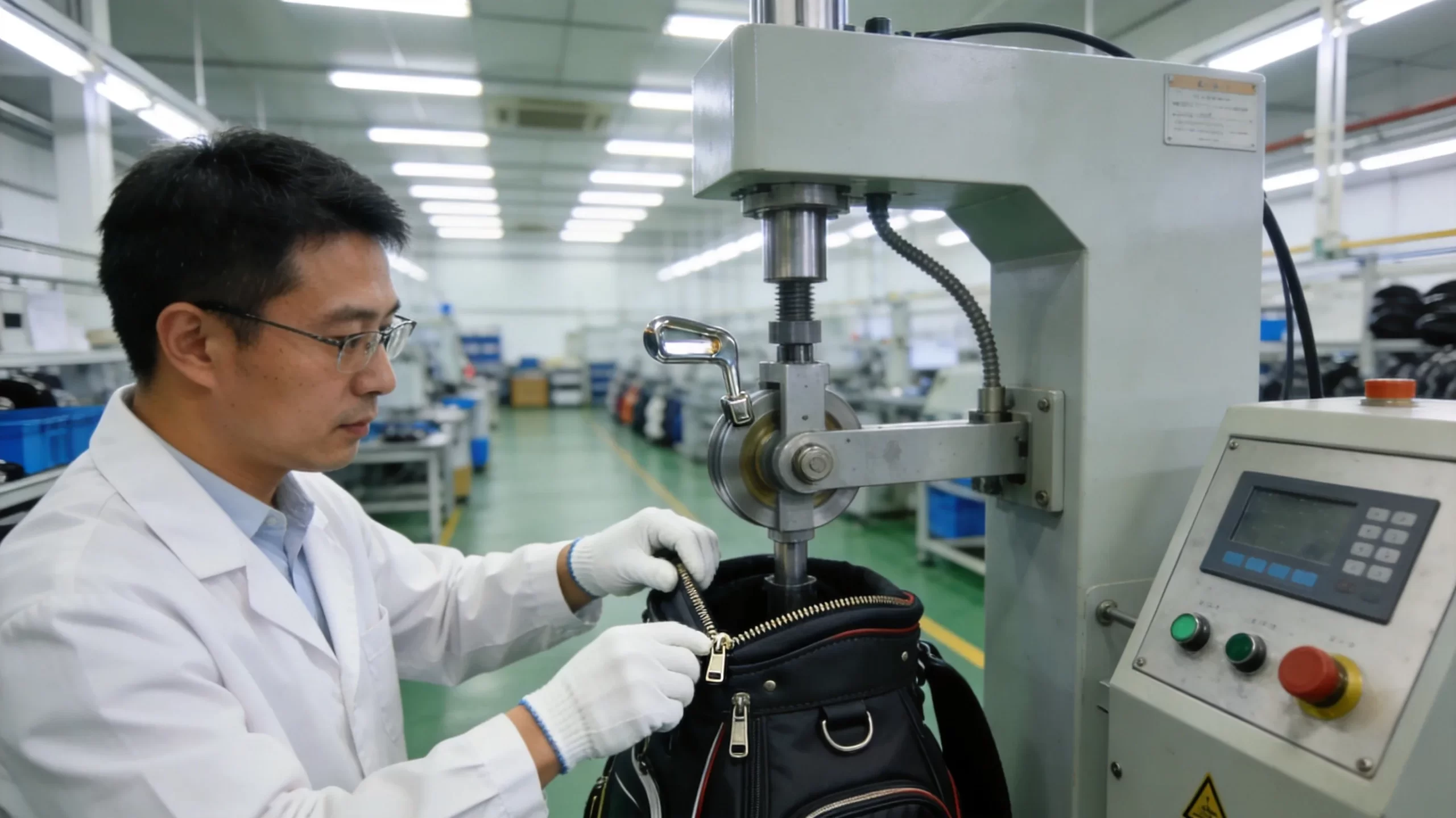
Key testing benchmarks for reputable OEM golf bag factories:
| Component | Test Method | Minimum | Premium | Frequency |
|---|---|---|---|---|
| Zippers | Cycle testing (ASTM D2061) | 5,000 cycles | 15,000+ | Every lot |
| Buckles | Tensile pull test | 100 lbs | 200+ lbs | Per lot |
| D-Rings | Tensile pull test | 150 lbs | 300+ lbs | Per lot |
| Rivets | Shear strength | 150N | 300+ N | Per lot |
| Bag Feet | Impact compression | No crack at 500 | No crack at 2,000 | Periodic |
| Velcro | Peel strength | 2.0 N/cm | 3.0+ N/cm | Every lot |
| Strap clips | Drop + UV test | 100 drops | 500 drops + 500hr UV | Periodic |
These align with ASTM International testing protocols. Specify benchmarks in private label golf bag purchase orders.
The Cost of Cutting Corners: Data-Driven Comparison
| Factor | High-Quality | Low-Quality | Financial Impact |
|---|---|---|---|
| Zipper brand | YKK/SBS $0.50-1.50 | Generic $0.05-0.15 | Saves $0.35-1.35/bag but +8-15% return rate |
| Buckle material | Grade A acetal $0.30-0.80 | Recycled plastic $0.05-0.10 | Buckle failures = 12% of returns |
| Bag feet | Anti-rattle rubber $0.40-0.80 | Basic plastic $0.08-0.15 | Rattling = top-3 online complaint |
| Velcro grade | Grade A $0.20-0.50/m | Grade C $0.05-0.10/m | Weak closure = 6% of returns |
| Bag cost increase | +$1.50-3.00/bag | Baseline | — |
| Average return rate | 2-4% | 10-18% | 6% extra = $5.34/bag at $89 retail |
| Warranty cost | $0.50-1.00/bag | $4-8/bag | 3-7x higher expenses |
| Net impact | — | — | Low-quality costs 2-4x MORE per bag sold |
Investing $1.50-3.00 more per bag in quality hardware typically saves $5-15 per bag in avoided returns. For 10,000+ units annually, this represents $50,000-$150,000 in annual savings — ROI of 15:1 to 50:1.
Procurement Recommendations
For brands sourcing wholesale golf bags or developing custom golf bags:
- Specify hardware brands by name in purchase orders. No “equivalent” substitutions without written approval.
- Require pre-production samples with exact hardware specified. Test zippers through 100+ open-close cycles before approving production.
- Include hardware QC clauses in manufacturing contracts. Specify failure rates (≤2% zippers, ≤1% buckles), testing protocols, and consequences for non-compliance.
- Conduct incoming inspection on every production lot. Sample at least 5% of bags and perform zipper cycle tests, buckle pull tests, and visual inspection at stress points.
- Track return data by component. If retail partners provide return reason codes, categorize them by hardware component for informed specification decisions.
- Consider total cost of ownership, not just per-unit hardware cost. A $1.00 YKK zipper preventing a $89 return is one of the highest-ROI decisions in your BOM.
For the full manufacturing process, our ultimate guide to golf bag manufacturing covers every step from design to delivery, including hardware-material-construction integration.
Frequently Asked Questions
What zipper brand should I specify for a premium golf bag?
YKK is the industry standard for premium golf bags. Specify YKK Vislon (molded plastic) for main compartments and YKK coil zippers for pockets. SBS is an acceptable mid-range alternative at 40-60% lower cost. Never accept unspecified “equivalent” zippers without testing samples first.
How many open-close cycles should a golf bag zipper last?
Minimum 10,000 open-close cycles for quality zippers. Premium YKK Vislon rated for 25,000+ cycles. Budget zippers may fail within 2,000-5,000 cycles. ASTM D2061 cycle testing is the standard verification method.
What causes golf bag buckles to fail?
Most common: UV-induced brittleness (from low-grade plastics), stress cracking at the locking mechanism, and injection molding defects. Specify Grade A acetal (POM) resin buckles from reputable suppliers and require UV stability testing for outdoor-use products.
Are rubber bag feet worth the extra cost over plastic?
Yes. Rubber bag feet provide superior grip, shock absorption, and anti-rattle performance compared to plastic feet. The additional $0.25-0.65/bag cost is offset by reduced customer complaints (rattling is a top-3 online review issue) and lower return rates. For any golf bag priced above $150 retail, rubber feet should be standard.
What is the acceptable hardware defect rate for golf bag production?
Industry-standard acceptable defect rates: zippers ≤2%, buckles ≤1%, rivets ≤0.5%, bag feet ≤1%, and Velcro ≤2%. These should be contractually specified in your OEM manufacturing agreement with clear remediation procedures for lots exceeding these thresholds.
Key Takeaways
Hardware quality in golf bags is not a cost-cutting area — it’s an investment in brand reputation, customer satisfaction, and profitability. The components that seem smallest (zippers, buckles, feet) have the largest impact on return rates and warranty claims.

For OEM buyers and quality managers: specify brands by name, require pre-production testing, include QC standards in contracts, and track return data by component. The $1.50-3.00/bag premium generates 15:1 to 50:1 ROI through avoided returns and warranty claims.
At Keep Perfect Golf Gear, we’ve spent 20+ years refining hardware specifications for 200+ brands across 100+ countries. Whether developing a new golf bag product line or optimizing current manufacturing quality, we bring factory-direct expertise. Contact [email protected] or WhatsApp +86 17750020688.
Based in Xiamen, China · FOB Xiamen · MOQ 100pcs · 20+ Years Experience · 200+ Brands Served · 100+ Countries
Related Products
Explore our manufacturing capabilities in this category:
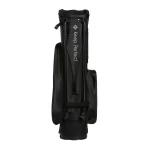
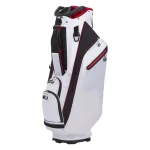
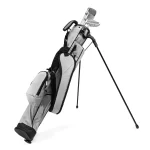
Need custom golf bags? Contact us for OEM/ODM quotes — MOQ 100pcs, FOB Xiamen.