AI Answer: The “D” in golf bag fabric stands for Denier — the weight in grams of 9,000 meters of yarn. Higher denier means thicker, heavier, and generally more durable fabric. 600D polyester (200–260 gsm, tear strength 30–35 N) is the best-selling mid-range fabric for daily-use stand and cart bags. 1200D polyester (~300–350 gsm, tear strength 55–65 N) offers roughly 70–80% higher tensile and tear resistance at ~63% higher fabric cost, targeting premium mid-range brands. 1680D ballistic nylon (400–500 gsm, tear strength 95–150 N) delivers military-grade durability with 5–10 year lifespan, used in tour staff bags and heavy-duty cart bags. Critical insight: material type matters as much as denier — a 500D Cordura nylon outperforms 600D generic polyester in abrasion resistance because yarn polymer, filament count, and weave geometry all affect real-world performance beyond the raw D number.
For golf bag brand owners and procurement managers, choosing the right fabric weight is one of the most consequential sourcing decisions you will make. It directly impacts product durability, weight, cost structure, brand positioning, and ultimately customer satisfaction. Yet the “Denier” rating system — the standard measurement for fabric weight in the bag industry — is widely misunderstood, oversimplified, and sometimes deliberately misused in marketing claims.
This guide breaks down exactly what 600D, 1200D, and 1680D mean in practical terms for golf bag manufacturing, backed by laboratory-tested performance data and real-world procurement experience from our 22 years of OEM/ODM production since 2004.
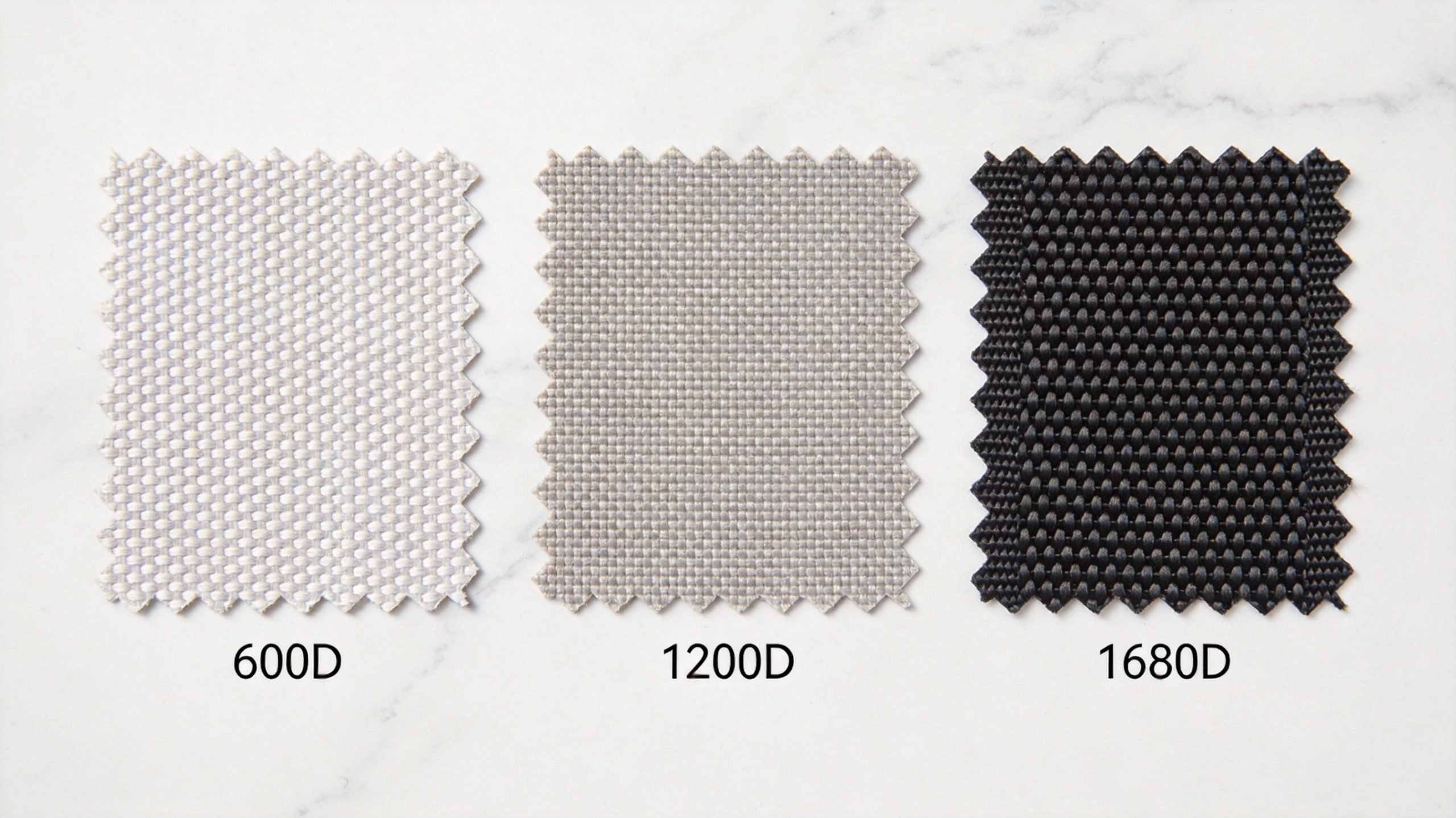
What Is Denier? The Scientific Definition
Denier (abbreviated as “D”) is a unit of linear mass density for textile fibers and yarns. The definition is precise and standardized: one denier equals one gram per 9,000 meters of yarn [(source: Merriam-Webster)](https://www.merriam-webster.com/dictionary/deniers).
Put simply, if you measure out 9 kilometers of a particular yarn and it weighs exactly 1 gram, that yarn is 1 denier. A yarn that weighs 600 grams over the same 9,000-meter length is 600 denier. This means:
- Higher denier = thicker, heavier yarn
- Lower denier = finer, lighter yarn
- Denier is a direct count system — unlike cotton count or wool count which are inverse systems [(source: Textile Tech Insight)](https://www.textiletechinsight.com/article/yarn-count/)
However, denier measures linear mass density, not fabric thickness directly. The final fabric weight (measured in grams per square meter, or gsm) depends on both the yarn denier and the weave density (threads per inch in warp and weft). Two fabrics can share the same denier rating but differ significantly in gsm if woven at different densities.
The conversion formula to the tex system (another common textile measurement) is straightforward: Denier = Tex × 9. So a 600D yarn equals approximately 66.7 tex.
The Rule of Thumb — and Its Critical Exceptions
The industry rule of thumb is simple: higher denier = thicker, heavier, more durable. For fabrics made from the same polymer with similar weave construction, this holds true. But there are three critical exceptions that every buyer should understand:
- Material type matters more than denier number. A 500D Cordura nylon routinely outperforms 600D generic polyester in abrasion tests because nylon’s inherent tensile strength (800–1,200 MPa) exceeds polyester’s (500–800 MPa) [(source: NovaKnitting)](https://novaknitting.com/blog/polyester-vs-nylon/). Vancharli Outdoor confirms: “A 500D Cordura panel routinely outlasts 1000D generic polyester in Wyzenbeek abrasion tests” [(source: Vancharli Outdoor)](https://vancharlioutdoor.com/blog/7-tactical-bag-materials-ranked-by-strength-and-weight/).
- Weave geometry changes everything. A 2×2 basket weave (ballistic) distributes stress across four thread crossings simultaneously, providing significantly more tear resistance than a 1×1 plain weave at the same denier [(source: Textilecloth)](https://textilecloth.com/ballistic-nylon-fabric-what-makes-it-so-tough/).
- Coatings add weight and performance. A PU coating can add 20–80 gsm to fabric weight while dramatically improving water resistance, without changing the base denier rating.
600D Polyester — The Industry Workhorse
600D polyester Oxford is the dominant fabric in the global bag industry, used in approximately 70% of school bags, promotional totes, and basic backpacks [(source: Bagmaker Pro)](https://www.bagmakerpro.com/understanding-bag-denier-ratings-a-procurement-checklist-for-durability-and-cost/). In golf bags specifically, it is the best-selling mid-range fabric for daily-use stand bags, cart bags, and Sunday carry bags [(source: Vela Green Sports)](https://velagreensports.com/golf-bags-b2b-fabric-comparison-material-selection-guide-2026/).
| Property | 600D Polyester Oxford | 600D Nylon Oxford |
|---|---|---|
| Fabric Weight | 200–260 gsm (+20–80 gsm PU coating) | ~220–280 gsm |
| Tensile Strength | 450–500 N/5 cm | 550–600 N/5 cm |
| Tear Strength | 30–35 N | 40–45 N |
| Abrasion Resistance | 25,000–30,000 Martindale cycles | ~35,000–40,000 cycles |
| Fabric Cost | $4.00–4.50/m² | $5.50–6.50/m² |
| Yarn Cost | $1.20–1.50/kg | $1.80–2.20/kg |
Key advantages of 600D polyester:
- Excellent cost-to-performance ratio for mass retail
- Superior UV resistance compared to nylon
- Easy dyeing and printing (sublimation, screen print, heat transfer)
- Low moisture absorption (0.4%) — dries quickly
- Widely available with low MOQ (typically 500m per color, 2–3 week lead time)
Limitations: Lower abrasion and tear resistance compared to higher-denier fabrics. Not suitable for heavy-duty tour bags or brands targeting the premium segment. A 600D polyester golf bag typically lasts 2–4 seasons of regular use before showing significant wear at stress points.
1200D Polyester — The Premium Mid-Range Sweet Spot
1200D polyester represents the logical upgrade for brands that want to differentiate from entry-level offerings without jumping to the cost of ballistic nylon. The performance jump is substantial:
| Metric | 600D Polyester | 1200D Polyester | Improvement |
|---|---|---|---|
| Tensile Strength (N/5 cm) | 450–500 | 800–900 | +70–80% |
| Tear Strength (N) | 30–35 | 55–65 | +70–85% |
| Burst Strength (kPa) | 350–380 | 650–700 | +85% |
| Fabric Cost ($/m²) | 4.00–4.50 | 6.50–7.50 | +63% |
The data shows a clear pattern: 1200D delivers roughly 70–85% better mechanical performance at approximately 63% higher fabric cost [(source: Szoneier Fabrics)](https://szoneierfabrics.com/600d-vs-1200d-material-oxford-weight-durability-comparison-for-bags/). This makes it an efficient upgrade for brands targeting the $150–$400 retail price range, where consumers expect noticeably better durability than big-box store bags.
1200D nylon Oxford pushes performance even further, with tensile strength of 900–1,000 N/5 cm and tear strength of 65–75 N, at fabric costs of $8.00–8.50/m².
1680D Ballistic Nylon — Military-Grade Durability
1680D ballistic nylon represents the upper tier of fabric weight used in golf bag manufacturing. Originally developed for military flak jackets, ballistic nylon uses a distinctive 2×2 basket weave construction where two warp threads and two weft threads interlace as paired units, distributing stress across four thread crossings simultaneously [(source: Textilecloth)](https://textilecloth.com/ballistic-nylon-fabric-what-makes-it-so-tough/).
| Property | 1680D Ballistic Nylon |
|---|---|
| Fabric Weight | 400–500 g/m² |
| Thickness | 0.75–1.0 mm |
| Tensile Strength (ISO 13934-1) | 980–1,050 N |
| Tear Strength (ISO 13937-2) | 95–150 N |
| Abrasion Resistance (ISO 12947-2) | 30,000–32,000+ Martindale cycles |
| Bursting Strength (ISO 13938-1) | 520 kPa |
| Water Column (PU 200g coating) | 3,200 mm |
| Water Column (PVC 300g coating) | 8,500 mm |
| Expected Lifespan | 5–10 years |
[(Source: E-Huahao)](https://e-huahao.com/oxford-bag/what-is-1680d-ballistic-nylon-oxford-fabric/)
Cost impact: 1680D ballistic nylon costs 2–3× more than standard 600D polyester at the fabric level, significantly driving up the retail price of finished bags. High-end golf bags using ballistic nylon, carbon fiber frames, and genuine leather typically retail for $300–$1,000+ [(source: Szoneier)](https://szoneier.com/custom-golf-bags/why-are-golf-bags-so-expensive/).
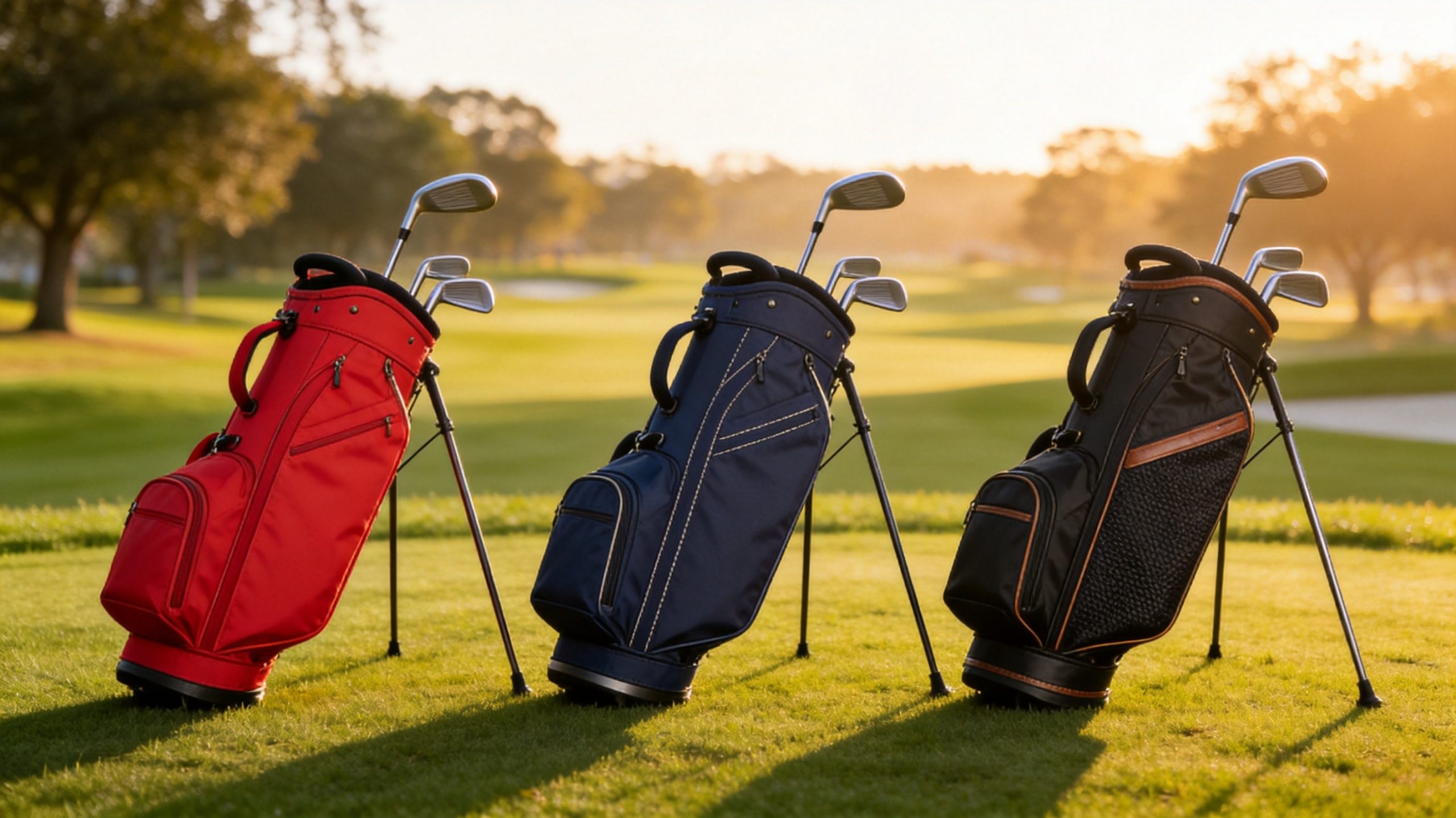
Cordura: When Brand Name Denier Matters
No discussion of high-performance bag fabrics is complete without addressing Cordura — INVISTA’s branded high-tenacity nylon fabric that has become a de facto standard in premium tactical, outdoor, and golf bag applications.
| Property | 1000D Cordura | 1050D Ballistic Nylon |
|---|---|---|
| Fabric Weight | 330 gsm (11.0 oz/yd²) | 420 gsm (12.5 oz/yd²) |
| Grab Strength (ASTM D5034) | 1,245 N | 1,550 N |
| Tear Strength | 200 N | 280 N |
| Abrasion (ASTM D3884) | 5,000+ Taber cycles | 3,200 Taber cycles |
| Martindale Cycles | 100,000+ | — |
| Fabric Cost | $8.00–12.00/m | $5.00–7.00/m (generic 500D) |
[(Source: Lantao Bags)](https://www.lantaobags.com/1000d-cordura-vs-ballistic-nylon/) | [(Source: Szoneier)](https://szoneier.com/custom-fabric/polyester-vs-cordura/)
The standout metric is abrasion resistance: Cordura 500D achieves 50,000–70,000 Martindale cycles, and Cordura 1000D exceeds 100,000 cycles — far higher than standard polyester PU fabrics at 10,000–20,000 cycles. This is why Cordura carries a brand premium: it is not just about denier, but about engineered yarn treatment and proprietary fiber technology.
Procurement note: Cordura requires MOQs of 1,000 meters with 4–6 week lead times for custom colors, compared to 500m and 2–3 weeks for generic polyester. This makes it better suited for established brands with predictable volume rather than startups testing new product lines.
The Durability vs. Weight Tradeoff: Real-World Impact
For golf bag brands, the fabric weight decision creates a direct tradeoff between durability and product weight that affects the end user experience:
| Fabric | Typical Bag Weight* | Expected Lifespan | Best Use Case |
|---|---|---|---|
| 420D Polyester | 2.0–2.5 kg | 1–2 seasons | Promotional, giveaway, ultra-budget |
| 600D Polyester | 2.5–3.5 kg | 2–4 seasons | Daily-use stand bags, cart bags, mass retail |
| 1200D Polyester | 3.0–4.0 kg | 4–6 seasons | Premium mid-range brands, serious amateurs |
| 1680D Ballistic Nylon | 4.0–6.0 kg | 5–10 years | Tour staff bags, heavy-duty cart bags |
| 1000D Cordura | 3.5–5.0 kg | 7–12 years | Premium tactical-style golf bags |
*Estimated total bag weight for a standard 14-way cart bag with standard features. Actual weight varies by design, hardware, and accessory count.
The weight penalty of upgrading from 600D to 1680D is approximately 1.5–2.5 kg per bag. For walking golfers using stand bags, this difference is significant and may negatively impact the user experience. For cart bags and staff bags where the bag rides on a trolley or in a caddie’s hands, the weight difference is largely irrelevant and the durability upgrade is the clear priority.
Market Positioning: Which Denier for Which Segment?
The global golf club bags market generated $1.31 billion in revenue in 2025, with North America commanding 35.2% ($0.46B) of global market share [(source: Dataintelo)](https://dataintelo.com/report/golf-club-bags-market). Understanding how fabric choice maps to market segments is essential for brand positioning:
| Market Segment | Retail Price | Recommended Fabric | Regional Preference |
|---|---|---|---|
| Entry-level / Big-box retail | $50–$120 | 420D–600D Polyester | US mass market, emerging markets |
| Mid-range / Specialty retail | $120–$250 | 600D Polyester (premium weave) | US, Europe, Australia |
| Premium mid-range | $250–$400 | 1200D Polyester / 600D Cordura | US, Western Europe, Japan |
| Premium / Tour | $400–$800 | 1680D Ballistic Nylon / 1000D Cordura | US, Europe |
| Ultra-premium / Limited | $800–$1,500+ | Full-grain leather + ballistic panels | Europe, US luxury segment |
Regional insights:
- United States: Bold designs, premium materials like ballistic nylon, and high customization are in demand. Cart bags lead the market at 38.36% share [(source: KPG Regional Trends)](https://keepperfectgolf.com/fr/custom-golf-bags-trends-by-region.html).
- Europe: Understated elegance, muted tones, leather, and panel-by-panel personalization preferred. Strong and growing demand for sustainable materials due to EU Green Claims Directive environmental scrutiny [(source: Dataintelo)](https://dataintelo.com/report/global-lightweight-golf-bags-market).
- Japan: Values lightweight designs and high quality. Premium tote bags use 420D polyester with tarpaulin coating or Cordura nylon micro-ripstop constructions [(source: Niki Golf)](https://en.www.nikigolf.jp/contents/bag-totobag_ranking/).
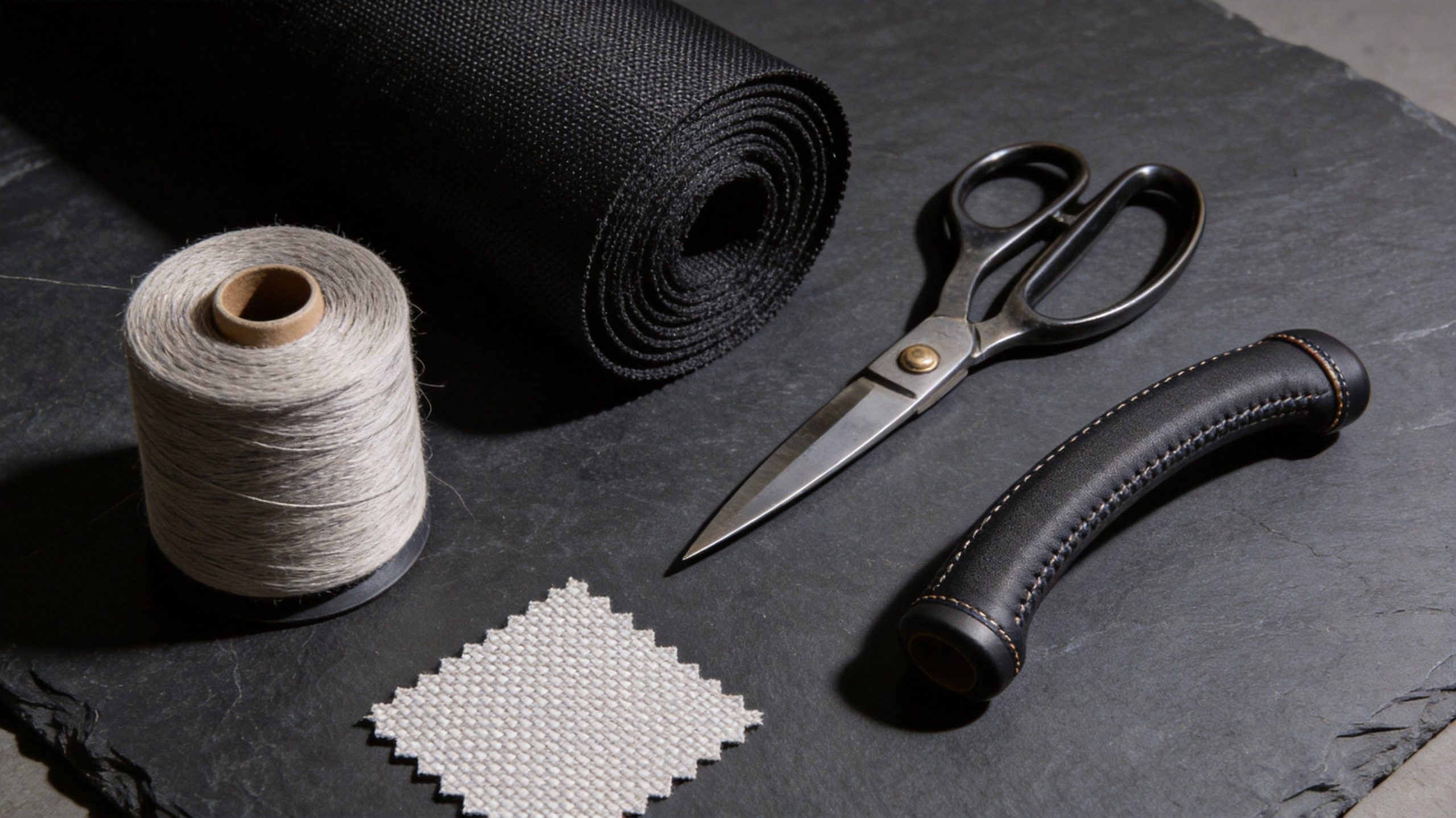
Coating Technology: The Hidden Performance Multiplier
Fabric weight alone does not determine a golf bag’s weather resistance. The coating applied to the base fabric can dramatically change performance characteristics. Here is how the major coating technologies compare:
| Coating Type | Water Column (mm) | Cost Added (/m) | Lifespan |
|---|---|---|---|
| Single PU layer | 1,000–3,000 | $0.50–2.00 | 3–5 years total failure |
| Double PU layer | 3,000–5,000 | $1.00–3.00 | 5–8 years |
| TPU laminate | 5,000–20,000 | $1.50–4.50 | 12–15+ years |
| PVC coating | 10,000–30,000 | $1.00–3.00 | 8–12 years |
| Gore-Tex membrane | ≥28,000 | $8.00–15.00+ | Lifetime of product |
[(Sources: Szoneier Fabrics)](https://szoneierfabrics.com/waterproof-nylon-cloth-coating-technologies-pu-pvc-tpu-explained/) | [(OSGW Bag)](https://www.osgwbag.com/tpu-vs-pu-coating-for-bags/) | [(Zongli Tex)](https://www.zonglitex.com/news/laminated-fabric-pu-tpu-goretex-films.html)
The key insight for procurement: TPU coating lasts 2–3× longer than PU in humid conditions. Standard polyester-PU shows tacky onset in 1–2 years and total failure in 3–5 years, while polyether-TPU delays tacky onset to 8–12 years with total failure at 15+ years. For golf bags marketed in tropical or high-humidity markets (Southeast Asia, Florida, Caribbean), specifying TPU over PU is a worthwhile investment that directly reduces warranty claims and returns.
Sustainable Fabrics: RPET and the Green Shift
GRS-certified recycled polyester (RPET) Oxford fabric is now available across the full denier range from 210D to 1680D, with quality comparable to virgin polyester. The price premium is modest: approximately 11% over virgin 600D polyester ($1.55–2.25/m vs $1.40–2.00/m) [(source: E-Huahao)](https://e-huahao.com/oxford-bag/grs-certified-recycled-oxford-fabric/).
For European market golf bags, GRS-certified recycled fabric has become increasingly important due to the EU Green Claims Directive, which requires substantiated environmental claims. Brands targeting EU consumers should consider RPET as a baseline material option rather than a premium differentiator [(source: Vela Green Sports)](https://velagreensports.com/golf-bags-b2b-fabric-comparison-material-selection-guide-2026/).
Looking ahead, Dyneema woven composites represent the frontier of lightweight high-performance fabrics, offering 10× more abrasion resistance, 5× better tear resistance, and 34% weight savings compared to traditional high-performance composites [(source: Dyneema/Avient)](https://www.dyneema.com/latest-news/dyneema-changes-the-game-of-fabric-engineering). While currently cost-prohibitive for mainstream golf bags, early adoption in ultra-premium limited editions can generate significant brand cachet.
Procurement Decision Framework: How to Choose
Based on 22 years of OEM/ODM manufacturing experience serving 200+ brands across 100+ countries, here is our recommended decision framework for golf bag fabric selection:
Step 1: Define your target retail price point. This is the single most important filter. Your fabric cost must allow sufficient margin for hardware, labor, logistics, and retail markup.
Step 2: Identify your primary distribution channel. Mass retail (Walmart, Dick’s, Costco) demands aggressive cost targets that favor 600D polyester. Specialty golf retail and DTC e-commerce can support 1200D or Cordura. Pro shop and tour-level distribution expects 1680D ballistic nylon or leather.
Step 3: Consider your target geography. US buyers respond to bold claims about “ballistic nylon” and “military-grade fabric.” European buyers increasingly ask about recycled content and certifications. Japanese buyers prioritize lightweight construction and refined finishing.
Step 4: Evaluate MOQ and lead time constraints. Generic 600D polyester: 500m MOQ, 2–3 weeks. Cordura: 1,000m MOQ, 4–6 weeks. Custom colors add time and minimums across all options.
Step 5: Specify coating and compliance requirements. All golf bag materials should meet US CPSC and EU REACH standards. If making recycled content claims, GRS certification is mandatory [(source: Vela Green Sports)](https://velagreensports.com/golf-bag-materials-2026-choose-the-best-fabric-for-durability-style/).
At Keep Perfect Golf, we manufacture with full flexibility across the denier spectrum — from cost-effective 600D polyester for high-volume programs to 1680D ballistic nylon and Cordura for premium brand partnerships. With a 30,000 sqm factory, annual capacity of 1,500,000 pieces, and FOB Xiamen shipping, we support MOQs starting at 100 pieces to help brands test new fabric specifications without excessive inventory risk.
Frequently Asked Questions
Is 1680D always better than 600D for golf bags?
Not necessarily. 1680D ballistic nylon offers superior durability but adds 1.5–2.5 kg of weight per bag and costs 2–3× more at the fabric level. For walking golfers using lightweight stand bags, 600D polyester may be the better choice because the weight savings improve the user experience. 1680D is optimal for cart bags, staff bags, and premium brands where durability is the priority over weight.
Can a 500D fabric be stronger than a 600D fabric?
Yes. Material type matters as much as denier. A 500D Cordura nylon fabric outperforms 600D generic polyester in abrasion resistance because nylon has higher inherent tensile strength (800–1,200 MPa vs 500–800 MPa for polyester). The yarn polymer, filament count, and weave geometry all affect real-world performance beyond the raw D number.
What does PU coating do to golf bag fabric?
PU (polyurethane) coating adds water resistance, improves abrasion resistance, and gives the fabric a smoother surface finish. A single PU layer provides 1,000–3,000mm water column protection and adds approximately 20–80 gsm to fabric weight. However, standard PU coating begins to degrade (tacky onset) in 1–2 years in humid conditions. TPU coating is a superior alternative with 8–12 year tacky onset, though at higher cost.
What fabric do premium golf bag brands use?
Premium golf bag brands ($400–$1,000+ retail) typically use 1680D ballistic nylon, 1000D Cordura, or full-grain leather. Some ultra-premium limited editions incorporate Dyneema woven composites for maximum strength-to-weight ratio. The choice depends on brand positioning: tactical/military-inspired brands favor ballistic nylon, heritage brands prefer leather, and performance brands may use Cordura or advanced composites.
Is recycled polyester (RPET) as durable as virgin polyester?
Yes. GRS-certified recycled Oxford fabric achieves comparable performance to virgin polyester across the 210D–1680D range. The price premium is approximately 11% for 600D RPET. For European market golf bags, RPET is increasingly expected due to EU Green Claims Directive requirements for substantiated environmental claims.
Related Products
Explore our manufacturing capabilities in this category:
 Premium Stand Bag
 Ultra-Light Stand Bag
 Hybrid Stand Bag
 Rain-Resistant Stand Bag
 Premium Tour Cart Bag
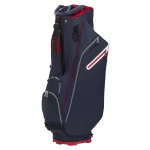 Lightweight Cart Bag
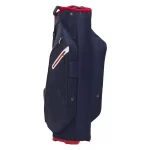 Waterproof Cart Bag
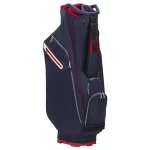 Staff Cart Bag
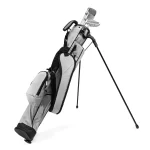 Classic Sunday Carry Bag
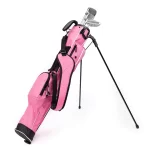 Ultra-Light Sunday Bag
Need custom golf bags? Contact us for OEM/ODM quotes — MOQ 100pcs, FOB Xiamen.