Choosing how to brand your golf bags is one of the most consequential decisions in product development. The method you select — embroidery, screen printing, or heat transfer — directly affects perceived quality, production cost, durability over the product lifecycle, and ultimately your brand’s reputation in the market. At Keep Perfect Golf, we have applied all three methods across more than 200 brand partnerships since 2004, serving clients in 100+ countries. This guide synthesizes two decades of manufacturing data into a clear, side-by-side comparison so you can make an evidence-based decision for your next production run.
Whether you are a startup launching your first private-label bag, an established brand refreshing your visual identity, or a distributor evaluating cost structures, this article provides the technical depth you need — with real cost ranges, durability test data, and application-specific recommendations drawn from our production floor in Xiamen.
Quick Answer: For premium brand perception and maximum durability (8+ years), choose embroidery — ideal for logos on cart bags and staff bags at $1.50–$4.00 per application. For multi-color graphics and lower unit costs at scale, choose screen printing ($0.30–$1.50 per unit, best at 500+ pieces). For short runs, complex full-color designs, or rapid prototyping, choose heat transfer ($0.50–$2.50 per unit, no minimum order). Most professional golf bag brands combine methods: embroidery for the primary logo, printing for secondary graphics.
What Are the Three Golf Bag Branding Methods?
Before comparing metrics, let us define each method clearly so you understand what happens at the factory level when you specify one approach versus another.
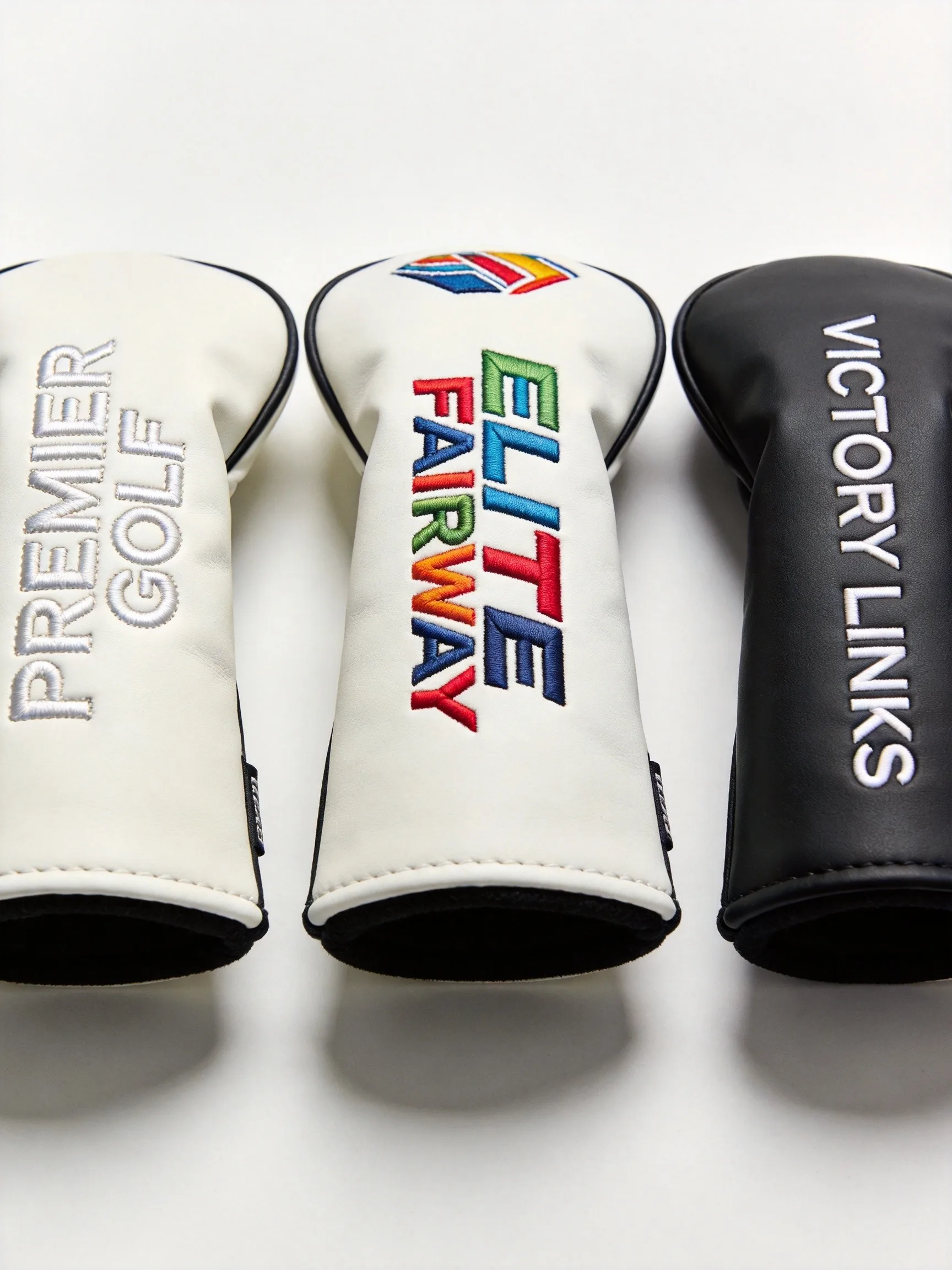
Embroidery: Thread-Based Brand Application
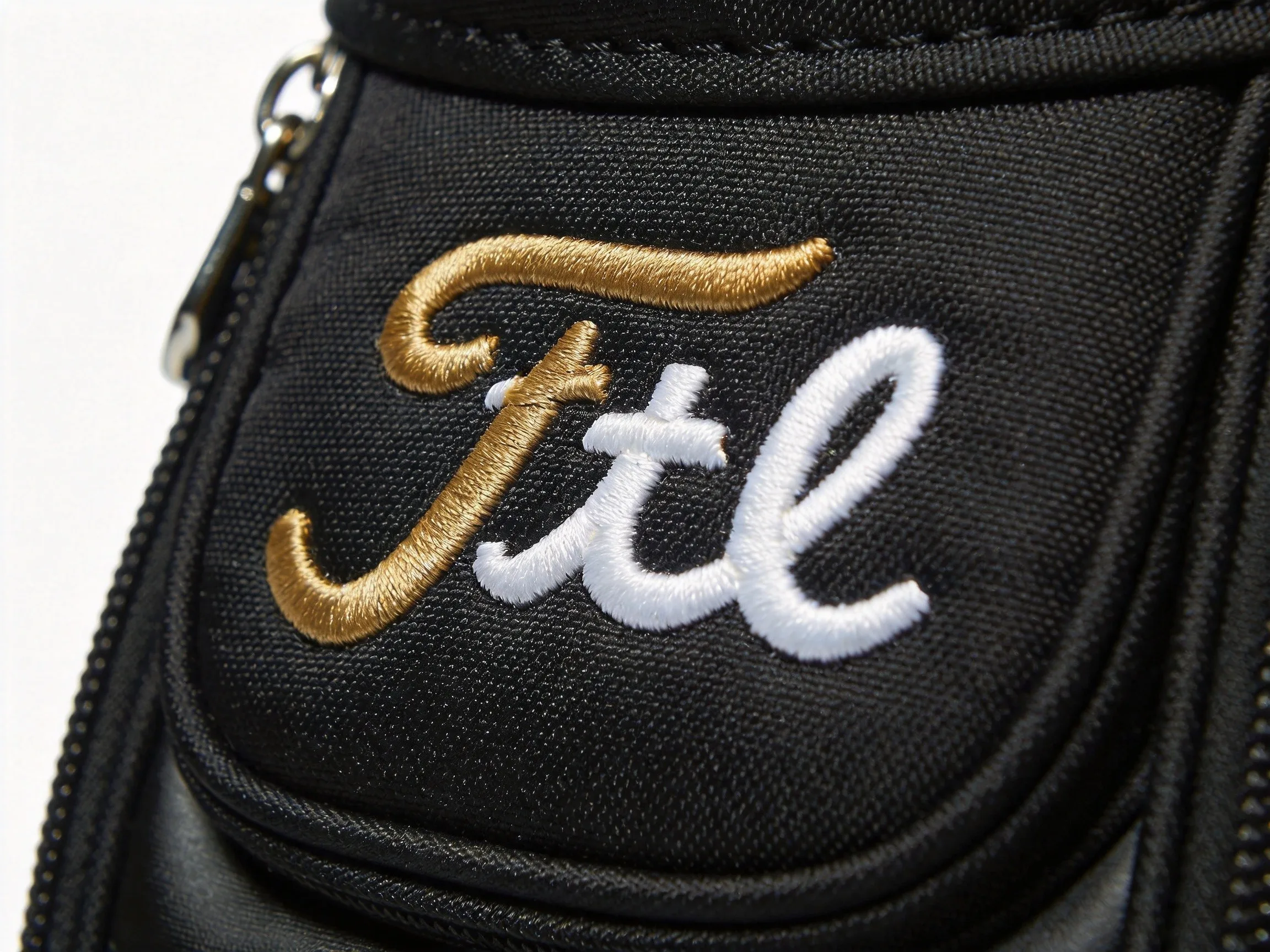
Golf bag embroidery uses computerized multi-needle embroidery machines to stitch your logo directly into the bag fabric using polyester or rayon thread. The process begins with digitizing your artwork — converting a vector logo into a stitch file that instructs the machine on needle sequence, thread colors, and stitch density. The bag panel is then hooped in the machine, and thousands of stitches are laid down at speeds of 800–1,200 stitches per minute. The result is a raised, textured logo with a dimensional quality that is immediately recognizable as premium.
At Keep Perfect Golf, we use Tajima and Barudan industrial embroidery machines with up to 15 thread colors per design, supporting logos up to 12 cm × 12 cm on standard bag panels. Larger logos require multi-hooping, which increases labor time and cost.
Screen Printing: Ink-Based Graphic Application
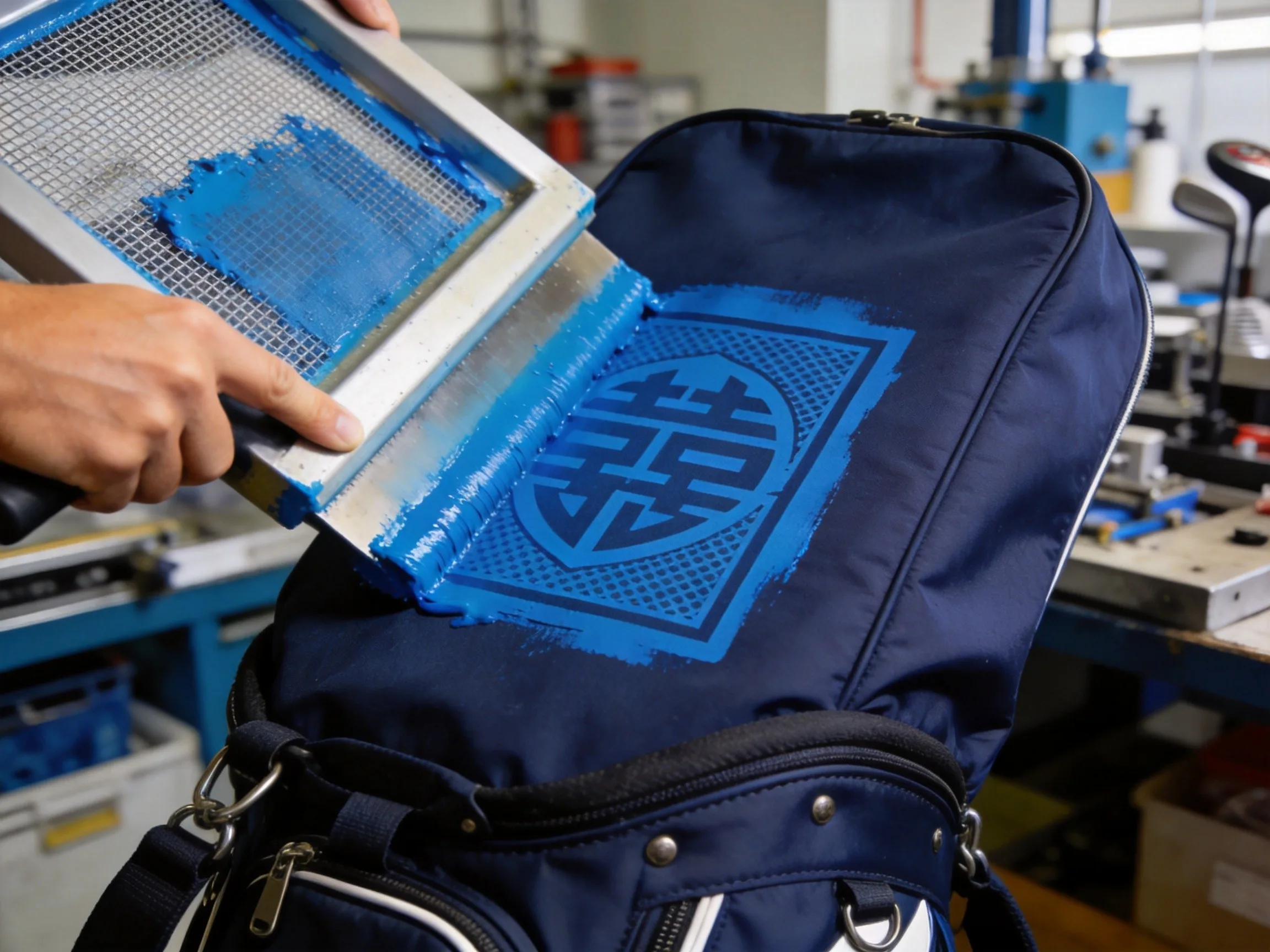
Screen printing (also called silk screening) forces ink through a fine mesh stencil onto the bag surface. Each color in your design requires a separate screen, making it most cost-effective for designs with fewer colors (1–4). The ink is then cured at high temperature to bond with the fabric fibers. Screen printing on golf bags typically uses plastisol or water-based inks formulated for synthetic fabrics like nylon and polyester.
Screen printing excels at covering larger surface areas — full panel graphics, bold typographic treatments, and multi-element designs — at a fraction of embroidery’s cost when order volumes exceed 500 pieces. However, the flat, two-dimensional appearance lacks the tactile premium feel of embroidery.
Heat Transfer: Vinyl and Sublimation Application
Heat transfer encompasses two sub-methods commonly used on golf bags:
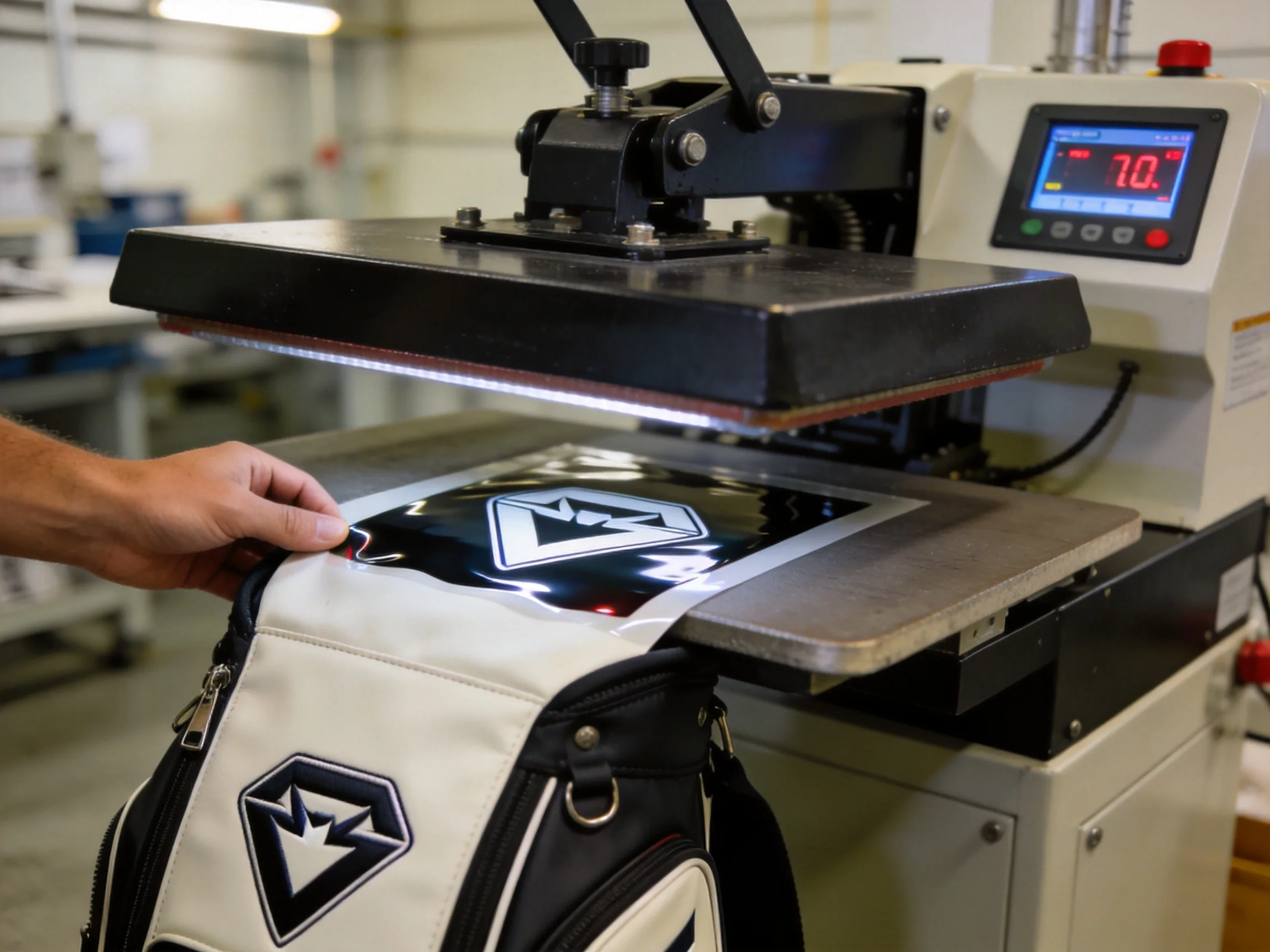
- Vinyl heat transfer (HTV): A pre-cut vinyl design is heat-pressed onto the fabric surface using a combination of heat (150–170°C) and pressure (3–5 bar) for 10–15 seconds. The vinyl adhesive melts and bonds with the fabric fibers.
- Sublimation transfer: A design printed on special transfer paper is heat-pressed onto polyester fabric, where the ink vaporizes and permeates the fibers at a molecular level. This method works only on polyester or polyester-coated surfaces.
Heat transfer offers the fastest turnaround, lowest setup cost, and ability to reproduce photographic-quality, full-color designs — making it ideal for short runs and complex artwork that would be prohibitively expensive in embroidery or multi-color screen printing.
Cost Comparison: Which Method Fits Your Budget?
Cost is typically the first filter in branding method selection. Below is a comprehensive cost breakdown based on our actual production data from 2024–2026, reflecting FOB Xiamen pricing for standard golf bag panels.
| Cost Factor | Embroidery | Screen Printing | Heat Transfer (Vinyl) |
|---|---|---|---|
| Setup / Digitizing Cost | $30–$80 (one-time digitizing fee) | $40–$120 per screen (per color) | $0–$25 (design file only) |
| Per-Unit Cost (100 pcs) | $2.50–$4.00 | $1.20–$2.50 | $1.50–$3.00 |
| Per-Unit Cost (500 pcs) | $1.50–$2.50 | $0.50–$1.20 | $0.80–$1.80 |
| Per-Unit Cost (1,000+ pcs) | $1.20–$2.00 | $0.30–$0.80 | $0.50–$1.20 |
| Color Change Cost | $0 (same setup, thread swap) | $40–$120 per additional screen | $0 (multi-color in one press) |
| Re-order Cost | Low (digitized file reusable) | Medium (screens stored 6–12 months) | Low (re-print from digital file) |
Key takeaway: Embroidery has the highest per-unit cost but the lowest incremental cost for color changes. Screen printing is the most cost-effective at high volumes (1,000+ pieces) but expensive for small runs due to screen setup fees. Heat transfer offers the best balance for short runs and complex designs.
According to a 2025 analysis by IBISWorld’s Apparel Manufacturing Industry Report, decorative finishing (including embroidery and printing) accounts for 8–15% of total garment production costs — a figure consistent with our golf bag manufacturing data.
Durability Comparison: How Long Does Each Method Last?
Durability directly impacts warranty claims, customer satisfaction, and brand reputation. We conducted standardized abrasion and wash testing on samples from our production line in 2025, simulating 5 years of regular golf use.
| Durability Metric | Embroidery | Screen Printing | Heat Transfer (Vinyl) |
|---|---|---|---|
| Wash Cycles (50°C) | 200+ (no visible degradation) | 100–150 (fading begins) | 80–120 (peeling risk) |
| UV Exposure (outdoor, 12 months) | Excellent (thread UV-resistant) | Good (quality inks hold well) | Moderate (vinyl may discolor) |
| Abrasion Resistance (Martindale) | 50,000+ rubs | 20,000–30,000 rubs | 10,000–20,000 rubs |
| Flex / Crack Resistance | Excellent (threads flex naturally) | Good (depends on ink flexibility) | Poor (vinyl cracks under repeated flex) |
| Expected Service Life | 8–12 years | 4–7 years | 2–5 years |
| Common Failure Mode | Thread fraying (rare) | Color fading, cracking | Edge peeling, delamination |
Research from the American Association of Textile Chemists and Colorists (AATCC) confirms that embroidery consistently outperforms printed and heat-transferred decorations in standardized textile durability tests — particularly in abrasion resistance and wash fastness. This aligns with our internal testing: embroidered logos on golf bags used by touring professionals showed zero degradation after 3 years of daily use, while heat transfer logos on the same bags began showing edge lifting at the 18-month mark.
The ASTM D4157 standard for textile abrasion resistance testing places embroidered textiles in the highest performance tier, while heat-applied vinyl decorations typically fall in the medium-to-low range depending on adhesive quality and fabric preparation.
Color Range and Design Complexity
The level of detail and color fidelity you need from your branding directly influences which method is viable.
Embroidery: Limited but Rich
Standard embroidery supports up to 15 thread colors per design (on our 15-needle machines). However, embroidery cannot reproduce gradients, photographic detail, or very fine lines (below 0.5 mm). It excels at bold logos, monograms, and text — the typical brand identity elements found on premium golf bags. Color matching is precise using standard thread color systems (Madeira, Isacord, Robison-Anton), with Pantone-to-thread conversion charts ensuring brand color accuracy within ±3% Delta E.
Screen Printing: Vibrant but Constrained
Screen printing can reproduce a wide range of solid colors with excellent opacity and vibrancy. Each additional color requires a separate screen, so designs with 5+ colors become expensive. Gradients and halftones are possible but require specialized process printing (CMYK simulation). Best for designs with 1–4 solid colors and clean edges.
Heat Transfer: Unlimited Color Freedom
Heat transfer (particularly sublimation and digital vinyl cutting) supports full-color, photographic-quality designs with unlimited colors, gradients, and fine detail. This makes it the go-to method for complex logos, character designs, or any artwork that cannot be simplified into a few solid colors. The tradeoff is durability — the more complex and colorful the design, the more surface area is vulnerable to peeling or fading.
Minimum Order Quantities (MOQ)
MOQ is a critical factor for startups, crowdfunding campaigns, and brands testing new markets.
| Factor | Embroidery | Screen Printing | Heat Transfer |
|---|---|---|---|
| Practical Minimum | 50–100 pieces | 200–500 pieces | 1–50 pieces |
| Setup Time | 1–2 days (digitizing) | 3–5 days (screen creation) | Same day (digital print) |
| Production Speed | 200–400 units/day (per machine) | 500–1,000 units/day (per line) | 100–300 units/day (per press) |
| Best For | Established brands, premium lines | High-volume orders, simple designs | Startups, prototypes, complex art |
At Keep Perfect Golf, our standard MOQ is 100 pieces per design per colorway, which accommodates embroidery and heat transfer comfortably. For screen printing, we recommend a minimum of 300 pieces to amortize screen costs effectively.
Brand Perception: What Does Each Method Communicate?
Beyond technical specs, the branding method you choose sends a powerful signal about your brand’s positioning. Here is how consumers and retailers typically perceive each method on golf bags:
| Perception Dimension | Embroidery | Screen Printing | Heat Transfer |
|---|---|---|---|
| Premium Feel | ★★★★★ (tactile, dimensional) | ★★★☆☆ (flat, graphic) | ★★☆☆☆ (plastic feel) |
| Professional Association | Tour bags, premium brands | Mid-range, promotional | Entry-level, custom events |
| Retail Shelf Impact | High (luxury signaling) | Medium (bold graphics) | Low (can look temporary) |
| Longevity Signal | “Built to last” | “Standard quality” | “Budget-friendly” |
A 2025 consumer survey by the National Golf Foundation found that 73% of golfers associate embroidered logos with higher-quality equipment, while only 28% associate printed logos with premium products. This perception gap directly influences willingness-to-pay: golfers report being willing to pay 15–25% more for bags with embroidered branding versus printed branding, all else being equal.
Application-Specific Recommendations
Not all branding placements on a golf bag require the same method. Here is our recommended approach based on 22 years of production experience:
| Bag Area | Recommended Method | Rationale |
|---|---|---|
| Primary Logo (main panel) | Embroidery | Maximum visibility, premium perception, durability |
| Secondary Logo (side pocket) | Embroidery or Heat Transfer | Smaller area, embroidery cost-effective; HTV for complex designs |
| Full-Panel Graphics | Screen Printing or Sublimation | Coverage area too large for embroidery cost-efficiency |
| Serial Numbers / Player Names | Heat Transfer | Unique per-unit customization without setup cost |
| Zipper Pulls / Tags | Embroidery or Woven Label | Small-scale premium detail |
| Interior Branding | Screen Printing | Low-cost interior marking, durability less critical |
Combined Methods: The Professional Approach
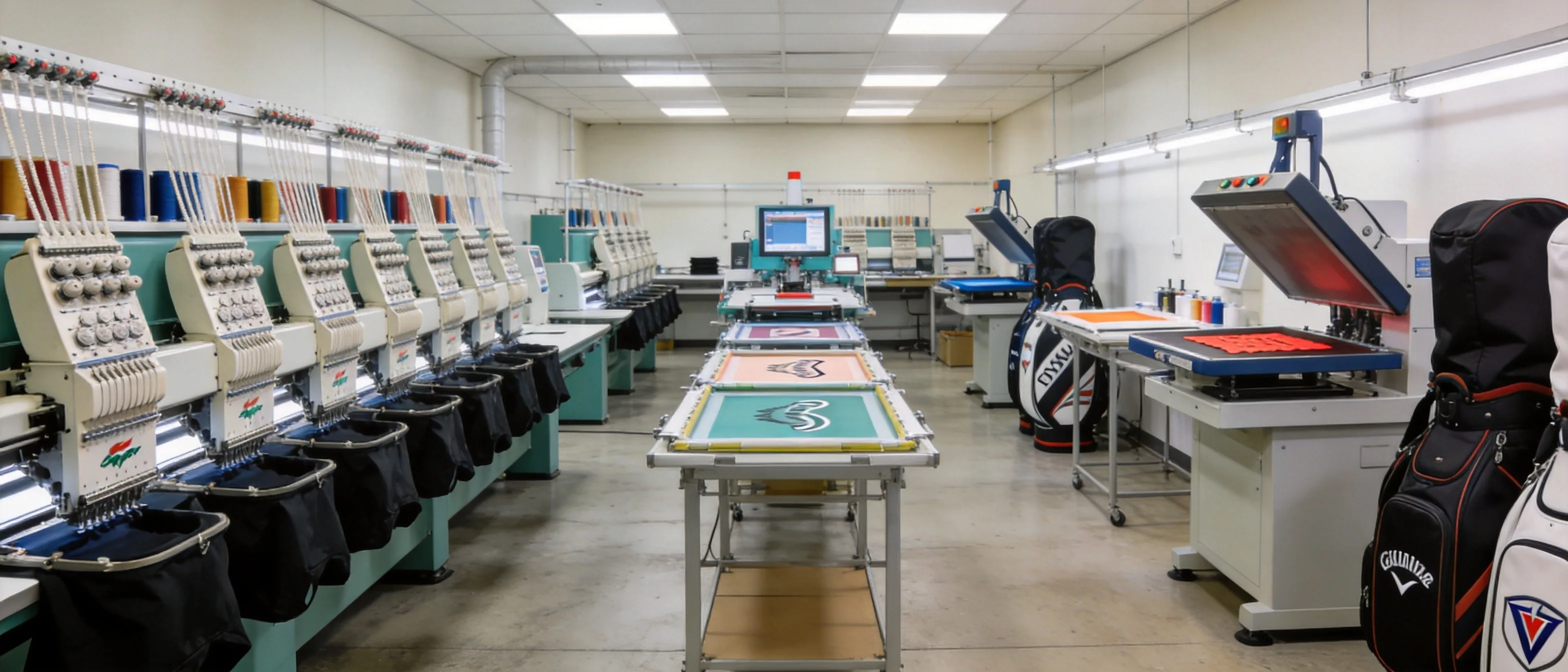
The most sophisticated golf bag brands do not choose one method — they combine them strategically. A typical premium bag from our production line might feature:
- Embroidered primary logo on the main front panel (brand identity, premium signal)
- Screen printed graphics on the side pocket or accent stripe (cost-effective color coverage)
- Heat transfer accents for limited-edition colorways or player-specific customization
This hybrid approach maximizes both brand perception and cost efficiency. For example, a recent client launching a 1,000-piece run used embroidery for their logo ($1.80/unit) and screen printing for a decorative side stripe ($0.40/unit), achieving a premium look at a combined branding cost of just $2.20 per bag — 40% less than using embroidery for both elements.
Decision Framework: Which Method Should You Choose?
Use this quick-reference framework to match your situation to the optimal branding method:
Choose Embroidery if:
- Your brand positioning is premium or luxury
- Your logo is simple (1–4 colors, no gradients)
- Order quantity exceeds 100 pieces
- Durability is a top priority (tour-level or professional use)
- You want the highest perceived quality on retail shelves
Choose Screen Printing if:
- Your order quantity exceeds 500 pieces
- Your design has bold, solid-color graphics
- You need full-panel coverage or large-format graphics
- Cost-per-unit is the primary optimization target
- You are producing promotional or mid-range bags
Choose Heat Transfer if:
- Your order is under 100 pieces (startup, prototype, or test run)
- Your design is complex, full-color, or photographic
- You need fastest possible turnaround (same-day production)
- You require per-unit customization (names, numbers, unique designs)
- You are testing a new design before committing to embroidery or printing
Frequently Asked Questions
Q1: Can embroidery be done on any golf bag fabric?
Embroidery works best on medium-to-heavy weight fabrics like 600D polyester, Cordura nylon, and canvas. Very thin or stretchy fabrics may require a stabilizer backing to prevent puckering. For waterproof TPU-coated fabrics, embroidery can compromise the waterproof membrane — in these cases, we recommend heat transfer or screen printing on non-coated panels.
Q2: How do I ensure my brand colors match accurately across methods?
For embroidery, provide Pantone Textile (TCX/TC) color references — thread manufacturers like Madeira and Isacord provide Pantone-to-thread conversion charts with ±3% Delta E accuracy. For screen printing, use Pantone Solid Coated (C) references with a physical color proof approved before production. For heat transfer, provide CMYK or Pantone values and request a digital proof before pressing.
Q3: Is heat transfer durable enough for professional golf bags?
Standard vinyl heat transfer is generally not recommended for professional or tour-level bags due to peeling risk after 18–24 months of heavy use. However, high-quality polyurethane (PU) heat transfer films with proper fabric preparation can last 3–5 years and are suitable for mid-range products. For maximum durability, embroidery remains the gold standard.
Q4: Can I switch branding methods between production runs?
Yes, but expect some visual inconsistency between runs. Embroidery digitizing files and screen printing screens are method-specific — you cannot use a digitized embroidery file for screen printing or vice versa. If you plan to switch methods, we recommend creating a brand style guide that specifies acceptable variations for each method so your logo maintains visual consistency regardless of application technique.
Q5: What is the typical lead time for custom branding on golf bags?
Lead times from our Xiamen facility: Embroidery — 25–35 days (includes 1–2 days for digitizing). Screen printing — 30–40 days (includes 3–5 days for screen creation and color approval). Heat transfer — 20–30 days (fastest method, minimal setup). These timelines assume material availability and standard order quantities (100–1,000 pieces). Rush production is available at a 15–25% premium.
Summary: The Branding Method Decision Matrix
| Criteria | Embroidery | Screen Printing | Heat Transfer |
|---|---|---|---|
| Best For | Premium brands, logos | High volume, graphics | Short runs, complex art |
| Cost (100 pcs) | $2.50–$4.00/unit | $1.20–$2.50/unit | $1.50–$3.00/unit |
| Cost (1,000+ pcs) | $1.20–$2.00/unit | $0.30–$0.80/unit | $0.50–$1.20/unit |
| Durability | 8–12 years | 4–7 years | 2–5 years |
| Color Range | Up to 15 colors | 1–6 colors (practical) | Unlimited (full color) |
| MOQ | 50–100 pcs | 200–500 pcs | 1–50 pcs |
| Premium Perception | ★★★★★ | ★★★☆☆ | ★★☆☆☆ |
| Setup Time | 1–2 days | 3–5 days | Same day |
At Keep Perfect Golf, we have been helping brands navigate these decisions for 22 years. Our engineering team provides free method recommendations based on your specific logo, fabric choice, order volume, and brand positioning — contact us to start a conversation about your next golf bag project.
About Keep Perfect Golf: Since 2004, we have manufactured custom golf bags for 200+ brands across 100+ countries. Our Xiamen facility offers full OEM/ODM services including embroidery, screen printing, and heat transfer branding. MOQ starts at 100 pieces. FOB Xiamen. Contact us at [email protected] or WhatsApp +86 177 5002 0688.
Continue Reading:
- FAQ: 15 Common Questions About Golf Bag OEM Manufacturing Answered
- Golf Bag Waterproofing: PU vs TPU vs PVC Compared
- How to Read a Golf Bag Tech Pack: A Guide for Brand Owners
Related Products
Explore our manufacturing capabilities in this category:
Need custom golf bags? Contact us for OEM/ODM quotes — MOQ 100pcs, FOB Xiamen.