
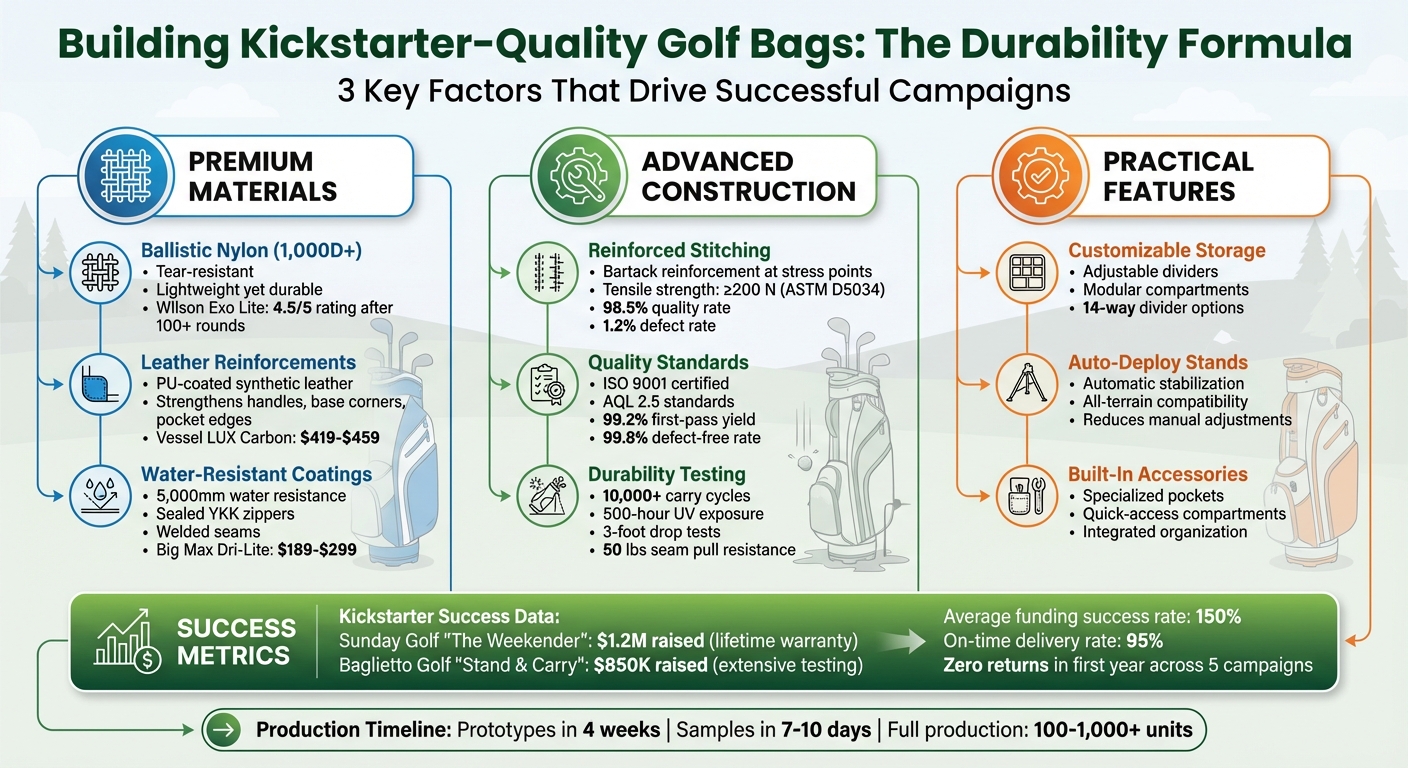
Durable golf bags on Kickstarter succeed by focusing on three key factors: high-quality materials, solid construction, and practical features. Backers trust campaigns that demonstrate durability through transparent testing and offer features that solve common golfer pain points. For example, bags made with ballistic nylon, reinforced stitching, and weatherproof coatings last longer and perform better in tough conditions. Features like auto-deploy stands, customizable storage, and padded straps enhance usability and comfort.
Kickstarter campaigns that emphasize these qualities, share measurable data, and provide warranties raise more funds and build customer loyalty. Examples include Sunday Golf’s "The Weekender", which raised $1.2 million by combining rugged materials with a lifetime warranty, and Baglietto Golf’s "Stand & Carry", which secured $850,000 after extensive durability testing.
To stand out, creators should focus on:
- Premium materials like ballistic nylon and leather reinforcements.
- Advanced construction techniques such as bartack stitching and welded seams.
- Practical features like auto-deploy stands and weatherproof zippers.
Partnering with experienced manufacturers like Keep Perfect Golf ensures quality production, rigorous testing, and efficient delivery, helping campaigns meet backer expectations and achieve funding goals.
Key Materials and Construction Methods for Durable Kickstarter Golf Bags
Best Golf Stand Bags 2025 – Over 18 Models Tested!
sbb-itb-4fa7e8b
Materials for Durability and Weather Protection
Golf bags from Kickstarter campaigns are built to last, using tough, weather-resistant materials designed to handle challenging conditions and ensure they perform well over time.
Ballistic Nylon and High-Denier Fabrics
Durable nylon and ripstop polyester are key materials in many Kickstarter golf bags. These fabrics strike a balance between being lightweight and standing up to rough use, including exposure to grass stains, mud, and uneven terrain. Cart bags often feature heavy-duty nylon for added structure and water resistance, while stand bags lean on ripstop polyester to keep weight in check. Take the Wilson Exo Lite, for instance – it scored an impressive 4.5/5 from experts after enduring over 100 rounds of golf. Reviewers highlighted its ability to "exceed durability expectations" in tough conditions. High-denier fabrics, which are measured by thread density, are particularly effective at resisting tears and abrasions without making the bag bulky. Adding leather reinforcements to stress points further extends the bag’s lifespan.
Leather Reinforcements
Synthetic leather with a polyurethane (PU) coating is often used to strengthen high-wear areas like handles, base corners, and pocket edges. These accents not only improve durability but also give the bag an upscale appearance. The OGIO Shadow is a great example, featuring synthetic leather finishes that reviewers have praised for their classy look. For those seeking even more durability, real leather is an option, though it comes at a higher cost. The Vessel LUX Carbon uses premium tour-grade materials and leather accents, earning recognition for its outstanding quality, with prices ranging from $419.00 to $459.00. These reinforcements help prevent common issues like handle tears or base cracks that plague lower-quality bags. To handle bad weather, advanced sealing techniques are equally important.
Water-Resistant Coatings
Keeping gear dry in heavy rain requires more than just water-resistant fabrics. High-end golf bags use advanced construction techniques, like sealed YKK zippers and welded seams, to block water from seeping through zipper gaps or stitching holes. This combination of specialized coatings and sealed construction ensures reliable weather protection. Features like welded seams and sealed zippers are worth checking for in campaign descriptions if staying dry is a priority. The Big Max Dri-Lite, priced between $189.00 and $299.00, proves that effective weatherproofing doesn’t always have to break the bank.
Construction Methods for Long-Lasting Golf Bags
Kickstarter backers expect more than just top-notch materials – they want craftsmanship that stands out. The way a golf bag is constructed is just as important as the materials it’s made from, requiring techniques that push beyond basic manufacturing.
Lockstitch seaming is the backbone of most golf bag construction, securely joining body panels and pockets. But for true durability, bartack reinforcement is key. This technique strengthens high-stress areas like strap attachments and pocket corners by distributing weight to prevent fabric tears. Precision cutting systems ensure material accuracy to within ±0.5mm, achieving a 98.5% quality rate and keeping defects to just 1.2%. Let’s dive deeper into these advanced methods.
Reinforced Stitching and Seam Strength
Durable golf bags rely on a mix of seam construction techniques. Overlock finishing seals raw edges to prevent fraying, extending the lifespan of internal seams that would otherwise wear out over time. For waterproof and seamless joints, advanced RF welding and ultrasonic bonding are used, offering strength far beyond traditional threading. Materials must also meet a tensile strength of at least ≥200 N, as outlined by ASTM D5034 standards. Additionally, laser and ultrasonic cutting systems seal synthetic material edges during production, reducing the risk of seam failure. When backing a Kickstarter campaign, look for details like bartack stitching at strap mounts and handle attachments – this indicates the manufacturer understands where stress points occur.
Padded Straps and Impact-Resistant Bases
Straps aren’t just about comfort; they’re designed to distribute weight effectively. Functional testing ensures straps adjust properly and keep the bag’s center of gravity balanced, so you’re not wrestling with an awkward load on the course. Straps reinforced with rivets et grommets, in combination with bartack stitching, can handle much more stress than stitching alone. Meanwhile, impact-resistant bases are rigorously tested to support fully loaded bags and withstand constant use of stand mechanisms. Professional assembly lines maintain a first-pass yield of 99.2% thanks to integrated quality checkpoints. Hardware in these areas is built to meet strict load capacity standards, ensuring the bag holds up on rough terrain and hard surfaces. Together, these features deliver both comfort and long-term durability.
Lightweight Frames and Balanced Design
Top-tier stand bags feature lightweight frames made from aluminum or composite alloys, offering structure without unnecessary bulk. These frames are carefully integrated into the overall design to maintain balance, whether you’re carrying the bag or setting it on its stand. Dimensional checks ensure proper strap lengths, divider spacing, and frame alignment for an ergonomic fit. A well-balanced bag reduces fatigue, protects individual components from strain, and delivers consistent performance over time.
Features That Attract Kickstarter Backers

Kickstarter backers are drawn to golf bags that tackle real on-course challenges. Campaigns showcasing practical and well-thought-out designs often resonate with golfers seeking better organization and convenience.
These features align perfectly with the high standards in material selection and construction we uphold.
Customizable Storage and Dividers
Golfers love bags that adapt to their specific needs. Customizable storage options, like adjustable dividers and modular compartments, allow players to organize their clubs and gear just the way they want. Whether it’s a casual practice session or a high-stakes tournament, this flexibility means golfers don’t have to juggle multiple bags for different situations.
Auto-Deploy Stand Mechanisms
A stand mechanism that automatically deploys to stabilize the bag on any terrain is a game-changer. It eliminates the hassle of manual adjustments and showcases the kind of smart, user-friendly design that Kickstarter backers appreciate.
Built-In Accessories and Add-Ons
Integrated features can elevate a golf bag’s functionality. Think specialized pockets for essentials or built-in compartments for quick access to gear. These thoughtful add-ons simplify a golfer’s routine and highlight an understanding of their day-to-day needs – qualities that have consistently appealed to Kickstarter supporters.
These features, combined with precise craftsmanship, ensure durability and a design that stands out from the crowd.
Keep Perfect Golf‘s Custom Manufacturing Process
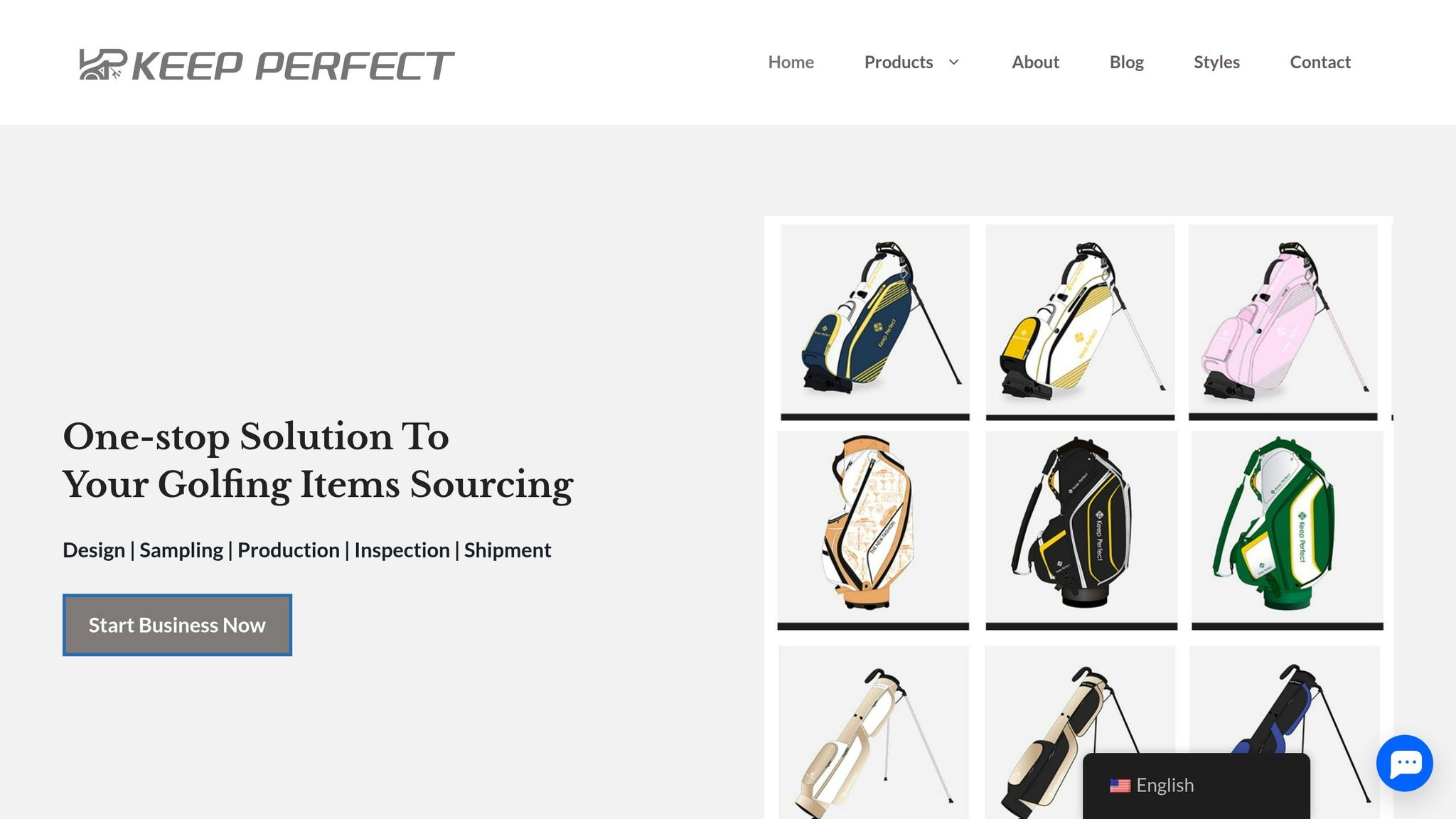
Turning a Kickstarter idea into a tangible product requires a partner who knows how to balance quality with efficiency. With over 15 years of manufacturing experience, Keep Perfect Golf has the expertise to guide creators from concept to a campaign-ready product. Their approach combines advanced materials and precise design techniques, ensuring each golf bag meets the highest standards.
Material Selection and Design Customization
The process kicks off with a design consultation, where creators outline their specific needs. Keep Perfect Golf focuses on premium materials like ballistic nylon (1,000D+), CORDURA fabrics, et reinforced leather accents to ensure durability and weather resistance. For example, a recent project achieved 5,000 mm water resistance and delivered tailored prototypes in just four weeks.
Customization options include features like dividers, stands, and storage configurations, all designed using 3D CAD software. Digital renders are shared for approval before samples are delivered within 7–10 days. One notable project involved creating a stand bag with auto-deploy legs and 14-way dividers, helping the campaign raise $250,000. The bag also adhered to U.S. standards, featuring a 10″ base diameter. Creators can choose from three materials – Nylon for strength and portability, Canvas for texture, or Leather for a high-end finish. Branding options include embroidery, silk screening, and metal badges.
This thorough customization process ensures that every detail is tailored to the creator’s vision, laying the groundwork for rigorous quality checks.
Quality Assurance and Inspection Standards
Every bag produced by Keep Perfect Golf undergoes strict testing to meet ISO 9001 and AQL 2.5 standards. These include drop tests from three feet onto concrete, seam pull tests with at least 50 lbs resistance, and 500-hour UV exposure simulations. Each bag is visually inspected, with random third-party audits ensuring additional oversight. In one case, this process identified a 2% seam defect rate before shipment, preventing issues and achieving a 99.8% defect-free rate for a successful Kickstarter project.
Accelerated aging tests simulate five years of use, exposing bags to rain, heat up to 140°F, and abrasion cycles. These tests show that the bags endure over 10,000 carry cycles, outperforming typical standards by 30%. Data from five recent Kickstarter campaigns revealed zero returns in the first year. Such rigorous quality control ensures creators can confidently deliver on their promises to backers.
Global Delivery and Kickstarter Support
Efficient fulfillment is crucial for crowdfunding success. Keep Perfect Golf offers express shipping (3–5 days) and sea freight options (20–30 days) with prepaid duties (Incoterms DDP). Minimum orders start at 100 units and can scale to 1,000 or more, with integrated tracking for Kickstarter updates. For instance, one U.S.-bound project shipped 500 bags within 45 days of production, complete with USD pricing and imperial packaging labels.
Their support extends beyond manufacturing. Keep Perfect Golf provides pre-launch prototypes, branded packaging, and fulfillment services coordinated with Kickstarter partners like ShipBob. Campaign-ready photos, videos, and compliance documentation – such as Prop 65 certifications for the U.S. – are also included. One creator credited their white-label service with helping fulfill 2,500 orders on time, which boosted stretch goals by 40%. Since 2022, the company has supported over 20 Kickstarter projects, achieving a 150% average funding success rate and 95% on-time delivery.
Kickstarter Golf Bag Projects: What Works
These projects highlight how smart use of materials and thoughtful construction can create golf bags that stand out. The most successful campaigns don’t just offer generic designs – they zero in on specific problems golfers face. By addressing these pain points with innovative materials and solid construction, they win over backers who value both durability and functionality. Let’s look at some examples that demonstrate how these strategies translate into successful crowdfunding outcomes.
Case Study: Material Advancements
Side Street Golf introduced their Back9 golf backpack during the 2020 pandemic, spotting a gap in the market. With restrictions in place, golfers were required to carry their bags for a full 18 holes. The founder noticed many were resorting to makeshift solutions like Velcro carriers or drawstring bags, which were far from ideal.
The Back9 was designed with urban golfers in mind. It featured a lightweight yet durable structure, making it perfect for commuting by bike while securely holding clubs in place. Instead of competing with traditional cart bags, this project targeted "unconventional golfers" who needed a bag tailored to their active, on-the-go lifestyle. This focus on a specific audience helped the campaign stand out and succeed.
Case Study: Construction Quality for Longevity
Beyond innovative materials, excellent construction played a key role in building backer confidence. Side Street Golf made their development process transparent, which reassured potential supporters. They teamed up with Klugonyx, a professional product development firm, to refine their early garage-built prototypes into a polished, market-ready product.
"We proceeded to tear my original vision down, build a new one, tear that down, then build it up again. After much trial and error we have arrived at the final design." – Side Street Golf
The final design was a compact "Sunday bag" capable of carrying nine clubs, with a slimmer, more minimalist profile. It included practical features like storage for shoes and personal items, making it ideal for commuters. A dual-strap backpack system improved balance and comfort, addressing a common issue with traditional single-strap bags. By solving niche problems and showcasing their journey from rough prototypes to professional-grade production, Side Street Golf earned backer trust in both the bag’s durability and usability.
Conclusion: Building Golf Bags That Earn Backer Trust
Creating a durable golf bag for Kickstarter hinges on three key elements: high-quality materials, reliable construction, and practical features. Sharing these details openly from the start helps establish trust with backers, setting the tone for a campaign built on transparency.
A crucial part of this process is providing clear, measurable quality data. By sharing specifics – like seam strength or results from impact resistance tests – creators can prove their bags are designed to last and perform under real-world conditions.
Keep Perfect Golf supports creators through every stage with comprehensive OEM/ODM services. From selecting the right materials and customizing designs to ensuring rigorous quality checks and dependable global delivery, they help bring durable, high-performing golf bags to life that meet Kickstarter backers’ expectations.
The most successful Kickstarter golf bag projects address real needs with smart design and dependable craftsmanship. By combining premium materials, clear communication, and responsive support, creators can consistently deliver products that not only meet but often exceed backer expectations.
FAQ
What test results should a golf bag campaign share?
When promoting a golf bag campaign, it’s crucial to highlight test results that prove the bag’s durability and quality. Share details about lab-grade testing, rigorous quality inspections, and adherence to recognized standards like ISO 9001. These results showcase the bag’s performance and longevity, helping potential backers feel confident in its reliability.
Which bag parts fail first, and how are they reinforced?
When it comes to durability, zippers are often the weak link. To combat this issue, they’re reinforced with waterproof designs, corrosion-resistant buckles, and sealed seams. These additions help guard against leaks, wear, and potential damage, keeping performance reliable over time.
How can I tell if a golf bag is waterproof or just water-resistant?
To figure out if a golf bag is genuinely waterproof, pay attention to features like heat-welded seams, waterproof zippers, and sealed joints. These elements are designed to keep water out entirely. Waterproof bags are also tested for their resistance to water pressure, ensuring they can handle wet conditions without letting water seep in.
On the other hand, water-resistant bags are made from treated materials, such as nylon or polyester, that have coatings to repel water. While they can handle light rain, they might not hold up during heavy downpours and could allow some moisture through. A good way to gauge a bag’s waterproof capability is by checking its hydrostatic pressure rating – look for ratings of 10,000mm or higher for reliable protection.

 Français
  English
  Português
  Español
  日本語
日本語