
Returning international golf bags can be tricky due to high shipping costs, customs duties, and complex logistics. Here’s what you need to know:
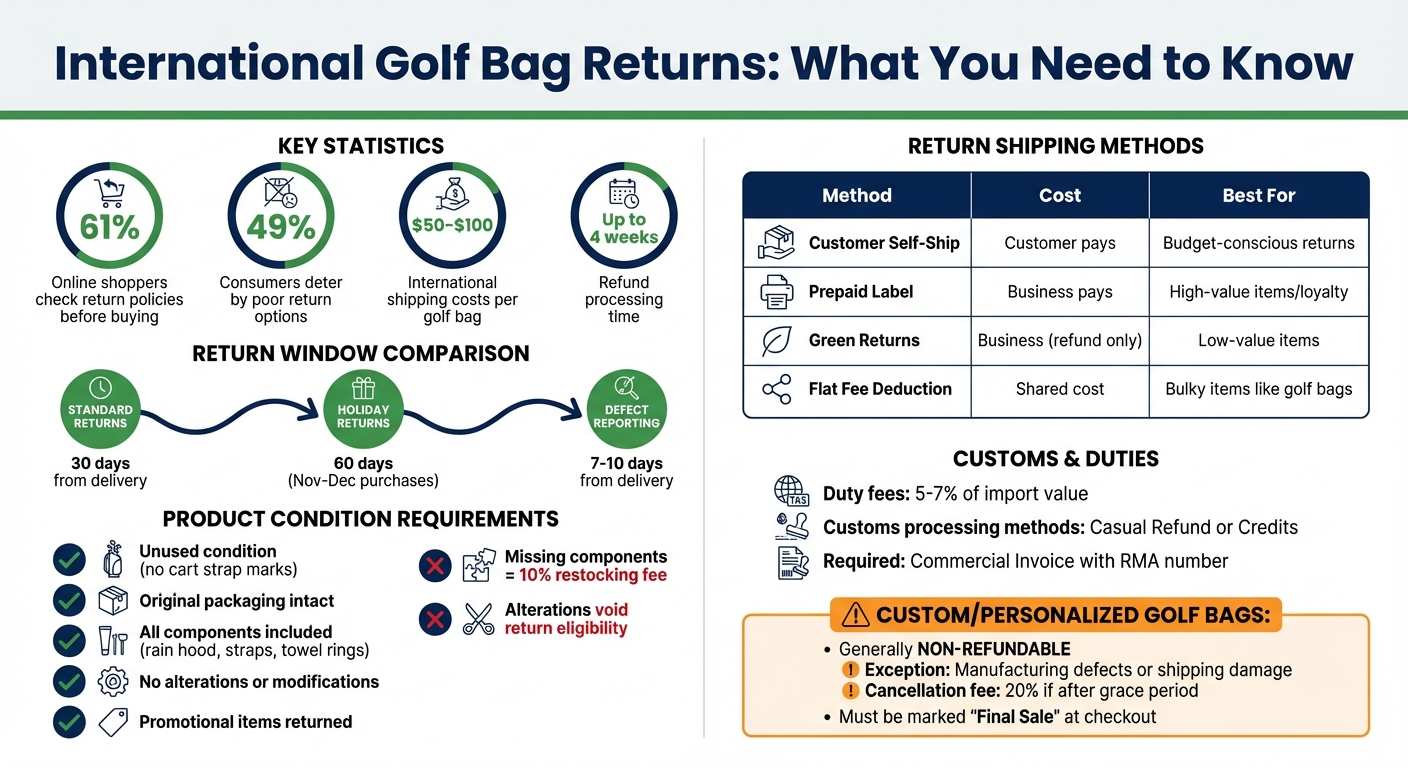
- Clear policies build trust: 61% of online shoppers check return policies before buying. Poor return options deter 49% of consumers.
- Costs and timelines: International shipping for golf bags ranges from $50–$100. Start return periods upon delivery for fairness.
- Product condition matters: Returns require unused items, original packaging, and all components intact. Missing parts may incur fees.
- Custom items: Personalized golf bags are generally non-refundable unless there’s a defect.
- Shipping and customs: Retailers often require customers to cover return shipping and customs fees. Refunds may not include these costs.
- Refund timing: Refunds can take up to four weeks due to transit, inspections, and bank processing.
Transparent policies reduce confusion and encourage repeat business. For custom orders, setting clear expectations upfront is key.
International Golf Bag Return Requirements and Costs Comparison
How to Write an Online Store Return Policy
sbb-itb-4fa7e8b
Core Elements of a Clear Returns Policy
A clear and detailed returns policy is essential to avoid confusion and disputes. Customers need to understand which items qualify for returns, the timeframes involved, and the conditions required.
Most golf retailers offer a 30-day return window, starting from the date of purchase or receipt. During the holiday season, this window often extends to 60 days for purchases made between late November and late December. Whatever timeframe you decide on, make sure it’s easy to find – display it prominently on product pages, shopping cart summaries, and within order confirmation emails.
Setting Eligibility Rules and Time Limits
Be specific about when the return period begins – whether it’s at the time of purchase or upon delivery. For international orders, which can take 7–14 days to arrive, it’s best to start the return period upon delivery. Some businesses also set different timeframes for refunds versus exchanges. For instance, refunds for "change of mind" might have a 14-day limit, while exchanges could allow up to 28 days.
Clearly outline exclusions. Items like custom-fit or personalized golf bags, final sale products, and gift cards are usually non-returnable. Mark these items as "Final Sale" on product pages, in the shopping cart, and in confirmation emails. As Vessel explains:
"Your custom bag was made just for you!"
Additionally, specify that any post-purchase alterations will void return eligibility. For example, Stix Golf’s policy states:
"Post-purchase adjustments and alterations of any kind (painting, re-shafting, re-gripping, or alteration of loft/lie, etc) voids return, exchange and warranty policy eligibility."
Specifying Product Condition Requirements
Define what "new and unused" means for your products. For golf bags, this typically means they haven’t been taken to a course or driving range and show no cart strap marks. Items should also be returned in their original packaging with all included components – like rain hoods, shoulder straps, towel rings, and any promotional gifts – intact.
Make it clear that missing components will result in penalties. For instance, Vessel charges a 10% restocking fee for missing parts like towel rings or rain hoods. Similarly, Vice Golf specifies:
"Golf balls, bags, gloves, and other accessories must be returned in unused condition unless defective."
If a purchase includes a free gift, mention that the gift must also be returned. Otherwise, its retail value will be deducted from the refund. This discourages customers from keeping promotional items while returning the main product.
| Requirement | What It Means | What Happens If Not Met |
|---|---|---|
| Unused Condition | No course use; no cart strap marks | Return declined |
| Original Packaging | Original box and protective materials intact | May result in store credit instead of full refund |
| All Components | Includes rain hood, straps, towel rings, etc. | 10% restocking fee applied |
| No Alterations | No painting, re-shafting, or modifications | Return and warranty voided |
| Promotional Items | Free gifts must be returned with the main item | Retail value deducted from refund |
Managing International Return Shipping
Handling international return shipping can be a costly and complex process. To manage these challenges effectively, it’s essential to provide clear instructions on who will bear the return shipping costs. This transparency not only helps control expenses but also builds trust with your customers. When it comes to international transactions, clarity around return policies plays a significant role in influencing purchase decisions.
Customer-Paid vs. Prepaid Return Labels
Determining who covers return shipping costs often depends on your business model and profit margins. If the return stems from a defective product or a fulfillment mistake, the business should cover the return shipping costs – this is widely considered best practice. However, if the return is due to a change of mind, you have more flexibility in how you handle the costs.
For international returns, many retailers require customers to pay for return shipping. For example, you might charge a flat fee (around $50) for domestic returns while asking international customers to cover the shipping costs themselves.
In cases where shipping costs outweigh the value of the product – such as with low-cost items – consider adopting a "Green Returns" policy. This involves issuing a refund without requiring the customer to ship the item back. Another approach is to tailor return methods based on the customer’s location, shipping costs, and applicable tax duties.
| Return Method | Cost Responsibility | Best Use Case |
|---|---|---|
| Customer Self-Ship | Customer | For international returns on tight budgets |
| Prepaid Label | Business | For high-value items or to boost customer loyalty |
| Green Returns | Business (Refund only) | For low-value items where shipping costs exceed product value |
| Flat Fee Deduction | Shared | For bulky items like golf bags to offset logistics costs |
After addressing shipping fees, the next hurdle is managing customs and import duties.
Customs and Import Duties
Customs fees add another layer of complexity to international returns. For many consumer goods, duty fees typically range from 5% to 7% of the import value. However, when products are returned to their country of origin, it may be possible to recover these fees through duty reclamation.
There are two primary methods for reclaiming duties. The first is a "Casual Refund", where customers submit the necessary paperwork to their local customs office to reclaim the fees. The second is through "Credits", which are processed automatically by a customs broker, enabling you to provide a seamless refund experience. As one shipping expert notes:
"Reclamation is often the economic tipping point to whether returns are viable for them on cross-border returns. It’s so important to work with a partner like Passport because we handle all the direct commissions and paperwork."
To streamline customs processing, always include a Commercial Invoice with your international returns for proper valuation. Ensure you provide multiple copies of the Commercial Invoice and Airway Bill. Additionally, using a Return Material Authorization (RMA) number on labels and invoices can help customs officials process returns more efficiently.
Given the longer transit times for international shipments, consider extending your return window beyond 30 days. Clearly communicate on your website and packaging slips whether customers are responsible for carrier fees and import taxes for international returns. This transparency will help set proper expectations and reduce potential friction in the returns process.
Returns for Customized Golf Bags
Customized golf bags come with specific challenges when it comes to returns. Unlike off-the-shelf products, these items are tailored to your preferences – whether through custom embroidery, unique color combinations, or personalized logos – which makes them impossible to resell.
Return Rules for Custom Items
Customized golf bags are typically non-refundable and non-exchangeable. As Vessel clearly states:
"Personalized items cannot be returned or exchanged. Your custom bag was made just for you!"
TaylorMade takes a similar stance, emphasizing:
"All sales are final for customised products and you may not return customised goods. Please also note that you do not have a statutory cancellation right for customised products".
However, there is an important exception: manufacturing defects or shipping damage. If your custom bag arrives with defects or is damaged during shipping, you may qualify for a return or replacement. PXG explains:
"You do not have a right to change your mind in respect of: custom fit items (unless these were delivered faulty)".
When your bag arrives, inspect it immediately and report any issues within 7–10 days. Be prepared to provide proof of purchase and clear photos of the defect. For international orders, the process is similar, but customers often bear additional shipping and duty costs. Some retailers may also charge a 20% processing fee for cancellations of custom orders made after a brief grace period.
By clearly communicating these policies, retailers can help manage expectations and reduce disputes over customized orders.
Communicating Customization Limits Upfront
Given the strict return policies for custom items, it’s crucial for retailers to set clear expectations from the start. Custom items should be clearly marked as "Final Sale" at every step of the purchase process – on product pages, in the shopping cart, and in order confirmations. It’s also helpful to define "custom" precisely, distinguishing between personalized features (like logos or unique colors) and standard options (such as shaft or grip choices). This clarity helps avoid misunderstandings.
To further minimize errors, retailers can implement a digital preview or mock-up approval process. Requiring customers to approve these mock-ups before production begins can significantly reduce mistakes and return requests. Additionally, setting a firm cancellation window – such as one business day after the order is placed – ensures production timelines remain unaffected.
For international buyers, it’s essential to state upfront that they are responsible for any reverse duties, return shipping insurance, and carrier fees if a return is approved. Transparency in these policies builds trust and helps prevent disputes, especially in cross-border transactions.
Processing Refunds and Exchanges in USD
Currency Conversion and Associated Fees
When issuing international refunds, they’re always processed in the currency used for the original payment. However, this can lead to some complications. As the Shopify Help Center explains:
"Refunds are always issued to a customer in the currency that they used to pay for the order. Because currency conversion rates fluctuate, the rate at the time of the payment is often different from the rate at the time of the refund. As a result, the converted amount that you receive for the order usually doesn’t equal the converted amount that you give back in the refund."
Exchange rates can shift between the time of purchase and the time of refund, which means the refund amount in your local currency may not match the original payment. Thankfully, platforms like Shopify and Stripe don’t charge a second conversion fee when processing refunds, but the variability in exchange rates still introduces some financial risk.
To offset these challenges, consider implementing a restocking fee of 10%–20% for international returns. This can help cover potential losses from currency fluctuations and additional costs like shipping. Keep in mind that shipping fees, customs duties, and import taxes are typically non-refundable, so it’s important to communicate this clearly to your customers.
Refund Processing Timeframes
Currency conversion isn’t the only factor that can complicate refunds – timing is another issue, particularly for international transactions. Processing a refund for an international order often takes longer than for domestic ones. The entire process, from when the item is returned to when the refund appears on the customer’s account, can take up to four weeks. This delay occurs because international returns involve multiple steps.
Here’s a general breakdown of the timeline:
- International transit: 5–10 business days for the returned item to arrive.
- Warehouse inspection and processing: 3–5 business days.
- Bank processing: 5–10 business days.
GolfBags.com provides a realistic expectation for customers:
"You should expect to receive your refund within four weeks of giving your package to the return shipper, however, in many cases you will receive a refund more quickly."
It’s also essential to ensure refunds are credited back to the original payment method used at checkout. For customers using "Buy Now, Pay Later" services like Affirm or AfterPay, refunds may take up to 30 days to reflect in their accounts. To minimize confusion and reduce customer inquiries, send automated email updates at key stages – when the return is received, approved, and processed.
Return Rules for Keep Perfect Golf Custom Orders
Keep Perfect Golf has specific policies in place for its custom products, ensuring clarity and fairness for customers.
Warranty and Defect Coverage
Custom-made and personalized golf bags from Keep Perfect Golf cannot be refunded or exchanged unless there is a manufacturing defect. Since these bags are tailored to your exact specifications – like logo placement, material choices, and design patterns – they cannot be resold.
You have 30 days from the date you receive your bag to report any defects or initiate a return. However, the item must remain in its original condition and packaging. Keep Perfect Golf follows a "Strict Quality Warranty" process, overseeing every step – from design and sampling to inspection and shipping – to ensure their products meet high standards. If a defect is confirmed or the wrong item was sent, they’ll cover the full cost of return shipping. Be sure to keep the original shipping carton, as it may be needed for carrier claims or warranty inspections.
If you notice a defect, contact the support team immediately to begin the return process.
Customer Support for Custom Orders
Before sending back a custom order, you’ll need to get a Return Authorization (RA) or RMA form from Keep Perfect Golf. You can reach their support team by emailing cco@junyuanbags.com or calling 177 5002 0688. When you contact them, include your order number, receipt, and a brief description of the defect. If the item is damaged, it’s helpful to take clear photos of the issue.
The support team will evaluate your case to see if it qualifies under the warranty. If approved, they’ll provide detailed return instructions, including using a trackable shipping method with insurance.
Conclusion
A clear and straightforward returns policy goes a long way in building trust. By defining key details – like the 30-day return window, applicable fees, and conditions such as "unused" and "original condition" – you eliminate confusion and help customers understand their eligibility before initiating a return.
For businesses dealing with custom products, managing expectations upfront is critical. Take personalized golf bags with custom logos or embroidery as an example. Since these items can’t be resold, explicitly stating that they are non-refundable can help avoid misunderstandings and reduce disputes. At the same time, addressing potential defects with a clear resolution process reassures customers of your commitment to quality.
Keep Perfect Golf serves as a great example of this balance. Their approach includes full defect coverage within 30 days and transparent policies for custom orders, ensuring both customer satisfaction and smooth operations. From design to delivery, they demonstrate a focus on maintaining high standards.
Transparency in all aspects of your returns policy is key. Whether it’s outlining international shipping costs, clarifying customs responsibilities, or specifying refund timeframes, clear communication helps customers feel informed and confident in their purchase decisions. These steps, combined with the strategies discussed earlier, create a strong foundation for managing international returns effectively while fostering trust and loyalty.
Preguntas frecuentes
How do I start an international return from the U.S.?
To initiate an international return from the U.S., head to the retailer’s returns portal or system and follow the provided instructions. This might mean arranging your own shipping or using a prepaid label provided by the retailer. Make sure to include your order number and any required return details. Always review the retailer’s return policy for exact steps and requirements.
Who pays return shipping, duties, and taxes on returns?
Customers must cover the cost of return shipping, as well as any duties and taxes. These fees can differ depending on the retailer and the type of product being returned. For instance, there may be flat fees for items like golf bags or accessories. Additionally, extra charges such as duties or tariffs might apply, depending on the import regulations of your location.
What proof do I need for a defect on a custom golf bag?
To report an issue with your custom golf bag, make sure to include proof of purchase y clear photos that highlight the defect. These are essential for processing your claim effectively.

 Español
  English
  Português
  Français
  日本語
日本語