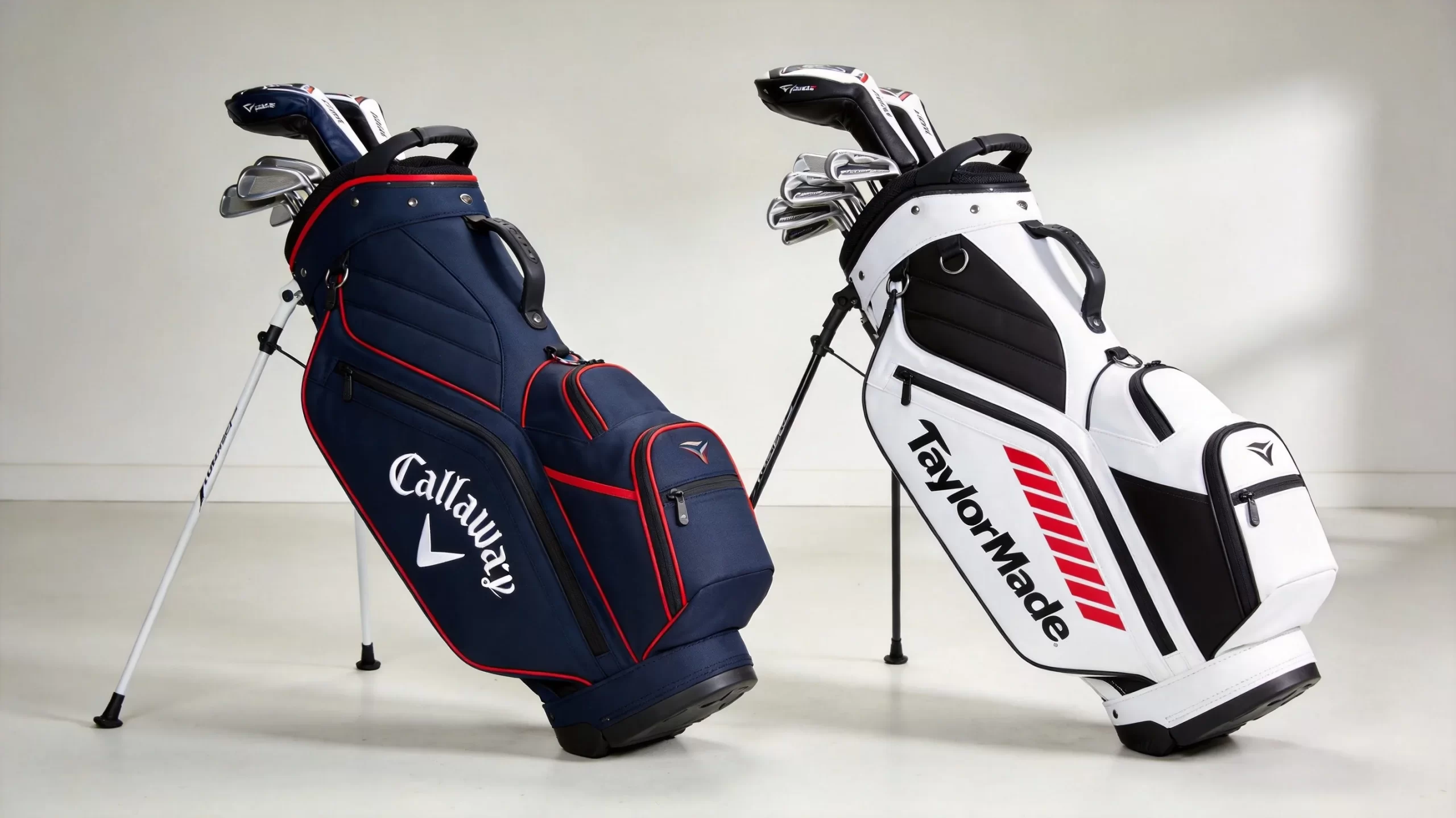
Callaway vs TaylorMade golf bags: which one is actually worth the money? From a factory floor view, the raw build cost of a mid-tier Callaway-class stand bag is roughly $40–$60, and a comparable TaylorMade-class stand bag lands in a nearly identical $42–$62 band — because both are built in the same affiliated and partner factories with the same 600D to 1680D polyester, the same 14-way divider tops, and the same aluminum or polymer stand mechanisms. The real difference is not quality. It is line positioning, hardware specification, and brand spend. This article breaks down the two brands bag for bag: materials compared, build steps, a factory cost table, what you pay extra for, and whether a private-label equivalent gets you the same result for less.
TL;DR / Quick Answer
Callaway and TaylorMade golf bags are made to a very similar standard. Both brands design and spec their bags in-house and produce them through partner factories in Asia. Their mainstream stand bags and cart bags use the same family of materials — primarily 600D to 1680D polyester with molded polypropylene tops and bases — and the factory cost of a comparable build typically differs by only a few dollars. The retail price gap you see on the shelf comes from brand, marketing, tour spend, distribution, and retailer margin, not from more expensive fabric. If you want the same materials and build quality without the logo premium, a qualified OEM/ODM golf bag factory can deliver a very similar 14-way stand bag or high-pocket cart bag at a meaningfully lower price point.
Two Brands, One Supply Chain: The Manufacturing Reality
Before comparing materials and cost, it helps to be clear about how big-brand golf bags actually reach the market. Neither Callaway nor TaylorMade owns the sewing lines that stitch most of their bags. The typical model is design in-house, manufacture through affiliated and partner factories, and control quality through brand-side specification and inspection. This is normal across the industry.
A capable partner factory — the kind that builds for many labels — typically runs something like 7 production lines with about 149 machines, 126 of them dedicated to sewing, in a facility of around 4,950 square metres, serving 200+ brands across 100+ countries as of 2026. In that environment, a branded logo on the pocket costs almost nothing to add; the materials and the engineering underneath it are what carry the real cost. That is exactly why an honest materials-and-cost comparison of Callaway versus TaylorMade usually ends with: the bags are similar where it matters.
Materials Compared: Callaway vs TaylorMade
The fastest way to compare the two brands is to line up the fabric families and hardware they spec across their main lines. Big-brand bags are rarely made from a single fabric; a mid-sized build mixes a main body fabric, a heavier wear-panel fabric, a molded frame, and a stand system.
Head-to-Head Material Table
| Component | Callaway-class | TaylorMade-class | What it does |
|---|---|---|---|
| Main body fabric | 600D–1200D polyester | 600D–1680D polyester | Outer shell; 1680D is noticeably tougher |
| Wear panels | 900D–1680D reinforcement | 1000D–1680D reinforcement | Bottom, stand contact, handles |
| Top cuff | Molded polypropylene / ABS | Molded polypropylene / ABS | Structurally holds the divider top |
| Divider top | 5-way / 14-way | 5-way / 14-way with full-length guides | Club organization and shaft protection |
| Base | Injection-molded PP | Injection-molded PP, sometimes heavier | Stability when standing or on a cart |
| Stand legs | Aluminum / polymer hybrid | Aluminum / polymer hybrid, lighter-weight focus | Walking-friendly stand action |
| Straps | Padded, some dual-strap | Dual-strap ergonomic on premium lines | Carry comfort |
| Lining | Flannel / mesh | Flannel / mesh | Scratch protection for clubs |
| Zippers/plastics | #4/#5 coil, name-brand pulls optional | #4/#5 coil on most lines | Durability of daily-use closures |
Read on the table: both brands sit in the same material league. TaylorMade tends to push 1680D on more of its mid and premium lines, while Callaway leans on 600D to 1200D with heavier reinforcement on wear panels. Neither uses dramatically more expensive materials than a good private-label build — the specification is a matter of a few dollars per bag in factory margin, not tens of dollars.
What Actually Goes into the Build: The Factory Steps
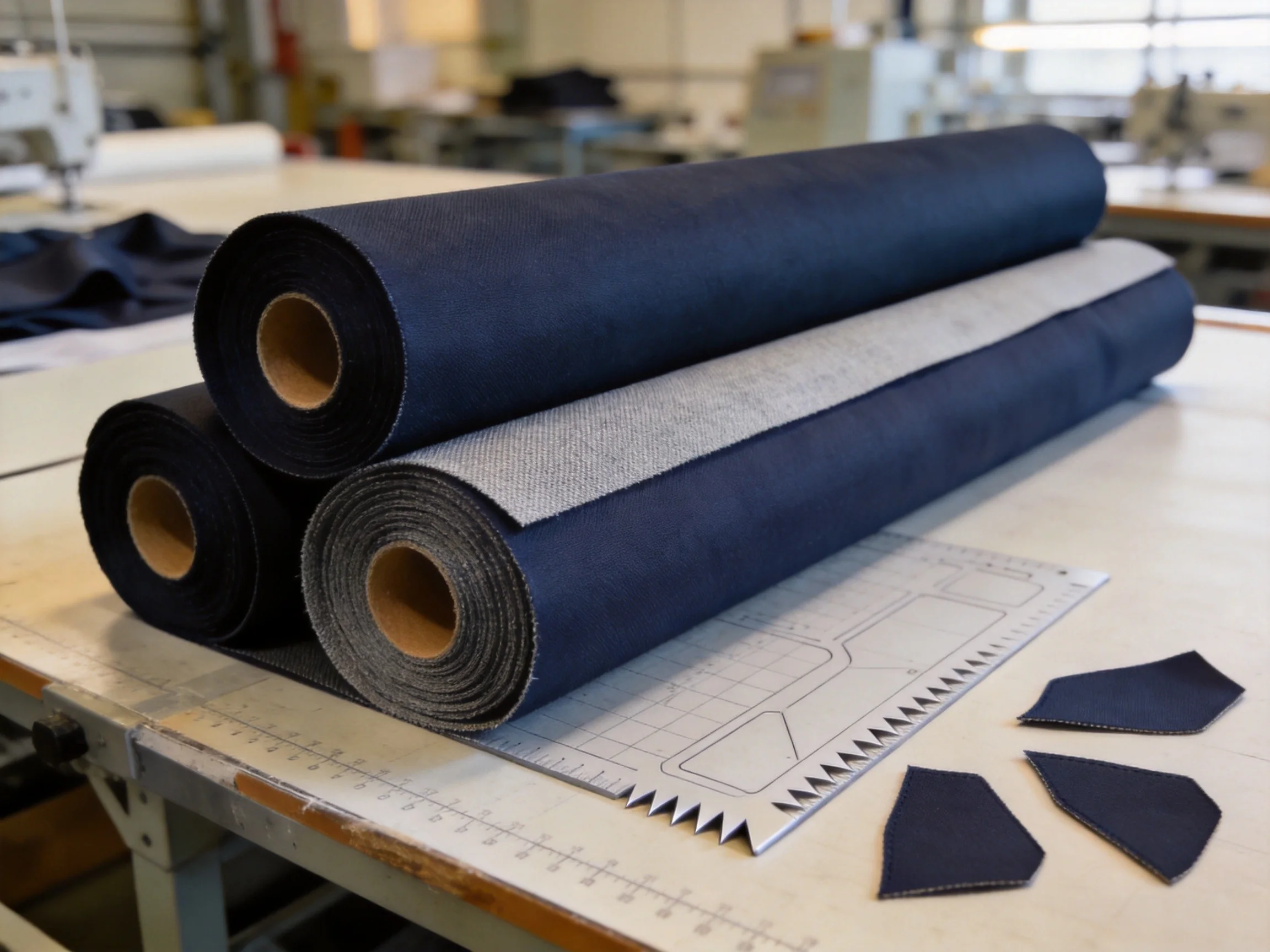
A Callaway or TaylorMade-class golf bag goes through essentially the same eight stages in a partner factory. Understanding these steps is the fastest way to see where material quality shows up and where the cost is honestly earned.
- Design and tech-pack. The brand sends an approved spec with panel layouts, fabric grades, hardware, and a drop test target.
- Fabric cutting. Rolls of 600D to 1680D polyester are laid out and cut, with cut panels matched to the tech-pack.
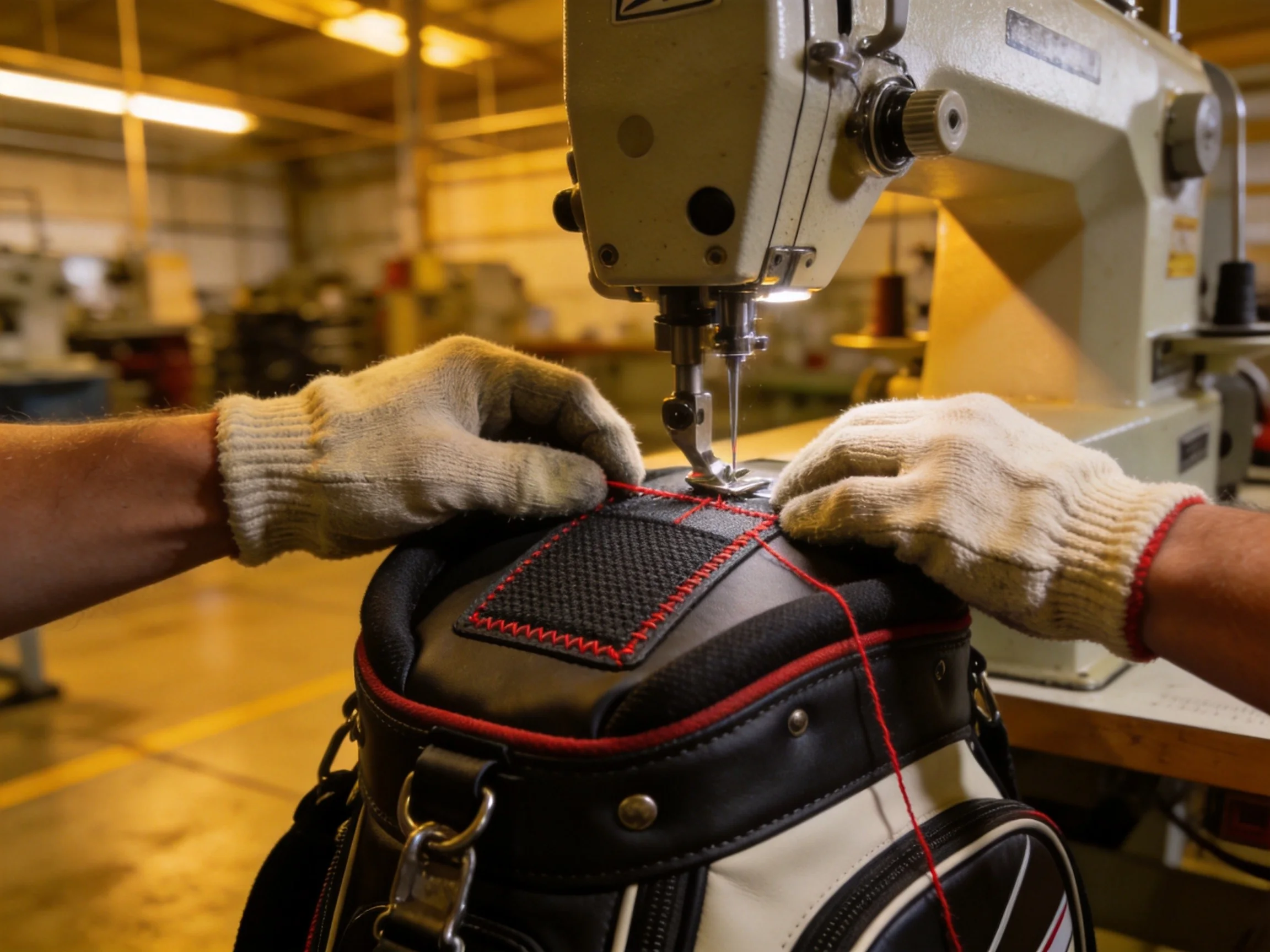
- Main-body sewing. Side panels and the main body are sewn and bound; heavier wear panels are stitched in at this stage.
- Pockets, zippers and lining. Pockets are added, zippers are set, and flannel or mesh lining is inserted.
- Strap system. Padded or dual straps are attached with reinforced bartacking at stress points.
- Stand mechanism and base. The aluminum or polymer legs and the molded PP base are integrated and the spring action is tested.
- Top cuff and dividers. The molded cuff and the 5-way or 14-way divider top are fitted and clipped in.
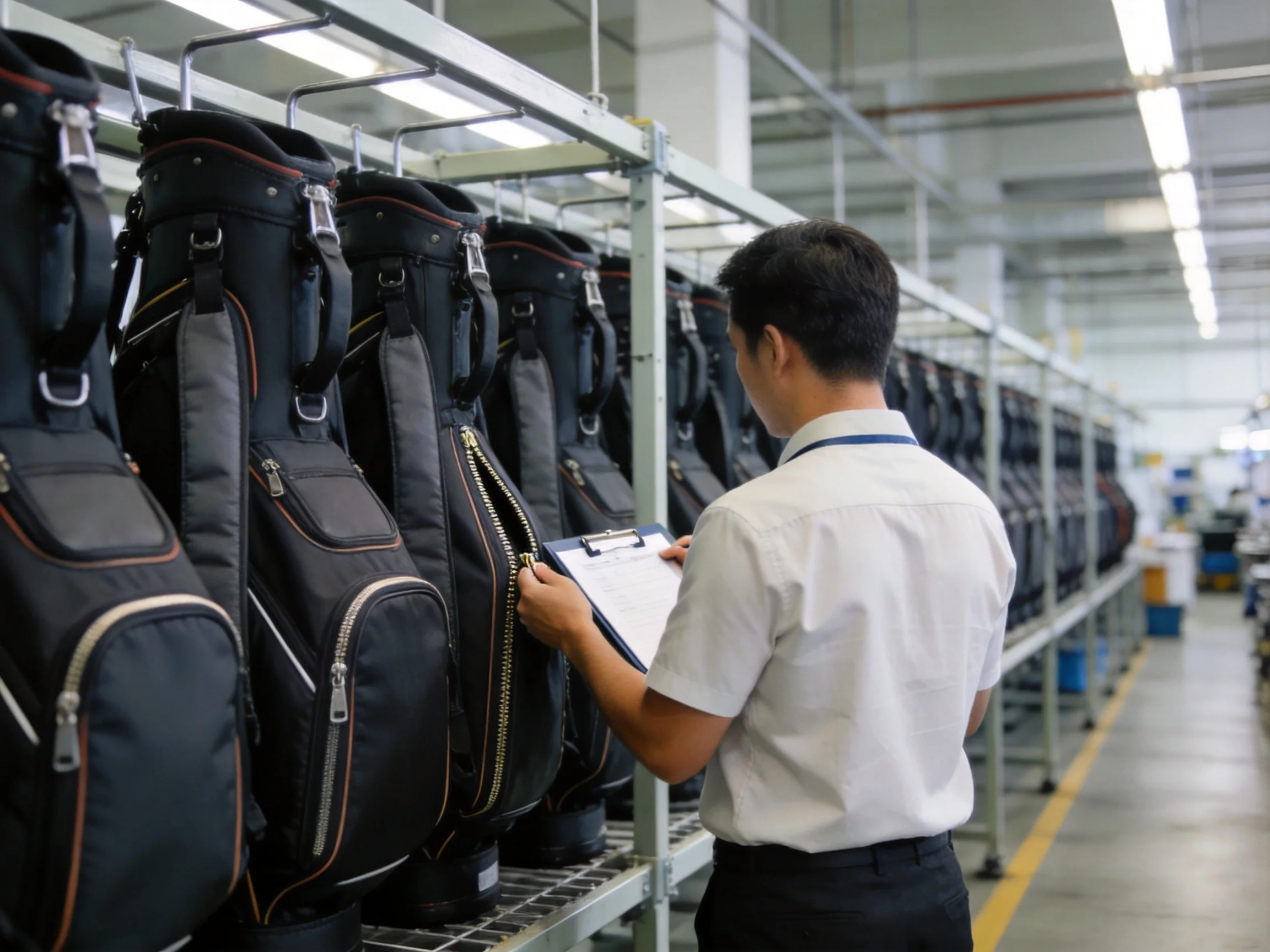
- Final QC and packing. Zippers, stitching, stand action, and drop compliance are checked before the bag ships.
Where premium brands earn a small edge is step 1 and step 8: tighter specs and stricter QC. That costs more in engineering time, but it is a modest per-unit difference, and a disciplined OEM factory delivers the same discipline.
Where the Cost Goes: A Factory-Level Comparison
It is hard to give a precise landed price that holds for every country and date, because material pricing and import duties keep moving. The figures below are realistic factory-cost bands for a mainstream 14-way stand bag, shown as approximate ranges; exact tariffs should be confirmed with a broker. They are useful for comparing the two brands, not as a quote.
Approximate Factory Cost Breakdown (14-Way Stand Bag)
| Cost block | Callaway-class | TaylorMade-class |
|---|---|---|
| Fabric & materials | $20–$28 | $21–$30 |
| Hardware, zippers, stand, base | $12–$16 | $13–$17 |
| Auxiliary & trims (straps, lining, labels) | $6–$9 | $6–$9 |
| Labour & overhead (7 lines, 149 machines) | $5–$8 | $5–$8 |
| Total factory cost | $43–$61 | $45–$64 |
| Typical retail price | $179–$349 | $189–$369 |
| Markup multiple (approx) | 3–5× | 3–5× |
What the table shows: the factory cost difference between the two brands is only a few dollars for a comparable build. The 3–5× retail markup covers brand design, tour contracts, marketing, freight, import duty (figure this with a broker), distribution, and retailer margin. That is not hidden quality — it is the economics of selling a branded consumer good.
Brand Cost Breakdown: What Are You Actually Paying For?
When someone asks why are TaylorMade so expensive or is Callaway worth it, the honest answer from a factory is: you are paying for four things beyond the materials.
- Design and R&D. Real money goes into bag ergonomics, stand geometry, and club protection — genuinely useful.
- Tour and athlete spend. Bags carried by touring pros get free exposure at every tournament; that budget is in the price.
- Marketing and distribution. National campaigns, retailer programs, and stock holding all add margin layers.
- Warranty and brand trust. A known-name warranty has value, and you fund it up front.
None of these change the fabric on your bag. If your priority is the best materials and build for the money, that budget is better spent on a brand-agnostic factory-direct build.
Are Callaway and TaylorMade Golf Bags Worth It?
Short answer: yes for the features, no if you are paying for the logo. Both brands make excellent bags with real design and reliable QC. For a golfer who wants a proven 14-way stand bag or a feature-packed cart bag and does not mind the premium, either brand is a safe, good buy. But on pure materials and cost, a comparable private-label bag from a qualified partner factory typically delivers the same 600D–1680D build for dramatically less.
A good rule of thumb: if you want the tour-brand experience and warranty, buy the brand. If you want the engineering and the fabric without the 3–5× markup, go factory-direct or private-label and spend the difference on clubs or lessons.
Why the Same Build Can Cost Less: The OEM/ODM Route
The most common question buyers ask after this comparison is: can I get Callaway or TaylorMade quality without the brand? The answer is yes, and this is exactly what OEM/ODM means in golf bag manufacturing. The same affiliated and partner factories that build big-brand bags also build private-label lines with the same materials, hardware, and QC checks.
With OEM, you use the factory’s proven in-line patterns — which is why the build quality matches — and add your own brand. With ODM, the factory also helps design a differentiated bag. Either route removes brand, tour, and marketing spend from the price while keeping the fabric and the sewing. For most single-product or small-retail buyers, this is the highest quality-to-dollar path in the market.
If you want to explore a comparable build, a factory can quote a 14-way stand bag or a high-pocket cart bag from existing in-line patterns, keeping panel counts standard and selecting proven hardware to control cost while keeping the 600D–1680D spec.
Buyer’s Checklist: Callaway vs TaylorMade vs Factory
- Choose Callaway or TaylorMade if you want the tour brand, ecosystem, and warranty and accept a 3–5× markup.
- Choose factory/private-label if your priority is the same materials and build at a lower price point.
- Always check the fabric grade — 1680D panels wear better than 600D on contact points regardless of logo.
- Confirm the divider top — a true 14-way with full-length guides protects shafts better than a 5-way.
- Verify stand and base — molded PP base and aluminum/polymer legs matter more than brand for durability.
- Ask about QC — drop testing and zipper inspection determine whether a bag lasts 5 years or 10.
Frequently Asked Questions
Are Callaway and TaylorMade golf bags made in the same factories?
It is common for both to be manufactured in affiliated and partner factories across Asia. They are not necessarily the exact same line, but the same class of partner facilities and production methods are used, which is why the build quality is so similar.
Which brand uses better materials, Callaway or TaylorMade?
Both sit in the same league, mainly 600D to 1680D polyester. TaylorMade tends to use 1680D on more of its mid and premium lines, while Callaway relies on 600D–1200D with heavier reinforcement on wear panels. The practical durability difference is small.
Why is the retail markup on golf bags so high?
The factory cost of a comparable 14-way stand bag is often only $43–$64. The 3–5× retail price adds design, tour, marketing, distribution, freight, import duty, and retailer margin — not more expensive fabric.
Is a 5-way or a 14-way divider top better?
A 5-way top groups clubs into open compartments. A 14-way top gives each club its own slot with a hidden bottom guide, protecting shafts and preventing grip tangle, at a slight cost in weight and complexity.
Can I get Callaway or TaylorMade quality without the brand?
Yes. Private-label OEM/ODM lines from the same partner factories use identical materials and QC. A qualified factory can deliver a comparable 14-way stand bag or cart bag at a lower price point.
How long does a Callaway-class or TaylorMade-class golf bag last?
A well-built 600D or higher bag typically lasts 5 to 10 years or more with normal use. The first wear points are usually the stand legs, base, and zippers, so reinforced panels and quality hardware matter more than the badge.
Which is better for most golfers, a cart bag or a stand bag?
If you mostly ride, a high-pocket cart bag offers more organized storage and easier access. If you walk or carry, a lighter stand bag with a stable stand serves better. Many golfers pair one of each.
How do I lower the cost of a custom golf bag order?
Start from an existing in-line pattern, keep panel counts standard, choose polyester over leather, use proven hardware, and order at a volume that fits line capacity. A mid-to-large partner factory runs 7 production lines with about 149 machines, 126 of them sewing, in a 4,950 square metre facility serving 200+ brands across 100+ countries as of 2026.
Get a Factory Quote on a Comparable Golf Bag
If you like what these two brands do but not the price tag, the smart move is to buy the same build factory-direct. An experienced golf bag factory can quote a 14-way stand bag or a high-pocket cart bag in 600D–1680D polyester with your own brand, backed by the same materials and QC that big labels rely on. Share your target spec and volume, and get a head-to-head factory cost against the brand price — often at a fraction of the retail figure.
Related Products
Explore our manufacturing capabilities in this category:
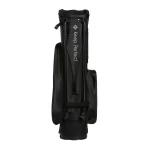 Premium Stand Bag
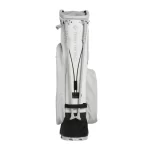 Ultra-Light Stand Bag
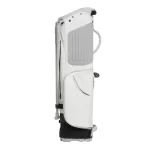 Hybrid Stand Bag
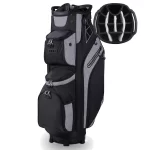 Rain-Resistant Stand Bag
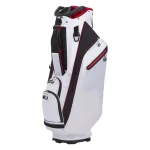 Premium Tour Cart Bag
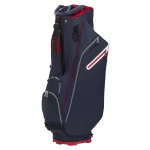 Lightweight Cart Bag
 Waterproof Cart Bag
 Staff Cart Bag
Need custom golf bags? Contact us for OEM/ODM quotes — MOQ 200 pcs (100 pcs for test orders), FOB Xiamen.