Quick Answer: A golf bag tech pack is a comprehensive technical document that translates your design concept into factory-ready specifications. It includes technical flat sketches, dimension tables, material callouts with Pantone codes, hardware lists, construction details, branding placement maps, and packaging requirements — everything a manufacturer needs to produce your bag accurately without guesswork.

Introduction: Why Every Great Golf Bag Starts with a Tech Pack
You have a vision for a golf bag — maybe it is a minimalist Sunday bag with clean lines, a tour-level cart bag with 15 individual pockets, or a lightweight stand bag built for walking courses. You can sketch it, describe it, even create mood boards. But none of that matters if the factory on the other side of the world cannot translate your vision into a physical product.
This is exactly where a golf bag tech pack bridges the gap between concept and production. It is the universal language between brands and manufacturers — a detailed technical blueprint that leaves zero room for misinterpretation.
After 20+ years of manufacturing golf bags since 2004, we at Keep Perfect Golf have reviewed thousands of tech packs from brands across 100+ countries. We have seen the good, the incomplete, and the ones that caused months of delays. This guide distills everything we have learned into a practical, step-by-step resource for brand owners, product developers, and sourcing managers who want to get their golf bag from idea to shipment — right the first time.
Whether you are launching your first bag brand or refining your existing product development process, this guide will walk you through every component of a production-ready golf bag tech pack.
What Is a Golf Bag Tech Pack?
A golf bag tech pack (short for “technical package”) is a standardized document that contains every specification required to manufacture a golf bag. Think of it as the architectural blueprint for your bag — it tells the factory exactly what materials to use, how to cut and sew each panel, where to place every zipper and logo, what colors to match, and how to pack the finished product.
A tech pack is fundamentally different from a spec sheet. A spec sheet typically lists only the final product dimensions and basic material descriptions. A tech pack goes far deeper — it includes visual references, construction methods, stitch counts, reinforcement points, tolerance ranges, and quality benchmarks. While a spec sheet answers “what are the measurements,” a tech pack answers “how do we actually build this thing.”
| Feature | Spec Sheet | Tech Pack |
|---|---|---|
| Technical flat sketches | Rarely included | Multiple views required |
| Material specifications | Basic description | Full breakdown with weight, finish, supplier refs |
| Color codes | General names | Pantone solid codes for every component |
| Construction details | Not included | Stitch types, seam allowances, reinforcement points |
| Hardware & trims | Mentioned briefly | Full BOM with sizes, finishes, placement |
| Branding placement | Not included | Mapped with size, position, technique specs |
| Packaging instructions | Not included | Detailed poly bag, carton, labeling requirements |
If you are working with a reliable golf bag manufacturer, they will often help you refine or even create the tech pack from your initial concept. However, having a solid starting document dramatically reduces sampling rounds and accelerates time-to-market.
Essential Components of a Golf Bag Tech Pack
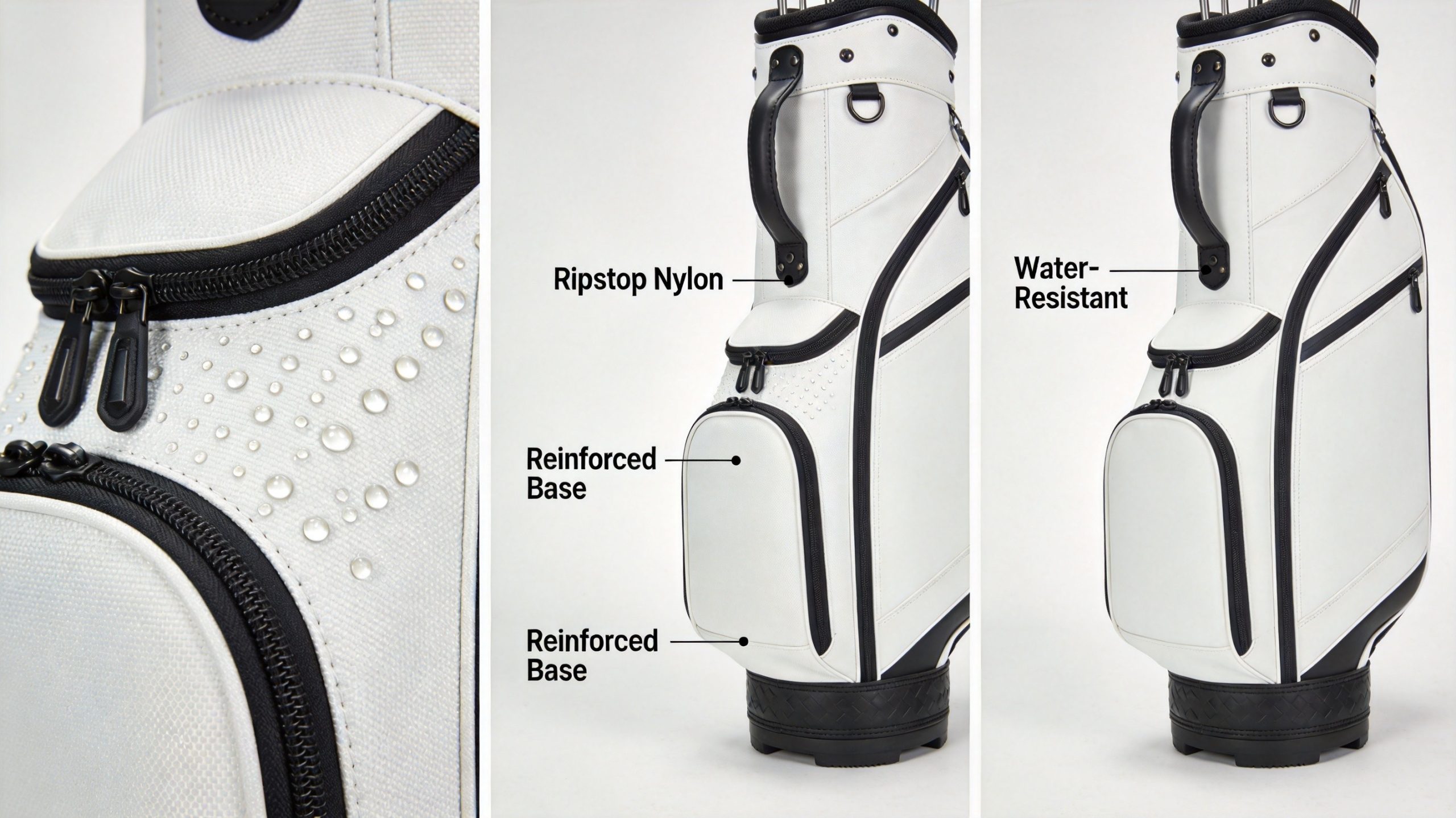
A complete golf bag tech pack contains eight core sections. Each section serves a specific purpose in eliminating ambiguity during production. Missing any one of them can lead to costly sampling iterations or — worse — an entire production run that does not match your vision.
1. Technical Flat Sketches
Technical flat sketches are the visual foundation of your tech pack. Unlike artistic renderings or lifestyle illustrations, flat sketches are precise, to-scale drawings that show every panel, seam, pocket, zipper, and structural element of the bag from multiple angles.
For a golf bag, you need a minimum of five views:
| View | What It Shows | Key Details to Include |
|---|---|---|
| Front view | Main body panels, front pockets, logo placement | Pocket dimensions, zipper paths, panel seam lines |
| Side view | Profile shape, side pockets, strap attachment points | Bag depth, side handle position, D-ring locations |
| Back view | Back panel, strap system, stand mechanism (if applicable) | Strap width and padding, back panel cushioning, stand leg positions |
| Top view | Cuff/top opening, divider configuration | Number of dividers, full-length divider layout, cuff shape and size |
| Bottom view | Base construction, feet placement, drain holes | Base material, rubber foot positions, waterproof base details |
Each sketch should be clean, line-based (no shading or artistic effects), and include callout labels pointing to specific features. Number each panel piece so it correlates with your cutting layout.
2. Dimensions & Specifications Table
Your measurements table should include every critical dimension of the finished bag, measured in both centimeters and inches for international clarity. Key measurements include:
- Overall height (including cuff)
- Overall width (widest point)
- Overall depth (front to back)
- Base dimensions (length x width)
- Cuff opening diameter (for cart/stand bags) or top opening width
- Each pocket width, height, and depth
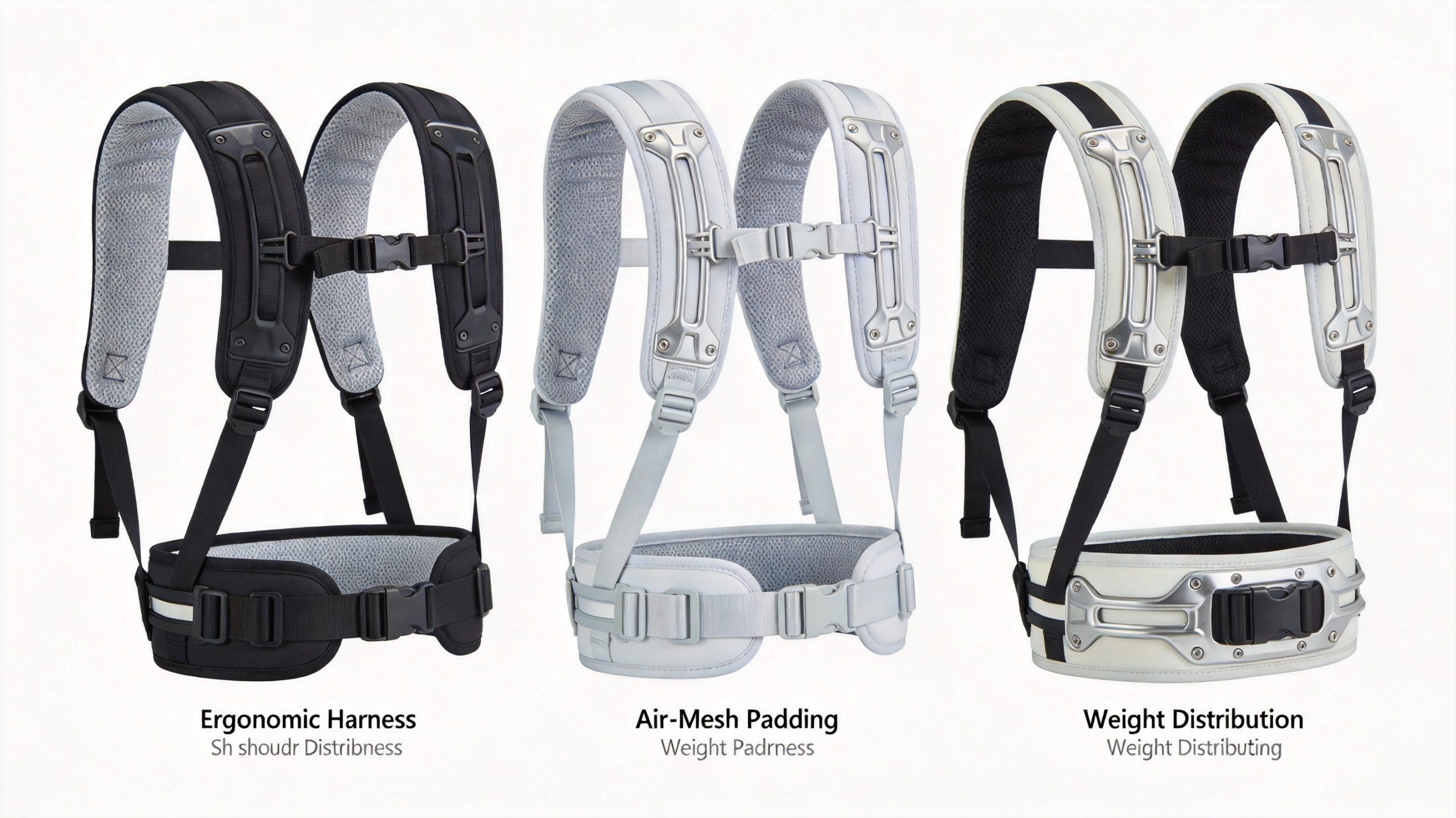
- Strap length (adjustable range), width, and padding thickness
- Handle drop length and grip circumference
- Weight target (empty bag)
Always specify tolerance ranges (e.g., ±5mm). Factories need to know what is acceptable deviation, especially for soft goods where fabric tension can affect measurements.
3. Materials & Fabric Specification
Material specification is where many tech packs fall short. For each material used in the bag, document:
| Component | Specification Details Required |
|---|---|
| Main body fabric | Fiber content (e.g., 600D polyester), weave type, weight (g/m²), water resistance rating, finish type (PU coated, laminated, etc.) |
| Lining fabric | Material (nylon taffeta 210D, polyester oxford, etc.), weight, color, print pattern if any |
| Frame/stays | Material (PE board, EVA sheet, aluminum rod, carbon fiber), thickness (mm), hardness grade |
| Base plate | Material (ABS plastic, molded PE, rubber), thickness, whether textured or smooth |
| Padding/foam | Type (EVA, EPE, memory foam), thickness (mm), density (kg/m³), placement area |
| Webbing | Width (mm), material (nylon, polyester), pattern (plain, jacquard), load rating |
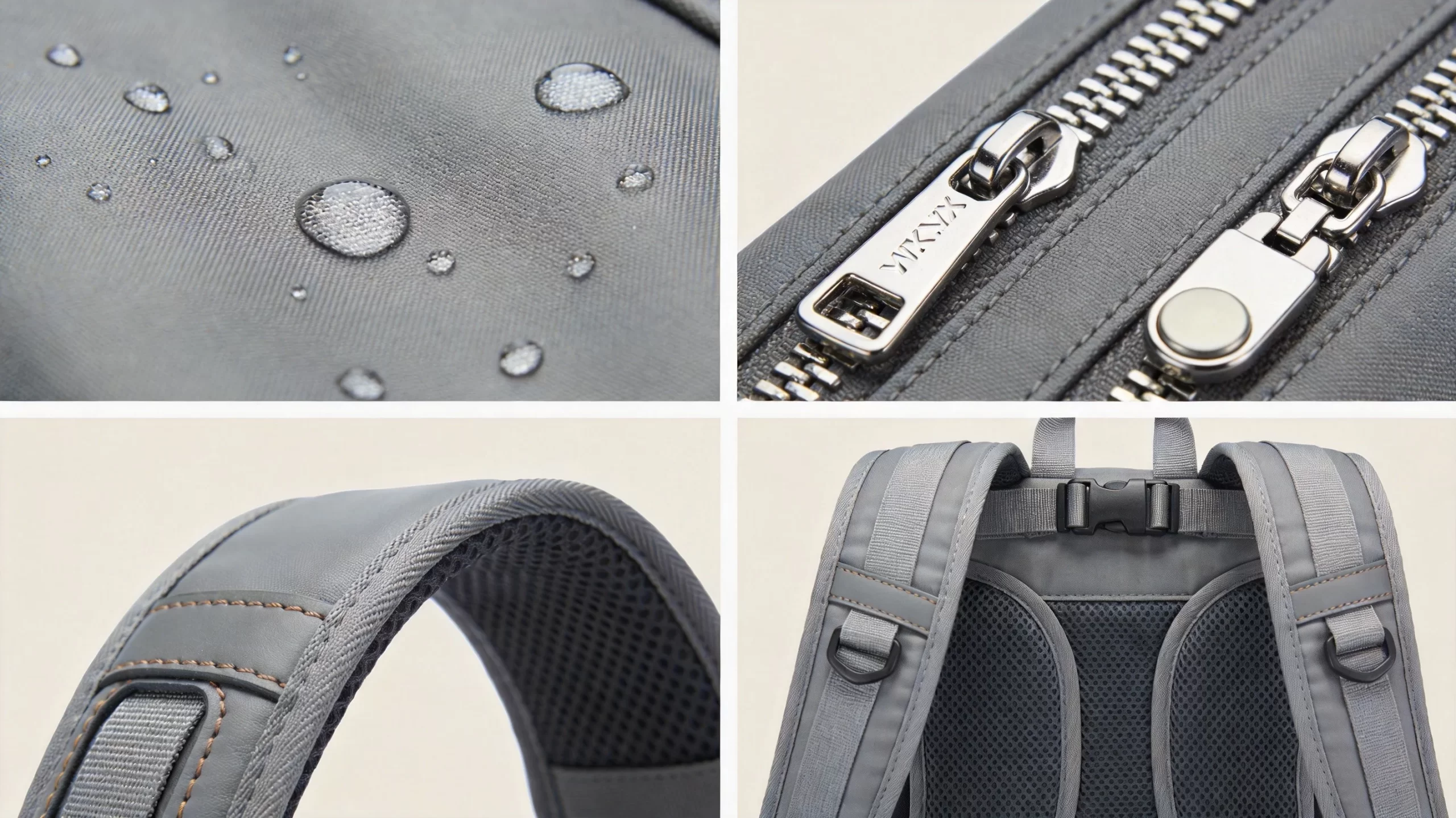
Reference specific supplier materials when possible (e.g., “YKK #5 Vislon zipper” rather than just “waterproof zipper”). This removes an entire layer of ambiguity.
4. Color Specifications
Never rely on color names alone. “Navy blue” means different things to different people. Always use Pantone Solid Coated codes (e.g., Pantone 289 C for deep navy). Your color specification section should include:
- Pantone code for every fabric color
- Pantone code for every zipper tape color
- Pantone code for every webbing, trim, and thread color
- Color placement map — which color goes on which panel
- Special finish notes (matte vs. glossy, metallic, reflective)
Include a colorway sheet if your design has multiple color options. Each colorway should be a separate page with its own Pantone callouts.
5. Hardware & Trims List
A complete Bill of Materials (BOM) for hardware and trims is essential. For a typical golf bag, this includes:
| Component | Specification | Quantity |
|---|---|---|
| Main zipper | YKK #10 coil, waterproof, metal puller | Per pocket |
| Accessory pocket zipper | YKK #5 Vislon, water-resistant | Per pocket |
| D-rings | 25mm stainless steel, matte black finish | 4-6 pcs |
| Buckles (strap) | 25mm side-release, nylon, black | 2 pcs |
| Trolley sleeve | Molded EVA handle, padded grip | 1 pc |
| Carabiner clip | Aluminum alloy, 30mm, custom logo engraved | 1 pc |
| Rubber feet | Molded rubber, 20mm diameter, snap-in type | 4 pcs |
| Velve/Hook loop | 20mm width, soft-back type, black | Per application |
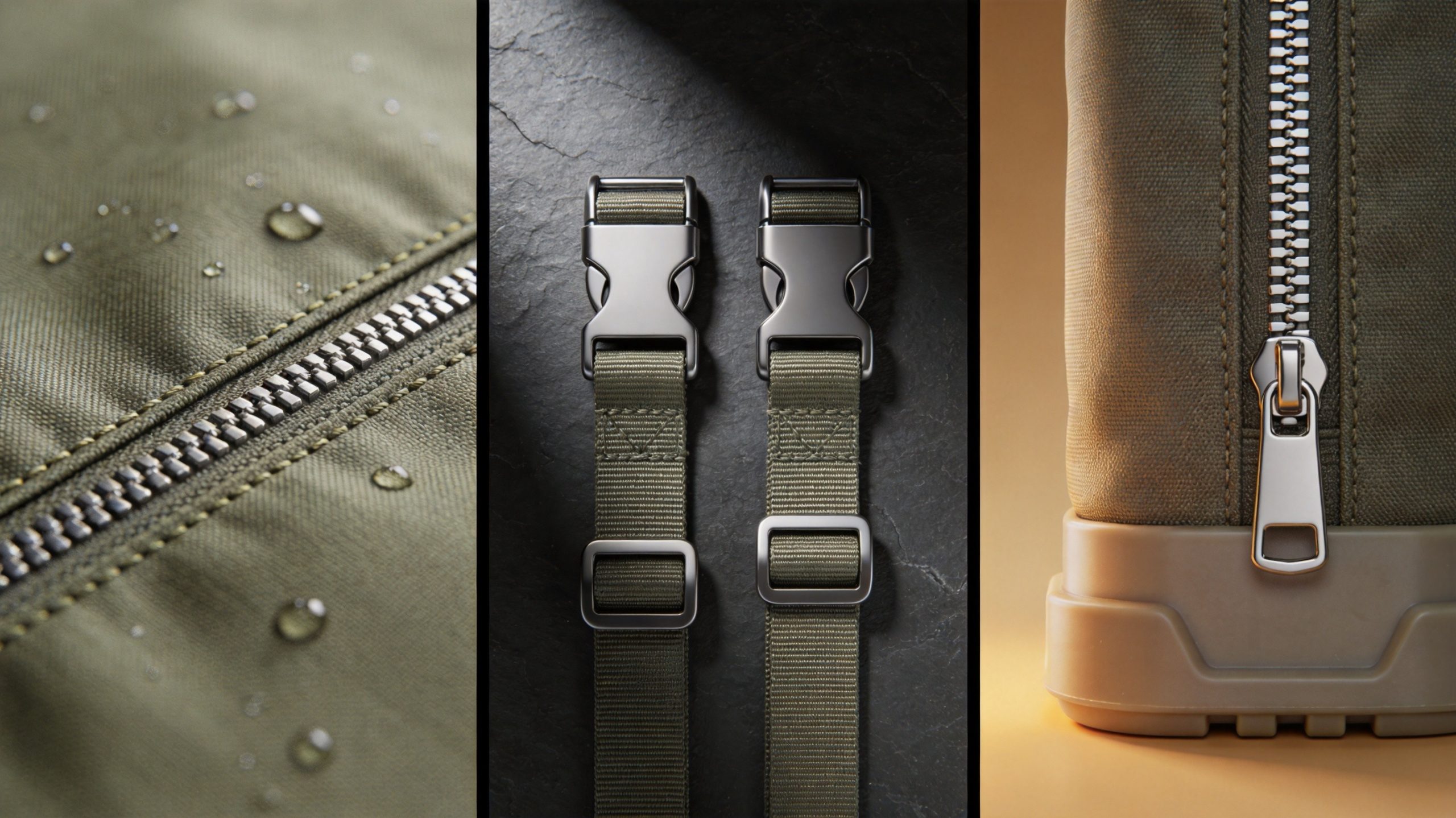
Specify the finish (matte, polished, brushed, antique, colored) and material (stainless steel, zinc alloy, aluminum, brass, nylon) for every metal and plastic component.
6. Logo & Branding Placement
Branding placement needs its own dedicated page in the tech pack with annotated sketches showing:
- Embroidery: Exact placement coordinates from reference points (e.g., “centered 8cm below top cuff seam”), stitch count, thread colors with Pantone codes, maximum dimensions
- Silk screen printing: Artwork file reference, color separations, Pantone mix codes, print area dimensions
- Heat transfer: Artwork file, transfer dimensions, placement position, temperature/pressure notes if factory-applied
- Woven labels: Label dimensions, fold type (end fold, center fold, Manhattan fold), attachment method (sewn, heat-tacked), content layout
- Rubber/silicone patches: 3D or 2D, dimensions, attachment method (glued, sewn, heat-pressed), color fill specifications
7. Construction Details
This section describes how the bag is assembled. Include:
- Stitch type: Single needle lockstitch (301), double needle chainstitch (406), overlock (504) — specify stitch-per-inch count (SPI), typically 7-9 SPI for nylon/polyester
- Seam type: Lapped seam, French seam, bound seam — specify which seam for which joint
- Reinforcement points: Bar-tack locations (strap attachment, handle joints, D-ring anchor points), size and stitch pattern of bar-tacks
- Zipper construction: Direction of zip opening, stopper type, puller style, whether to include zipper garage or rain flap
- Divider construction: Material of divider tubes, number of full-length vs. 3/4-length dividers, how dividers are anchored
- Internal layout: Pocket lining construction, velve partitions, insulated pocket lining, valuables pocket with zipper
Construction notes are where a deep understanding of custom golf bag design becomes critical. Poor construction specifications lead to weak stress points, premature wear, and customer complaints.
8. Packaging Requirements
Often overlooked but essential for brand consistency and logistics:
- Individual poly bag material and thickness (e.g., 0.05mm clear PE bag with warning text)
- Desiccant/silica gel inclusion
- Stuffing material (kraft paper, air pillow) to maintain bag shape during shipping
- Master carton specifications: dimensions, wall thickness (single/double/triple wall), gross weight limit
- Carton marking: shipping marks, barcode labels, country of origin
- Pcs per carton and carton stacking orientation
- Hang tags, care labels, and UPC/EAN sticker placement

Step-by-Step: Creating Your First Golf Bag Tech Pack
Now that you understand all the components, here is the practical workflow to create your first production-ready golf bag tech pack from scratch.
Step 1: Define Bag Type & Target User
Before you draw a single line, lock down the fundamentals:
- Bag category: Cart bag, stand bag, Sunday/travel bag, staff bag, or specialty bag (cooler bag, rain bag, etc.)
- Target user: Weekend golfer, touring professional, caddie, junior player, fitness-focused walker
- Price positioning: Budget (retail $79-149), mid-range ($150-299), premium ($300-599), luxury ($600+)
- Key features: How many pockets, divider configuration, stand mechanism, integrated technology
These decisions cascade into every subsequent specification. A luxury staff bag will demand full-grain leather accents and YKK Excella zippers; a budget stand bag might use 600D polyester with standard coil zippers.
Step 2: Create Technical Sketches
Using Adobe Illustrator, CLO 3D, or even hand-drawn sketches scanned at high resolution, create your flat technical drawings. If you lack in-house design capability, many manufacturers (including our ODM team) can develop sketches from your concept description or reference images.
Best practices for technical sketches:
- Use consistent line weights — thick lines for outlines, thin lines for internal details and stitching
- Include panel numbering (P1, P2, P3…) that matches your cutting pattern
- Add dimension callouts directly on the sketches
- Show zipper direction with arrows
- Mark all hardware placement points with standardized symbols
Step 3: Specify Materials & Colors
Create a material layout map that shows exactly which material goes on which panel. Cross-reference with your Pantone color codes. If you are sourcing materials from specific mills, include the supplier name and reference number.
Pro tip: Order material swatches and physically tape them to your tech pack. Digital color representations can vary between screens. Having physical references prevents the most common color discrepancy issues.
Step 4: Detail Hardware & Trims
Build your hardware BOM item by item. For custom hardware (e.g., branded zipper pulls, embossed buckles), include:
- 3D renderings or reference photos of the hardware
- Exact dimensions (length, width, thickness)
- Material and finish specification
- Attachment method (riveted, sewn, snapped)
- Mold development cost and timeline (for fully custom pieces)
Step 5: Add Branding & Logo Placement
Create a dedicated branding page with annotated views showing every logo location. Provide print-ready artwork files (AI or EPS format) for each branding element. Specify the exact size at production scale — logos that look perfect on screen may be too small or too large when physically applied to the bag.
Step 6: Define Construction Notes
Walk through the assembly sequence mentally. What gets sewn first? Where does the frame insert go? How does the divider system install? Document these in order. Include cross-section diagrams for complex assemblies like the stand mechanism or the cuff-to-body connection.
Step 7: Add Measurement Spec Sheet
Create a comprehensive measurement table with:
- Every critical dimension listed with tolerance
- Measurement method description (e.g., “Height: measure from base bottom to highest point of cuff, bag standing upright”)
- QC inspection points marked on a diagram
- Point-of-measurement (POM) reference photos
Golf Bag Tech Pack Template
Below is a simplified tech pack template structure. In practice, a full golf bag tech pack runs 15-30 pages. This template gives you the framework to organize your specifications:
| Section | Page(s) | Contents |
|---|---|---|
| Cover Page | 1 | Style name/number, season, brand logo, version number, date |
| Design Overview | 2 | Lifestyle reference images, design concept summary, target consumer |
| Technical Flats | 3-7 | Front, back, side, top, bottom views with callouts |
| Color Specification | 8-9 | Pantone codes, colorway map, thread colors |
| Materials List | 10-11 | All materials with supplier refs, weights, finishes |
| Hardware BOM | 12-13 | Every zipper, buckle, ring, clip with specs |
| Branding | 14-15 | Logo placement maps, artwork files, technique specs |
| Construction | 16-18 | Assembly instructions, stitch specs, reinforcement details |
| Spec Sheet | 19-20 | Full measurement table with tolerances and POM |
| Packaging | 21 | Packing method, carton specs, labeling requirements |
Common Tech Pack Mistakes That Delay Production
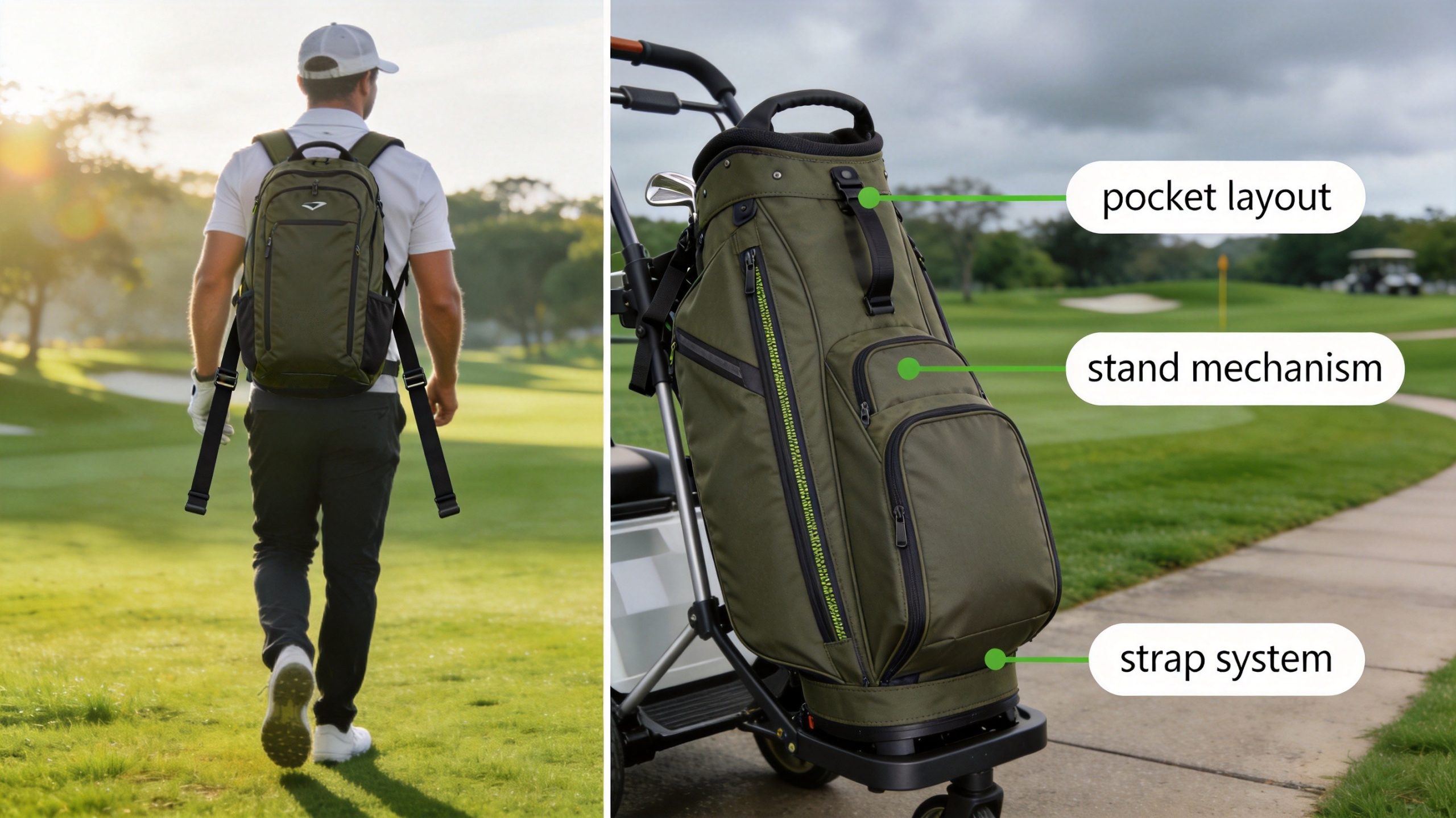
After reviewing thousands of tech packs, these are the most frequent errors that cause production delays, quality issues, and costly re-sampling:
| # | Mistake | Impact | How to Fix |
|---|---|---|---|
| 1 | No Pantone codes for colors | Factory guesses colors, sample rejected, 2-4 week delay | Assign Pantone Solid Coated codes to every element |
| 2 | Missing reinforcement point callouts | Bag fails stress test at strap attachment, structural failure in field | Mark every bar-tack location with dimensions on the flat sketch |
| 3 | Vague material descriptions | “Good quality nylon” means nothing; factory uses cheapest available | Specify denier, weave, weight, coating, and supplier reference |
| 4 | No tolerance ranges on measurements | QC rejects bags within normal soft-goods variance, shipment blocked | Add ±tolerance to every dimension (typically ±3-5mm for sewn goods) |
| 5 | Artwork files not print-ready | Logo distorted, blurred, or wrong size on production bags | Provide vector files (AI/EPS) at actual production size with color separations |
| 6 | Inconsistent version control | Factory uses outdated tech pack version, producing wrong design | Number every version (V1.0, V1.1, V2.0), date-stamp, and archive old versions |
| 7 | No zipper direction specified | Pockets open in wrong direction, usability issues for golfer | Show zipper start/end points with arrows on flat sketches |
| 8 | Missing packaging specs | Wrong carton size, damaged goods in transit, retail-unfriendly unpacking | Document full packing method including inner packaging and carton marks |
How to Work with Your Factory on Tech Pack Refinement
Your first tech pack submission is almost never perfect — and that is completely normal. The key is establishing an efficient feedback loop with your factory. Here is how top brands manage the process:
Initial Tech Pack Review Meeting
Schedule a video call (not just email) to walk through every page of your tech pack with the factory’s technical team. This 60-90 minute session catches 80% of potential issues before sampling begins. Share your screen, go page by page, and invite their engineers to flag concerns in real time.
The Sampling Feedback Cycle
When you receive the first sample, document every discrepancy between the sample and your tech pack. Use a standardized comment sheet with photos:
- Take photos of the issue area
- Reference the specific tech pack page and line item
- Describe the deviation (what you expected vs. what you received)
- Assign priority: Critical (must fix), Important (should fix), Minor (nice to have)
Version Control Protocol
Every revision should be tracked. Use a simple naming convention: StyleName_TechPack_V1.0_20240115.pdf. When you update the tech pack, change the version number and date. Keep all previous versions archived. This single discipline prevents more production errors than any other practice.
Building a Collaborative Relationship
The best results come from treating your factory as a development partner, not just an order taker. Experienced manufacturers like Keep Perfect Golf (with 200+ brands served across 100+ countries) bring invaluable production intelligence. They will tell you when a material choice will cause delamination, when a pocket design will compromise structural integrity, or when a decorative stitch will slow production enough to affect unit cost. Listen to these inputs — they save you money and time.
From Tech Pack to Sample: What Happens Next
Once your tech pack is approved by the factory, here is the typical production development timeline:
| Stage | Duration | What Happens |
|---|---|---|
| Tech pack review | 3-5 days | Factory engineers review all specs, request clarifications, confirm feasibility |
| Material sourcing | 7-15 days | Factory sources fabrics, hardware, trims; sends material swatches for approval |
| First sample (proto sample) | 15-25 days | Factory produces first sample based on tech pack; focuses on construction, not perfect materials |
| Sample review & comments | 5-7 days | Brand reviews sample against tech pack, documents all corrections needed |
| Revised sample (fit sample) | 15-20 days | Factory implements corrections, produces second sample with correct materials |
| Pre-production sample | 10-15 days | Final sample from production line using mass-production materials and methods |
| Bulk production | 30-60 days | Full order production based on approved pre-production sample |
The entire process from tech pack submission to bulk shipment typically takes 90-150 days. Brands that invest time upfront in a thorough, accurate tech pack often complete the cycle on the shorter end — because fewer sampling rounds are needed.
Frequently Asked Questions
Q1: How much does it cost to create a golf bag tech pack?
If you create it in-house with your own design team, the cost is primarily labor time (typically 40-80 hours for a first-time tech pack). If you hire a freelance technical designer, expect $500-2,000 per style depending on complexity. Many manufacturers, including Keep Perfect Golf, offer tech pack development as part of their ODM service — converting your concept into a production-ready tech pack at no separate charge.
Q2: Do I need professional CAD software to create a tech pack?
Not necessarily. While Adobe Illustrator is the industry standard for technical flats, you can create effective tech packs using hand-drawn sketches (scanned at 300dpi), Google Drawings, or even clear photographs of prototype bags with hand-drawn annotations. What matters is clarity and completeness, not software sophistication.
Q3: How many sampling rounds should I expect?
For a first-time brand with a complex bag design (cart bag with 10+ pockets), expect 2-4 sampling rounds. Experienced brands with established patterns may only need 1-2 rounds. A thorough tech pack reduces the number of rounds significantly.
Q4: What file format should the tech pack be in?
PDF is the universal standard for tech pack documents. Artwork files (logos, prints) should be provided in vector format (AI, EPS, or SVG). Keep separate working files in their native formats for future edits.
Q5: Can the factory help me create the tech pack?
Absolutely. Most experienced golf bag manufacturers have dedicated development teams that can create or refine tech packs from your concept sketches, reference photos, or even verbal descriptions. This is especially valuable for brands new to product development.
Q6: How do I specify a custom color that is not in the Pantone book?
Provide a physical color swatch (fabric sample, Pantone chip, or painted sample) along with the closest Pantone match as a reference. The factory’s dye house can match to a custom color, though this may add 5-7 days to material lead time and may incur minimum order quantities for custom-dyed fabrics.
Q7: What is the minimum order quantity (MOQ) for a custom golf bag?
MOQ varies by manufacturer and bag complexity. At Keep Perfect Golf, our standard MOQ is 100 pieces for golf bags and 500 pieces for accessories. This is designed to support emerging brands and small-batch product launches while maintaining production efficiency.
Q8: Should I include washing and care instructions in the tech pack?
Yes. Include recommended care instructions (spot clean only, hand wash, etc.) along with the required care label content and placement. Different materials require different care, and this affects the durability claims you can make to consumers.
Q9: How do I protect my tech pack from being shared with competitors?
Before sharing your tech pack, sign a Non-Disclosure Agreement (NDA) with your factory. Reputable manufacturers will readily sign NDAs. Additionally, your tech pack is your intellectual property — clearly state this on the cover page.
Q10: Can I use the same tech pack for multiple factories?
Yes, but we recommend adapting the tech pack for each factory based on their specific capabilities, equipment, and material sourcing strengths. A tech pack optimized for a factory with automated cutting will differ from one optimized for a factory that specializes in hand-finishing.
Ready to Bring Your Golf Bag from Concept to Production?
Creating a production-ready golf bag tech pack is the single most important step in your product development journey. A well-crafted tech pack reduces sampling time, minimizes production errors, and ensures your final product matches your original vision.
At Keep Perfect Golf (KPG), we have spent over 20 years perfecting the art of golf bag manufacturing. Since 2004, we have partnered with 200+ brands across 100+ countries, turning concepts into high-quality, market-ready golf bags.
Why brands choose KPG for tech pack development:
- 20+ years of golf bag manufacturing expertise since 2004
- 200+ brands served across diverse markets worldwide
- Export experience to 100+ countries with full compliance
- FOB Xiamen shipping terms for transparent pricing
- Low MOQ of 100pcs (accessories 500pcs) for emerging and established brands
- Certified: BSCI, ISO 9001, Sedex for ethical and quality-assured production
Whether you have a detailed tech pack ready for quotation or just a rough sketch on a napkin, our development team can guide you through every step — from material selection and engineering to sampling and bulk production.
Contact us today to start your golf bag project:
- Email: [email protected]
- WhatsApp: +86 17750020688
- Visit: Keep Perfect Golf Contact Page