Quick Answer: Starting a golf bag brand in 2026 requires as little as $8,000–$15,000 for your first production run. Choose a niche (stand bags, cart bags, or Sunday bags), partner with a certified OEM factory with low MOQs of 100 pieces, and sell through DTC and Amazon. With 20+ years manufacturing experience, we have helped over 200 brands launch successfully.
Introduction: The Golf Bag Opportunity in 2026
The global golf bag market is projected to exceed $2.4 billion by 2028, driven by a post-pandemic surge in new golfers and a growing appetite for premium, personalized equipment. Unlike the saturated golf club market — dominated by a handful of legacy brands — the golf bag segment still has room for agile, design-forward newcomers who understand their customers.
For entrepreneurs with limited capital, a golf bag brand is one of the most accessible hard-goods businesses you can start. A single SKU can be produced in quantities as low as 100 pieces, unit costs are reasonable, and the product is lightweight enough for economical international shipping. You do not need to invent new technology; you need to design smart, market well, and execute reliably.
This guide walks you through every step — from picking your niche and finding a manufacturer in China to launching your first sales channel and building a brand on a shoestring budget. Whether you are a weekend golfer with a side hustle or an aspiring DTC founder, this is the playbook.
1. Market Research: Finding Your Niche
The biggest mistake first-time golf bag brand owners make is trying to offer a full line of products from day one. The smartest move is to pick one category, dominate it with your target audience, and expand later. Here is how to think about the three main categories:
Cart Bags vs. Stand Bags vs. Sunday Bags
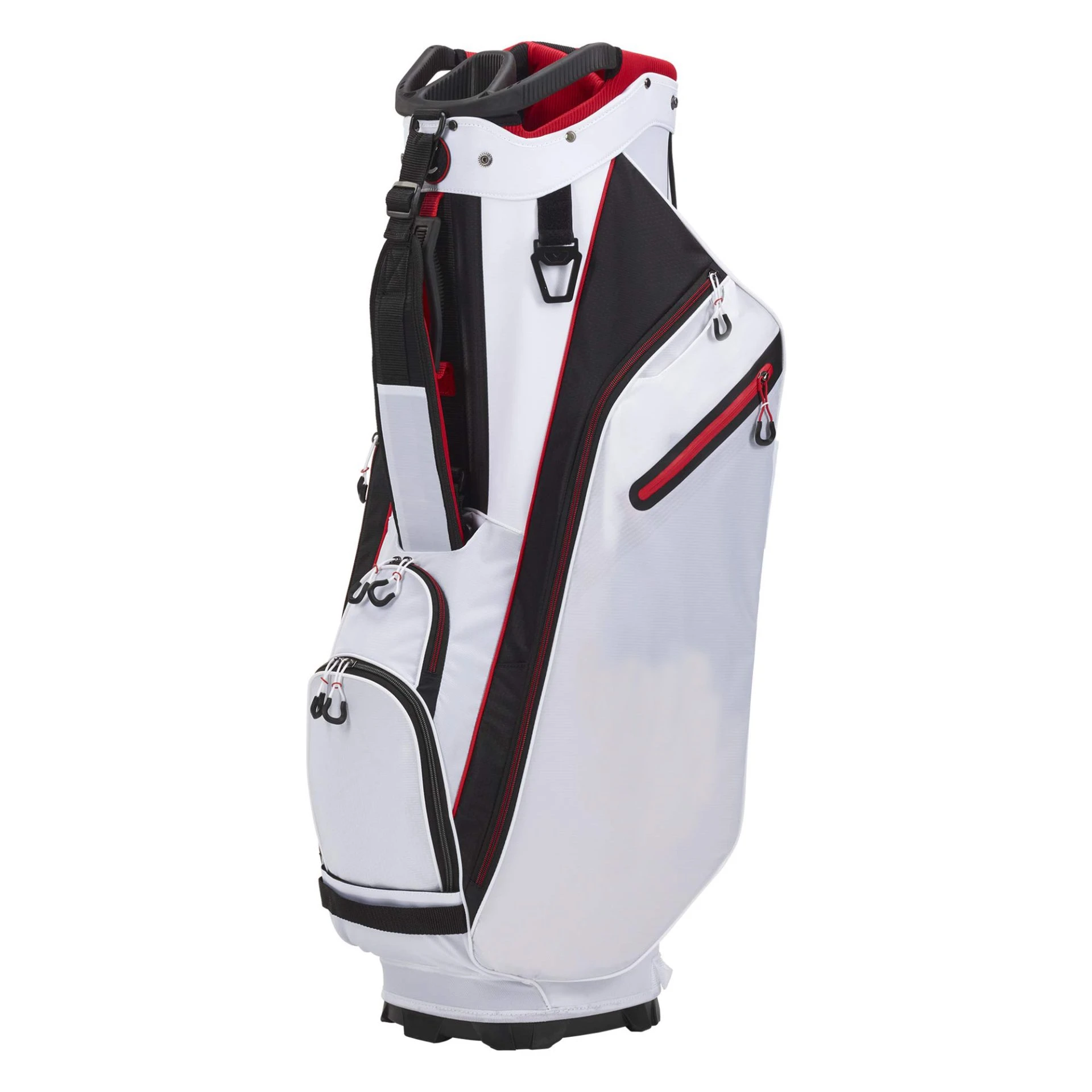
Cart bags are the largest segment by revenue. They are designed to ride on a golf push cart or motorized cart, so they can be heavier (5–7 lbs) and feature more pockets, organizational dividers, and premium materials. Cart bags retail from $150 to $500+, making them attractive for brands targeting higher margins.
Stand bags are the most versatile. Built with integrated legs that pop out for standing on the course, they weigh 3–5 lbs and appeal to golfers who sometimes walk and sometimes ride. Stand bags are the best-selling category globally and a strong entry point for a new brand.
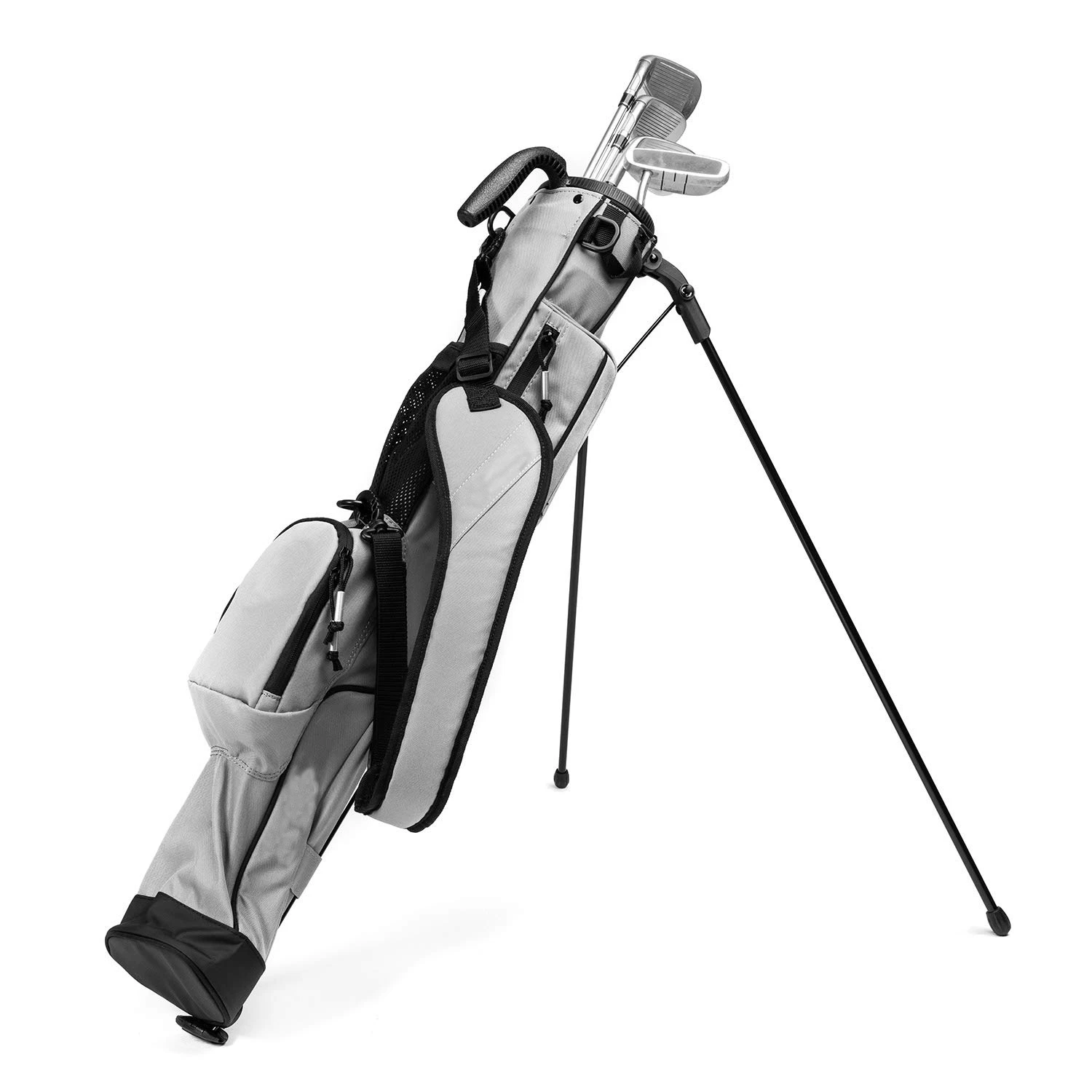
Sunday bags (also called carry bags or day bags) are the lightest option — typically 2–3 lbs — with minimal pockets. They are trendy among younger golfers, fitness-oriented players, and the growing “walking golf” movement. Lower material costs mean lower entry barriers, though retail prices are also lower ($80–$200).
Target Customer Profiles
Knowing who you are designing for determines everything — materials, features, price, and messaging:
- Weekend Warriors: The largest segment. Play 1–2 rounds per week, want quality without tour-level pricing. Price sweet spot: $150–$300.
- Tour/Competitive Players: Expect premium materials, tour van aesthetics, and performance features. Price: $300–$600+. Harder to break into as a new brand.
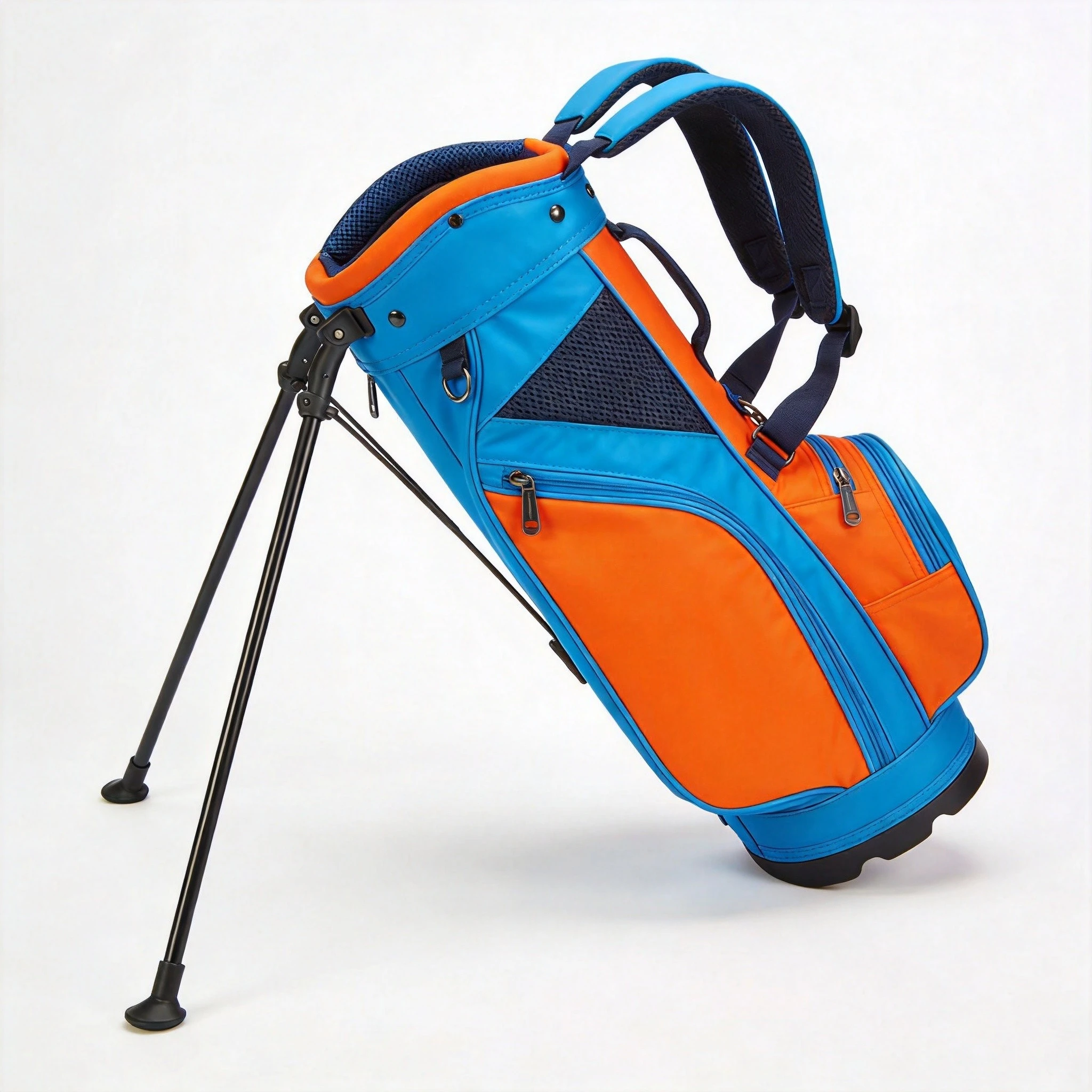
- Junior/Youth Golfers: Fast-growing segment driven by family participation. Parents buy; kids influence. Price: $80–$180. Great niche for a new brand with bold, youthful design.
- Women Golfers: Fastest-growing demographic in golf. Often underserved by legacy brands that simply “shrink and pink” men’s bags. Huge opportunity for purpose-built designs.
Price Point Positioning
Your price point defines your brand as much as your logo does. For a new brand, we recommend entering at the mid-market ($150–$300 retail). This gives you enough margin to absorb marketing costs while staying accessible. For a detailed breakdown of manufacturing costs at different price points, read our Golf Bag Manufacturing Cost Guide 2026.
2. Brand Identity & Positioning
Brand Name & Story
Your brand name should be easy to pronounce, spell, and remember. It should evoke a feeling — performance, freedom, heritage, or innovation — without being generic. Before settling on a name, check trademark availability in your primary market (USPTO for the US, EUIPO for Europe) and secure the .com domain.
The brand story matters more than most founders think. Golfers buy into identity. Are you the brand for the modern minimalist? The eco-conscious player? The under-30 disruptor? Write a one-paragraph brand story that you will use on your website, packaging, and social media. Consistency here builds trust fast.
Logo & Visual Identity
Invest in a clean, professional logo. You do not need a fancy agency — a skilled freelance designer on Fiverr or 99designs can deliver a strong mark for $200–$800. The key is simplicity: your logo must look good embroidered on a bag, printed on a hang tag, and as a small Instagram profile picture.
Choose a color palette (2–3 primary colors) and stick to it across every touchpoint — website, packaging, social media, trade show booth. Visual consistency is what separates a brand from a generic product.
Brand Values: Performance, Lifestyle, or Sustainability?
Modern golf consumers increasingly care about what a brand stands for beyond the product itself:
- Performance: Lightweight materials, aerodynamic design, tour-proven. Think Vessel or Sun Mountain.
- Lifestyle: Golf as culture — fashion-forward, community-driven, aspirational. Think Jones or MG.
- Sustainability: Recycled fabrics, vegan leather, carbon-neutral shipping. This is a genuine differentiator in 2026 and a story consumers will pay for.
Pick one primary value and build everything around it. You can always expand later, but a focused brand launches faster and resonates louder.
3. Product Development on a Budget
Start with 1–2 SKUs, Not a Full Collection
This cannot be stressed enough. Many first-time brand owners fall in love with their product line and try to launch 8–10 SKUs simultaneously. This drains capital, complicates quality control, and slows everything down. Launch with one hero product — your best stand bag or your most unique cart bag — and make it exceptional.
You can learn more about the differences between developing custom designs versus adapting factory platforms in our complete OEM/ODM guide.
OEM vs. ODM: What is the Difference?
OEM (Original Equipment Manufacturer): You provide the design; the factory builds it to your specifications. Full customization, higher upfront design and tooling costs, but complete brand ownership.
ODM (Original Design Manufacturer): The factory provides existing designs or “templates”; you customize colors, logos, materials, and minor details. Lower cost, faster turnaround, ideal for first-time brand owners testing the market.
For a budget-conscious launch, start with ODM. Use factory templates, customize the visual identity, and validate demand before investing in full custom tooling.
Using Factory Templates to Save Mold Costs
A custom golf bag mold can cost $3,000–$8,000 per design. Factory templates (existing base designs) eliminate this cost entirely. You choose from the factory’s catalog, then customize:
- Fabric color and material (nylon, polyester, leather accents)
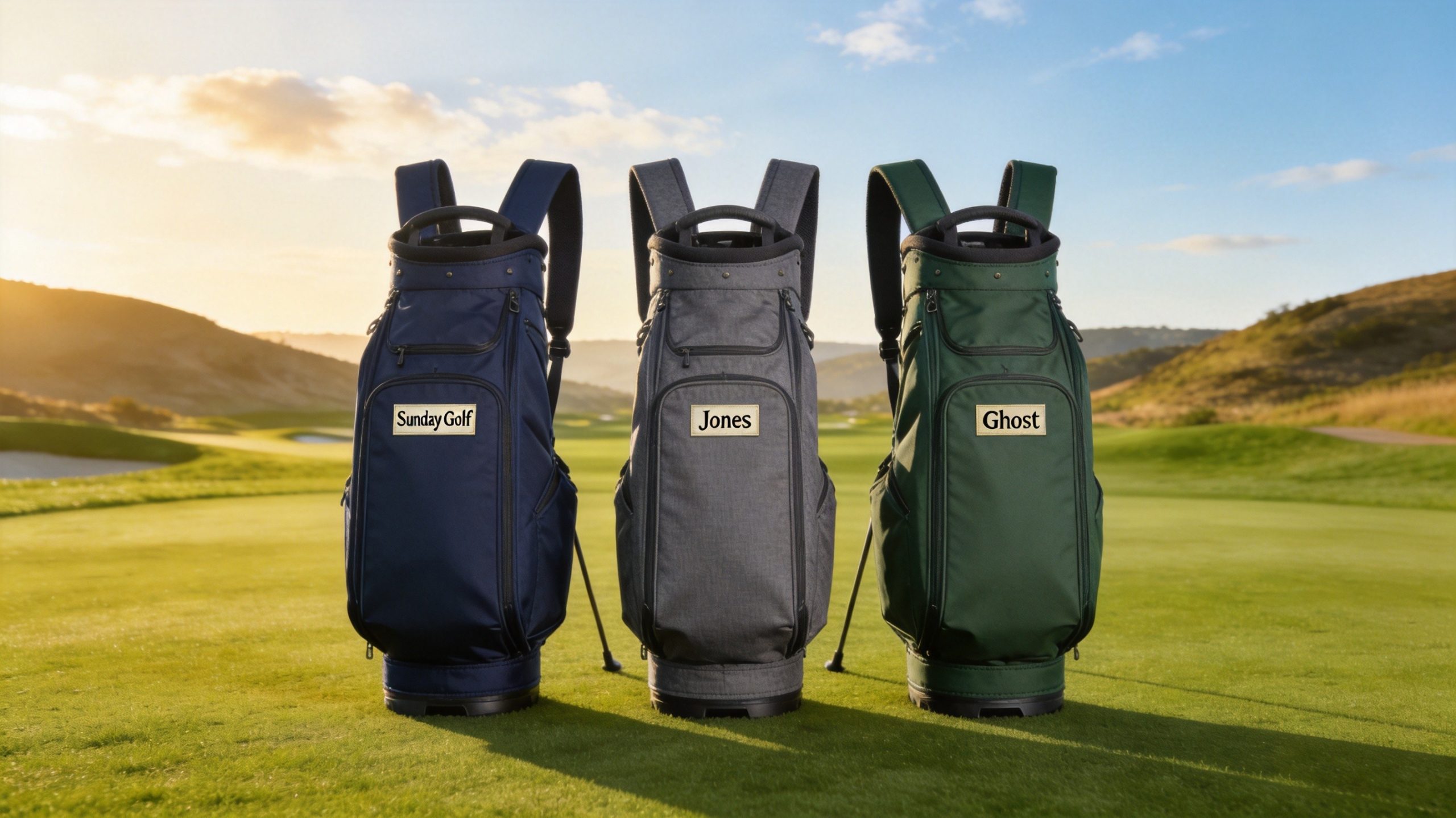
- Logo placement (embroidery, debossing, rubber patches, screen print)
- Zipper pulls and hardware color
- Interior lining and pocket configuration
- Strap padding and stand mechanism color
This approach lets you create a unique-looking product without the $10,000+ investment in custom tooling.
Realistic Budget Breakdown for Your First Launch
| Category | Estimated Cost | Notes |
|---|---|---|
| Brand Design (logo, packaging, website) | $1,000 – $3,000 | Freelance designer + basic Shopify site |
| Sampling (2–3 rounds) | $500 – $1,500 | $150–$500 per sample depending on complexity |
| First Production Run (100 units) | $3,000 – $6,000 | $30–$60/unit for mid-range stand bag (ODM) |
| Shipping (FOB Xiamen to US/EU) | $800 – $2,000 | Sea freight for 100 units; air freight is 3–4x more |
| Marketing (launch month) | $1,500 – $3,000 | Social ads, influencer seeding, content creation |
| Miscellaneous (samples shipping, QC travel, legal) | $500 – $1,500 | Trademark filing, product photos, etc. |
| TOTAL ESTIMATED | $7,300 – $17,000 | Realistic range for a single-SKU launch |
4. Finding & Vetting a Manufacturer in China
China remains the global hub for golf bag manufacturing, producing an estimated 70%+ of the world’s supply. Xiamen, in Fujian province, is the epicenter — home to dozens of experienced factories with certifications like BSCI, ISO 9001, and Sedex. At Keep Perfect Golf (Junyuan Bags), we have been manufacturing in Xiamen since 2004, serving over 200 brands across 100+ countries.
Where to Find Suppliers
- Alibaba.com: The largest B2B platform. Search “golf bag manufacturer” and filter by verified supplier, trade assurance, and years in business. Look for factories with 10+ years of experience.
- Global Sources: A more curated platform, strong for golf and sporting goods. Suppliers here tend to be more export-experienced.
- Canton Fair (China Import & Export Fair): Held twice yearly in Guangzhou. The sporting goods section is where you can meet factories face-to-face, touch materials, and negotiate directly.
- Industry referrals: Ask other brand owners, join golf industry Facebook groups, or connect with sourcing agents who specialize in sporting goods.
Verification Checklist
Before committing to any factory, verify the following:
- Business license and years of operation
- Factory audit reports (BSCI, Sedex, or SMETA)
- Quality management certification (ISO 9001)
- Export experience to your target market
- Client references (ideally brands you recognize)
- In-house design and sampling capability
For a comprehensive step-by-step process, see our Factory Verification Checklist for Golf Bag Buyers.
Questions to Ask Before Ordering
- What is your MOQ for custom vs. template designs?
- What is the sample lead time and cost?
- Can you provide material swatch books and color cards?
- What is the bulk production lead time after sample approval?
- Do you offer in-house logo application (embroidery, debossing, printing)?
- What payment terms do you offer for first-time buyers?
- Can you arrange shipping (FOB or CIF)?
5. Ordering Your First Production Run
MOQ Negotiation Tips
Most golf bag factories have a standard MOQ of 100–300 pieces per style per color. As a new brand, you want to start at the lower end. Here is how to negotiate:
- Commit to a repeat order: Tell the factory you plan to reorder within 3–6 months if the first batch sells well. This reduces their perceived risk.
- Accept minor compromises: Use stock colors instead of custom Pantone matches. Use existing zipper hardware instead of custom pulls. Every customization you skip lowers the MOQ barrier.
- Combine SKUs: Some factories will allow 50 pieces each of 2–3 colorways to hit their 100-piece minimum per production run.
At Keep Perfect Golf, our MOQ is just 100 pieces for golf bags and 500 pieces for accessories, making us one of the most startup-friendly factories in the industry.
Sample Approval Process
Never skip the sampling phase. The typical process:
- First sample (prototype): Factory produces based on your tech pack or chosen template with your branding. Cost: $150–$300. Lead time: 15–25 days.
- Review & revise: Check stitching, zipper quality, stand mechanism, weight, pocket layout, logo placement. Request changes.
- Second sample (pre-production): Incorporates all revisions. This is your gold standard — keep this sample for quality comparison during bulk production.
- Sign off: Written approval triggers bulk production. Never give verbal-only approval.
Quality Control for First-Time Buyers
You have three options for QC:
- Factory self-inspection: The factory checks each bag before packing. Acceptable for trusted, certified factories with ISO 9001.
- Third-party inspection: Hire a QC company like QIMA or AsiaInspection for $200–$300 per day. They inspect a random sample (AQL standard) before shipment. Highly recommended for first orders.
- Personal visit: If you can travel to China, visiting the factory during production is the best QC. You see everything in real time.
Payment Terms & Protections
Standard payment terms in the golf bag industry:
- 30% deposit, 70% before shipment — most common for repeat orders
- 50/50 split — sometimes offered to first-time buyers
- Alibaba Trade Assurance — provides escrow protection; always use this if ordering through Alibaba
- Letter of Credit (L/C) — for large orders ($20,000+); bank-guaranteed but has fees
Never pay 100% upfront. Always retain leverage until you have inspected and approved the finished goods.
6. Branding, Packaging & Unboxing
How your bag arrives in the customer’s hands defines their first impression — and in the age of social media, the unboxing experience is marketing.
Logo Application Methods
- Embroidery: Premium, durable, and the most common on golf bags. Best for logos with clean lines and limited colors.
- Debossing/Embossing: Pressed into leather or synthetic leather. Creates a subtle, luxury feel.
- Rubber/silicone patches: Modern, sporty look. Can be multi-color. Attached with adhesive or stitching.
- Screen printing: Cost-effective for larger graphics or text. Less premium than embroidery but great for accent details.
- Metal badges: Small metal logos attached with rivets or adhesive. Used by luxury brands for a high-end touch.
Custom Packaging Options
Standard golf bag packaging includes a poly bag and cardboard box. To elevate the experience:
- Custom box printing: Your brand colors, logo, and tagline on the shipping box. Cost adds $1–$3 per unit.
- Dust bag: A branded cotton or flannel dust bag inside the box. Cost: $1–$2 per unit. Customers love keeping these.
- Tissue paper & stickers: Branded tissue wrapping inside the bag. Low cost, high perceived value.
Hang Tags, Care Cards & Warranty Cards
These small additions cost pennies but build brand professionalism:
- Hang tag: Branded cardstock tag with your logo, product name, and key features.
- Care card: Simple instructions on how to clean and maintain the bag. Includes your website and social handles.
- Warranty card: Even a basic 1-year warranty card signals confidence and builds trust.
7. Sales Channels & Distribution
DTC Website (Shopify / WooCommerce)
A direct-to-consumer website is essential. Shopify is the fastest to launch ($29/month), while WooCommerce offers more customization if you are technically inclined. Your website is your brand’s home base — invest in good product photography, clear descriptions, and a frictionless checkout process.
Amazon FBA vs. FBM
FBA (Fulfillment by Amazon): Ship inventory to Amazon’s warehouses; they handle storage, packing, and shipping. Great for Prime eligibility and fast delivery, but Amazon takes 15%+ in fees. Start here if you want volume quickly.
FBM (Fulfillment by Merchant): You ship orders yourself or use a third-party logistics provider. Lower fees but slower delivery. Better for high-value or custom items where margin matters more than speed.
Wholesale to Pro Shops & Golf Retailers
Getting your bag into pro shops and golf retail stores builds credibility and drives brand awareness. Typical wholesale terms are 50% of retail price (keystone pricing). A bag that retails for $250 wholesales for $125. Start with local pro shops and regional chains before pitching national retailers.
Trade Shows & Events
The PGA Merchandise Show (January, Orlando) is the industry’s biggest B2B event. Regional golf expos and local golf festivals are lower-cost alternatives for getting your product in front of buyers and end consumers.
8. Marketing on a Shoestring Budget
Social Media: Instagram, TikTok & YouTube
Golf content on TikTok and Instagram Reels is booming. You do not need a big following to start — you need consistency. Post 3–5 times per week showing:
- Product details and close-ups
- Behind-the-scenes factory and design process
- Customer testimonials and on-course use
- Golf lifestyle content that aligns with your brand values
YouTube is ideal for longer-form content: “What is in my golf bag” videos, product reviews, and brand story documentaries.
Influencer & Ambassador Programs
You do not need PGA Tour pros. Target micro-influencers (5,000–50,000 followers) in the golf space — teaching pros, golf fitness coaches, lifestyle golfers. Offer them a free bag in exchange for honest content. Many will post multiple times if they genuinely like the product. Budget for 10–20 ambassadors in your launch quarter.
Content Marketing & SEO
Start a blog on your website from day one. Write about topics your customers search for: “Best golf bag for walking,” “How to choose a stand bag,” “Cart bag vs. stand bag.” Each post is a long-term traffic asset. For comprehensive resources, explore our Custom Golf Bags Guide for reference content ideas.
Email Marketing
Collect emails from day one — offer a 10% discount on the first order for email sign-ups. Use Mailchimp or Klaviyo (both have free tiers) to send launch announcements, new product drops, and golfer-focused content. Email remains the highest-ROI marketing channel for DTC brands.
9. Realistic Timeline & Budget Summary
| Phase | Duration | Key Activities | Cost Range |
|---|---|---|---|
| Month 1–2 | 8 weeks | Market research, brand naming, logo design, supplier sourcing | $1,000 – $3,000 |
| Month 3 | 4 weeks | Sample ordering, review, and revisions | $500 – $1,500 |
| Month 4–5 | 6–8 weeks | Bulk production, quality control | $3,000 – $6,000 |
| Month 5–6 | 3–4 weeks | Shipping, customs, inventory receipt | $800 – $2,000 |
| Month 6–7 | Ongoing | Website launch, marketing, first sales | $1,500 – $3,000 |
| TOTAL | 6–7 months | From concept to first sale | $7,300 – $17,000 |
10. Common Mistakes First-Time Brand Owners Make
- Launching too many SKUs: Spreading capital across 8+ products before validating demand. Start with one hero product and nail it.
- Skipping sampling: Going straight to bulk production without approving samples. This is the single most expensive mistake you can make — you may end up with 500 bags you cannot sell.
- Choosing the cheapest factory: The lowest quote often means corners cut on stitching, zippers, or materials. A $5 difference per unit is not worth the quality risk.
- Neglecting packaging: A great bag in generic packaging feels generic. Packaging is the first physical touchpoint and sets expectations.
- Underestimating marketing costs: “If the product is good, it will sell itself” — no, it will not. Budget at least 30% of your total capital for marketing in the first year.
- No clear brand positioning: Trying to appeal to everyone means appealing to no one. Pick a niche, a customer, and a value proposition — then own it.
- Ignoring intellectual property: Failing to trademark your brand name or design can result in copycats or, worse, receiving a cease-and-desist from someone who registered your name first.
- Not planning for reorders: Selling out your first batch is great — but if you cannot reorder for 3 months because you did not plan ahead, you lose momentum and customers.
11. Frequently Asked Questions
How much money do I need to start a golf bag brand?
Realistically, $8,000–$17,000 for a single-SKU launch including sampling, production of 100 units, shipping, branding, and initial marketing. You can start leaner ($5,000–$8,000) if you use ODM templates and handle marketing yourself.
What is the minimum order quantity for golf bags?
Most Chinese factories require 100–300 pieces per style per color. Some specialized factories like Keep Perfect Golf offer MOQs as low as 100 pieces for bags and 500 for accessories.
How long does it take from concept to first sale?
Six to seven months is typical: 2 months for research and design, 1 month for sampling, 6–8 weeks for production, 3–4 weeks for shipping, and 2–4 weeks for website setup and launch marketing.
Should I use OEM or ODM for my first golf bag?
Start with ODM (factory templates) to minimize upfront investment. Once you validate demand and understand your customers, invest in custom OEM designs for your next generation.
How do I find a reliable golf bag factory in China?
Search on Alibaba and Global Sources, attend the Canton Fair, and verify factories through certifications (BSCI, ISO 9001, Sedex), audit reports, and client references. Always order samples before committing.
What is the best golf bag category for a new brand?
Stand bags offer the best balance of market size, versatility, and margin. Sunday bags have lower entry costs, while cart bags command higher retail prices but appeal to a narrower audience.
Do I need a trademark before launching?
It is strongly recommended. Trademark filing costs $250–$350 per class in the US (USPTO) and protects your brand name and logo. File before your public launch to avoid conflicts.
Can I sell golf bags on Amazon as a new brand?
Yes. Amazon FBA is one of the fastest ways to reach golf consumers. You will need a professional seller account ($39.99/month), UPC/GTIN codes, and optimized product listings. Budget for PPC advertising to gain initial visibility.
What certifications should I look for in a golf bag factory?
Key certifications include BSCI (social compliance), ISO 9001 (quality management), and Sedex (ethical trade). These indicate the factory operates professionally and meets international standards.
How do I market my golf bag brand with limited budget?
Focus on social media content (Instagram Reels, TikTok), micro-influencer partnerships, SEO-driven blog content, and email marketing. These channels have low upfront costs and compound over time. Budget $1,500–$3,000 for your launch quarter.
12. Ready to Launch Your Golf Bag Brand?
Starting a golf bag brand is one of the most rewarding ventures in the sporting goods industry. With the right factory partner, a focused product strategy, and disciplined execution, you can go from concept to first sale in under seven months — for less than $17,000.
At Keep Perfect Golf (Junyuan Bags), we have spent over 20 years manufacturing golf bags for brands around the world. Since 2004, we have helped more than 200 brands — from startups to established names — bring their vision to life. We offer:
- Low MOQ: 100 pieces for bags, 500 for accessories
- Certified quality: BSCI, ISO 9001, and Sedex compliant
- Full-service: From design and sampling to production, branding, packaging, and FOB Xiamen shipping
- Global reach: Exported to 100+ countries
Whether you need help choosing the right bag type, selecting materials, or planning your first production run, our team is ready to guide you. Contact us today to discuss your project — no minimum commitment, no pressure, just expert guidance from a factory that has done this hundreds of times.
Email: [email protected]
WhatsApp: +86 17750020688