Weather can damage your golf gear if your bag isn’t designed to handle it. Rain, heat, humidity, and UV rays all pose risks, from slippery grips to rusted clubs and cracked materials. Manufacturers combat these issues with specialized materials, construction methods, and features like waterproof fabrics, sealed seams, and UV-resistant coatings. Here’s what matters most:
- Rain Protection: Waterproof materials (e.g., TPU, Gore-Tex), sealed seams, and rain hoods keep your gear dry.
- Heat and UV Resistance: UV-stabilized polymers and heat-resistant materials prevent fading, cracking, and warping.
- Humidity Solutions: Ventilation systems and mildew-resistant fabrics help manage moisture buildup in humid climates.
- Custom Features: Tailored designs, such as thermal insulation for hot regions or anti-corrosion hardware for coastal areas, ensure durability.
Choosing the right golf bag for your climate protects your equipment and makes every round more comfortable. Look for weather-specific features, and maintain your bag to extend its lifespan.
The Truth About Waterproof Golf Bags – Do You REALLY Need One?
Rain Protection: Waterproof Materials and Features
When the rain starts pouring on the course, your golf bag needs to do more than shrug off a few drops. The materials and construction of modern bags are what determine whether your gear stays dry or ends up drenched.
Waterproof Materials for Maximum Protection
Top-tier bags rely on materials like TPU laminate and Gore‑Tex membranes to keep moisture out while staying lightweight. Polyurethane (PU) coatings offer a more affordable option, though they may not be as durable. PVC-coated fabrics provide reliable water resistance but tend to add extra weight to the bag.
Newer 50 Denier coated fabrics strike a great balance, offering 50% more waterproofing with 17% less weight. High-quality bags often boast a hydrostatic rating of 10,000 mm or more, meaning they can endure heavy rain without letting water seep through. For comparison, basic water resistance starts at around 1,000–3,000 mm, which is enough for light rain but insufficient for a downpour.
Seam-Sealed Construction and Waterproof Zippers
Sealed seams and waterproof zippers are key to keeping moisture out. Traditional stitching can create tiny holes that let water in, so manufacturers use heat-applied tape or ultrasonic welding to seal these vulnerable areas. Welded seams, which eliminate stitching altogether, are the gold standard for premium bags.
"Standard zippers are a major weakness against rain. Waterproof zippers are built differently… they may have a rubberized coating that closes over the teeth." – Spencer Lanoue, Founder, Caddie AI
YKK AquaGuard zippers, for example, use rubber gaskets to form a watertight seal, keeping your pockets dry. Some high-end bags even include zipper garages – small fabric covers at the end of the zipper track that block any remaining gaps. Storm flaps provide an additional layer of protection by covering the zipper itself, shielding it from driving rain.
To keep zippers functioning smoothly, apply a silicone-based lubricant or zipper wax regularly. In a pinch, candle wax works as a substitute. After a wet round, open all pockets and let the bag air dry for 24–48 hours to avoid mildew forming behind the waterproof seals.
Rain Hoods and Drainage Systems
Rain hoods are essential for keeping your club heads and grips dry, which helps maintain a solid grip and consistent swing. Wet grips can force you to grip tighter, throwing off your tempo and shot quality. Look for hoods with quick-deploy mechanisms or magnetic closures for easy, one-handed operation.
Standard hoods typically cover just the top of the bag, but full-length "poncho" covers offer more comprehensive protection, shielding the entire bag, including the base and pockets. These covers often come with elastic hems and wind-resistant straps to stay secure in gusty weather. For the best protection, choose covers with an IPX 7 rating, which ensures they can withstand heavy rain without letting water through.
Built-in drainage systems are another helpful feature, preventing water from pooling at the base of your bag. These systems work alongside ventilation to manage internal moisture and condensation. A quality rain cover from a trusted brand will typically cost between $30 and $60. It’s a good idea to attach your rain cover as soon as you see those dark clouds rolling in.
These rain-specific features integrate seamlessly into modern bag designs, preparing them to handle diverse weather conditions while paving the way for features that address heat and UV challenges.
Heat and UV Resistance: Protecting Bags in Sunny Conditions
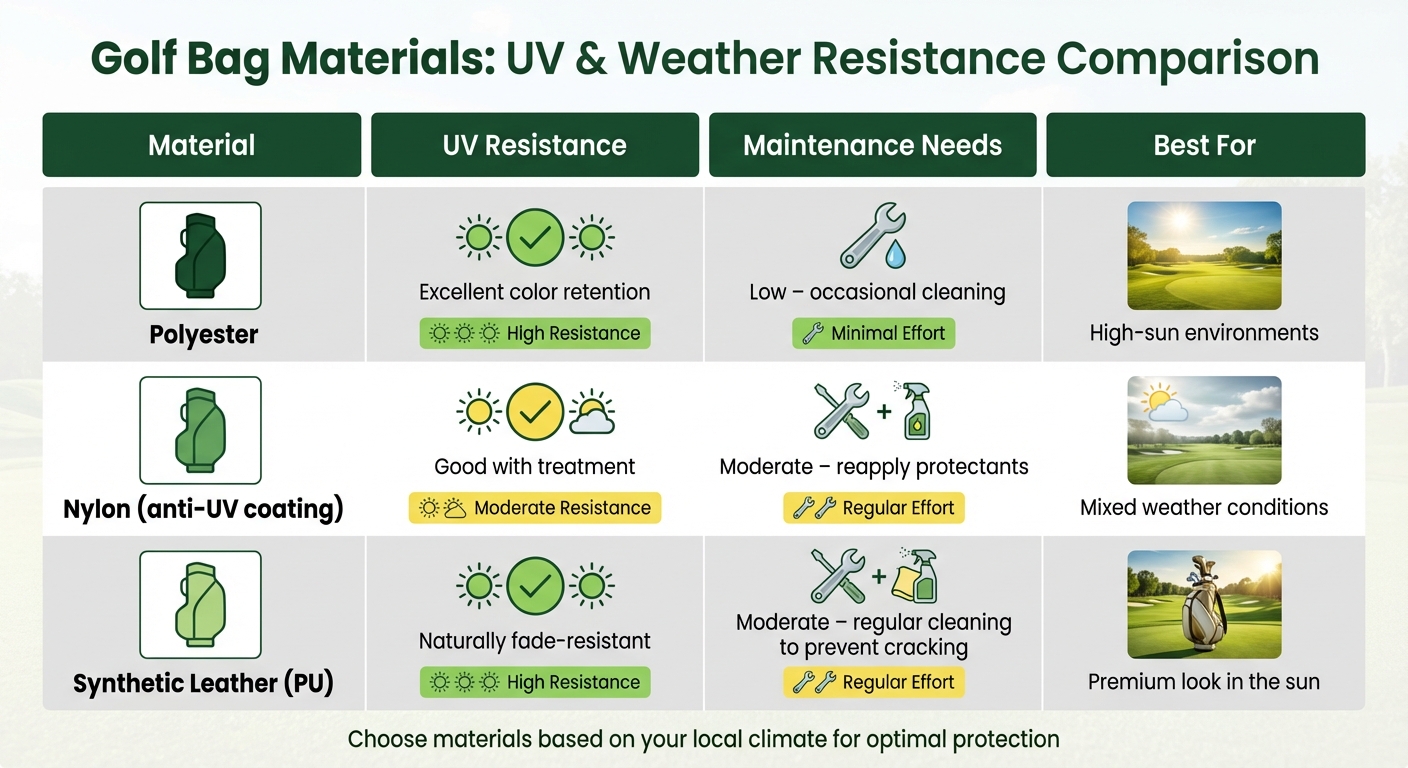
Golf Bag Material Comparison for Weather Protection
While rain often takes the spotlight in weatherproofing discussions, the sun can be just as harsh on golf bags. Long-term exposure to heat and UV rays can fade colors, weaken synthetic fibers, and increase the risk of tears and abrasions. Proper materials and thoughtful maintenance are key to keeping your bag in top shape under the sun.
UV-Resistant and Fade-Proof Materials
Some materials handle UV exposure better than others. Polyester, for example, is a standout in sunny climates due to its ability to retain color longer than untreated nylon. UV-stabilized polymers offer even greater resistance to the chemical breakdown caused by ultraviolet rays. For a more premium look, synthetic leather (PU) provides natural fade resistance, though it may become brittle or crack over time with intense sun exposure. To maintain flexibility, regular damp cleaning is essential. If your bag lacks built-in UV protection, applying a product like Nikwax Tent & Gear SolarProof® can add an extra layer of defense.
| Material | UV Resistance | Maintenance Needs | Best For |
|---|---|---|---|
| Polyester | Excellent color retention | Low – occasional cleaning | High-sun environments |
| Nylon (anti-UV coating) | Good with treatment | Moderate – reapply protectants | Mixed weather conditions |
| Synthetic Leather (PU) | Naturally fade-resistant | Moderate – regular cleaning to prevent cracking | Premium look in the sun |
Heat-Resistant Construction
When temperatures rise above 90°F, standard materials can soften or lose their shape. High-end golf bags combat this with synthetic leather and tour-grade synthetics, which offer greater structural integrity compared to thinner nylon. These materials often feature TPU coatings and resin treatments to withstand extreme heat. Heat-welded seams are another smart addition, providing a durable bond that resists fraying under thermal stress.
Some advanced designs go even further by incorporating reflective inner surfaces or thermal barriers to deflect solar energy. Carbon fiber, commonly used for stand legs, is another excellent choice – it’s strong, lightweight, and resistant to warping in high temperatures. These features combine to ensure your bag stays in great condition, even in the sunniest conditions, while complementing its overall weather-resistant design.
sbb-itb-4fa7e8b
Humidity Solutions: Breathable and Mildew-Resistant Designs
When it comes to humid climates, golf bags face more than just rain – they need to tackle moisture buildup that can lead to mold, mildew, and unpleasant odors. Without proper ventilation, trapped humidity can damage your clubs and accessories. The key is in smart designs that promote airflow and use materials that resist moisture.
Ventilation Systems for Better Airflow
Effective ventilation is essential for combating humidity inside your golf bag. Some of the best designs use pressure differentials to encourage natural airflow. By strategically placing air inlets and outlets, these bags take advantage of the stack (or chimney) effect: warm, moist air rises and escapes through top vents, while cooler, drier air flows in from below. This constant circulation helps keep condensation at bay.
Mesh panels in pocket walls and dividers also promote airflow, keeping your clubs and gear dry. For even more protection, high-end bags may include cross-ventilation systems that move air horizontally, ensuring every corner stays fresh. Rain covers with built-in vents add another layer of defense against internal moisture buildup.
After playing in humid conditions, drying your bag thoroughly is critical. Open all compartments fully to allow maximum air exposure. Placing a fan nearby can speed up drying within 24–48 hours, but avoid using hairdryers or radiators, as they can damage materials like nylon and plastic. Be sure to remove damp items like towels, gloves, and paper scorecards immediately, as wet paper can quickly become a breeding ground for mold.
Quick-Drying and Mildew-Resistant Fabrics
The choice of materials plays a big role in managing humidity. Gore-Tex membranes are a top-tier option, offering excellent breathability and water resistance. TPU (Thermoplastic Polyurethane) laminates are another strong choice, combining good breathability with durability, though they tend to be more expensive. On the other hand, PVC coatings excel at water resistance but lack airflow, which can trap moisture inside.
For added protection, many bags feature moisture-wicking linings and air mesh padding to draw dampness away from your clubs and improve airflow between you and the bag. If you’re golfing in tropical or consistently humid climates, look for bags with anti-microbial treatments. These coatings are designed to prevent mold and mildew from forming on damp fabrics, keeping your gear clean and odor-free.
Customizing Golf Bags for Specific Weather Conditions
Standard golf bags often fall short when it comes to handling the unique challenges of different climates. That’s where Keep Perfect Golf steps in, letting you tailor your bag to handle Florida’s humidity, Arizona’s scorching heat, or the relentless rain of the Pacific Northwest. By combining weatherproof basics with localized tweaks, these customizations ensure your bag is ready for anything.
Material Selection for Climate-Specific Needs
The first step in customizing your golf bag is choosing the right materials to match your environment. For rainy regions, go with lightweight, breathable, and water-resistant materials designed to keep moisture out. Many premium options offer professional-grade protection, boasting water resistance ratings of 10,000mm or more.
If you’re playing in areas with intense sun, UV-stabilized polyester is a smart choice. It resists fading and holds up well under prolonged exposure to sunlight. For humid climates, materials treated with anti-microbial finishes and moisture-wicking linings can help prevent mold and mildew from forming inside your bag.
"Nylon is the most popular material used in modern golf bags, prized for its exceptional strength-to-weight ratio and versatility." – Sarah Johnson, Textile Engineer & Golf Enthusiast
Walkers will appreciate lightweight fabrics that make carrying easier, while cart users might prefer heavy-duty PVC-coated materials for added durability. If you’re playing near the coast, marine-grade materials with corrosion-resistant hardware are essential to combat the effects of salt air and prevent rust.
Choosing the right material is the foundation for building a golf bag that performs in your specific weather conditions.
Custom Features for Weather-Specific Performance
Once you’ve nailed down the materials, it’s time to add features that enhance weather performance. For rainy conditions, consider welded seams created through ultrasonic welding, which eliminates leaks at the joints. Adding storm flaps over zippers and zipper garages can further block water from seeping in.
In hot climates, reflective inner surfaces and thermal insulation layers are great for protecting your gear from heat while keeping drinks cool during summer rounds. For humid environments, ventilation designs that encourage airflow can help keep your bag’s interior dry. Quick-deploy magnetic rain hoods are another smart addition, offering easy, one-handed operation when the skies open up.
Keep Perfect Golf even offers specialized packages tailored to specific climates. For example, their "Tropical Climate" setup focuses on enhanced ventilation and anti-microbial treatments, while the "Desert Condition" configuration emphasizes UV protection and dust-sealing features. These thoughtful adjustments ensure your golf bag is always ready to perform, no matter the weather.
Conclusion: Choosing Weather-Adapted Golf Bags
When it comes to picking the right golf bag, matching its design to your local weather is key. Whether you’re dealing with Florida’s sudden downpours, Arizona’s blazing heat, or the constant drizzle of the Pacific Northwest, features like waterproofing, UV protection, and ventilation can make all the difference in keeping your gear safe and functional.
"Investing in a high-quality waterproof golf bag is essential for any golfer who plays in wet conditions. By protecting your clubs, electronics, and personal items from moisture, you’ll not only extend the life of your equipment but also enjoy a more comfortable round."
– Sarah Williams, Golf Equipment Specialist
Lightweight walking bags (under 5.5 pounds) are ideal for reducing fatigue during long rounds. Key features to look for include welded seams, waterproof zippers with storm flaps, and specialized enhancements like anti-microbial linings for humid areas or corrosion-resistant hardware for coastal courses. Brands like Keep Perfect focus on advanced construction techniques to ensure their bags stand up to a variety of weather challenges.
Taking care of your bag is just as important as choosing the right one. After a wet round, leave all pockets open and let the bag air dry for 24–48 hours. For waterproof zippers, a silicone-based lubricant can help maintain their effectiveness over time.
With weather-smart features and proper upkeep, your golf bag can remain dependable through countless rounds, no matter the season.
FAQs
How can I pick the right golf bag for my local weather?
Choosing the right golf bag often comes down to the weather where you play. If you’re in a rainy or humid area, waterproof bags are a must. Look for materials like PVC or Gore-Tex® that repel water, along with features such as sealed seams, waterproof zippers, and built-in rain covers. These details will keep your gear dry, no matter how wet the course gets.
For hot or dry climates, lighter bags made from breathable materials like treated nylon or polyester are a better fit. Bags with UV protection and ventilation systems can help prevent overheating and protect your equipment from sun damage.
If you’re dealing with unpredictable or extreme weather, choose a bag designed to handle both temperature and moisture changes. This way, your gear stays protected and ready to perform, no matter the conditions.
Why are UV-resistant materials important in golf bags?
UV-resistant materials play a key role in golf bags, shielding the fabric and components from the harmful effects of ultraviolet (UV) rays. Without this protection, extended exposure to sunlight can weaken the material, cause fading, and break down waterproof coatings. Over time, this leads to reduced durability and performance.
By incorporating UV-resistant fabrics, golf bags are better equipped to retain their strength, color, and quality, even under constant sun exposure. This means they last longer, maintain their appearance, and stay functional – an ideal choice for golfers who spend hours out on the course.
How can I care for my golf bag to make it last in different weather conditions?
To keep your golf bag in good shape across different climates, consistent care and protection are essential. In wet or humid conditions, consider using waterproof sprays or covers to shield your bag from moisture. After exposure to rain, make sure to dry it completely to avoid issues like mold or rust. Adding rain hoods and using waterproof compartments can provide extra defense during heavy rain.
For hot, sunny environments, opt for bags made with UV-resistant materials and ventilation features to protect against overheating and material damage. When not in use, store your bag in a cool, dry spot to minimize wear and tear. Regular maintenance, like cleaning the exterior and vacuuming the pockets to remove dirt and debris, will help your bag remain functional and look great over time.
Related Blog Posts
- Waterproof Golf Bags: How Custom Materials Protect Your Gear in Rain
- Study: Impact of Weatherproof Bags on Golf Gear
- Ultimate Guide to Golf Bag Material Innovations
- Top 10 Trending Golf Bags of 2025: Ultimate Buyer’s Guide
Related Resources
Related Products
Explore our manufacturing capabilities in this category:
Need custom golf bags? Contact us for OEM/ODM quotes — MOQ 100pcs, FOB Xiamen.